

 English

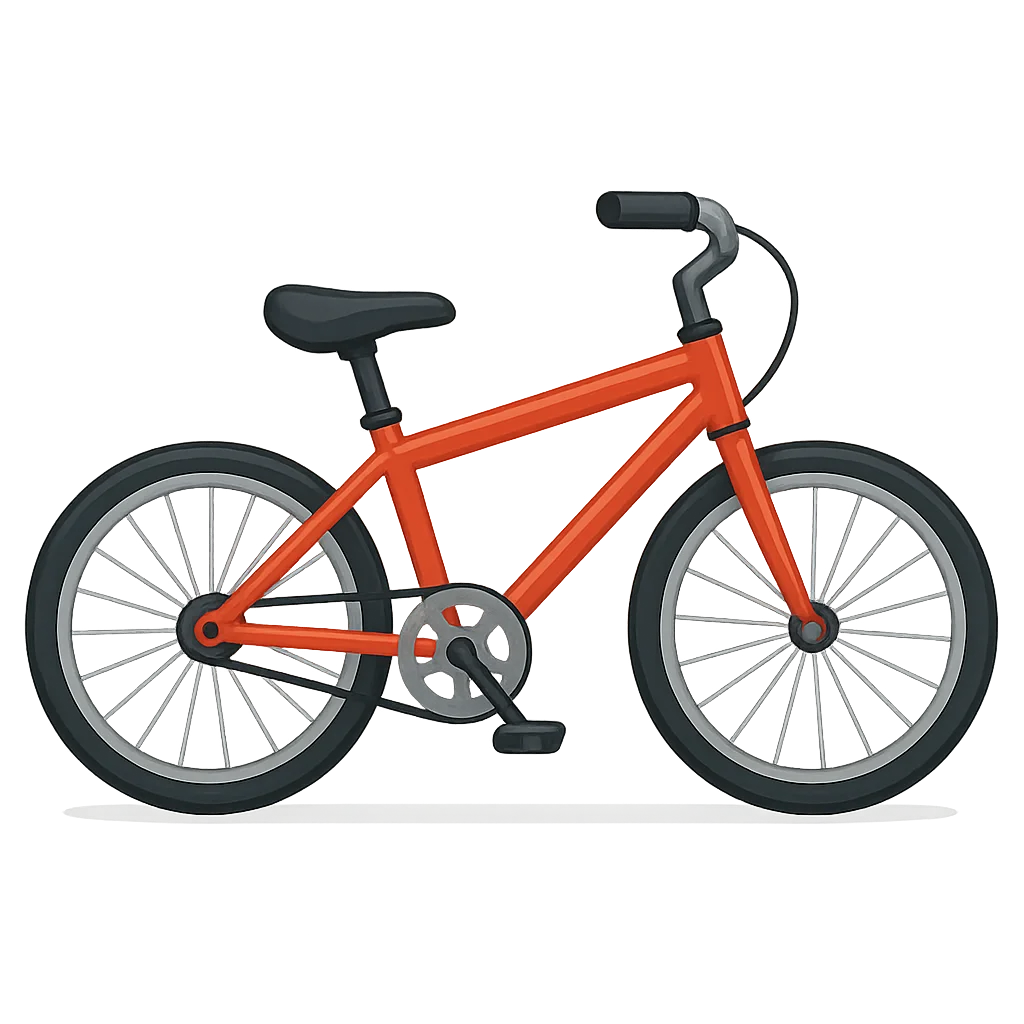
My Two-Wheeled Journey Through Time
Hello there. You can call me the Bicycle. You’ve probably seen me zipping down sidewalks, resting in parks, or leaning against a school wall. I’m everywhere now. But can you imagine a world without me? A time when the fastest you could go was as fast as your own two feet could carry you, unless your family was wealthy enough to own a horse. Getting from one town to the next was a long, slow journey. People needed a way to travel that was faster than walking but cheaper than a horse. That’s where my story begins, with a clever idea to help people roll through the world.
My first wobbly steps were taken a long, long time ago, in the year 1817. My inventor was a German man named Baron Karl von Drais. He didn’t create me just for fun; he created me because people were in trouble. A giant volcano had erupted on the other side of the world, making the weather so cold that crops failed and it became very difficult to feed horses. People needed a new way to get around. So, Karl invented my earliest ancestor, the 'Laufmaschine,' which means 'running machine' in German. I was mostly made of wood and had two wheels, a seat, and handlebars to steer, but something important was missing: pedals. To move, riders had to push their feet against the ground and then glide. It wasn't very fast, and it was a bit clumsy, but it was a start. I was a brand-new idea, a machine for human travel.
My next few decades were like my awkward teenage years. Around the 1860s, inventors in France, like Pierre Michaux, had a brilliant idea: they attached pedals directly to my front wheel. This new version of me was called the Velocipede. It was exciting because you no longer had to push on the ground, but oh, it was a bumpy ride. With my stiff wooden frame and iron-rimmed wheels clattering over cobblestone streets, I earned the nickname 'the Boneshaker.' It felt like my rider's teeth were chattering with every turn of the pedals. Then, I went through an even stranger phase. To go faster, inventors made my front wheel gigantic and my back wheel tiny. They called me the 'Penny-farthing,' after two British coins of different sizes. The bigger the front wheel, the farther I could travel with one pedal push. But riding me was a balancing act. You sat perched so high in the air that if you hit a rock, you could tumble right over the handlebars. It was a thrilling but dangerous way to travel.
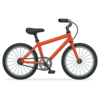
I was so relieved when I finally became something everyone could enjoy safely. That wonderful change happened in 1885, thanks to an English inventor named John Kemp Starley. He created what he called the 'Safety Bicycle.' His design was revolutionary. First, he made both of my wheels the same size, which made me much more stable and easier to ride. No more sitting way up high in the sky. Second, instead of putting the pedals on my front wheel, he used a chain to connect them to my back wheel. This was much more efficient and made pedaling smoother. Just a few years later, in 1888, another inventor named John Boyd Dunlop gave me the greatest gift of all: air-filled rubber tires. Suddenly, the bone-shaking rattles were gone. I could glide over bumps silently and comfortably. At last, I was not just useful, but truly fun.
With my new safe and comfortable design, I rolled into the hearts of people everywhere. I gave them a kind of freedom they had never known before. For the first time, an ordinary person could travel to a neighboring village for work or a visit, all on their own power. I became especially important for women, giving them new independence to travel and explore. My popularity even changed the world itself. As more and more people started riding me, they demanded better, smoother roads to ride on, which eventually helped cars, too. Even now, more than two hundred years after my first wobbly start, I am still one of the best ways to get around. I help you exercise, I don’t pollute the air, and I let you feel the wind on your face. So next time you see me, remember my long journey. And maybe, we can go on a new adventure together.
Activities
Take a Quiz
Test what you learned with a fun quiz!
Get creative with colors!
Print a coloring book page of this topic.







 Free for Educators