

 English

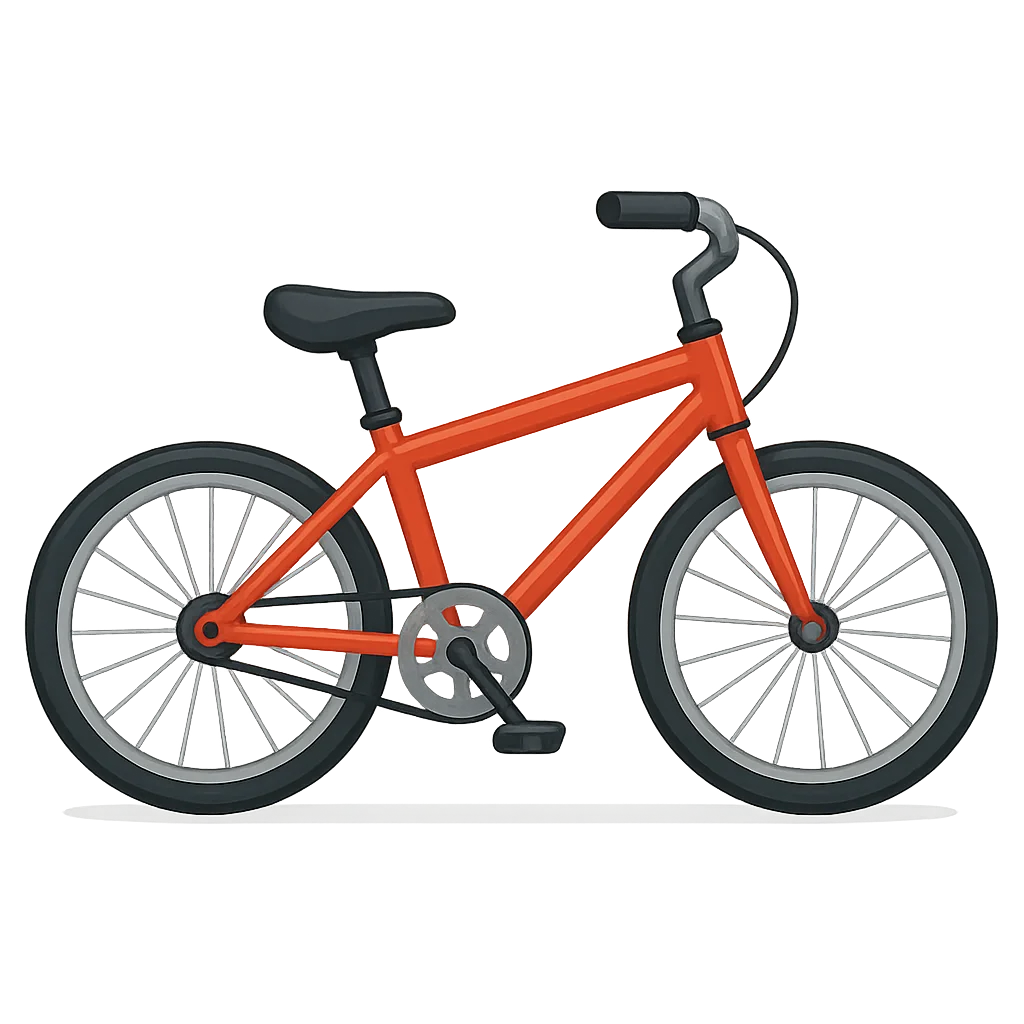
The Bicycle's Journey
Hello there. You probably know me as the Bicycle, zipping down your street or leaning against a tree in the park. But my story didn't begin with shiny gears and comfortable seats. I started as a wobbly, uncertain idea, born out of a time of great need. To understand me, you have to travel back with me to the year 1817. The world was a different place, still shivering from the effects of a massive volcanic eruption a few years earlier. The sky was often gray with ash, crops failed, and it became very difficult and expensive to feed horses, which were the main way people got around. In Germany, a brilliant inventor named Baron Karl von Drais looked at the struggling people and thought there had to be a better way. He envisioned a machine that could help people move without needing an animal to pull it. That's when I was born, though I didn't look anything like I do today. I was called the 'Laufmaschine,' which means 'running machine.' I was made almost entirely of wood, with two wooden wheels, a simple handlebar for steering, and a padded saddle. But something was missing: pedals. To move me, you had to sit on my frame and push off the ground with your feet, like a scooter. It felt awkward, a bit like a clumsy foal learning to walk. But with every push, I was doing something brand new. I was carrying a person forward under their own power, a spark of an idea that would change the world.
For many years, I remained a curiosity, a wooden contraption that didn't quite catch on. I waited patiently in workshops and sheds for my next big moment, which finally arrived in the bustling city of Paris during the 1860s. A blacksmith named Pierre Michaux, along with his inventive son Ernest, saw my potential. They were repairing one of my early forms when they had a revolutionary thought. What if, instead of pushing off the ground, a rider could propel me by pushing with their feet on cranks attached directly to my front wheel? In 1863, they did just that, and with the addition of pedals, I was reborn as the 'velocipede.' Suddenly, I could travel much farther and faster. I was a sensation, but I had a rather painful secret. My frame was rigid iron, and my wheels were rimmed with metal, just like wagon wheels. On the bumpy cobblestone streets of Paris, every single stone and rut sent a jarring shock right through the rider. People started calling me the 'boneshaker,' and I must admit, it was a fitting, if unflattering, name. My evolution took an even more dramatic turn in the 1870s with the arrival of my most famous, and perhaps most dangerous, form: the Penny-farthing. To achieve greater speed, my front wheel grew enormous, sometimes over five feet tall, while my back wheel shrank. The logic was simple: one turn of the pedals on that giant wheel covered a huge amount of ground. I was fast, but I was also incredibly difficult to ride. Mounting me was an athletic feat, and falling from that height was a serious risk. I was a thrilling, but treacherous, machine.
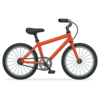
My days as a dangerous high-wheeler were numbered. The world needed a version of me that was practical, safe, and accessible to everyone, not just daring young men. My true transformation, my golden age, began in 1885 with an English inventor named John Kemp Starley. He looked at the towering Penny-farthing and redesigned me from the ground up. He gave me two wheels of the same size, which made me stable and easy to balance. He moved the rider to a lower, safer position between the wheels. Most brilliantly, he used a chain to connect the pedals to my rear wheel. This meant I could be both fast and safe. He called his creation the 'Rover Safety Bicycle,' and I was finally the machine you recognize today. But there was one more innovation that made me truly beloved. Just three years later, in 1888, a Scottish veterinarian named John Boyd Dunlop was watching his son ride a tricycle on bumpy ground. To give his son a smoother ride, he invented the first practical pneumatic tire—a rubber tube filled with air. When these air-filled tires were added to my wheels, the change was magical. The jarring shocks of the 'boneshaker' era vanished. My ride became smooth, quiet, and comfortable. I was no longer just a novelty or a sports machine; I was a revolution in personal transportation. I gave people a newfound sense of freedom and independence. For the first time, ordinary people could travel for work, visit neighboring towns, or simply explore the countryside for fun. I became a powerful symbol of liberation, especially for women, who found in me a new way to move freely through the world.
From that golden age, I have never stopped rolling forward and changing with the times. Inventors gave me gears, which allowed riders to climb steep hills with ease and race across flat roads at incredible speeds. My frame, once made of heavy wood and iron, became lighter and stronger with the introduction of steel, then aluminum, and now even super-light carbon fiber. I have adapted into countless forms to suit every kind of adventure. There are sleek racing versions of me built for pure speed, rugged mountain bikes designed to tackle tough trails, and nimble BMX bikes made for amazing tricks. My journey has been long and filled with bumps, breakthroughs, and bold ideas. From a simple wooden 'running machine' born of necessity to the sophisticated and diverse family I represent today, my purpose has remained the same. I am more than just a collection of wheels, pedals, and gears. I am a source of joy, a partner in exercise, and a clean, green way to see the world. I am proof that a simple idea, when nurtured with creativity and perseverance, can continue to bring freedom and adventure to people everywhere.
Activities
Take a Quiz
Test what you learned with a fun quiz!
Get creative with colors!
Print a coloring book page of this topic.












 Free for Educators