English

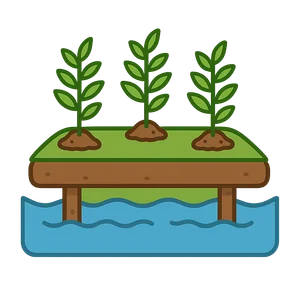
Chinampas
Chinampas are a type of Mesoamerican agriculture which are artificial islands constructed in shallow lake…
Reads at Grades 3–5 Listens at Grades 1–5
Print & create
Answer keys·No prep·Free with an account
28 worksheets · answer keys · full story · quiz · Ages 8-10 · CEFR B1
Plus adds 164,000+ more stories in 27 languages, audio for every one, and printables for all of them.
Just want Chinampas?
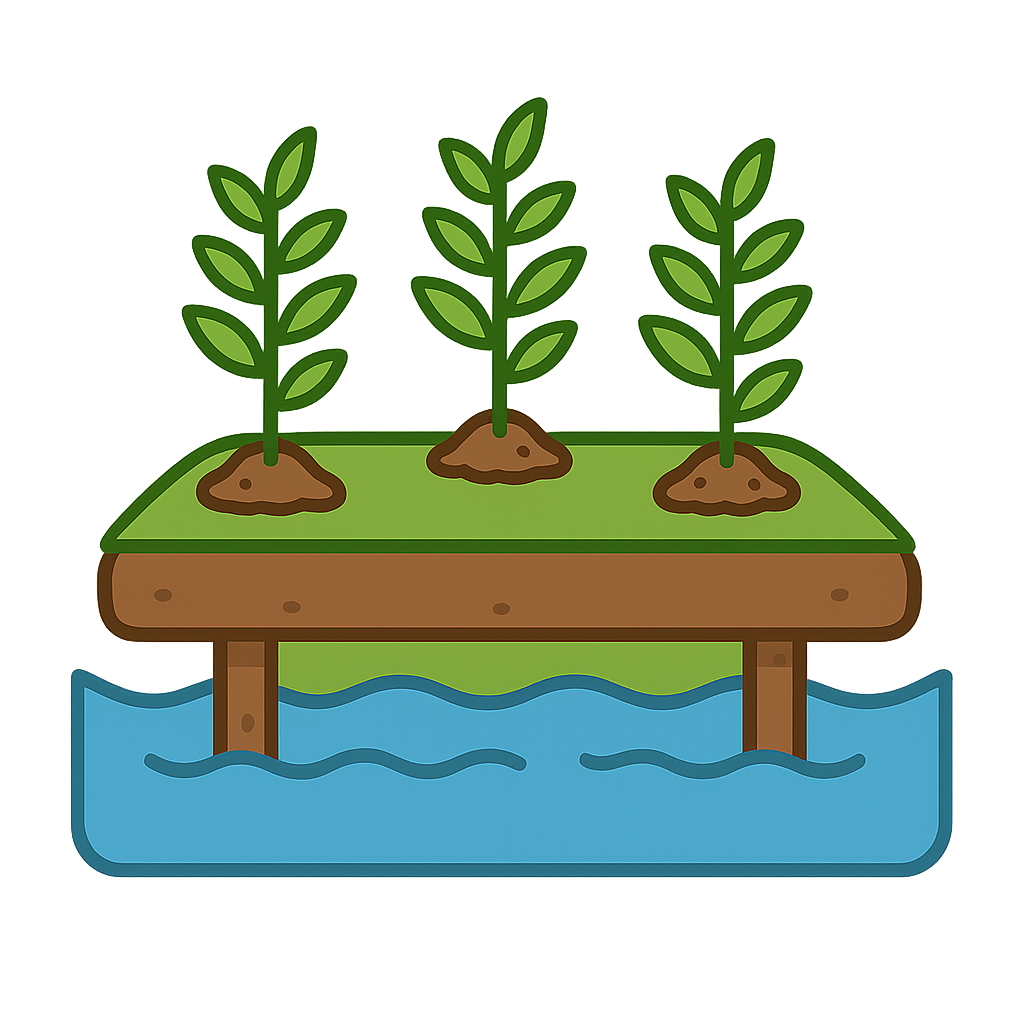
Hello there. You can call me a Chinampa. While you might imagine a garden as a patch of dirt on solid ground, I am something quite different. I am a garden born on water. My story began a very long time ago, around the 12th century, in the beautiful, high-altitude Valley of Mexico. In the middle of a great, shimmering body of water called Lake Texcoco, a magnificent city was rising. It was Tenochtitlan, the capital of the Aztec Empire. The city was a marvel of canals and temples, bustling with people. But as more and more people came to live there, they faced a big problem. The city was built on an island in a swampy lake, and there just wasn't enough solid land to grow food for everyone. The Aztec people were brilliant, and they knew they needed a creative solution to feed their growing population.
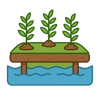
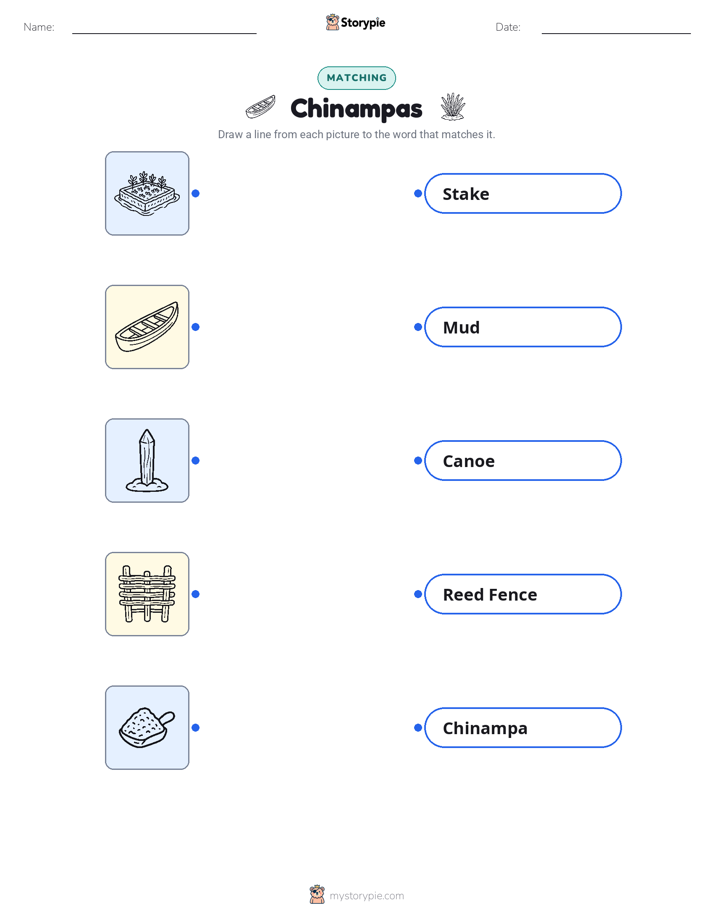
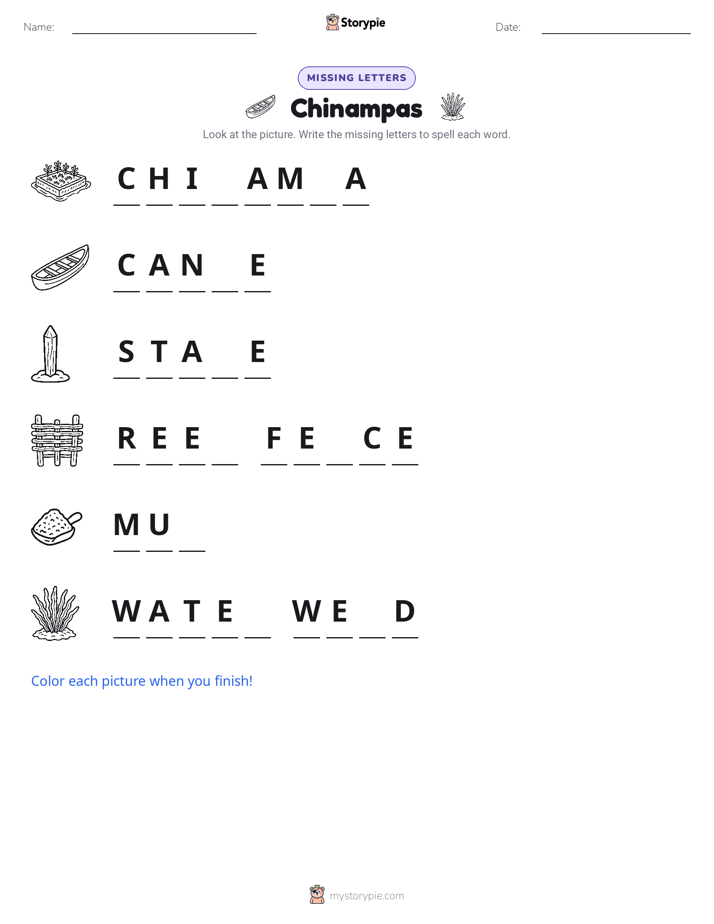
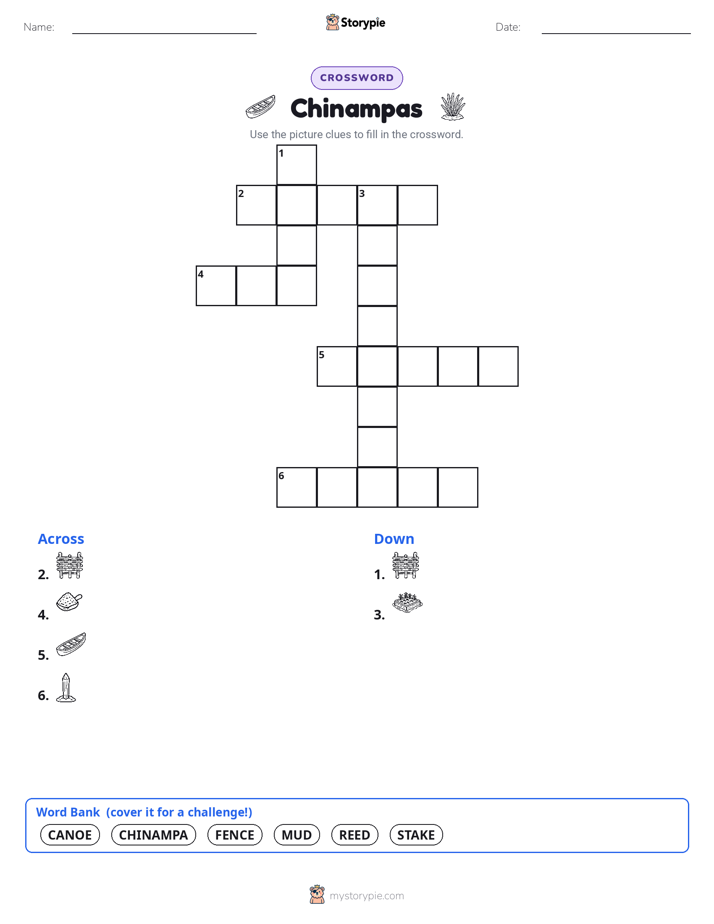
That clever solution was me. The Aztec farmers saw the shallow lake not as an obstacle, but as an opportunity. They began to build me right in the water. First, they wove long, tough reeds and sturdy sticks together to create a huge, rectangular frame, almost like a giant basket without a bottom. They drove strong wooden stakes deep into the lakebed to anchor my frame, making sure I wouldn't just float away with the current. Then came the most important part. Paddling their canoes, they used special shovels to scoop up the rich, dark, nutrient-filled mud from the bottom of the lake. This mud was a treasure, full of everything plants need to grow strong. They carefully piled this wonderful mud inside my woven walls until I rose just above the surface of the water, a brand-new island of fertile soil. To make me strong and permanent, they planted special willow trees, which they called ahuejotes, at my corners. As these trees grew, their incredible roots reached all the way down to the lake bottom, holding me firmly in place like living anchors. Because I was made of the best soil and was surrounded by water, my earth was always perfectly moist. The farmers never had to worry about their plants getting thirsty. Soon, I was covered in rows of tall maize, climbing beanstalks, plump squash, juicy red tomatoes, and even bright, beautiful flowers that were used in their ceremonies. I was a floating pantry, a vibrant patch of green life on the sparkling water.
The Floating Garden of Tenochtitlan
Hello there. You can call me a Chinampa. While you might imagine a garden as a patch of dirt on solid ground, I am something quite different. I am a garden born on water. My story began a very long time ago, around the 12th century, in the beautiful, high-altitude Valley of Mexico. In the middle of a great, shimmering body of water called Lake Texcoco, a magnificent city was rising. It was Tenochtitlan, the capital of the Aztec Empire. The city was a marvel of canals and temples, bustling with people. But as more and more people came to live there, they faced a big problem. The city was built on an island in a swampy lake, and there just wasn't enough solid land to grow food for everyone. The Aztec people were brilliant, and they knew they needed a creative solution to feed their growing population.
That clever solution was me. The Aztec farmers saw the shallow lake not as an obstacle, but as an opportunity. They began to build me right in the water. First, they wove long, tough reeds and sturdy sticks together to create a huge, rectangular frame, almost like a giant basket without a bottom. They drove strong wooden stakes deep into the lakebed to anchor my frame, making sure I wouldn't just float away with the current. Then came the most important part. Paddling their canoes, they used special shovels to scoop up the rich, dark, nutrient-filled mud from the bottom of the lake. This mud was a treasure, full of everything plants need to grow strong. They carefully piled this wonderful mud inside my woven walls until I rose just above the surface of the water, a brand-new island of fertile soil. To make me strong and permanent, they planted special willow trees, which they called ahuejotes, at my corners. As these trees grew, their incredible roots reached all the way down to the lake bottom, holding me firmly in place like living anchors. Because I was made of the best soil and was surrounded by water, my earth was always perfectly moist. The farmers never had to worry about their plants getting thirsty. Soon, I was covered in rows of tall maize, climbing beanstalks, plump squash, juicy red tomatoes, and even bright, beautiful flowers that were used in their ceremonies. I was a floating pantry, a vibrant patch of green life on the sparkling water.
Alongside hundreds, and then thousands, of my brothers and sisters, I formed a vast network of canals and fertile fields that fed the massive city of Tenochtitlan. During the 15th and 16th centuries, we were the reason this incredible city could thrive and become one of the largest and most impressive in the entire world. We were more than just gardens; we were the lifeline of an empire, a beautiful example of how people can work together with nature to create something amazing. My story isn't over, though. The great Aztec city is gone, but my descendants live on. If you ever visit a place called Xochimilco, near modern-day Mexico City, you can see us. People ride in colorful boats called trajineras through the canals that flow between us. Looking back, I am proud that I am not just a piece of history. I am a living reminder that some of the oldest ideas are the smartest, showing how we can grow food in a way that is gentle on the Earth. I am a garden that floats, a farm that feeds, and an ancient idea that is still growing strong.
Wow facts
About
Chinampas are a type of Mesoamerican agriculture which are artificial islands constructed in shallow lake areas to grow crops on the lake beds in the Valley of Mexico.
Take a Quiz
Question 1 of 5
The story says the Chinampa was very 'fertile.' What does the word 'fertile' mean in this sentence?
Explore next



Want to do even more?
Go beyond exploring. Unlock tools that turn every story into real learning.

Storypie Plus for families
Full stories, quizzes, and printables. Nights and car rides, sorted.
- Unlimited audio stories
- Create Mode: your child stars in the story
- Offline downloads
- Printable worksheets & coloring pages

Why Storypie for Schools
Students engaged. Prep in seconds. Evenings back to you.
- Worksheets & Quizzes
- Classroom Management
- Formative Assessment
- Custom Curriculum & Lesson Plans
- 27 Languages

Why Storypie for Homeschool
Curriculum done. They'll ask for more. Hours back in your day.
- Worksheet Generator
- First-Person Audio Stories
- Built-in Comprehension Quizzes
- Custom Curriculum & Lesson Plans
- Print & Go Activities