English

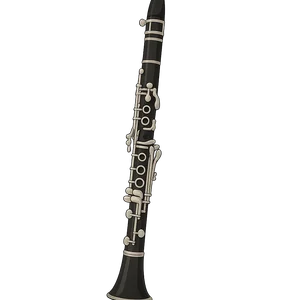
Clarinet
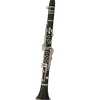
The clarinet is a single-reed woodwind instrument known for its wide range of tones.
Reads at Grades 6–8 Listens at Grades 4–8
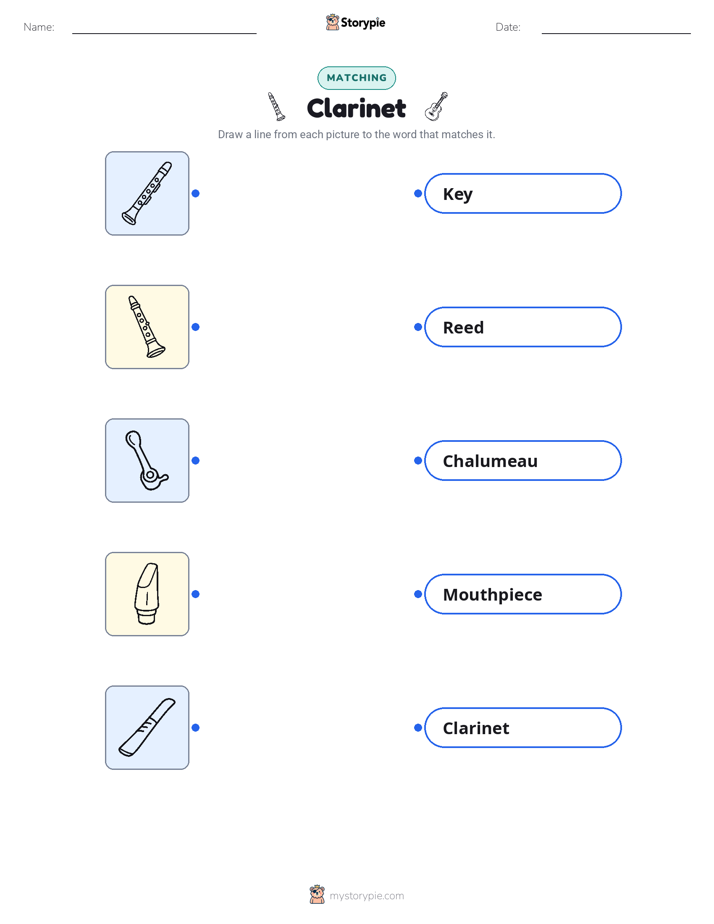
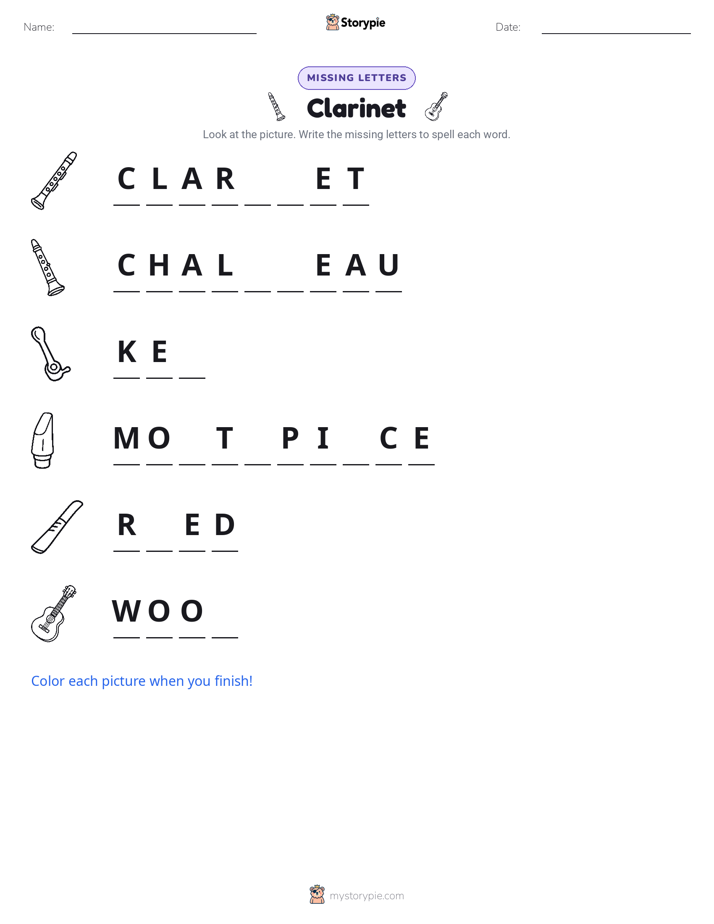
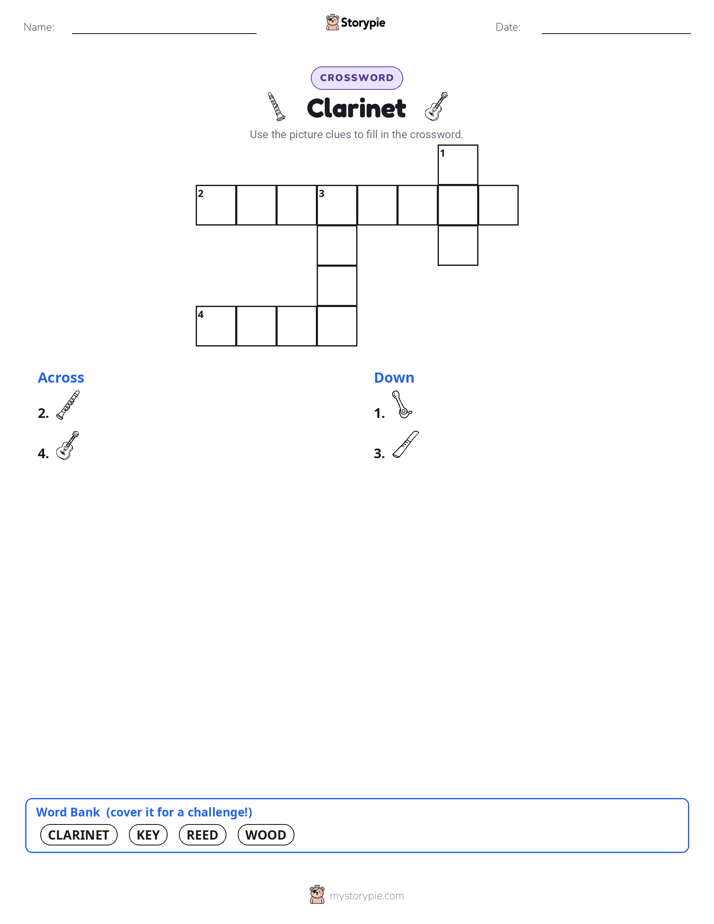
Print & create
Answer keys·No prep·Free with an account
28 worksheets · answer keys · full story · quiz · Ages 10-12 · CEFR B2
Plus adds 279,000+ more stories in 27 languages, audio for every one, and printables for all of them.
Just want Clarinet?
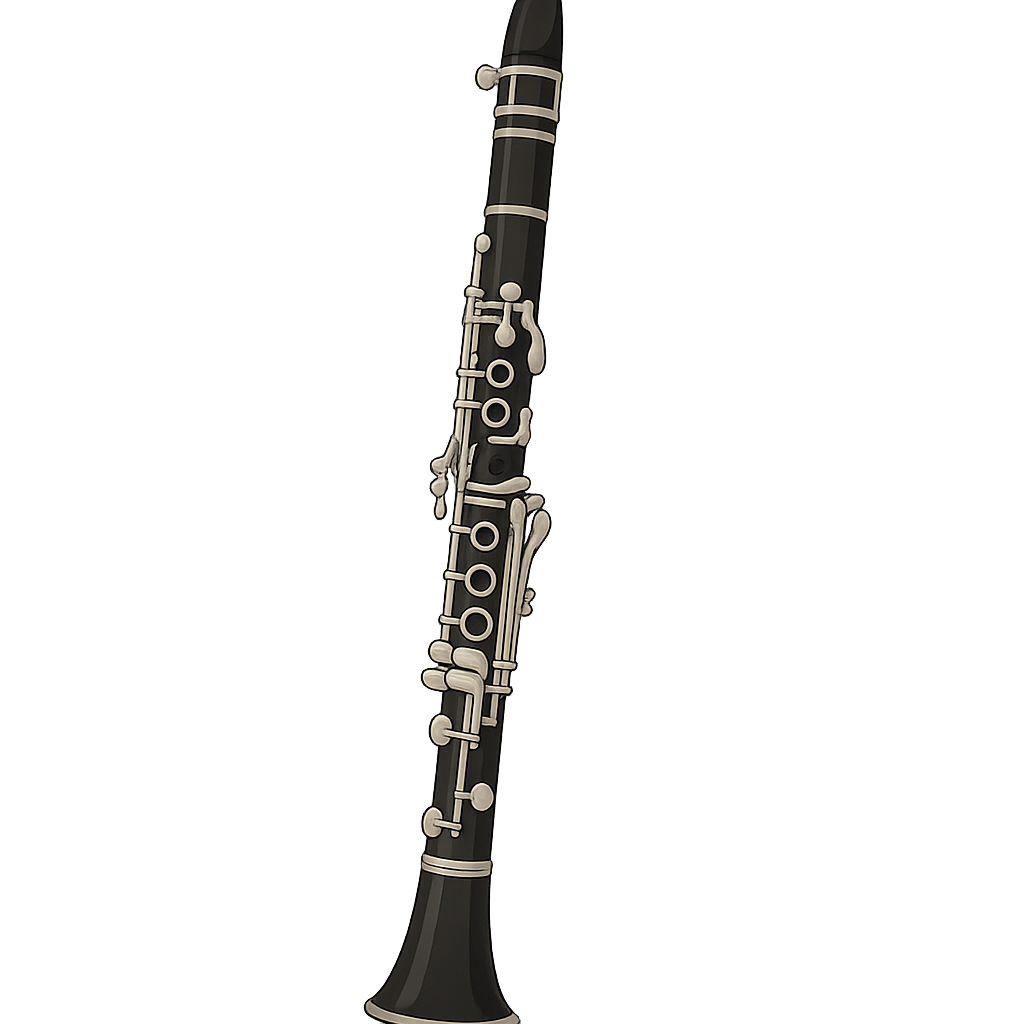
Before I was known as the clarinet, my spirit existed in a much simpler form. Imagine a room in Nuremberg, Germany, around the turn of the 18th century. The air smells of sawdust and wood varnish. There, I began as the chalumeau, a modest instrument carved from wood. I had a gentle, warm, and reedy voice, but I was limited. I could only sing low, mellow tunes, never reaching for the brilliant high notes that danced in the minds of composers. My ancestor, the chalumeau, was beloved for its soft sound, but it couldn't shout with joy or soar with excitement. My creator, a brilliant instrument maker named Johann Christoph Denner, saw my potential. He looked at the simple chalumeau, which had been around since the late 1600s, and envisioned something more. He dreamed of an instrument that could whisper and sing, one with a voice that could span the full range of human emotion. He knew that with a bit of ingenuity, my humble soul could be transformed into something truly extraordinary. He set to work in his shop, not to replace my lovely low voice, but to give me a second, higher one.
That transformation, my true birth, happened around the year 1700. Johann Christoph Denner was a patient and curious man. He spent countless hours experimenting, drilling new holes and adjusting my shape. The breakthrough came from a single, small addition. Near my mouthpiece, where the musician’s breath gives me life, he added a tiny key called a register key. It seemed like such a minor change, but it was the key to unlocking a whole new world for me. I remember the first time he pressed it. As the musician blew, a current of air rushed through me, and with a gentle click of that new key, my voice didn't just rise—it leaped. It soared into a bright, clear, and powerful new range, a sound so different from my old self. It was as if I had been living in a cozy valley and suddenly found wings to fly over the mountains. This gave me two distinct personalities. My original low range was still there, warm and rich, and it kept the name 'chalumeau register' in its honor. But my new, brilliant upper range was called the 'clarion' register, because it sounded a bit like a small, clear trumpet, or a 'clarino' in Italian. From that, I was given my name: the Clarinet, the 'little trumpet.' I finally had my full voice.
My Voice Through Time: The Story of the Clarinet
Before I was known as the clarinet, my spirit existed in a much simpler form. Imagine a room in Nuremberg, Germany, around the turn of the 18th century. The air smells of sawdust and wood varnish. There, I began as the chalumeau, a modest instrument carved from wood. I had a gentle, warm, and reedy voice, but I was limited. I could only sing low, mellow tunes, never reaching for the brilliant high notes that danced in the minds of composers. My ancestor, the chalumeau, was beloved for its soft sound, but it couldn't shout with joy or soar with excitement. My creator, a brilliant instrument maker named Johann Christoph Denner, saw my potential. He looked at the simple chalumeau, which had been around since the late 1600s, and envisioned something more. He dreamed of an instrument that could whisper and sing, one with a voice that could span the full range of human emotion. He knew that with a bit of ingenuity, my humble soul could be transformed into something truly extraordinary. He set to work in his shop, not to replace my lovely low voice, but to give me a second, higher one.
That transformation, my true birth, happened around the year 1700. Johann Christoph Denner was a patient and curious man. He spent countless hours experimenting, drilling new holes and adjusting my shape. The breakthrough came from a single, small addition. Near my mouthpiece, where the musician’s breath gives me life, he added a tiny key called a register key. It seemed like such a minor change, but it was the key to unlocking a whole new world for me. I remember the first time he pressed it. As the musician blew, a current of air rushed through me, and with a gentle click of that new key, my voice didn't just rise—it leaped. It soared into a bright, clear, and powerful new range, a sound so different from my old self. It was as if I had been living in a cozy valley and suddenly found wings to fly over the mountains. This gave me two distinct personalities. My original low range was still there, warm and rich, and it kept the name 'chalumeau register' in its honor. But my new, brilliant upper range was called the 'clarion' register, because it sounded a bit like a small, clear trumpet, or a 'clarino' in Italian. From that, I was given my name: the Clarinet, the 'little trumpet.' I finally had my full voice.
For several decades, I grew and found my place in small musical groups, but my big moment arrived in the late 1700s. A composer of incredible genius, Wolfgang Amadeus Mozart, heard my voice and fell in love with my dual nature. He understood that I could express a range of feelings that few other instruments could. I could sound playful and light, then sink into a melody of deep melancholy. He saw my potential not just as an instrument, but as a character in his musical stories. In the year 1791, he wrote the Concerto for Clarinet, a piece of music designed just for me. It was a gift that allowed me to show the world everything I could be—from my deepest, most velvety low notes to my most brilliant and agile high notes. As the 1800s progressed, other inventors continued to refine my body. Around 1843, two brilliant Frenchmen, Hyacinthe Klosé and Auguste Buffet jeune, adapted a revolutionary key system for me. This 'Boehm system' gave me an intricate network of silver keys and rings that made me far more nimble. My notes could now flow together seamlessly, allowing musicians to play faster and more complex music than ever before. I was no longer just a novelty; I was a sophisticated and essential member of the orchestra.
My journey didn't stop with the classical orchestra. As the world changed, so did music, and I found a thrilling new home in the 20th century. In the 1930s, I became a star in the energetic, swinging rhythms of jazz. A musician named Benny Goodman, who became known as the 'King of Swing,' made my voice the sound of a generation. He showed that I could be cool, exciting, and full of improvisational fire. Today, you can hear my voice everywhere. I might be the mysterious, haunting melody in a movie soundtrack, the cheerful and bold voice in a marching band, or the soulful soloist in a symphony orchestra. I can be whatever a musician needs me to be. My journey began with a simple idea in a German workshop over 300 years ago—the desire to help a quiet instrument sing a little higher. That single spark of creativity gave me a voice that has been used to express every possible feeling, connecting people across time and cultures through the universal language of music.
Wow facts
About
The clarinet is a single-reed woodwind instrument known for its wide range of tones. It was developed around the year 1700 by Johann Christoph Denner in Germany from an earlier instrument called the chalumeau.
Take a Quiz
Question 1 of 5
In your own words, summarize the main reason Johann Christoph Denner invented the clarinet.
Explore next




Want to do even more?
Go beyond exploring. Unlock tools that turn every story into real learning.

Storypie Plus for families
Full stories, quizzes, and printables. Nights and car rides, sorted.
- Unlimited audio stories
- Create Mode: your child stars in the story
- Offline downloads
- Printable worksheets & coloring pages

Why Storypie for Schools
Students engaged. Prep in seconds. Evenings back to you.
- Worksheets & Quizzes
- Classroom Management
- Formative Assessment
- Custom Curriculum & Lesson Plans
- 27 Languages

Why Storypie for Homeschool
Curriculum done. They'll ask for more. Hours back in your day.
- Worksheet Generator
- First-Person Audio Stories
- Built-in Comprehension Quizzes
- Custom Curriculum & Lesson Plans
- Print & Go Activities