

 English

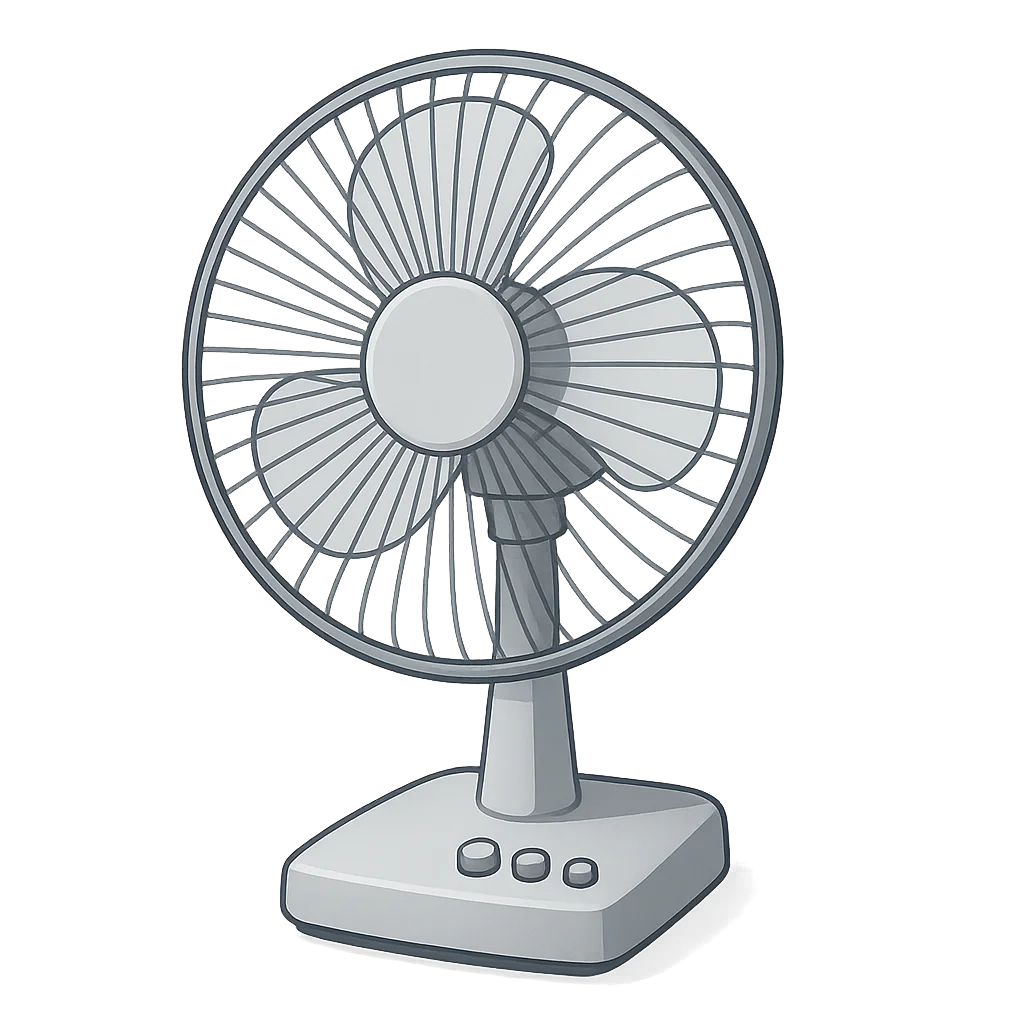
The Whispering Wind Machine
Before I was born, the world held its breath during the summer. Imagine a city street in July, the air thick and heavy like a wool blanket, the sun beating down on the cobblestones. People moved slowly, their energy drained by the oppressive heat. Their only defense against the sweltering stillness was a flimsy piece of folded paper or a woven palm leaf, waved back and forth, a temporary and tiring solution. In factories, workers dripped with sweat, their productivity slowing to a crawl. In homes, families sat on their porches late into the evening, waiting for a whisper of a breeze that rarely came. But beneath the surface of this sleepy, sun-baked world, a new force was awakening. It was a crackling, invisible power called electricity. It hummed in wires and glowed in the newfangled light bulbs of inventors like Thomas Edison. People saw it as a marvel, a mystery, something that could light up the dark. But they had not yet imagined that this same power could be taught to create the one thing they craved most: a cool, steady wind.
My story begins with a brilliant young engineer named Schuyler Skaats Wheeler. In 1882, he was working for a company that harnessed Mr. Edison’s incredible new technologies. Schuyler was fascinated by the electric motor, a device that could turn electrical energy into mechanical motion. He watched it spin tirelessly, a blur of constant, reliable power. On a particularly sticky summer day, while observing a motor whirring on a workbench, an idea sparked in his mind. He saw the world’s exhaustion from the heat, the endless effort of fanning by hand, and then he looked at the relentless spin of the motor. What if, he wondered, he could attach blades to that spinning shaft? Could he create a personal, mechanical breeze that never grew tired? It was a deceptively simple thought, but it held the power to revolutionize daily life. He wasn't just trying to build a machine; he was trying to capture the wind itself, to put it in a box and release it on command. The challenge was to design blades that were light enough to spin rapidly but shaped perfectly to push the air forward, creating a focused and refreshing current. It took persistence and countless adjustments, but Schuyler was determined to transform his electrifying idea into a reality.
I remember the moment I came to life. It wasn't a grand ceremony, just a quiet moment of anticipation in a workshop. Schuyler connected the wires, his brow furrowed in concentration. He flipped a switch, and a jolt of electricity surged through my copper veins. My motor hummed, and for the first time, my two simple blades began to rotate. Slowly at first, then faster and faster, they sliced through the still, heavy air. A soft whirring sound filled the room, the sound of a new kind of work being done. And then, it happened. A steady stream of cool air flowed forward, a miniature gale that rustled papers on the desk and brought a smile to Schuyler’s face. I was alive. In those early years, I was not a common sight. I was a luxury, a piece of modern magic. My first homes were not quiet living rooms but bustling factories, grand hotels, and opulent theaters. There, I was a workhorse. I spun above rows of laborers, pushing away the stifling factory heat so they could work more efficiently. I greeted patrons in ornate lobbies, offering a refreshing welcome from the summer sun. People would stand before me in awe, feeling my artificial breeze on their faces, marveling that humanity had finally tamed the air itself.
My creation sparked a cool revolution that soon spread far beyond the factory floor. While I was born as a desk fan, my family quickly grew. In 1887, an inventor named Philip Diehl, who had been working on adapting sewing machine motors, had a brilliant idea. He mounted a version of me on the ceiling, creating the first ceiling fan. This simple change had a profound effect. A single ceiling-mounted fan could circulate air throughout an entire room, making cooling more efficient and accessible. As the years passed, more improvements were made. Designers gave me an oscillating neck, allowing me to sweep my breeze back and forth across a room. Manufacturers found ways to produce me more cheaply, and slowly but surely, I moved from being a luxury for the wealthy to a staple in ordinary homes and offices. My presence changed how people lived. It became possible to build and inhabit homes comfortably in hotter parts of the world. Architects no longer had to design buildings solely around maximizing natural airflow with wide porches and high ceilings. Life didn't have to stop on a hot day; with my steady hum in the background, work and play could continue, no matter the temperature outside.
Today, you can find my descendants everywhere, though they may look very different. The fundamental idea born in that workshop in 1882—using a motor to spin blades and move air—is more important than ever. It lives on in the powerful air conditioners that cool entire skyscrapers, in the tiny, silent fans that prevent your computer from overheating, and even in the colossal wind turbines that generate clean energy from the wind I was designed to mimic. My story is a quiet one, a steady whir in the background of progress. But it is a reminder that even the most world-changing inventions can begin with a simple observation, a creative spark, and the desire to solve a common problem. One person’s brilliant idea, born on a hot summer day, brought comfort to millions and proved that with a little ingenuity, you can even command the wind.
Activities
Take a Quiz
Test what you learned with a fun quiz!
Get creative with colors!
Print a coloring book page of this topic.













 Free for Educators