

 English

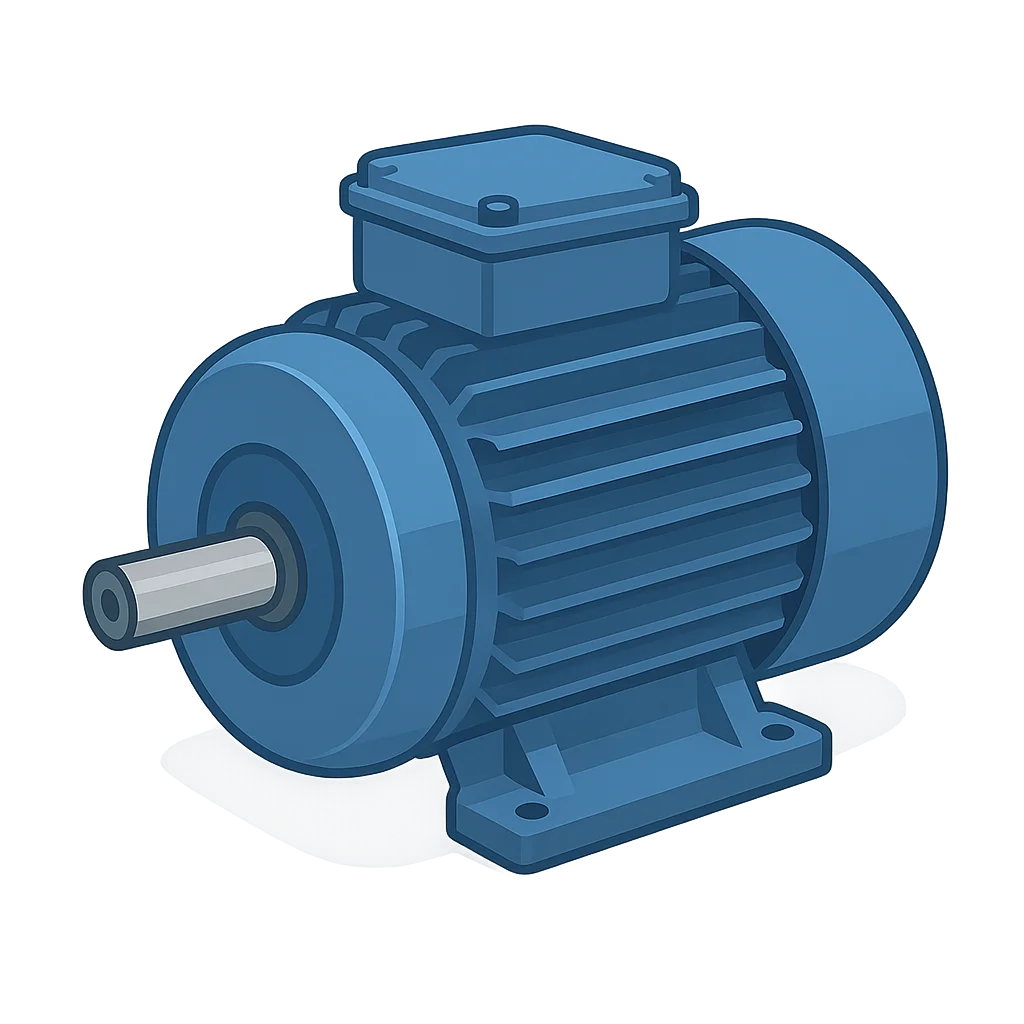
The Story of the Electric Motor
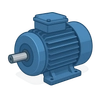
Listen closely. Can you hear that quiet hum? Feel that gentle vibration? That's me, the Electric Motor, waking up. I am the secret power that makes your world spin. Think about the fan that cools you on a hot day, the blender that whirls your smoothie, or the tiny toy car that zips across the floor. That's all me. I even make the phone in your pocket buzz. I am the invisible force turning silent electricity into powerful, useful motion. It’s easy to take my work for granted now, but there was a time before I existed, a world that moved to a much different, slower rhythm. It was a world powered by the strength of human and animal muscles, the push of the wind in sails, or the hiss of steam from massive, clanking engines. Every movement was an effort, every task a challenge. I was just a whisper of an idea back then, a dream of creating effortless motion from an unseen energy source, waiting for curious minds to bring me to life.
My story begins not with a bang, but with the quiet twitch of a needle. In the year 1820, a Danish scientist named Hans Christian Ørsted was conducting an experiment during a lecture. He noticed something astonishing that no one had ever seen before. When he sent an electric current through a wire, the needle of a compass resting nearby suddenly jumped and pointed in a new direction. It was the first clue, a secret handshake between my two parents: electricity and magnetism. This single observation proved they were connected by a hidden force, a powerful friendship just waiting to be understood. News of this discovery traveled across Europe and captivated a brilliant, self-taught scientist in London named Michael Faraday. He was fascinated by this mysterious link and spent months in his laboratory, tirelessly experimenting with wires, magnets, and batteries. He was determined to not just see the effect, but to harness it. Then, on a truly momentous day, September 3rd, 1821, he succeeded. He built a simple but ingenious device where a wire dangled into a cup of mercury with a magnet placed in the center. When he connected a battery, the wire began to dance. It spun and spun in a continuous, steady circle around the magnet. In that moment of ceaseless, controlled motion, I was born. I was not big or powerful, just a tiny scientific wonder in a London laboratory, but I was the very first proof that electricity could be transformed into endless movement.
For many years after my birth in Faraday's lab, I remained little more than a fascinating scientific curiosity. I was a clever trick to show in lecture halls, a spinning wire that amazed audiences, but I wasn't strong enough to do any real work. I needed to grow up, to become more powerful and practical. Many clever inventors dedicated themselves to helping me evolve. One of the most determined was a blacksmith from Vermont named Thomas Davenport. He saw my true potential beyond being a mere novelty. He spent years tinkering in his workshop, meticulously winding coils of wire and designing powerful electromagnets, all to make me a true workhorse. His perseverance paid off, and by 1837, he had secured a patent for one of the first direct current, or DC, motors that was robust enough for industrial use. He even used me to power a small printing press, giving me one of my very first jobs. But my most significant transformation was still to come, thanks to the visionary genius of Nikola Tesla. In the late 1880s, Tesla imagined an entirely new way for me to operate using alternating current, or AC. His creation, the AC induction motor, was a masterpiece of elegant engineering. I was simpler, with fewer parts that could break down, yet I was more reliable and immensely more powerful. Tesla's design was the breakthrough that allowed me to be built on a massive scale, ready to leave the small workshops and become the heart of modern industry. I became the tireless muscle that powered the factories of the second Industrial Revolution, driving looms, lathes, and conveyor belts that changed how everything was made.
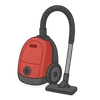
My journey didn't end at the factory gates. As I became smaller, more efficient, and more affordable, I began to move into homes all across the world. My quiet, steady hum became the background music of modern life. I became the reliable heart of refrigerators that kept food from spoiling, washing machines that saved families countless hours of hard labor, and vacuum cleaners that made homes healthier and cleaner. My work reached for the skies, powering the elevators that allowed cities to build towering skyscrapers. I pumped clean water to entire communities and drove the electric trains and streetcars that connected them. My spin became essential to progress. Today, my journey continues into an even more exciting future, and my work is more important than ever. You can find me spinning silently inside the electric cars that are helping to clean our air. I am at the very center of giant wind turbines, capturing the power of the wind and turning it into clean, renewable energy for our schools, hospitals, and homes. From a simple twitch of a compass needle over two hundred years ago to powering the clean technologies of tomorrow, my story is one of constant motion and endless possibility. My spin helped shape the world you live in, and I promise you, I am not finished yet. I am still working, still spinning, and still dreaming of the next way I can help make our world a better, brighter, and more exciting place.
Activities
Take a Quiz
Test what you learned with a fun quiz!
Get creative with colors!
Print a coloring book page of this topic.









 Free for Educators