English

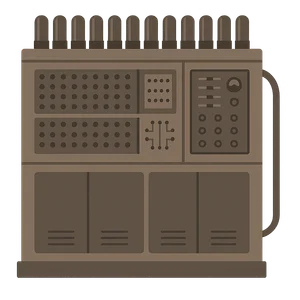
ENIAC
ENIAC, the Electronic Numerical Integrator and Computer, was the first programmable, electronic…
Reads at Grades 3–5 Listens at Grades 1–5
Print & create
Answer keys·No prep·Free with an account
28 worksheets · answer keys · full story · quiz · Ages 8-10 · CEFR B1
Plus adds 164,000+ more stories in 27 languages, audio for every one, and printables for all of them.
Just want ENIAC?
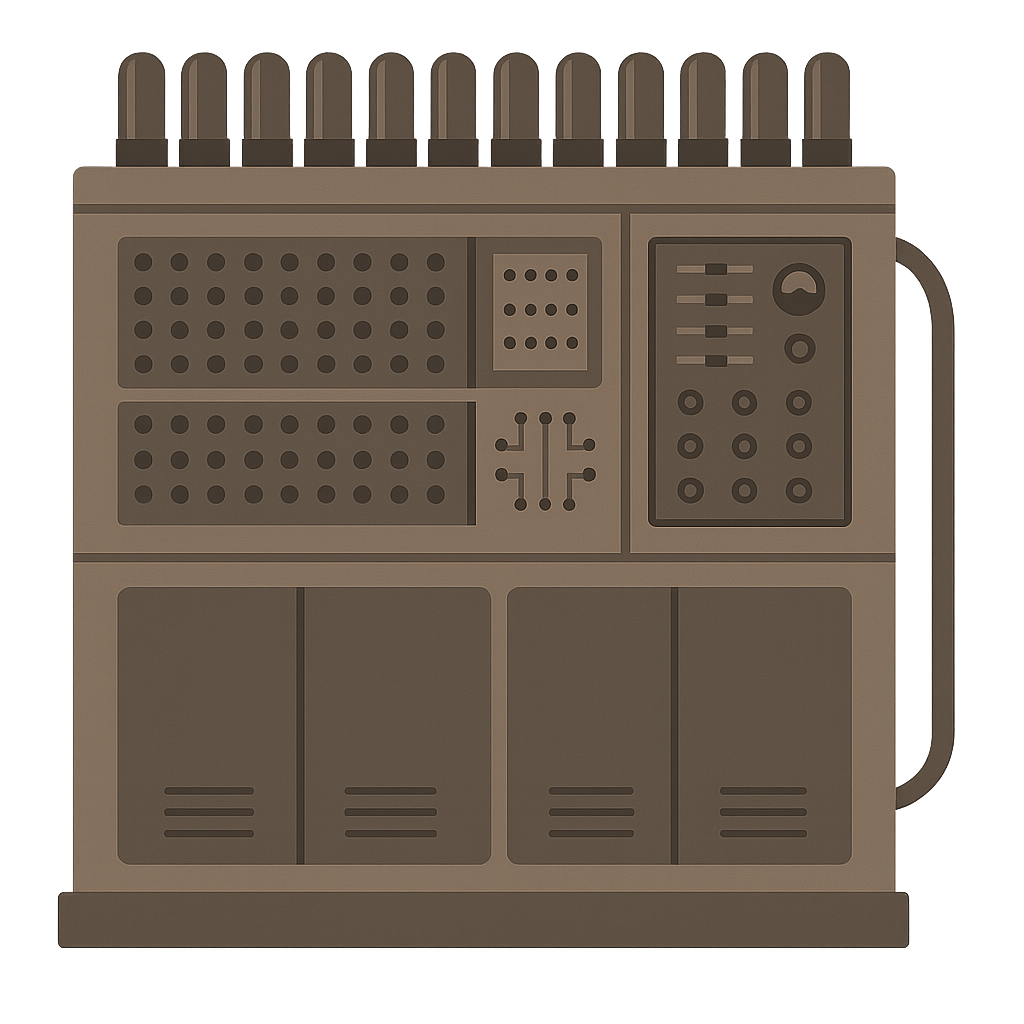
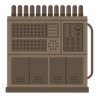
Hello there! My name is ENIAC, but some people used to call me the 'Giant Brain.' I suppose it was a good name for me, because when I was built, I was the biggest and fastest brain in the entire world! But I’m not a squishy brain like yours. I was made of metal, glass, and miles and miles of wire. Imagine a machine so big it filled a whole room, with thousands of lights that blinked and flashed like a city at night. That was me! I was born from an idea during a very serious time, a big conflict called World War II. In the year 1943, the United States Army had a giant math problem. They needed to figure out the paths of cannonballs, which required solving very long and tricky equations. There were clever people, mostly women, called 'computers' who did all this math by hand, but it was slow work. It could take a person more than a whole day to solve just one problem! The army needed answers much, much faster. They needed a new kind of thinker, one that could race through numbers quicker than any human ever could. They needed me.
Two brilliant men at a place called the University of Pennsylvania had the spark of an idea. Their names were John Mauchly and J. Presper Eckert. They dreamed of building a machine that could think with electricity. So, they started building me! It was a huge job. My body was made of nearly 18,000 special glass bulbs called vacuum tubes. Each one was like a tiny gate that could open and close for electricity, letting me make decisions. I had over 70,000 resistors, 10,000 capacitors, and so many switches and cables that it looked like a giant metal spaghetti monster! It took two whole years to put me all together, and I was finally finished in 1945. But once I was built, how would anyone talk to me? I didn't have a keyboard or a mouse like the computers you know. That’s where six amazing women came in. Their names were Kay, Jean, Betty, Marlyn, Fran, and Ruth, and they were my very first programmers. They were the ones who taught me how to think. To give me a problem, they had to move cables around, plugging them into a big board, kind of like a telephone switchboard. They also had to flip hundreds of switches into the correct positions. It was like they were physically rewiring my brain for every single math problem I had to solve! It was hard work, and they had to be incredibly smart to figure it all out, especially since no one had ever programmed a computer like me before. They were true pioneers, inventing the rules as they went.
The Story of ENIAC
Hello there! My name is ENIAC, but some people used to call me the 'Giant Brain.' I suppose it was a good name for me, because when I was built, I was the biggest and fastest brain in the entire world! But I’m not a squishy brain like yours. I was made of metal, glass, and miles and miles of wire. Imagine a machine so big it filled a whole room, with thousands of lights that blinked and flashed like a city at night. That was me! I was born from an idea during a very serious time, a big conflict called World War II. In the year 1943, the United States Army had a giant math problem. They needed to figure out the paths of cannonballs, which required solving very long and tricky equations. There were clever people, mostly women, called 'computers' who did all this math by hand, but it was slow work. It could take a person more than a whole day to solve just one problem! The army needed answers much, much faster. They needed a new kind of thinker, one that could race through numbers quicker than any human ever could. They needed me.
Two brilliant men at a place called the University of Pennsylvania had the spark of an idea. Their names were John Mauchly and J. Presper Eckert. They dreamed of building a machine that could think with electricity. So, they started building me! It was a huge job. My body was made of nearly 18,000 special glass bulbs called vacuum tubes. Each one was like a tiny gate that could open and close for electricity, letting me make decisions. I had over 70,000 resistors, 10,000 capacitors, and so many switches and cables that it looked like a giant metal spaghetti monster! It took two whole years to put me all together, and I was finally finished in 1945. But once I was built, how would anyone talk to me? I didn't have a keyboard or a mouse like the computers you know. That’s where six amazing women came in. Their names were Kay, Jean, Betty, Marlyn, Fran, and Ruth, and they were my very first programmers. They were the ones who taught me how to think. To give me a problem, they had to move cables around, plugging them into a big board, kind of like a telephone switchboard. They also had to flip hundreds of switches into the correct positions. It was like they were physically rewiring my brain for every single math problem I had to solve! It was hard work, and they had to be incredibly smart to figure it all out, especially since no one had ever programmed a computer like me before. They were true pioneers, inventing the rules as they went.
On February 15th, 1946, I was finally shown to the world. The room buzzed with excitement as people gathered to see the Giant Brain in action. My programmers gave me a very difficult problem. The moment they flipped the final switch, my lights began to dance, and my relays clicked and clacked, making a sound like a thousand tap dancers. In just 20 seconds, I had the answer! Everyone gasped. A problem that would have taken a human three days to solve, I did in less time than it takes to tie your shoes. I was a sensation! The war was over by then, but I was still very busy. I helped scientists understand the weather, design new things, and explore the mysteries of numbers. I worked day and night for almost ten years. My last day of work was October 2nd, 1955. At 11:45 p.m., they switched me off for the last time. But my story didn't end there. I was the grandparent of all the computers that exist today. I proved that a machine could solve problems and think with electricity. The ideas inside my giant metal body were shrunk down smaller and smaller, and made faster and faster, until they could fit inside a laptop, a tablet, or even the phone in your pocket. So, whenever you play a game, do your homework on a computer, or watch a movie, remember me, ENIAC. I was the big, clunky, room-sized brain that started it all, and my thinking spirit is still with you today.
Wow facts
About
ENIAC, the Electronic Numerical Integrator and Computer, was the first programmable, electronic, general-purpose digital computer, built during World War II to perform complex calculations.
Take a Quiz
Question 1 of 5
The story says programming ENIAC was like 'physically rewiring my brain for every single math problem.' What does this mean?
Explore next




Want to do even more?
Go beyond exploring. Unlock tools that turn every story into real learning.

Storypie Plus for families
Full stories, quizzes, and printables. Nights and car rides, sorted.
- Unlimited audio stories
- Create Mode: your child stars in the story
- Offline downloads
- Printable worksheets & coloring pages

Why Storypie for Schools
Students engaged. Prep in seconds. Evenings back to you.
- Worksheets & Quizzes
- Classroom Management
- Formative Assessment
- Custom Curriculum & Lesson Plans
- 27 Languages

Why Storypie for Homeschool
Curriculum done. They'll ask for more. Hours back in your day.
- Worksheet Generator
- First-Person Audio Stories
- Built-in Comprehension Quizzes
- Custom Curriculum & Lesson Plans
- Print & Go Activities