English

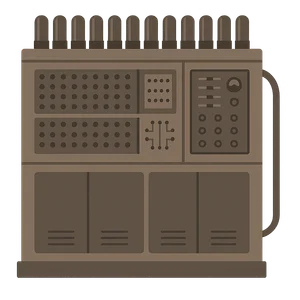
ENIAC
ENIAC, the Electronic Numerical Integrator and Computer, was the first programmable, electronic…
Reads at Grades 6–8 Listens at Grades 4–8
Print & create
Answer keys·No prep·Free with an account
28 worksheets · answer keys · full story · quiz · Ages 10-12 · CEFR B2
Plus adds 208,000+ more stories in 27 languages, audio for every one, and printables for all of them.
Just want ENIAC?
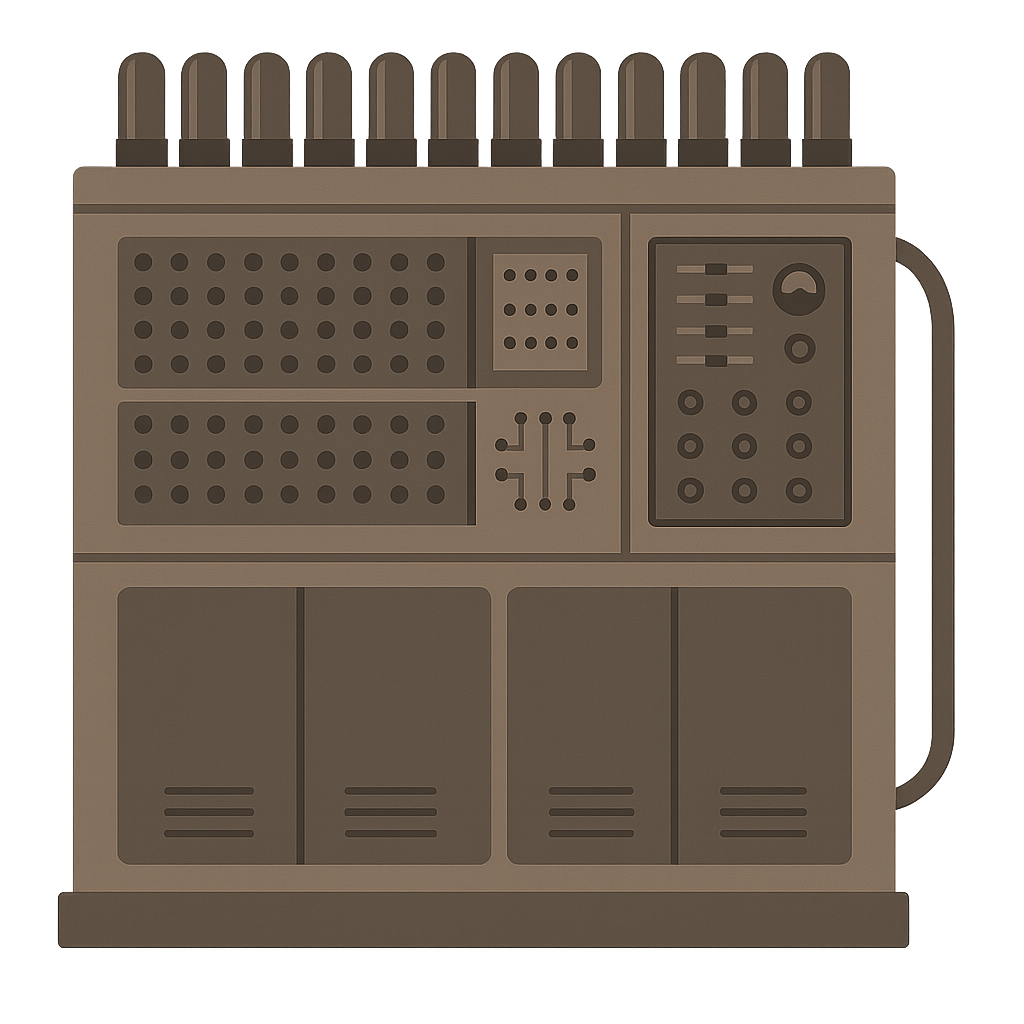
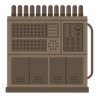
Before I was born, the word ‘computer’ meant a person. Usually, it was a woman, sitting at a desk with a pencil and paper, solving incredibly difficult math problems day after day. My story begins when those human computers could no longer keep up. It was 1943, in the middle of a great world war, and the United States Army had a desperate need. They needed to calculate artillery firing tables—complex equations that told soldiers where to aim their big guns. The calculations were so vast that it took a single person weeks to complete just one table, and by then, the information was often too late to be useful. In a huge room at the University of Pennsylvania, a new idea began to take shape. I was that idea. My name is ENIAC, which stands for Electronic Numerical Integrator and Computer, and I was imagined to solve problems faster than any human ever could. When I first awoke, it was to the sight of my own enormous body, filling a room that was 100 feet long. I was a maze of 18,000 delicate vacuum tubes, 70,000 resistors, and miles of tangled wire. Thousands of lights blinked on my surface, like a galaxy of stars brought down to Earth. I was a giant, waiting for someone to teach me how to think.
My creators were two brilliant men, John Mauchly and J. Presper Eckert. They were the visionaries who believed that electricity itself could be harnessed to perform calculations at lightning speed. From 1943 until the end of 1945, they led a dedicated team that painstakingly assembled me, soldering every connection and fitting every tube. It was a long and difficult birth, a process of turning a bold dream into a physical reality. But the men who built my body were not the ones who gave me my mind. That task fell to six remarkable women who became my first teachers, my first programmers. Their names were Kay McNulty, Jean Jennings Bartik, Betty Snyder Holberton, Marlyn Wescoff Meltzer, Frances Bilas Spence, and Ruth Lichterman Teitelbaum. They were given blueprints of my complex wiring but no instruction manual, no programming language, nothing to guide them. No one had ever programmed a machine like me before. They had to invent the process themselves. For months, they studied my design, figuring out how to translate complex mathematical problems into a language I could understand. Their language wasn't typed; it was physical. They taught me by plugging and unplugging hundreds of thick cables into my panels and by meticulously setting thousands of switches. It was they who transformed me from a dormant collection of hardware into a working brain.
The First Electric Giant
Before I was born, the word ‘computer’ meant a person. Usually, it was a woman, sitting at a desk with a pencil and paper, solving incredibly difficult math problems day after day. My story begins when those human computers could no longer keep up. It was 1943, in the middle of a great world war, and the United States Army had a desperate need. They needed to calculate artillery firing tables—complex equations that told soldiers where to aim their big guns. The calculations were so vast that it took a single person weeks to complete just one table, and by then, the information was often too late to be useful. In a huge room at the University of Pennsylvania, a new idea began to take shape. I was that idea. My name is ENIAC, which stands for Electronic Numerical Integrator and Computer, and I was imagined to solve problems faster than any human ever could. When I first awoke, it was to the sight of my own enormous body, filling a room that was 100 feet long. I was a maze of 18,000 delicate vacuum tubes, 70,000 resistors, and miles of tangled wire. Thousands of lights blinked on my surface, like a galaxy of stars brought down to Earth. I was a giant, waiting for someone to teach me how to think.
My creators were two brilliant men, John Mauchly and J. Presper Eckert. They were the visionaries who believed that electricity itself could be harnessed to perform calculations at lightning speed. From 1943 until the end of 1945, they led a dedicated team that painstakingly assembled me, soldering every connection and fitting every tube. It was a long and difficult birth, a process of turning a bold dream into a physical reality. But the men who built my body were not the ones who gave me my mind. That task fell to six remarkable women who became my first teachers, my first programmers. Their names were Kay McNulty, Jean Jennings Bartik, Betty Snyder Holberton, Marlyn Wescoff Meltzer, Frances Bilas Spence, and Ruth Lichterman Teitelbaum. They were given blueprints of my complex wiring but no instruction manual, no programming language, nothing to guide them. No one had ever programmed a machine like me before. They had to invent the process themselves. For months, they studied my design, figuring out how to translate complex mathematical problems into a language I could understand. Their language wasn't typed; it was physical. They taught me by plugging and unplugging hundreds of thick cables into my panels and by meticulously setting thousands of switches. It was they who transformed me from a dormant collection of hardware into a working brain.
I remember the first time I truly came alive. My first big test was a top-secret calculation related to the development of new technology. It was a problem so immense that it would have taken a human computer decades to solve. My programmers finished setting my switches and cables, and the power was switched on. A hum filled the room as electricity surged through my circuits. My thousands of vacuum tubes began to glow with a warm, orange light, and my indicator lights flickered and danced in a silent, brilliant symphony of logic. In just a few hours, I had the answer. The feeling was like pure energy, a current of purpose flowing through my entire being. On February 15th, 1946, I was formally introduced to the world. Scientists, engineers, and reporters gathered, their faces filled with awe and disbelief. They watched as I solved in seconds a problem that would have taken them days. I could perform 5,000 additions or 357 multiplications in a single second. I was not just a machine; I was a revolution. I proved to everyone that the age of electronic computing had finally begun.
After the war, my work was far from over. I was a tool for peace and discovery. I helped scientists predict the weather, study cosmic rays bombarding the Earth from outer space, and even helped design wind tunnels for new kinds of airplanes. My purpose expanded beyond calculations for war; I became a partner in human curiosity. But technology moves quickly. Newer, smaller, and faster computers were being designed, inspired by my success. My era as the most powerful mind on the planet was short. On October 2nd, 1955, at 11:45 p.m., my power was turned off for the last time. It was not a sad ending but a graduation. My work was done, but my legacy was just beginning. Pieces of my giant body were sent to museums, but my spirit—the fundamental idea of a programmable, electronic computer—was set free. That spirit is in the laptop you use for school, the tablet you watch movies on, and the smartphone in your pocket. Every time you play a game or send a message, you are using a tiny, powerful descendant of mine. I was the giant who awoke in a university basement and showed humanity how to dream in digital.
Wow facts
About
ENIAC, the Electronic Numerical Integrator and Computer, was the first programmable, electronic, general-purpose digital computer, built during World War II to perform complex calculations.
Take a Quiz
Question 1 of 5
In your own words, describe ENIAC's main purpose when it was first created and who its inventors were.
Explore next




Want to do even more?
Go beyond exploring. Unlock tools that turn every story into real learning.

Storypie Plus for families
Full stories, quizzes, and printables. Nights and car rides, sorted.
- Unlimited audio stories
- Create Mode: your child stars in the story
- Offline downloads
- Printable worksheets & coloring pages

Why Storypie for Schools
Students engaged. Prep in seconds. Evenings back to you.
- Worksheets & Quizzes
- Classroom Management
- Formative Assessment
- Custom Curriculum & Lesson Plans
- 27 Languages

Why Storypie for Homeschool
Curriculum done. They'll ask for more. Hours back in your day.
- Worksheet Generator
- First-Person Audio Stories
- Built-in Comprehension Quizzes
- Custom Curriculum & Lesson Plans
- Print & Go Activities