English

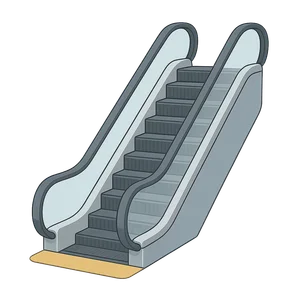
Escalator
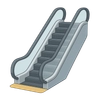
A moving staircase, or a conveyor transport device for carrying people between floors of a building.
Reads at Grades 6–8 Listens at Grades 4–8
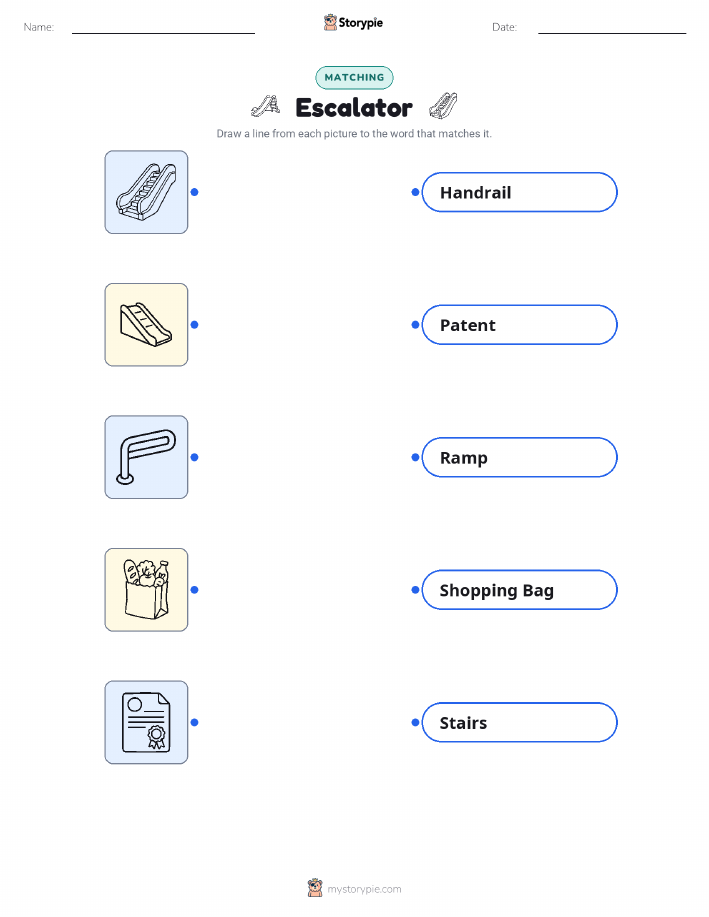
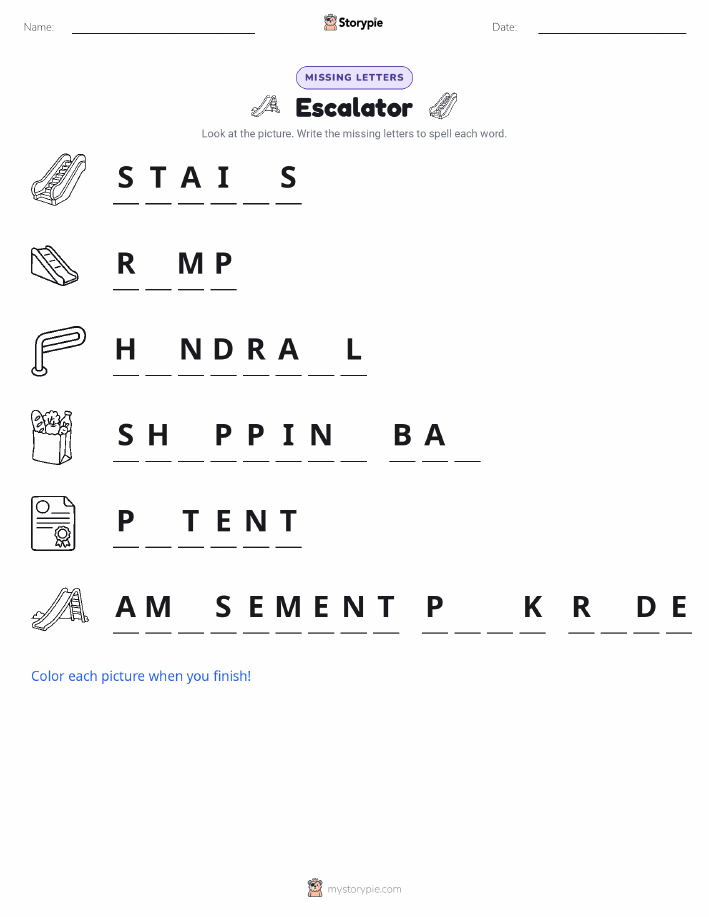
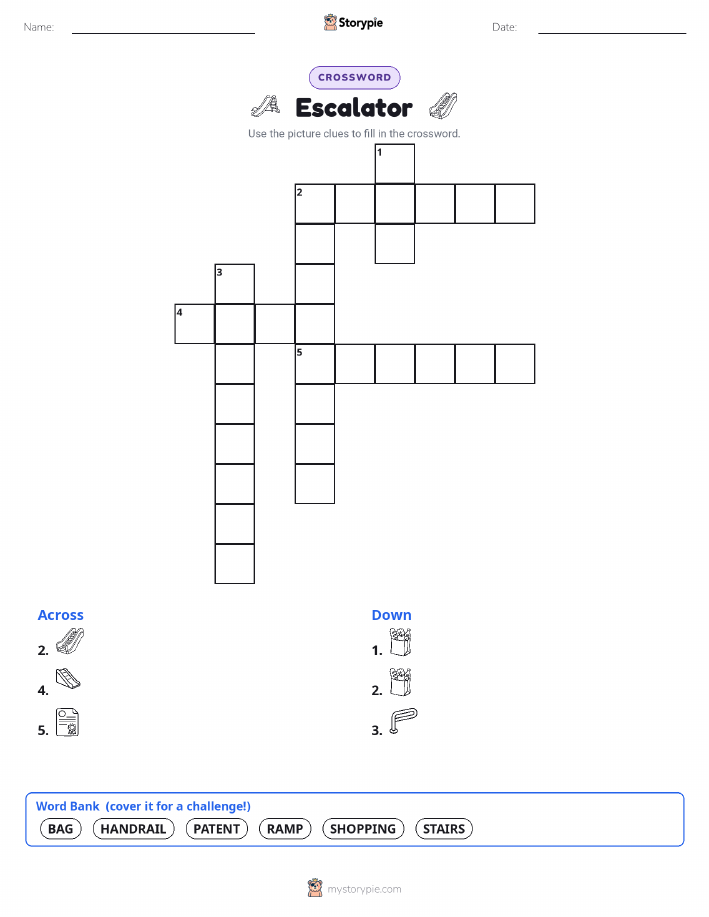
Print & create
Answer keys·No prep·Free with an account
28 worksheets · answer keys · full story · quiz · Ages 10-12 · CEFR B2
Plus adds 279,000+ more stories in 27 languages, audio for every one, and printables for all of them.
Just want Escalator?
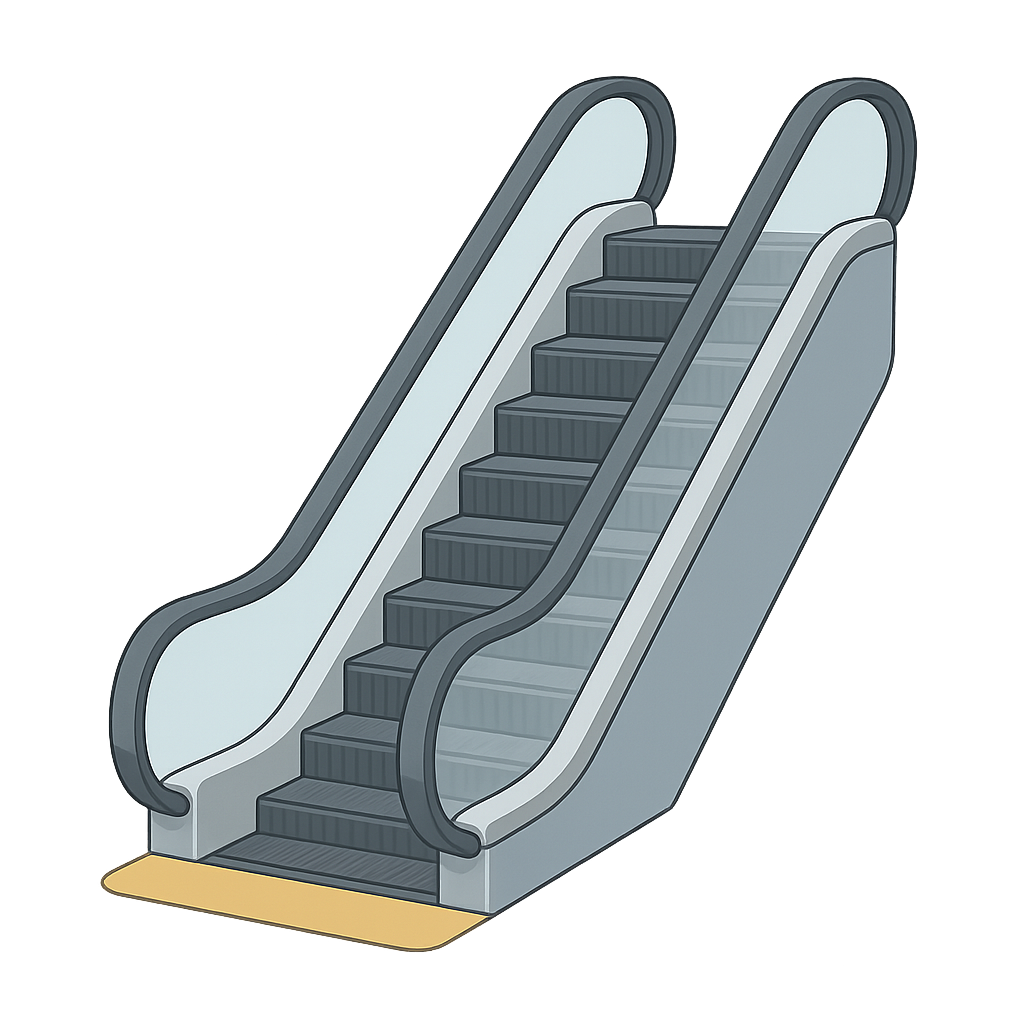
Before I was born, the world was full of huffing and puffing. Imagine magnificent new department stores in London and New York, grand train stations with soaring ceilings, and the first multi-story office buildings reaching for the sky. They were wonders of a new age, but they all shared one tiring problem: stairs. Endless flights of them, challenging for shoppers with arms full of packages, daunting for travelers with heavy luggage, and exhausting for anyone simply trying to get from one floor to another. The world was growing taller, but people were getting tired. A solution was needed, a way to float upward without effort. The first hint of my existence was just a whisper on a piece of paper. On August 9th, 1859, a man named Nathan Ames patented an idea he called 'Revolving Stairs.' It was a brilliant dream, a staircase that moved, but he never actually built it. For decades, I remained just a concept, a ghost of an idea waiting for someone to give me form and purpose, waiting to solve the problem of the climb.
My real story began with two different men who, at almost the same time, had a similar vision for me. You might call them my two fathers, Jesse W. Reno and Charles D. Seeberger. They both wanted to create a moving staircase, but they imagined me in very different ways. Mr. Reno saw me as something exciting and new. His version, which he called the 'inclined elevator,' wasn't a staircase at all but a moving ramp tilted at a 25-degree angle. It had a conveyor belt with rubber-covered slats, or cleats, for people to stand on. I made my very first public appearance on January 16th, 1896, not in a fancy store, but as a thrilling ride at the Old Iron Pier at Coney Island in New York. People lined up, giggling with a mix of fear and excitement as I carried them a mere seven feet up. I was a novelty, a bit of fun that whisked about 75,000 delighted riders during my two weeks there. While Mr. Reno was creating this playful version of me, Mr. Seeberger was working on a more elegant and practical design. He gave me the flat, grooved steps that you recognize today, the kind that magically appear from the floor and disappear back into it. His version was designed for serious transportation. He even came up with my name, 'Escalator,' from the Latin words 'scala' (steps) and 'elevator.' My grand debut came at the Paris Exposition on April 14th, 1900. I stood proudly in that magnificent festival of innovation, and people from all over the world stared in awe. They had never seen anything like it. I effortlessly carried them from one level to the next, and for my performance, I was awarded a first-prize medal. I had proven I was more than just an amusement park ride; I was a revolutionary invention.
The Story of the Escalator
Before I was born, the world was full of huffing and puffing. Imagine magnificent new department stores in London and New York, grand train stations with soaring ceilings, and the first multi-story office buildings reaching for the sky. They were wonders of a new age, but they all shared one tiring problem: stairs. Endless flights of them, challenging for shoppers with arms full of packages, daunting for travelers with heavy luggage, and exhausting for anyone simply trying to get from one floor to another. The world was growing taller, but people were getting tired. A solution was needed, a way to float upward without effort. The first hint of my existence was just a whisper on a piece of paper. On August 9th, 1859, a man named Nathan Ames patented an idea he called 'Revolving Stairs.' It was a brilliant dream, a staircase that moved, but he never actually built it. For decades, I remained just a concept, a ghost of an idea waiting for someone to give me form and purpose, waiting to solve the problem of the climb.
My real story began with two different men who, at almost the same time, had a similar vision for me. You might call them my two fathers, Jesse W. Reno and Charles D. Seeberger. They both wanted to create a moving staircase, but they imagined me in very different ways. Mr. Reno saw me as something exciting and new. His version, which he called the 'inclined elevator,' wasn't a staircase at all but a moving ramp tilted at a 25-degree angle. It had a conveyor belt with rubber-covered slats, or cleats, for people to stand on. I made my very first public appearance on January 16th, 1896, not in a fancy store, but as a thrilling ride at the Old Iron Pier at Coney Island in New York. People lined up, giggling with a mix of fear and excitement as I carried them a mere seven feet up. I was a novelty, a bit of fun that whisked about 75,000 delighted riders during my two weeks there. While Mr. Reno was creating this playful version of me, Mr. Seeberger was working on a more elegant and practical design. He gave me the flat, grooved steps that you recognize today, the kind that magically appear from the floor and disappear back into it. His version was designed for serious transportation. He even came up with my name, 'Escalator,' from the Latin words 'scala' (steps) and 'elevator.' My grand debut came at the Paris Exposition on April 14th, 1900. I stood proudly in that magnificent festival of innovation, and people from all over the world stared in awe. They had never seen anything like it. I effortlessly carried them from one level to the next, and for my performance, I was awarded a first-prize medal. I had proven I was more than just an amusement park ride; I was a revolutionary invention.
For a while, my two selves existed separately. There was the fun, ramp-like me from Mr. Reno and the sophisticated, step-based me from Mr. Seeberger. But my journey to becoming who I am today required one more important step: collaboration. A visionary company, the Otis Elevator Company, saw the genius in both designs. They understood that Mr. Seeberger's flat steps were safer and more comfortable, but they also recognized the potential of the moving staircase concept that both men had pioneered. In 1911, the Otis company purchased the patents from both of my fathers. It was as if my two halves were finally coming together to create a single, stronger whole. Otis engineers took the best elements of each design. They perfected the interlocking steps, improved the safety features with things like the comb plate at the top and bottom, and standardized my design. The name 'Escalator,' which had been an exclusive trademark of Otis, eventually became the common name for any moving staircase after 1950. With this new, unified design, I was ready to take my place in the world. I began appearing in the most modern and bustling places, transforming them completely. In department stores, I allowed shoppers to drift between floors, their eyes still scanning the merchandise. In underground subway stations, I carried tides of commuters, making their daily journeys quicker and less stressful. In sprawling airports, I became an essential link, moving travelers and their luggage across vast terminals.
From a forgotten patent and a Coney Island ride, I grew into an indispensable part of daily life for millions. I am not the fastest or the most glamorous invention, but I am one of the most reliable. I am the quiet hum in the background of a busy shopping mall, the gentle glide that lifts you toward your train, the steady helper when your arms are full and your feet are tired. My journey is a testament to the power of a simple idea that solves a real problem. It is also a story of how different visions can merge to create something even better than the sum of their parts. Through the perseverance of my inventors and the collaborative spirit of engineers, I became the trusty moving staircase you know today. Every time you step onto me and feel that effortless lift, remember the long journey from a dream on paper to the steady, helpful friend I am proud to be, always on the move to make your world a little easier to navigate.
Wow facts
About
A moving staircase, or a conveyor transport device for carrying people between floors of a building.
Explore next





Want to do even more?
Go beyond exploring. Unlock tools that turn every story into real learning.

Storypie Plus for families
Full stories, quizzes, and printables. Nights and car rides, sorted.
- Unlimited audio stories
- Create Mode: your child stars in the story
- Offline downloads
- Printable worksheets & coloring pages

Why Storypie for Schools
Students engaged. Prep in seconds. Evenings back to you.
- Worksheets & Quizzes
- Classroom Management
- Formative Assessment
- Custom Curriculum & Lesson Plans
- 27 Languages

Why Storypie for Homeschool
Curriculum done. They'll ask for more. Hours back in your day.
- Worksheet Generator
- First-Person Audio Stories
- Built-in Comprehension Quizzes
- Custom Curriculum & Lesson Plans
- Print & Go Activities