English

Flash Drive
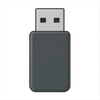
A small, portable data storage device that uses flash memory and a USB interface…
Reads at Grades 6–8 Listens at Grades 4–8
Print & create
Answer keys·No prep·Free with an account
28 worksheets · answer keys · full story · quiz · Ages 10-12 · CEFR B2
Plus adds 280,000+ more stories in 27 languages, audio for every one, and printables for all of them.
Just want Flash Drive?
Hello there. You’ve probably seen me or one of my countless relatives before. I’m a flash drive, a small, durable capsule of memory. To you, I might just be a simple tool for moving a school project or a collection of photos from one place to another. But I am a pocket-sized revolution, and I was born from a world that desperately needed me. Before I existed, the world of digital information was a clumsy and delicate place. Imagine trying to carry your homework on a thin, brittle plastic square called a floppy disk. It made a whirring, clicking sound and could be corrupted by a stray magnet or a bit of dust. A single high-quality photo might not even fit on one. Then came the compact disc, or CD. It was a step up, a shiny, rainbow-reflecting circle that could hold music or software. But it was just as fragile. One deep scratch, and the precious data stored on it could be lost forever. People needed something better. They needed a way to carry their digital worlds with them that was strong, small, and didn't require a special, clunky drive to read. They needed a key to unlock their data anywhere, and that is exactly what I became.
My story isn’t the tale of one single inventor in a lonely lab. Instead, I was an idea whose time had come, and clever minds across the globe were racing to bring me to life in the late 1990s. The world was becoming more connected, and the need for portable data was growing every day. In Israel, a visionary named Dov Moran and his company, M-Systems, were working tirelessly. They understood the power of something called flash memory—the same solid-state technology that stored pictures in early digital cameras. It had no moving parts, which made it sturdy and reliable. They imagined combining this memory with the Universal Serial Bus, or USB, a new type of connector that was appearing on all new computers. On April 5th, 1999, they filed a patent for this very idea, a crucial step in my official birth. At the same time, halfway across the world in Taiwan, a brilliant engineer named Pua Khein-Seng was perfecting another vital piece of my existence. He was designing the world's first single-chip USB flash memory controller. If flash memory was my heart, this tiny controller was my brain, the part that allowed me to talk to computers, managing the flow of information quickly and seamlessly. It was the fusion of these two breakthroughs—the durable memory and the smart controller—that made me possible. Around the year 2000, I made my grand debut. A company called IBM began selling one of my earliest forms, calling me the ‘DiskOnKey.’ I was tiny, no bigger than a piece of chewing gum, yet I could hold eight megabytes of data. That was nearly six times more than a floppy disk. I felt like a secret agent, small and unassuming, but carrying more information than anyone thought possible. People could finally slip their documents, their music, and their memories into their pockets and walk out the door without a worry.
I am a Flash Drive
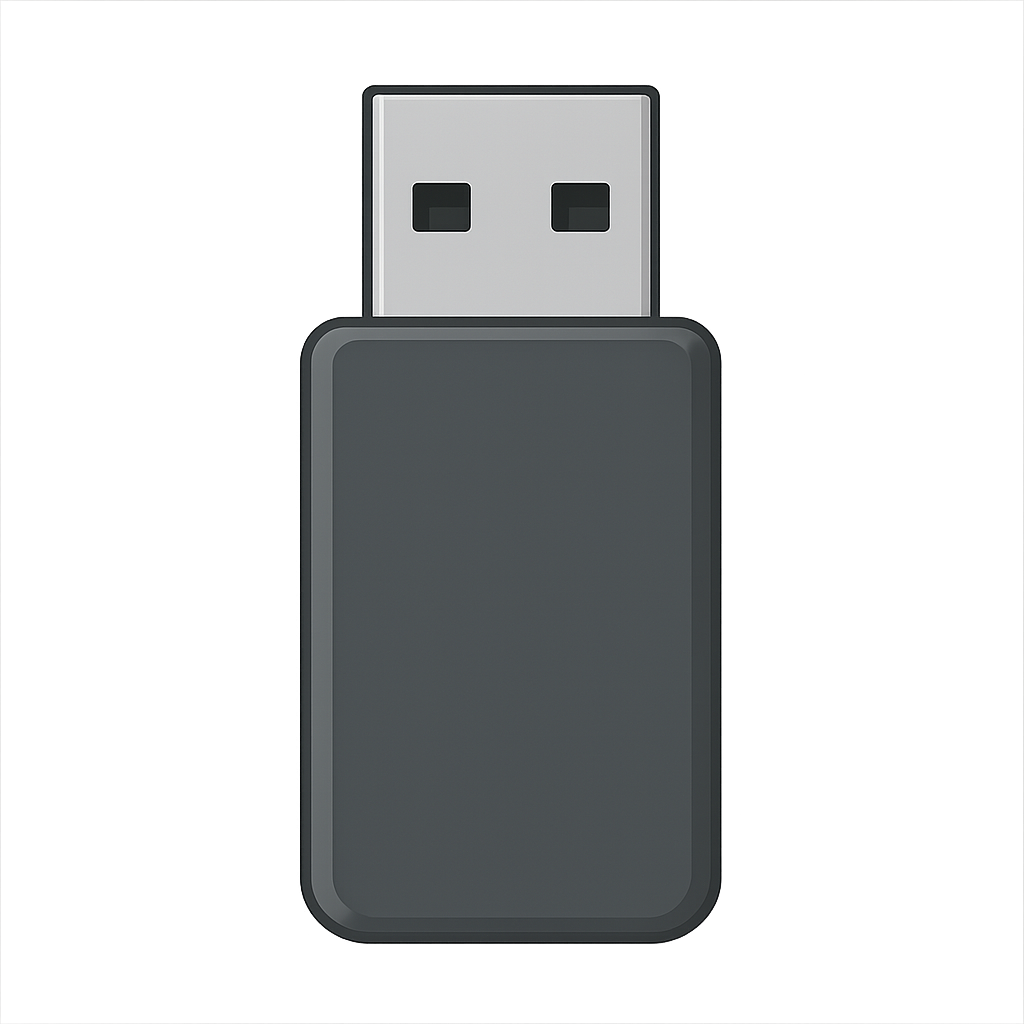
Hello there. You’ve probably seen me or one of my countless relatives before. I’m a flash drive, a small, durable capsule of memory. To you, I might just be a simple tool for moving a school project or a collection of photos from one place to another. But I am a pocket-sized revolution, and I was born from a world that desperately needed me. Before I existed, the world of digital information was a clumsy and delicate place. Imagine trying to carry your homework on a thin, brittle plastic square called a floppy disk. It made a whirring, clicking sound and could be corrupted by a stray magnet or a bit of dust. A single high-quality photo might not even fit on one. Then came the compact disc, or CD. It was a step up, a shiny, rainbow-reflecting circle that could hold music or software. But it was just as fragile. One deep scratch, and the precious data stored on it could be lost forever. People needed something better. They needed a way to carry their digital worlds with them that was strong, small, and didn't require a special, clunky drive to read. They needed a key to unlock their data anywhere, and that is exactly what I became.
My story isn’t the tale of one single inventor in a lonely lab. Instead, I was an idea whose time had come, and clever minds across the globe were racing to bring me to life in the late 1990s. The world was becoming more connected, and the need for portable data was growing every day. In Israel, a visionary named Dov Moran and his company, M-Systems, were working tirelessly. They understood the power of something called flash memory—the same solid-state technology that stored pictures in early digital cameras. It had no moving parts, which made it sturdy and reliable. They imagined combining this memory with the Universal Serial Bus, or USB, a new type of connector that was appearing on all new computers. On April 5th, 1999, they filed a patent for this very idea, a crucial step in my official birth. At the same time, halfway across the world in Taiwan, a brilliant engineer named Pua Khein-Seng was perfecting another vital piece of my existence. He was designing the world's first single-chip USB flash memory controller. If flash memory was my heart, this tiny controller was my brain, the part that allowed me to talk to computers, managing the flow of information quickly and seamlessly. It was the fusion of these two breakthroughs—the durable memory and the smart controller—that made me possible. Around the year 2000, I made my grand debut. A company called IBM began selling one of my earliest forms, calling me the ‘DiskOnKey.’ I was tiny, no bigger than a piece of chewing gum, yet I could hold eight megabytes of data. That was nearly six times more than a floppy disk. I felt like a secret agent, small and unassuming, but carrying more information than anyone thought possible. People could finally slip their documents, their music, and their memories into their pockets and walk out the door without a worry.
My arrival changed everything, one file at a time. Suddenly, students could work on a school computer and bring their essays home on a keychain, without worrying about a scratched CD. Photographers could carry hundreds of photos from a photoshoot in their pocket, ready to share. Office workers could transport important presentations between meetings without lugging around a heavy laptop. I became a tiny bridge connecting digital worlds. I wasn't just a storage device; I was a vehicle for collaboration and creativity. Over the years, I grew and evolved. While my physical body often shrank, becoming sleeker and more compact, my memory exploded. My earliest ancestors held a mere fraction of what my modern descendants can. The eight megabytes I started with became gigabytes, then terabytes—enough to hold entire libraries of books and movies. I helped make information truly portable for everyone. My success paved the way for the world you live in now, where sharing ideas and creations is as simple as plugging in a tiny device. I am a reminder that even the smallest inventions can unlock a universe of possibilities, connecting us all through the data we share and the stories we tell.
Wow facts
About
A small, portable data storage device that uses flash memory and a USB interface, revolutionizing how people carry and transfer digital files.
Take a Quiz
Question 1 of 5
What was the main problem that the flash drive was invented to solve?
Explore next



Want to do even more?
Go beyond exploring. Unlock tools that turn every story into real learning.

Storypie Plus for families
Full stories, quizzes, and printables. Nights and car rides, sorted.
- Unlimited audio stories
- Create Mode: your child stars in the story
- Offline downloads
- Printable worksheets & coloring pages

Why Storypie for Schools
Students engaged. Prep in seconds. Evenings back to you.
- Worksheets & Quizzes
- Classroom Management
- Formative Assessment
- Custom Curriculum & Lesson Plans
- 27 Languages

Why Storypie for Homeschool
Curriculum done. They'll ask for more. Hours back in your day.
- Worksheet Generator
- First-Person Audio Stories
- Built-in Comprehension Quizzes
- Custom Curriculum & Lesson Plans
- Print & Go Activities