

 English

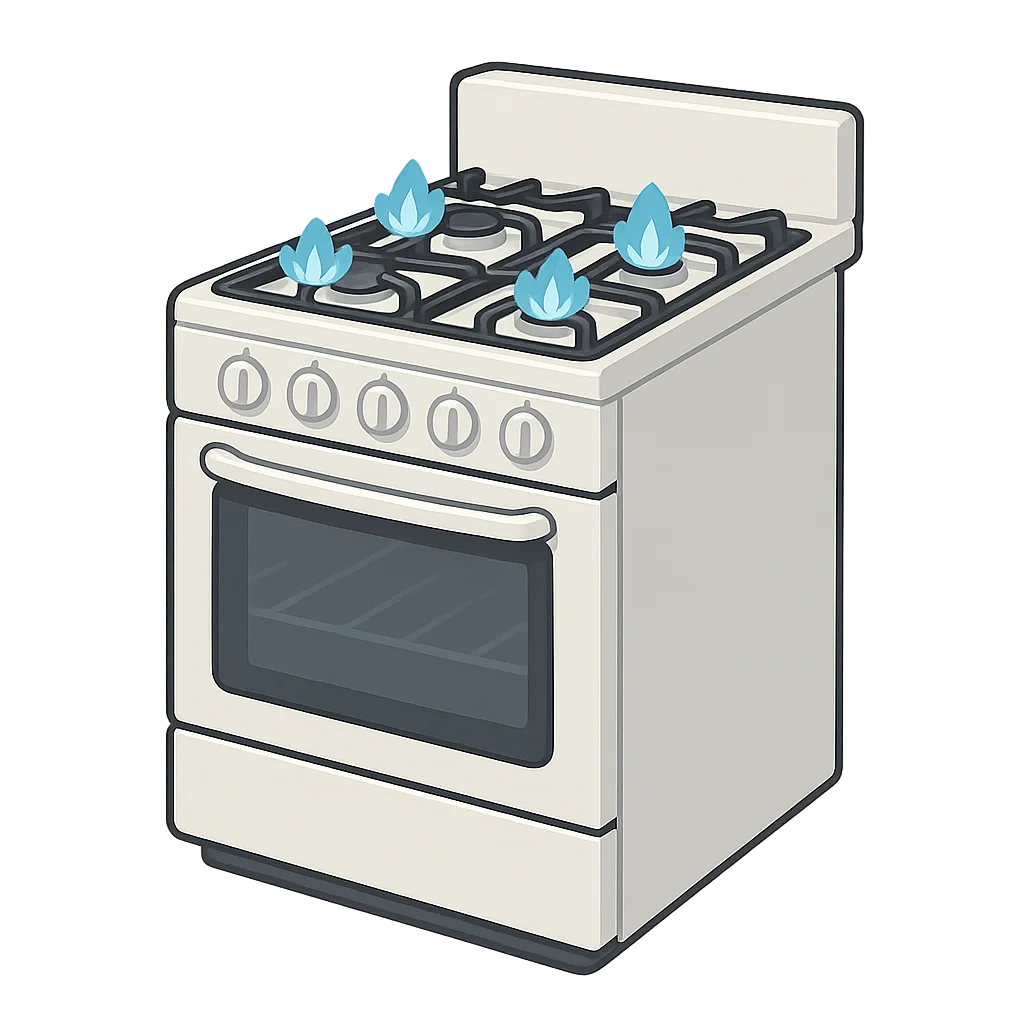
The Story of the Gas Stove
Hello there. You can call me the Gas Stove, and for nearly two hundred years, I’ve been the warm heart of the kitchen. Before I came along, cooking was a real struggle. Imagine a kitchen filled with thick, gray smoke that stung your eyes and made you cough. Meals were cooked over open fires, where it was almost impossible to control the heat. One minute your stew was barely warm, and the next, the bottom was burnt to a black crisp. Some homes had big, clunky coal stoves that were incredibly messy. They left black soot on the walls and took a very long time to heat up. Cooking wasn't just about making food; it was a difficult, dirty, and unpredictable chore. People needed a better way to prepare their meals—a cleaner, faster, and more reliable friend in the kitchen. They needed me.
My story begins not with a big flame, but with a bright idea inside the mind of a man named James Sharp. In the 1820s, he saw how town gas was being used to light up streets with a gentle glow, and he had a revolutionary thought: if gas can make light, why can’t it make heat for cooking? He tinkered and experimented, and on June 9th, 1826, he was granted a patent for the very first version of me. But my journey into people's homes was slow. At first, people were hesitant. The idea of having invisible gas piped directly into their kitchen felt strange and a little frightening. They were used to wood and coal, fires they could see and manage. So, I waited patiently, knowing that I could make their lives so much easier. My big break came in 1851 at the Great Exhibition in London, a huge fair that showed off the world's most amazing new inventions. There, people gathered and watched in awe as I cooked food perfectly without a single puff of smoke or speck of ash. They saw how a simple turn of a knob could bring a neat, controllable blue flame to life. After that, people saw me not as something to fear, but as a modern helper. My biggest upgrade, however, arrived in 1899 when an inventor named Frederick W. Robertshaw gave me a thermostat. This amazing device was like giving me a brain. Now, I could hold a temperature all by myself, making baking and roasting more precise than ever before.
With my steady blue flames and my new thermostat brain, I changed kitchens forever. The long, exhausting work of cooking became faster and much simpler. Since I didn't produce any smoke or soot, kitchens stayed wonderfully clean. This gave families more time to spend together, talking and laughing instead of scrubbing pots and walls. I made cooking reliable. A baker no longer had to guess if the oven was hot enough; they could trust me to bake their cakes and bread perfectly every time. I helped transform cooking from a tiring chore into a creative and enjoyable activity. People began experimenting with new recipes, knowing they had a dependable partner in the kitchen. Looking back, I see that I've done more than just heat food. I’ve warmed homes and helped create countless happy memories around the dinner table. Even now, with all the new gadgets in the world, I remain a trusted friend, ready to bring families together with a delicious meal at just the turn of a knob.
Activities
Take a Quiz
Test what you learned with a fun quiz!
Get creative with colors!
Print a coloring book page of this topic.















 Free for Educators