English

Gas Stove
A cooking appliance that uses combustible gas as a fuel source, revolutionizing kitchens with its clean…
Reads at Grades 6–8 Listens at Grades 4–8
Print & create
Answer keys·No prep·Free with an account
28 worksheets · answer keys · full story · quiz · Ages 10-12 · CEFR B2
Plus adds 279,000+ more stories in 27 languages, audio for every one, and printables for all of them.
Just want Gas Stove?
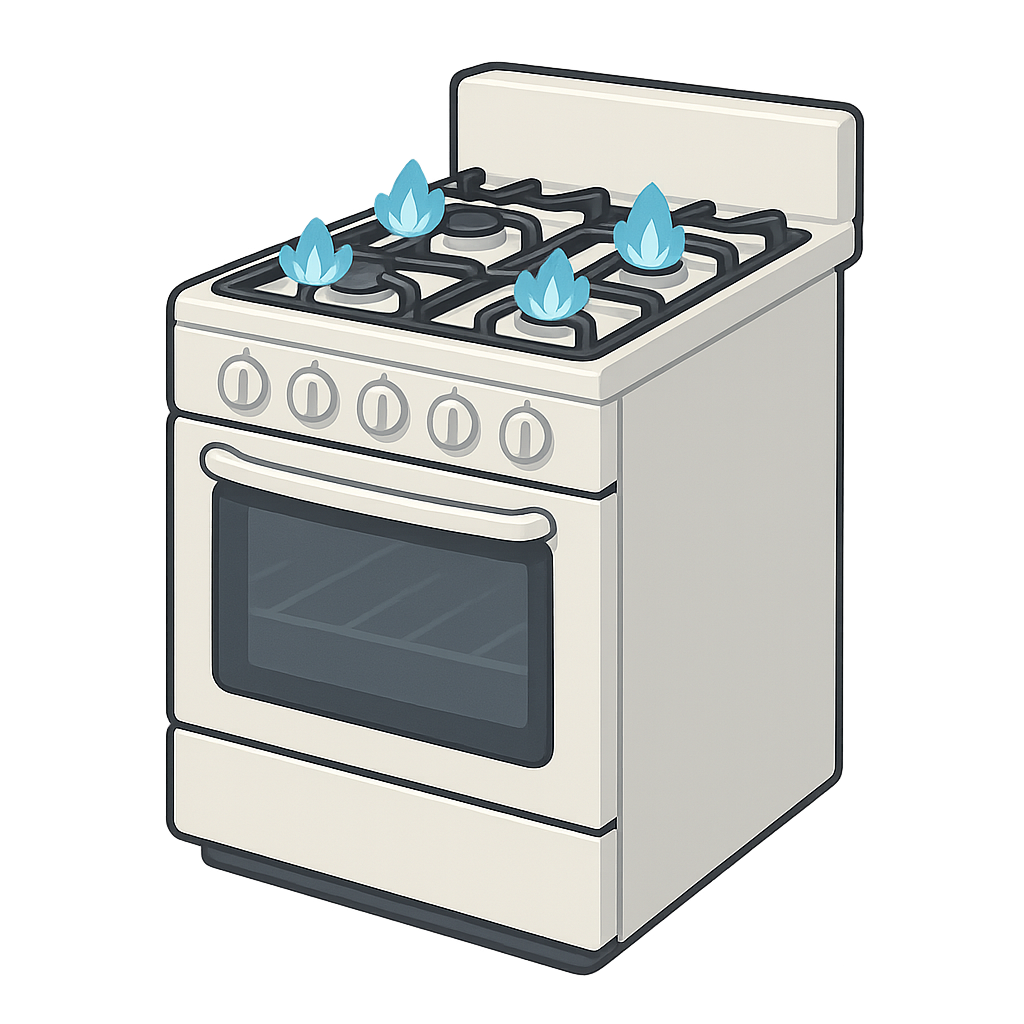
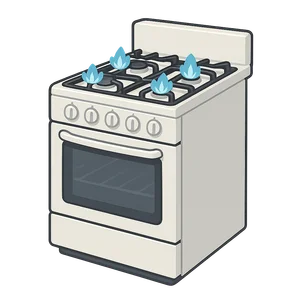
Hello there. You might know me as the sleek, stainless-steel appliance in your kitchen, with my neat rows of burners and precise control knobs. But before I was a common sight, I was a revolutionary idea. To understand my story, you have to imagine a world that was much smokier, much slower, and a lot more work. Picture a kitchen from two hundred years ago. It wasn't the bright, welcoming center of the home it is today. It was often a dark, hot room in the back of the house, its walls and ceiling stained with a permanent layer of black soot. The air was thick with smoke from a roaring fire in a hearth or a hulking iron range that burned wood or coal. Cooking wasn't a creative joy; it was a difficult, sweaty, all-day chore. You couldn’t just decide to bake a cake on a whim. The fire had to be built, fed, and coaxed to the right temperature, a process that took hours of guesswork and constant attention. A pot of soup could bubble over into ash, and a loaf of bread could be charred on one side and raw on the other. There was no instant, controllable heat. There was only the demanding, unpredictable, and messy fire. This was the world waiting for a new idea, a world ready for a clean, blue flame.
My story truly begins with a different kind of magic that was transforming the 19th century: coal gas. This amazing substance was being piped under the streets of cities like London, bringing a bright, steady glow to streetlamps and banishing the nighttime shadows. For a long time, people saw gas only as a source of light. But a few forward-thinkers wondered if it could also be a source of heat. An early pioneer named Zachäus Winzler experimented with using gas for cooking way back in 1802, but his ideas didn't quite catch on. My true creator was a practical and clever man named James Sharp, an assistant manager at the Northampton Gas Company in England. Day after day, he saw the power of this clean-burning gas lighting up his city. He thought, if this gas could be controlled in a lamp, why couldn't it be controlled in a box for cooking? It was a simple question with a brilliant answer. He began to tinker, designing a device that could safely pipe the gas into a small enclosure and ignite it to create a steady, adjustable flame. It was a radical concept. For centuries, fire was something to be contained in a fireplace, far from the main living areas. The idea of inviting a controlled flame right into the heart of the kitchen made people nervous. But James Sharp persevered. On March 26th, 1826, he secured the first patent for my design. My earliest forms were clunky and utilitarian, just simple iron boxes with a few burners on top. I wasn't beautiful, but I was the beginning of a revolution, a spark of genius that would soon change everything about the way people lived and ate.
I Am the Gas Stove
Hello there. You might know me as the sleek, stainless-steel appliance in your kitchen, with my neat rows of burners and precise control knobs. But before I was a common sight, I was a revolutionary idea. To understand my story, you have to imagine a world that was much smokier, much slower, and a lot more work. Picture a kitchen from two hundred years ago. It wasn't the bright, welcoming center of the home it is today. It was often a dark, hot room in the back of the house, its walls and ceiling stained with a permanent layer of black soot. The air was thick with smoke from a roaring fire in a hearth or a hulking iron range that burned wood or coal. Cooking wasn't a creative joy; it was a difficult, sweaty, all-day chore. You couldn’t just decide to bake a cake on a whim. The fire had to be built, fed, and coaxed to the right temperature, a process that took hours of guesswork and constant attention. A pot of soup could bubble over into ash, and a loaf of bread could be charred on one side and raw on the other. There was no instant, controllable heat. There was only the demanding, unpredictable, and messy fire. This was the world waiting for a new idea, a world ready for a clean, blue flame.
My story truly begins with a different kind of magic that was transforming the 19th century: coal gas. This amazing substance was being piped under the streets of cities like London, bringing a bright, steady glow to streetlamps and banishing the nighttime shadows. For a long time, people saw gas only as a source of light. But a few forward-thinkers wondered if it could also be a source of heat. An early pioneer named Zachäus Winzler experimented with using gas for cooking way back in 1802, but his ideas didn't quite catch on. My true creator was a practical and clever man named James Sharp, an assistant manager at the Northampton Gas Company in England. Day after day, he saw the power of this clean-burning gas lighting up his city. He thought, if this gas could be controlled in a lamp, why couldn't it be controlled in a box for cooking? It was a simple question with a brilliant answer. He began to tinker, designing a device that could safely pipe the gas into a small enclosure and ignite it to create a steady, adjustable flame. It was a radical concept. For centuries, fire was something to be contained in a fireplace, far from the main living areas. The idea of inviting a controlled flame right into the heart of the kitchen made people nervous. But James Sharp persevered. On March 26th, 1826, he secured the first patent for my design. My earliest forms were clunky and utilitarian, just simple iron boxes with a few burners on top. I wasn't beautiful, but I was the beginning of a revolution, a spark of genius that would soon change everything about the way people lived and ate.
For many years, I remained a curiosity, used by a few adventurous chefs but largely unknown to the public. My big moment, my grand debut on the world stage, came during the Great Exhibition of 1851. Held in London's breathtaking Crystal Palace, a massive structure of iron and glass, it was a festival of innovation that showcased the wonders of the industrial age. People flocked from all over the globe to see steam engines, telegraphs, and treasures from distant lands. And there, among all the marvels, I stood. I wasn't as loud as a steam engine or as exotic as a silk tapestry, but I performed my own kind of magic. Throughout the exhibition, a famous chef used me to cook an enormous banquet for hundreds of people, right in front of their eyes. They watched in amazement as he roasted joints of meat and prepared delicate sauces, all without a single puff of smoke or a speck of ash. He could turn my flame up or down with a simple twist, giving him perfect control. It was a stunning demonstration. The exhibition proved to the world that I was not a dangerous novelty but a clean, efficient, and reliable tool. I was the future of cooking. After that, my popularity soared, but my life was tied to the city. I could only work in homes connected to the growing network of gas mains that ran beneath the streets. This made me a symbol of modern city living, a sign that a household had embraced progress and left the old, smoky ways of the past behind.
My arrival changed everything. I transformed the kitchen from a grimy, isolated workroom into a clean and pleasant space where families could gather. Cooking, once a grueling, day-long task, became faster and more manageable. The time I saved gave people, especially women who did most of the cooking, more freedom to pursue other activities, from education to leisure. I made life easier and more delicious. As the years went by, I continued to evolve. I was no longer just a set of burners; I grew an oven beneath them, making it possible to roast and bake with the same clean efficiency. Then came one of my most important improvements: the thermostat, added in 1923. This gave cooks unprecedented control, allowing them to set an exact temperature and trust that I would maintain it. This precision opened up a whole new world of baking and cooking. Today, I have cousins who work with electricity and induction, but my fundamental principle remains at the heart of kitchens everywhere. The idea born in James Sharp's mind—the idea of instant, controllable heat—continues to bring people together, to empower creativity, and to help turn simple ingredients into the warm, wonderful meals that we share with the ones we love.
Wow facts
About
A cooking appliance that uses combustible gas as a fuel source, revolutionizing kitchens with its clean, controllable heat and replacing messy wood and coal stoves.
Take a Quiz
Question 1 of 5
Retell the story of the gas stove's creation in your own words, focusing on the key people and events from the 19th century.
Explore next






Want to do even more?
Go beyond exploring. Unlock tools that turn every story into real learning.

Storypie Plus for families
Full stories, quizzes, and printables. Nights and car rides, sorted.
- Unlimited audio stories
- Create Mode: your child stars in the story
- Offline downloads
- Printable worksheets & coloring pages

Why Storypie for Schools
Students engaged. Prep in seconds. Evenings back to you.
- Worksheets & Quizzes
- Classroom Management
- Formative Assessment
- Custom Curriculum & Lesson Plans
- 27 Languages

Why Storypie for Homeschool
Curriculum done. They'll ask for more. Hours back in your day.
- Worksheet Generator
- First-Person Audio Stories
- Built-in Comprehension Quizzes
- Custom Curriculum & Lesson Plans
- Print & Go Activities