English

Inca Road System
A vast network of roads, bridges, and structures built by the Inca Empire in the 15th century…
Reads at Grades 6–8 Listens at Grades 4–8
Print & create
Answer keys·No prep·Free with an account
28 worksheets · answer keys · full story · quiz · Ages 10-12 · CEFR B2
Plus adds 164,000+ more stories in 27 languages, audio for every one, and printables for all of them.
Just want Inca Road System?
I am the Qhapaq Ñan, the Great Inca Road. You might picture me as a single path, but I am so much more. Imagine a web of over 24,000 miles of trails, bridges, and tunnels stretching across the highest peaks and driest deserts of South America. I am like the veins of the Andes Mountains, carrying life and connection to every corner of a mighty empire. Before I existed, the world here was different. Around the year 1438, the Inca Empire began a great expansion, but its people were separated by towering mountains and deep canyons. To travel from one village to another was a dangerous and difficult journey. A great ruler needed a way to unite his people, to move his armies, to send messages, and to transport goods. That is why I was born. I was a dream of connection, a grand project to tie the heart of the empire in Cusco to its most distant lands, from modern-day Colombia to Chile. I was built to make the impossible possible, to turn a scattered collection of communities into one of the most organized empires the world has ever known.
My creation was not the work of a single person or a single lifetime. I was brought into being by the hands of thousands, a testament to the collective will of the Inca people. Under the direction of powerful emperors like Pachacuti, skilled engineers and countless workers sculpted me from the earth. They possessed a knowledge of the land that was more powerful than any modern tool. They built me without the help of wheels, iron, or even written blueprints. My paths were paved with stones, carefully fitted together to grip the steep mountainsides and prevent erosion from the harsh rains. Where canyons split the earth, they wove incredible suspension bridges from ichu grass, strong enough to hold llamas and people, yet light enough to sway in the wind. In other places, they carved stairways directly into the solid rock, steps that still climb toward the sky today. This was all made possible by the ‘mita’ system. Every able-bodied citizen contributed their labor for a portion of the year, not as a burden, but as a civic duty. They were building their empire, and I was their greatest public work. Their ingenuity was boundless, adapting my form to every challenge, whether it was the shifting sands of the coast or the thin, cold air of the high peaks.
The Story of the Great Inca Road
I am the Qhapaq Ñan, the Great Inca Road. You might picture me as a single path, but I am so much more. Imagine a web of over 24,000 miles of trails, bridges, and tunnels stretching across the highest peaks and driest deserts of South America. I am like the veins of the Andes Mountains, carrying life and connection to every corner of a mighty empire. Before I existed, the world here was different. Around the year 1438, the Inca Empire began a great expansion, but its people were separated by towering mountains and deep canyons. To travel from one village to another was a dangerous and difficult journey. A great ruler needed a way to unite his people, to move his armies, to send messages, and to transport goods. That is why I was born. I was a dream of connection, a grand project to tie the heart of the empire in Cusco to its most distant lands, from modern-day Colombia to Chile. I was built to make the impossible possible, to turn a scattered collection of communities into one of the most organized empires the world has ever known.
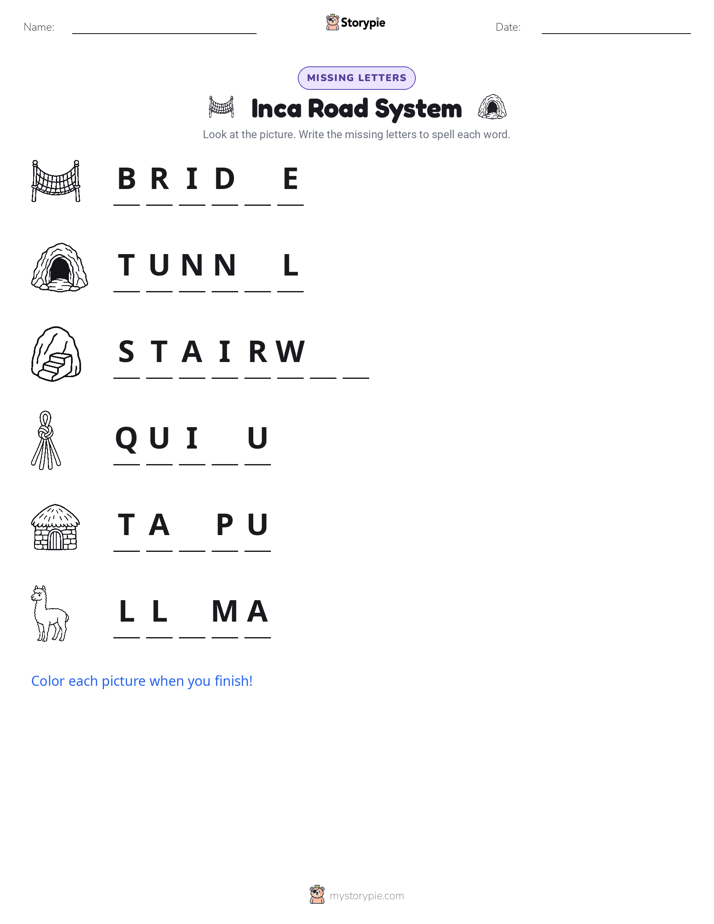
My creation was not the work of a single person or a single lifetime. I was brought into being by the hands of thousands, a testament to the collective will of the Inca people. Under the direction of powerful emperors like Pachacuti, skilled engineers and countless workers sculpted me from the earth. They possessed a knowledge of the land that was more powerful than any modern tool. They built me without the help of wheels, iron, or even written blueprints. My paths were paved with stones, carefully fitted together to grip the steep mountainsides and prevent erosion from the harsh rains. Where canyons split the earth, they wove incredible suspension bridges from ichu grass, strong enough to hold llamas and people, yet light enough to sway in the wind. In other places, they carved stairways directly into the solid rock, steps that still climb toward the sky today. This was all made possible by the ‘mita’ system. Every able-bodied citizen contributed their labor for a portion of the year, not as a burden, but as a civic duty. They were building their empire, and I was their greatest public work. Their ingenuity was boundless, adapting my form to every challenge, whether it was the shifting sands of the coast or the thin, cold air of the high peaks.
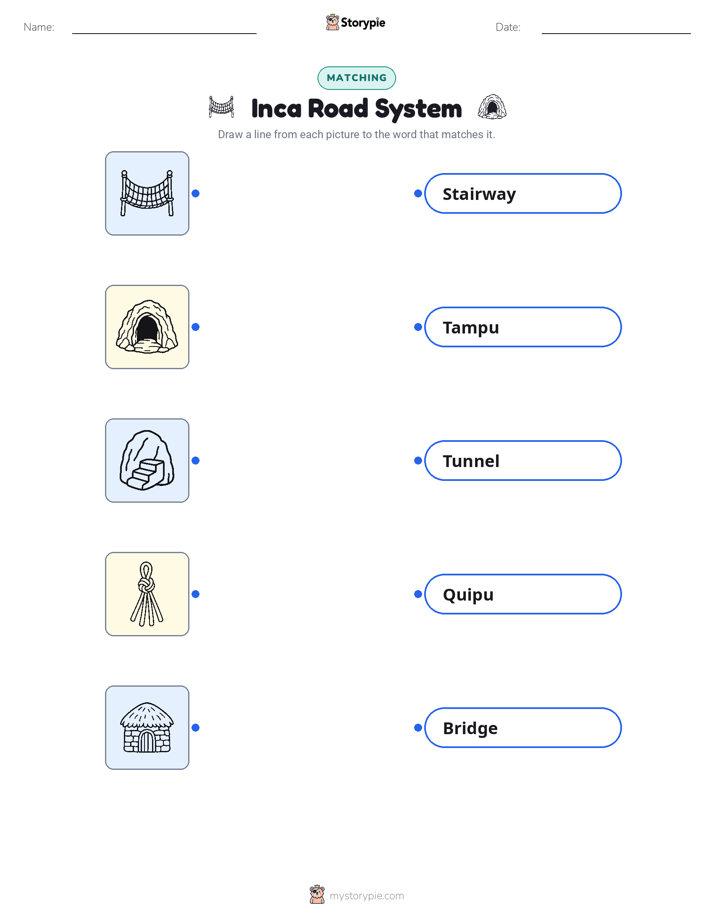
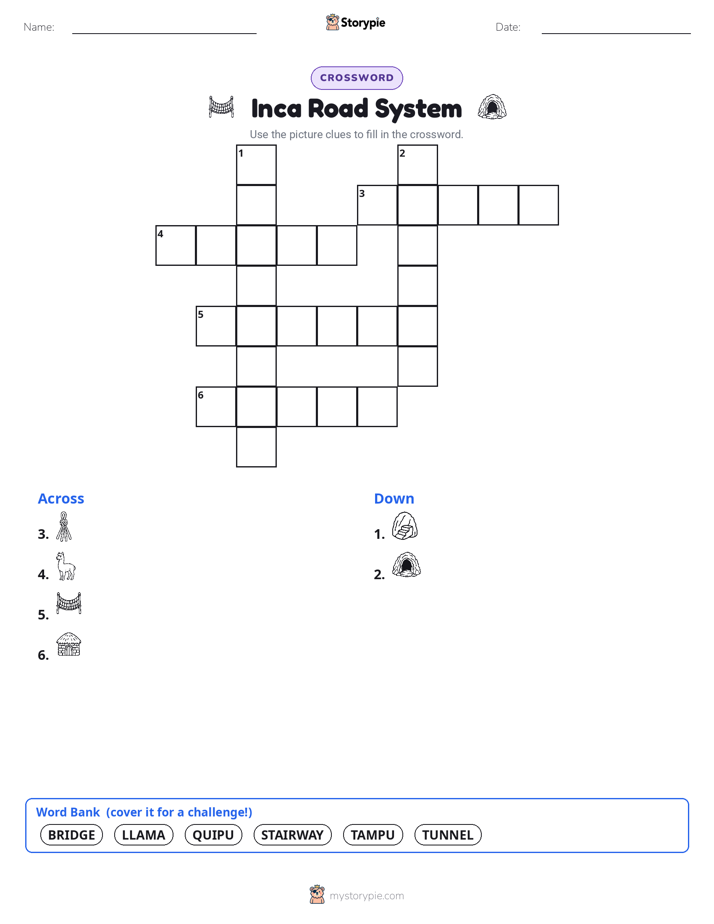
Once I was complete, I became the lifeline of the Inca Empire. However, I was not for everyone. My paths were reserved for official use, a highway for the business of the state. Armies marched along my stones to defend the empire’s borders, and government officials traveled my lengths to administer its laws. But my most famous travelers were the chasquis. They were the empire’s messengers, an elite corps of relay runners who were my heart and soul. A chasqui would carry a message, perhaps a knotted string record called a quipu, or a small, important item. He would run as fast as he could for several miles to the next station, a small shelter called a tampu. There, another chasqui would be waiting, ready to take the message and sprint to the next station. This system was astonishingly efficient. A message leaving Cusco could reach the city of Quito, over 1,200 miles away, in less than a week. Along my route, larger tampus were built every 12 to 15 miles. These were more than just relay stations; they were inns that provided food, lodging, and supplies for official travelers. I was the empire’s nervous system carrying information, its circulatory system moving people, and its strong backbone supporting its immense power and reach.
My time as the artery of the Inca Empire eventually came to an end. In the 1530s, Spanish conquerors arrived. They marveled at my construction, writing that the roads in Europe could not compare to my grandeur. Yet, their arrival marked the beginning of the end for the civilization that created me. The empire I had served so faithfully fell. But I did not disappear. I endured. Though the empire is gone, my spirit lives on. Many of my stone paths and rope bridges are still walked today by the descendants of the Inca in Peru, Ecuador, Bolivia, and other Andean countries. They use me to travel between their villages, just as their ancestors did centuries ago. Today, I am recognized as a UNESCO World Heritage site, a treasure of human history to be protected and celebrated. I am more than just stone and rope; I am a lasting symbol of connection and community. I represent the incredible things people can achieve when they work together with a common purpose, leaving a path that future generations can still follow, a reminder of the genius of those who lived among the clouds.
Wow facts
About
A vast network of roads, bridges, and structures built by the Inca Empire in the 15th century, with more work done into the early 16th century, to connect its territory across the challenging Andes Mountains of South America.
Take a Quiz
Question 1 of 5
What is the main idea of the story of the Qhapaq Ñan?
Explore next

Want to do even more?
Go beyond exploring. Unlock tools that turn every story into real learning.

Storypie Plus for families
Full stories, quizzes, and printables. Nights and car rides, sorted.
- Unlimited audio stories
- Create Mode: your child stars in the story
- Offline downloads
- Printable worksheets & coloring pages

Why Storypie for Schools
Students engaged. Prep in seconds. Evenings back to you.
- Worksheets & Quizzes
- Classroom Management
- Formative Assessment
- Custom Curriculum & Lesson Plans
- 27 Languages

Why Storypie for Homeschool
Curriculum done. They'll ask for more. Hours back in your day.
- Worksheet Generator
- First-Person Audio Stories
- Built-in Comprehension Quizzes
- Custom Curriculum & Lesson Plans
- Print & Go Activities