English


Key Lock
A device used to secure buildings, rooms, or containers, which can be opened or closed with a matching key.
Reads at Grades 6–8 Listens at Grades 4–8
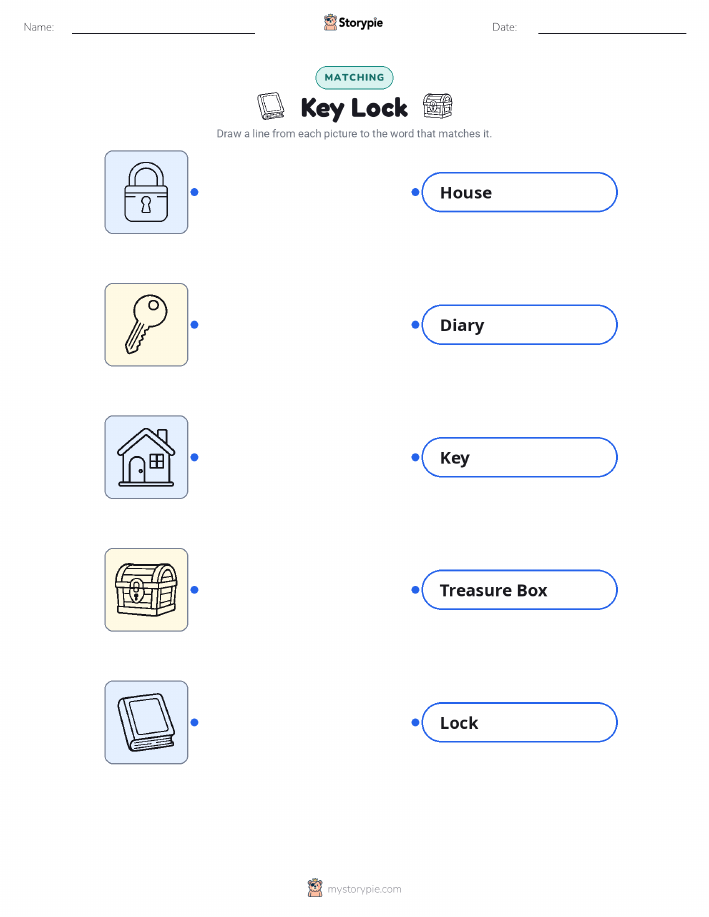
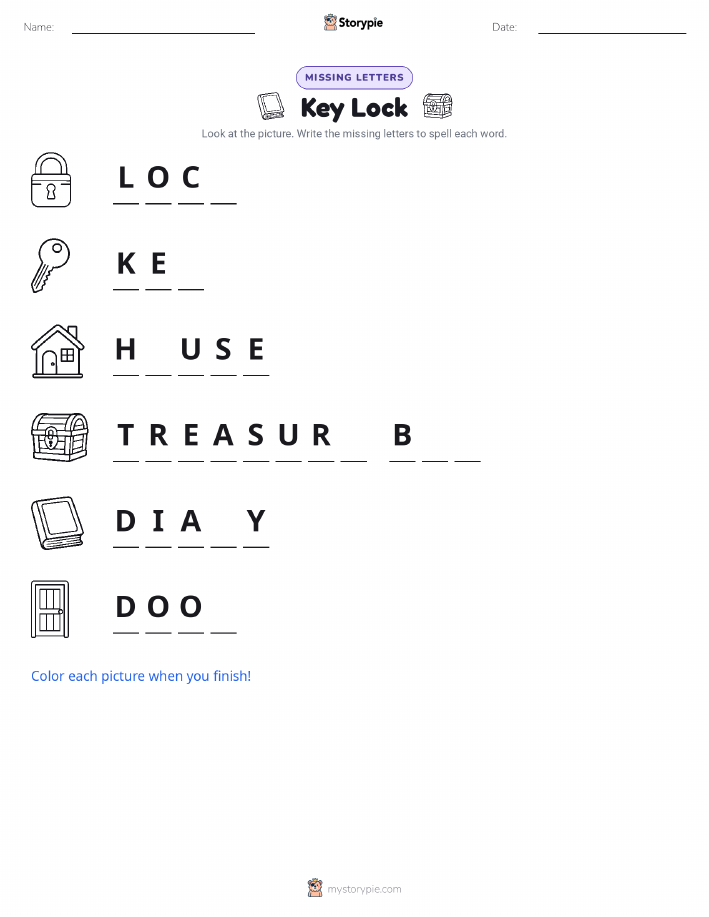
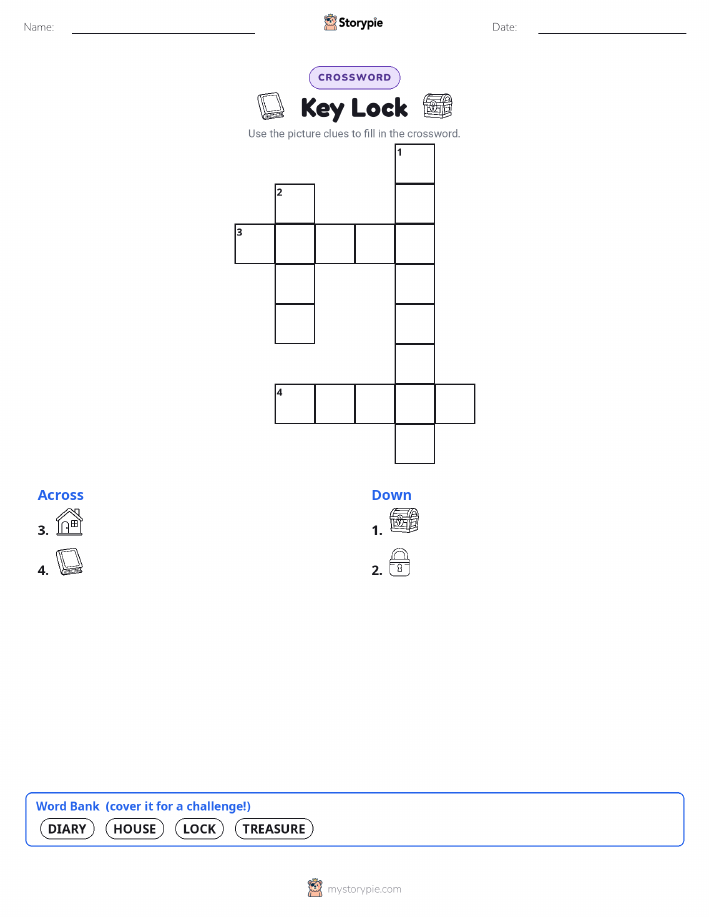
Print & create
Answer keys·No prep·Free with an account
28 worksheets · answer keys · full story · quiz · Ages 10-12 · CEFR B2
Plus adds 280,000+ more stories in 27 languages, audio for every one, and printables for all of them.
Just want Key Lock?

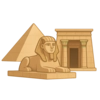
Before you knew my name, you knew my purpose. I am a guardian, a keeper of secrets, a silent protector. I am the Key Lock, and my story begins in the dust and sun of the ancient world, long before the world you know existed. My earliest memory is of being carved from a heavy block of wood in the kingdom of Assyria, around 4000 BCE. I was large and sturdy, fixed to the inside of a great wooden door. My job was to hold a heavy bolt in place, and I did it with a series of hidden wooden pins that would drop into holes in the bolt, securing it fast. The only way to move me was with my partner, a giant wooden key that looked more like a modern toothbrush, with pegs that matched my pins perfectly. It was a clumsy but effective partnership. It was in the land of Egypt, however, that I truly found my calling. The Egyptians, with their grand tombs and precious treasures, saw my potential. They used me to guard not just doors, but the resting places of pharaohs and the storehouses of grain that fed their civilization. I felt a deep sense of importance, knowing that I was trusted with the most sacred and valuable things in their world. Centuries passed, and my journey took me to the bustling, organized world of the Roman Empire. There, my wooden body was shed for something stronger and more elegant: metal. Roman locksmiths crafted me from bronze and iron, making me smaller and more intricate. I was no longer just a clunky guardian on a door; I became a symbol of status. Wealthy Romans carried my keys with them, sometimes worn as rings on their fingers, a public declaration that they had something valuable enough to protect. I was proud, a small metal heart securing the private worlds of the most powerful people on Earth.
The Story of the Key Lock
Before you knew my name, you knew my purpose. I am a guardian, a keeper of secrets, a silent protector. I am the Key Lock, and my story begins in the dust and sun of the ancient world, long before the world you know existed. My earliest memory is of being carved from a heavy block of wood in the kingdom of Assyria, around 4000 BCE. I was large and sturdy, fixed to the inside of a great wooden door. My job was to hold a heavy bolt in place, and I did it with a series of hidden wooden pins that would drop into holes in the bolt, securing it fast. The only way to move me was with my partner, a giant wooden key that looked more like a modern toothbrush, with pegs that matched my pins perfectly. It was a clumsy but effective partnership. It was in the land of Egypt, however, that I truly found my calling. The Egyptians, with their grand tombs and precious treasures, saw my potential. They used me to guard not just doors, but the resting places of pharaohs and the storehouses of grain that fed their civilization. I felt a deep sense of importance, knowing that I was trusted with the most sacred and valuable things in their world. Centuries passed, and my journey took me to the bustling, organized world of the Roman Empire. There, my wooden body was shed for something stronger and more elegant: metal. Roman locksmiths crafted me from bronze and iron, making me smaller and more intricate. I was no longer just a clunky guardian on a door; I became a symbol of status. Wealthy Romans carried my keys with them, sometimes worn as rings on their fingers, a public declaration that they had something valuable enough to protect. I was proud, a small metal heart securing the private worlds of the most powerful people on Earth.
For a very long time after the fall of Rome, I felt a bit stagnant. My makers became more interested in how I looked than how I worked. I was covered in elaborate scrollwork and fashioned into the shapes of animals and mythical creatures, but inside, my mind remained simple. I was beautiful, but I wasn't very clever, and a skilled thief could often outsmart me. Then, a great change swept across the world: the Industrial Revolution. Smoke filled the skies, cities grew larger and more crowded, and people suddenly had more possessions and a greater need for real security. It was in this new, fast-paced world that I was truly reborn. A series of brilliant minds took it upon themselves to make me smarter and stronger than ever before. In 1778, an Englishman named Robert Barron gave me what he called “double-acting tumblers.” It was like he had given me a new layer of thought, a puzzle that had to be solved in two ways at once, making me much harder to pick. Then, in 1784, Joseph Bramah created a version of me so complex that he was certain no one could defeat me. He placed his new lock in his shop window with a sign offering a massive reward to anyone who could open it. For decades, the greatest minds tried and failed. I became a legend of security. Just a few decades later, in 1818, Jeremiah Chubb added another layer to my intelligence. He designed me to be a tattletale. If a thief tried to pick me and pushed one of my levers too far, a special mechanism would jam me shut. The owner’s key wouldn't even work anymore. Only a special, second key could reset me, which immediately told the owner that someone had been tampering with their security. But the greatest leap forward came when two men, a father and son, looked back at my most ancient form. Linus Yale Sr., and later his son, Linus Yale Jr., were inspired by the simple pin-and-tumbler idea from my Egyptian childhood. They knew that its ancient genius could be the key to my future.
My true modern birthday arrived in 1861, thanks to the vision of Linus Yale Jr. He took the ancient Egyptian concept and perfected it, using the precision of modern machinery to create a version of me that was small, reliable, and incredibly secure. I was the pin-tumbler lock, the very same kind you likely have on your front door today. My secret is elegantly simple. Inside me is a small cylinder that must turn to unlock the bolt. A series of tiny metal pins, split in two, hold that cylinder in place. Your key, with its unique pattern of jagged teeth, is my perfect partner. When you slide it inside me, each tooth lifts each pin to an exact height, aligning the split perfectly along what is called the shear line. For that one perfect moment, the cylinder is free to turn, and the door opens. It’s like a secret mechanical handshake. This reinvention changed everything. Suddenly, true security wasn’t just for kings and wealthy merchants anymore. I was affordable and easy to produce, and I began to appear on doors all over the world. I brought peace of mind to millions, letting them sleep soundly at night. I guard homes, keep diaries safe, secure school lockers, and protect businesses. I am a small invention, but my impact is immense. I am a physical symbol of safety, privacy, and trust—a quiet promise that the things you value most will be there when you return. My journey from a wooden block to a precise metal guardian shows that even the oldest ideas can be reinvented, and that the human need to feel safe is a powerful force for creativity and innovation.
Wow facts
About
A device used to secure buildings, rooms, or containers, which can be opened or closed with a matching key. Its design has evolved over millennia from simple wooden bolts to complex modern mechanisms.
Take a Quiz
Question 1 of 5
Retell the major changes the lock went through from ancient times to the Industrial Revolution, excluding unnecessary details.
Explore next





Want to do even more?
Go beyond exploring. Unlock tools that turn every story into real learning.

Storypie Plus for families
Full stories, quizzes, and printables. Nights and car rides, sorted.
- Unlimited audio stories
- Create Mode: your child stars in the story
- Offline downloads
- Printable worksheets & coloring pages

Why Storypie for Schools
Students engaged. Prep in seconds. Evenings back to you.
- Worksheets & Quizzes
- Classroom Management
- Formative Assessment
- Custom Curriculum & Lesson Plans
- 27 Languages

Why Storypie for Homeschool
Curriculum done. They'll ask for more. Hours back in your day.
- Worksheet Generator
- First-Person Audio Stories
- Built-in Comprehension Quizzes
- Custom Curriculum & Lesson Plans
- Print & Go Activities