English

Paper
A thin material produced by pressing together moist fibers, traditionally from rags, mulberry bark…
Reads at Grades 3–5 Listens at Grades 1–5
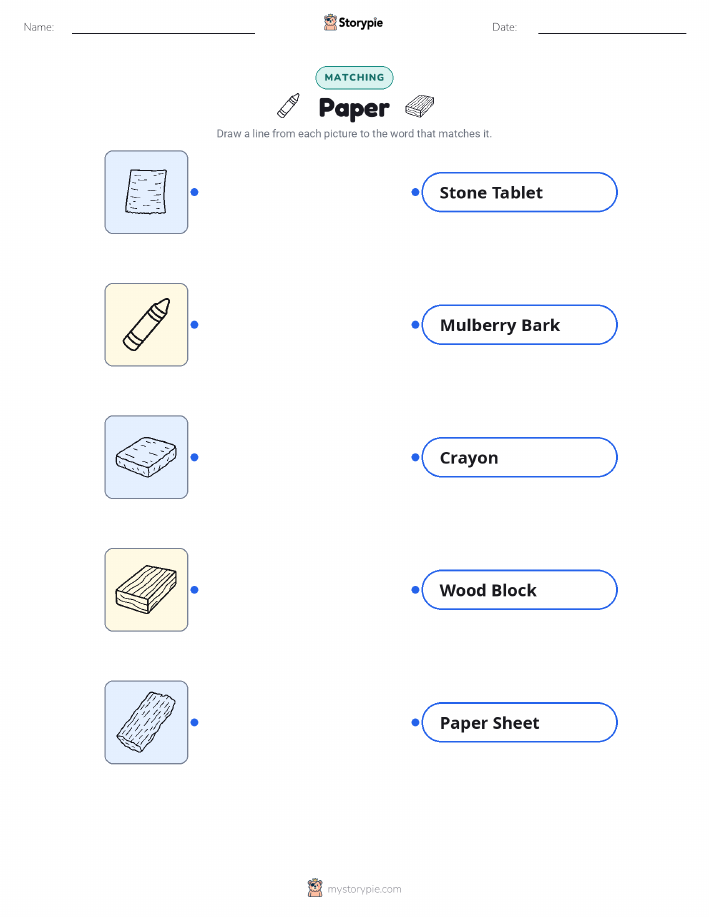
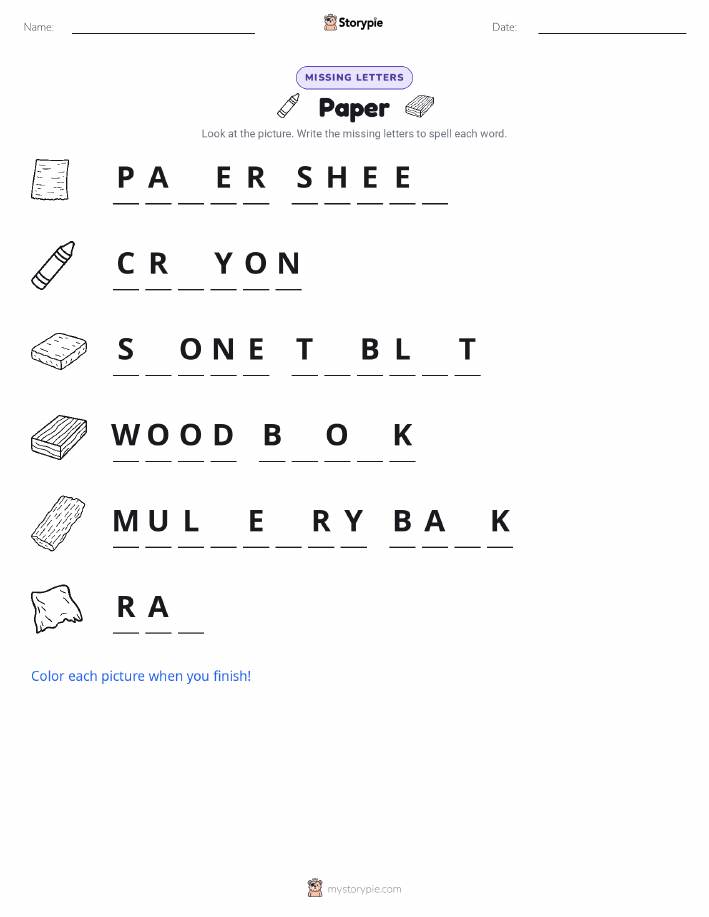
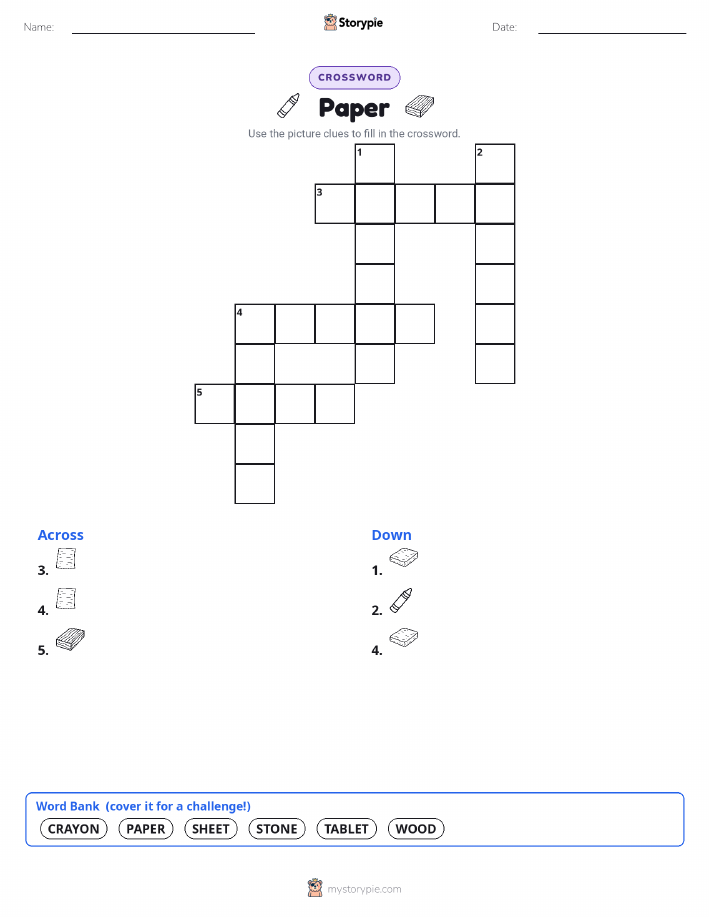
Print & create
Answer keys·No prep·Free with an account
28 worksheets · answer keys · full story · quiz · Ages 8-10 · CEFR B1
Plus adds 280,000+ more stories in 27 languages, audio for every one, and printables for all of them.
Just want Paper?
Hello there. You might not recognize me at first, but I bet you see me every day. I am Paper. Before I came along, the world was a much heavier place. Imagine trying to write a story or send a message. In ancient China, where my story begins, people had to carve words onto long, clumsy strips of bamboo. A single book could be so heavy it had to be carried in a wagon. If you were very wealthy, you might write on beautiful, smooth silk, but it was incredibly expensive. Most people couldn't afford it. Sharing ideas was hard work. A clever and kind official in the Emperor's court named Cai Lun saw this problem. Around the year 100 CE, he watched scholars struggle with heavy bamboo scrolls and knew there had to be a better, lighter, and cheaper way for people to share their thoughts, stories, and knowledge. He dreamed of something new, something that anyone could use. He dreamed of me.
Cai Lun was a patient and curious inventor. He knew my creation wouldn't be easy, but he was determined. He began his experiments, gathering all sorts of materials that others might have thrown away. He collected the soft inner bark from mulberry trees, old scraps of hemp, worn-out rags from clothing, and even tattered fishing nets. He thought that the strong fibers inside these things could be woven together in a new way. His workshop must have looked like a strange and wonderful mess. He chopped everything into tiny pieces and boiled it in a huge pot of water for hours until it all turned into a thick, gooey, soupy pulp. Then came the magical part. He took a flat screen made of woven bamboo and dipped it into the vat, scooping up a thin, milky layer of the pulp. He lifted the screen carefully, letting the water drip, drip, drip away, leaving a delicate mat of tangled fibers behind. He would then press this wet sheet between heavy cloths to squeeze out every last drop of water. Finally, he would lay me gently on a flat surface to dry in the warm sun. After many tries, on a day around 105 CE, he succeeded. I was born. I was thin, I was light, and I was strong. Cai Lun was so proud that he presented me to the Emperor He of Han, who was amazed. A new age of writing had begun.
My Life as a Sheet of Paper
Hello there. You might not recognize me at first, but I bet you see me every day. I am Paper. Before I came along, the world was a much heavier place. Imagine trying to write a story or send a message. In ancient China, where my story begins, people had to carve words onto long, clumsy strips of bamboo. A single book could be so heavy it had to be carried in a wagon. If you were very wealthy, you might write on beautiful, smooth silk, but it was incredibly expensive. Most people couldn't afford it. Sharing ideas was hard work. A clever and kind official in the Emperor's court named Cai Lun saw this problem. Around the year 100 CE, he watched scholars struggle with heavy bamboo scrolls and knew there had to be a better, lighter, and cheaper way for people to share their thoughts, stories, and knowledge. He dreamed of something new, something that anyone could use. He dreamed of me.
Cai Lun was a patient and curious inventor. He knew my creation wouldn't be easy, but he was determined. He began his experiments, gathering all sorts of materials that others might have thrown away. He collected the soft inner bark from mulberry trees, old scraps of hemp, worn-out rags from clothing, and even tattered fishing nets. He thought that the strong fibers inside these things could be woven together in a new way. His workshop must have looked like a strange and wonderful mess. He chopped everything into tiny pieces and boiled it in a huge pot of water for hours until it all turned into a thick, gooey, soupy pulp. Then came the magical part. He took a flat screen made of woven bamboo and dipped it into the vat, scooping up a thin, milky layer of the pulp. He lifted the screen carefully, letting the water drip, drip, drip away, leaving a delicate mat of tangled fibers behind. He would then press this wet sheet between heavy cloths to squeeze out every last drop of water. Finally, he would lay me gently on a flat surface to dry in the warm sun. After many tries, on a day around 105 CE, he succeeded. I was born. I was thin, I was light, and I was strong. Cai Lun was so proud that he presented me to the Emperor He of Han, who was amazed. A new age of writing had begun.
At first, the secret of how to make me was guarded carefully in China. I was a special treasure. But secrets have a way of traveling, and so did I. My journey began on the famous Silk Road, a long network of trade routes. Tucked into the bags of merchants and scholars, I traveled on camels and in carts to distant lands. I crossed deserts and mountains, reaching the Middle East, Africa, and eventually Europe. Everywhere I went, I changed things. Suddenly, books didn't have to be rare treasures owned only by kings. More books could be made, which meant more people could learn to read and write. Scientists could record their discoveries, explorers could draw maps of new worlds, and friends could send letters to each other across the miles. I carried poems, laws, and histories. Today, I am still here, holding the world's most important ideas and its silliest doodles. I hold the beautiful stories you read and the empty pages of your journal, just waiting for your own adventure to begin.
Wow facts
About
A thin material produced by pressing together moist fibers, traditionally from rags, mulberry bark, or wood pulp, and drying them into flexible sheets. It is used for writing, printing, drawing, and packaging, and has been instrumental in the storage and dissemination of knowledge.
Take a Quiz
Question 1 of 5
Why do you think Cai Lun wanted to invent something new for writing?
Explore next



Want to do even more?
Go beyond exploring. Unlock tools that turn every story into real learning.

Storypie Plus for families
Full stories, quizzes, and printables. Nights and car rides, sorted.
- Unlimited audio stories
- Create Mode: your child stars in the story
- Offline downloads
- Printable worksheets & coloring pages

Why Storypie for Schools
Students engaged. Prep in seconds. Evenings back to you.
- Worksheets & Quizzes
- Classroom Management
- Formative Assessment
- Custom Curriculum & Lesson Plans
- 27 Languages

Why Storypie for Homeschool
Curriculum done. They'll ask for more. Hours back in your day.
- Worksheet Generator
- First-Person Audio Stories
- Built-in Comprehension Quizzes
- Custom Curriculum & Lesson Plans
- Print & Go Activities