English

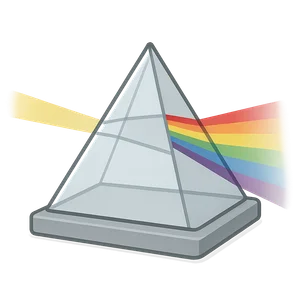
Prism
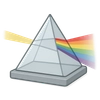
A transparent optical element with flat, polished surfaces that refract light.
Reads at Grades 6–8 Listens at Grades 4–8
Print & create
Answer keys·No prep·Free with an account
28 worksheets · answer keys · full story · quiz · Ages 10-12 · CEFR B2
Plus adds 102,000+ more stories in 27 languages, audio for every one, and printables for all of them.
Just want Prism?
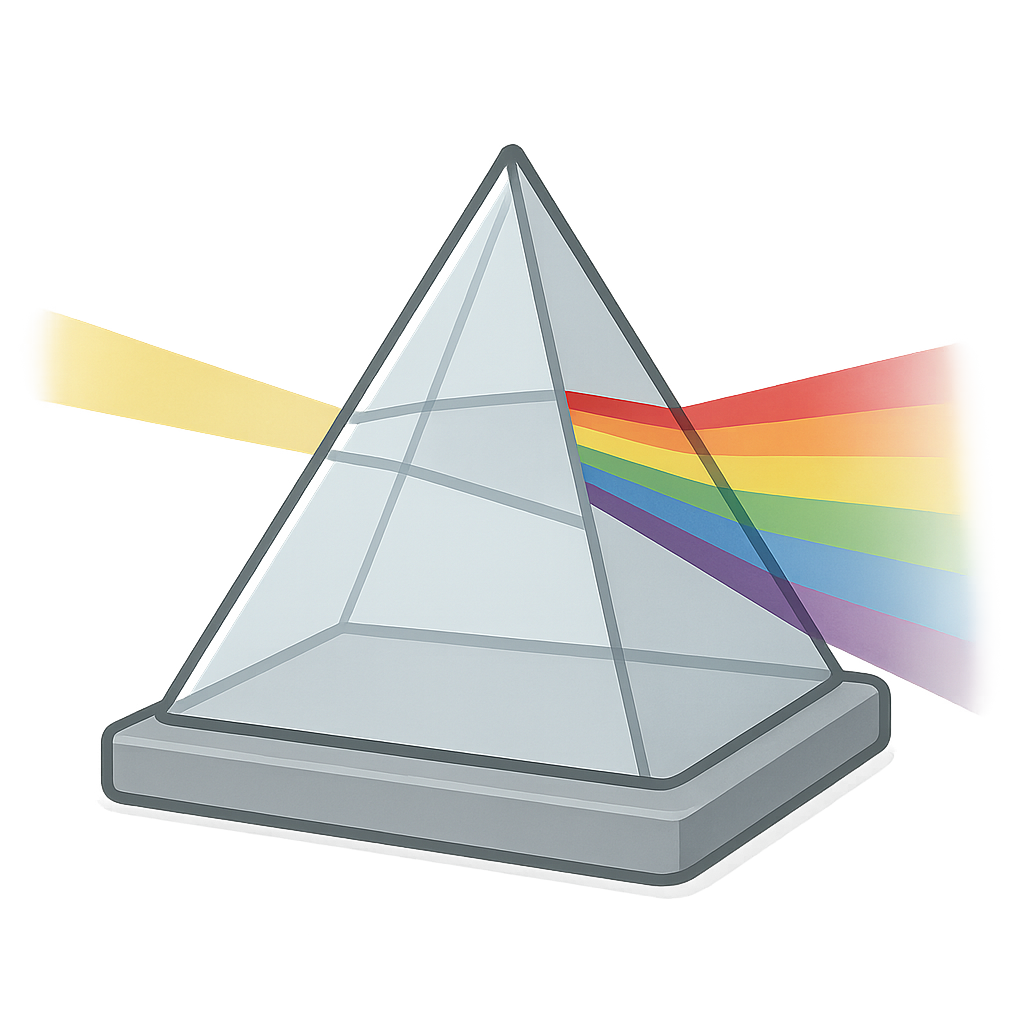
For centuries, I was little more than a curiosity. I am a prism, a simple block of glass, carefully cut with flat, polished sides. Humans saw me and thought I was a toy, a piece of magic. They would hold me up to the sun and gasp as I threw a beautiful, vibrant rainbow onto a nearby surface. They smiled, delighted by the splash of color, but they did not understand me. For as long as anyone could remember, the greatest minds believed that white light from the sun was the purest thing in the universe—simple, clean, and without any parts. They thought that I, in my glassy form, was somehow flawed. They believed that I was staining the pure, white light, corrupting it to create the colors they saw. I held my secret silently, waiting. I knew the truth was not that I added color to the light, but that the light itself carried a spectacular secret within it. I just needed someone with a curious and patient mind to look closely enough to see it, someone who would not just accept what everyone else believed, but who would dare to ask a new question.
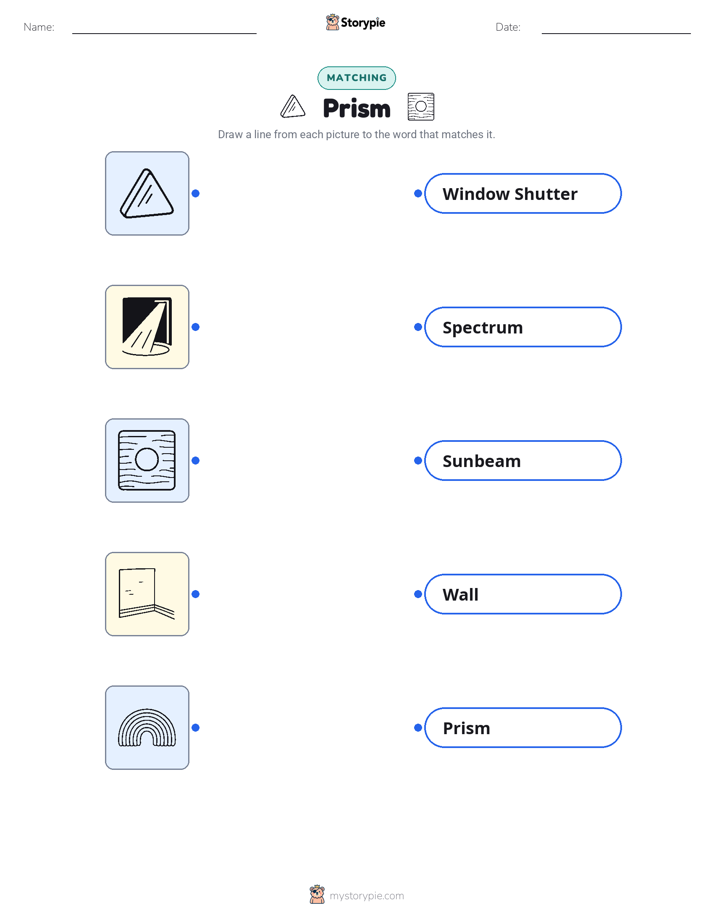
My moment finally came around the year 1666. A quiet, thoughtful man named Isaac Newton brought me to his home, Woolsthorpe Manor in England. During a time when he had to stay home, his mind was busier than ever. He took me into a completely dark room, allowing no light to enter except for what he permitted. He had made a tiny hole in a window shutter, and through it streamed a single, sharp beam of sunlight, cutting a bright path through the dusty air. I could feel a sense of purpose as he picked me up. He didn’t handle me like a toy. He held me with the careful precision of a true investigator. He placed me directly in the path of that solitary sunbeam. The light entered my glass body, and for a moment, everything bent and shifted within me. Then, as the light exited my other side, the great secret was revealed. On the far wall of the dark room, where a simple spot of white light should have been, there was now a stunning, elongated band of color. It was a spectrum, glowing with red, orange, yellow, green, blue, indigo, and violet, all in a perfect, unbroken order. Newton stared, captivated. In that moment, he realized the ancient belief was wrong. I had not stained the light. I had unlocked it. The colors were not my creation; they had been hidden inside the white light all along, traveling together as one. I had simply given them a way to separate and show their true, individual beauty.
I Am the Prism: A Story of Light and Discovery
For centuries, I was little more than a curiosity. I am a prism, a simple block of glass, carefully cut with flat, polished sides. Humans saw me and thought I was a toy, a piece of magic. They would hold me up to the sun and gasp as I threw a beautiful, vibrant rainbow onto a nearby surface. They smiled, delighted by the splash of color, but they did not understand me. For as long as anyone could remember, the greatest minds believed that white light from the sun was the purest thing in the universe—simple, clean, and without any parts. They thought that I, in my glassy form, was somehow flawed. They believed that I was staining the pure, white light, corrupting it to create the colors they saw. I held my secret silently, waiting. I knew the truth was not that I added color to the light, but that the light itself carried a spectacular secret within it. I just needed someone with a curious and patient mind to look closely enough to see it, someone who would not just accept what everyone else believed, but who would dare to ask a new question.
My moment finally came around the year 1666. A quiet, thoughtful man named Isaac Newton brought me to his home, Woolsthorpe Manor in England. During a time when he had to stay home, his mind was busier than ever. He took me into a completely dark room, allowing no light to enter except for what he permitted. He had made a tiny hole in a window shutter, and through it streamed a single, sharp beam of sunlight, cutting a bright path through the dusty air. I could feel a sense of purpose as he picked me up. He didn’t handle me like a toy. He held me with the careful precision of a true investigator. He placed me directly in the path of that solitary sunbeam. The light entered my glass body, and for a moment, everything bent and shifted within me. Then, as the light exited my other side, the great secret was revealed. On the far wall of the dark room, where a simple spot of white light should have been, there was now a stunning, elongated band of color. It was a spectrum, glowing with red, orange, yellow, green, blue, indigo, and violet, all in a perfect, unbroken order. Newton stared, captivated. In that moment, he realized the ancient belief was wrong. I had not stained the light. I had unlocked it. The colors were not my creation; they had been hidden inside the white light all along, traveling together as one. I had simply given them a way to separate and show their true, individual beauty.
Newton, however, was a thorough scientist. One profound discovery was not enough; he needed to prove it beyond any doubt. To do this, he designed what he called the 'Experimentum Crucis'—the crucial experiment. First, he used me to cast the spectrum upon a surface. Then, he took a screen with a small slit in it and positioned it to allow only a single color, like red, to pass through. This isolated sliver of pure red light then traveled onward, where it met a second prism. I watched as my brother prism was put to the test. If the old ideas were right, this second prism should have been able to stain the red light further, creating other colors. But it did not. The red light that entered the second prism emerged on the other side as the very same shade of red. It proved that each color in the spectrum was fundamental and could not be broken down further. Then came the final, brilliant proof. Newton used a lens to carefully collect all the separate colors of my spectrum and focus them back together onto a single point. As the bands of red, orange, yellow, green, blue, indigo, and violet merged, the rainbow vanished. In its place, a perfect circle of brilliant white light reappeared. It was undeniable. I had separated the colors, and now they were rejoined. Newton finally published his groundbreaking work in his book 'Opticks' in 1704, changing humanity's understanding of light forever.
From that darkened room in 1666, my purpose grew far beyond what anyone had imagined. My ability to split light into its essential colors gave birth to a whole new field of science: spectroscopy. This is the science of analyzing light to understand what things are made of. I am the ancestor of powerful tools called spectroscopes, which do the same job I do, but with far greater precision. My descendants are now essential partners to humanity's greatest explorers. They sit within giant telescopes, peering at the faint light of distant stars and galaxies. By splitting that ancient light, they tell astronomers what those stars are made of, how hot they are, and how fast they are moving through the cosmos. My legacy also lives in laboratories, where spectroscopes help scientists identify unknown materials by the unique light they give off. It all began with a simple piece of glass and a curious mind that refused to accept the easy answer. I am a reminder that sometimes, the most profound truths about the universe are not hidden in complex equations, but are waiting to be seen, concealed in a simple ray of light.
Wow facts
About
A transparent optical element with flat, polished surfaces that refract light. It is most famous for its ability to split white light into its constituent spectral colors, the colors of the rainbow.
Take a Quiz
Question 1 of 5
What is the central idea of the story, as told by the prism?
Explore next





Want to do even more?
Go beyond exploring. Unlock tools that turn every story into real learning.

Storypie Plus for families
Full stories, quizzes, and printables. Nights and car rides, sorted.
- Unlimited audio stories
- Create Mode: your child stars in the story
- Offline downloads
- Printable worksheets & coloring pages

Why Storypie for Schools
Students engaged. Prep in seconds. Evenings back to you.
- Worksheets & Quizzes
- Classroom Management
- Formative Assessment
- Custom Curriculum & Lesson Plans
- 27 Languages

Why Storypie for Homeschool
Curriculum done. They'll ask for more. Hours back in your day.
- Worksheet Generator
- First-Person Audio Stories
- Built-in Comprehension Quizzes
- Custom Curriculum & Lesson Plans
- Print & Go Activities