English

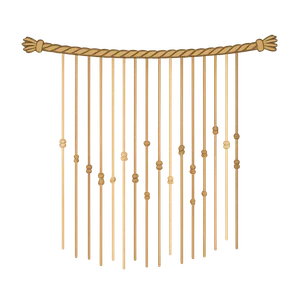
Quipu
A Quipu is a recording device made from knotted strings…
Reads at Grades 6–8 Listens at Grades 4–8
Print & create
Answer keys·No prep·Free with an account
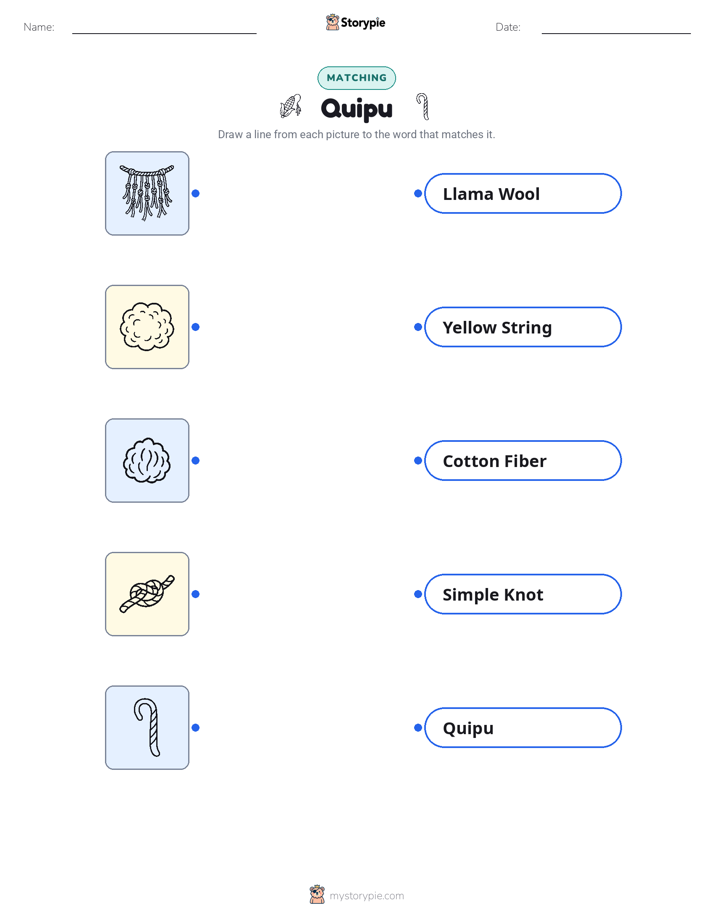
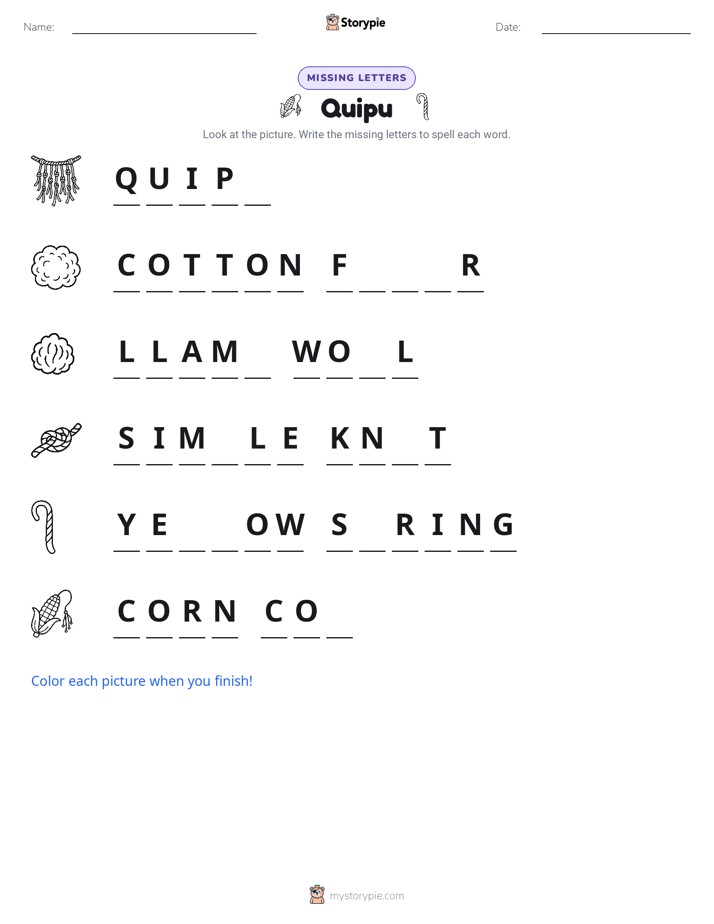
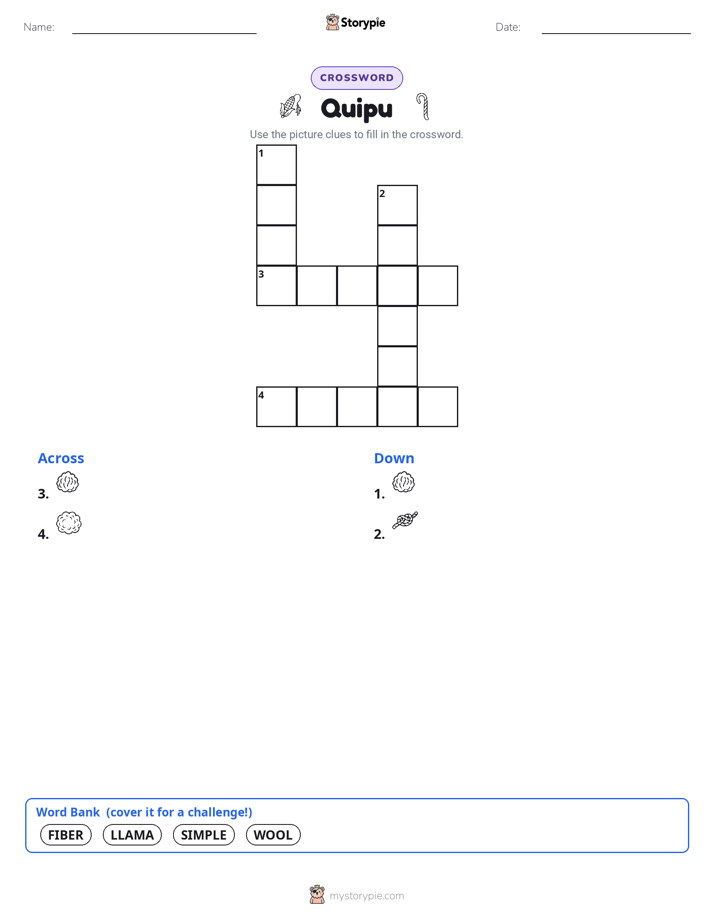
28 worksheets · answer keys · full story · quiz · Ages 10-12 · CEFR B2
Plus adds 208,000+ more stories in 27 languages, audio for every one, and printables for all of them.
Just want Quipu?
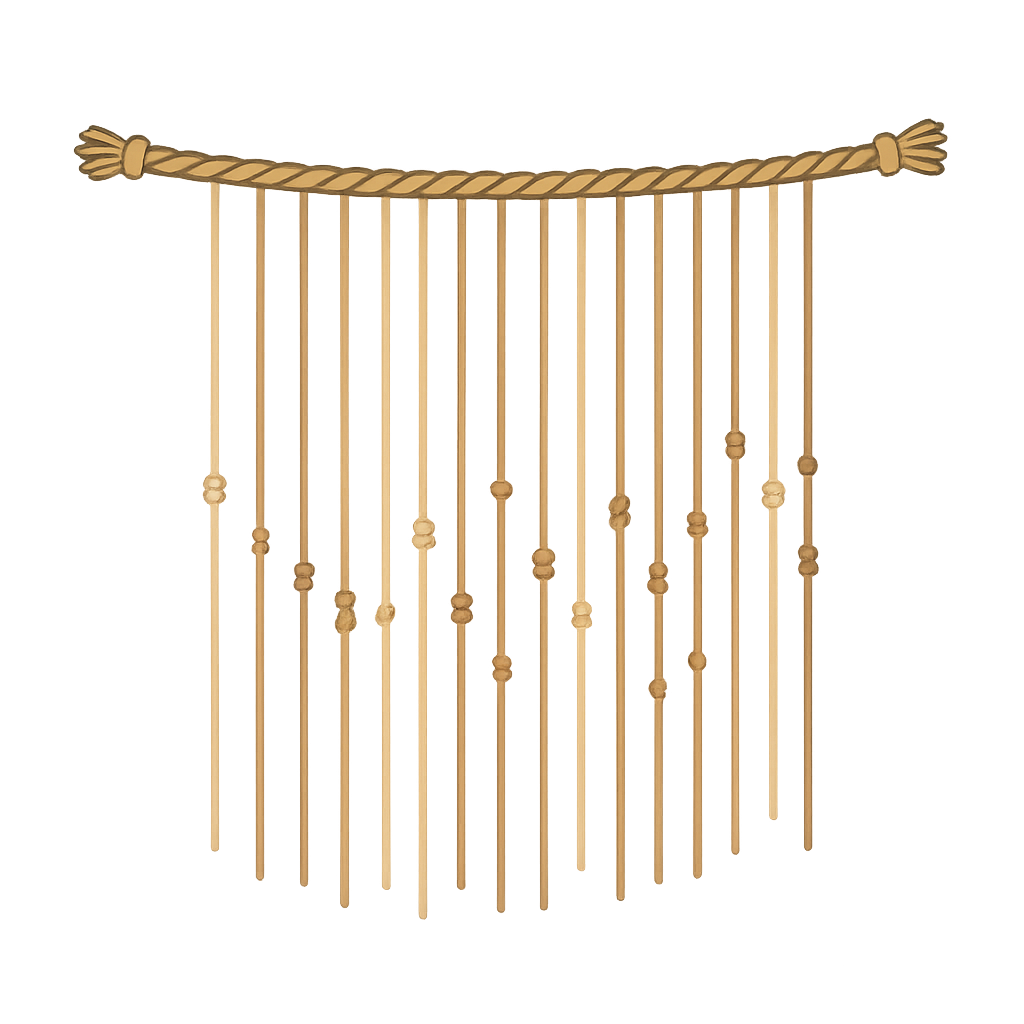
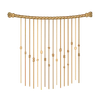
I am not a book, yet I hold libraries of information within my threads. You would not read me with your eyes scanning across a page, but with your fingers, tracing the stories I tell. I am a Quipu. Imagine a long, main cord, like the sturdy trunk of a tree, and hanging from it are dozens, sometimes hundreds, of thinner strings, a cascade of vibrant colors. These are my branches, and they are spun from soft cotton or warm llama and alpaca wool. On these hanging strings, you will find my words: a complex and beautiful system of knots. My story began a very long time ago, high in the Andes mountains of South America, long before the famous Inca Empire rose to power. Some of my oldest relatives, simple knotted strings used for counting, date all the way back to around 2500 BCE, born from the minds of clever people in ancient cities like Caral. I am a living memory, a web of whispers woven from the threads of history, and I hold the secrets of an empire that communicated not with ink, but with knots.
My most important role came during the height of the magnificent Inca Empire, which flourished from about 1400 CE until 1532 CE. The Inca built incredible cities, roads, and bridges, but they had one thing missing: a written alphabet. That is where I came in. I was their memory, their accounting ledger, their calendar, and their history book all tied into one. But I could not speak on my own. I needed a special partner, a keeper of my secrets. These keepers were called the Quipucamayocs, and they were highly respected officials trained from a young age to tie my knots and interpret my meaning. They were my voice. The system they used was brilliant. It was based on the number ten, just like the fingers on your hands. The type of knot they tied—a simple single knot, a long knot with several turns, or a figure-eight knot—told them a specific number. The position of the knot on the string was also crucial; a knot at the very bottom might mean a single digit, like seven, while the same knot tied further up could mean seventy or seven hundred. The colors of my strings were a code as well. A yellow string might track the harvest of golden corn, a red one could count the number of brave warriors in a squadron, and a white string might represent a tally of precious silver. I held the data for the entire empire: the number of llamas in a herd, the amount of potatoes stored in a warehouse, the census of a village, and the taxes owed to the Sapa Inca. Without me, the empire would have been unable to manage its vast resources and people. I was the silent, organized heart of it all, ensuring everything ran smoothly across thousands of miles of rugged mountain terrain.
The Knotted Storyteller
I am not a book, yet I hold libraries of information within my threads. You would not read me with your eyes scanning across a page, but with your fingers, tracing the stories I tell. I am a Quipu. Imagine a long, main cord, like the sturdy trunk of a tree, and hanging from it are dozens, sometimes hundreds, of thinner strings, a cascade of vibrant colors. These are my branches, and they are spun from soft cotton or warm llama and alpaca wool. On these hanging strings, you will find my words: a complex and beautiful system of knots. My story began a very long time ago, high in the Andes mountains of South America, long before the famous Inca Empire rose to power. Some of my oldest relatives, simple knotted strings used for counting, date all the way back to around 2500 BCE, born from the minds of clever people in ancient cities like Caral. I am a living memory, a web of whispers woven from the threads of history, and I hold the secrets of an empire that communicated not with ink, but with knots.
My most important role came during the height of the magnificent Inca Empire, which flourished from about 1400 CE until 1532 CE. The Inca built incredible cities, roads, and bridges, but they had one thing missing: a written alphabet. That is where I came in. I was their memory, their accounting ledger, their calendar, and their history book all tied into one. But I could not speak on my own. I needed a special partner, a keeper of my secrets. These keepers were called the Quipucamayocs, and they were highly respected officials trained from a young age to tie my knots and interpret my meaning. They were my voice. The system they used was brilliant. It was based on the number ten, just like the fingers on your hands. The type of knot they tied—a simple single knot, a long knot with several turns, or a figure-eight knot—told them a specific number. The position of the knot on the string was also crucial; a knot at the very bottom might mean a single digit, like seven, while the same knot tied further up could mean seventy or seven hundred. The colors of my strings were a code as well. A yellow string might track the harvest of golden corn, a red one could count the number of brave warriors in a squadron, and a white string might represent a tally of precious silver. I held the data for the entire empire: the number of llamas in a herd, the amount of potatoes stored in a warehouse, the census of a village, and the taxes owed to the Sapa Inca. Without me, the empire would have been unable to manage its vast resources and people. I was the silent, organized heart of it all, ensuring everything ran smoothly across thousands of miles of rugged mountain terrain.
My world of order and meaning changed forever around the year 1532 CE. From across the great ocean came the Spanish conquistadors, men with steel armor and weapons that roared with fire. They did not understand my language of knots. To them, I was just a peculiar collection of threads, and some even viewed me with suspicion, thinking my knots held forbidden secrets. In the chaos of the conquest, many of my kind were burned or destroyed, and the great schools where the Quipucamayocs were trained disappeared. The knowledge of how to read me, passed down meticulously from one generation to the next, began to fade. The hands that knew how to tie my stories and the minds that could hear my voice were lost, and I fell into a deep silence. For centuries, I hung in museums and collections, a beautiful but silent mystery. People could see my intricate knots and vibrant colors, but my stories were locked away. But my tale does not end in silence. Today, in the 21st century, a new generation of keepers is trying to awaken my voice. Scientists, archaeologists, and historians are using powerful computers and new ideas to study my patterns. They are looking for the hidden meanings in my colors, twists, and knots, hoping to finally decipher the histories I have held safe for so long. I am a puzzle from the past, a reminder that stories can be told in many wonderful ways and that even the simplest knot, tied with purpose, can contain the entire world of a civilization.
Wow facts
About
A Quipu is a recording device made from knotted strings, used by the Inca and other ancient Andean civilizations to collect data and keep records.
Take a Quiz
Question 1 of 5
In your own words, describe the main purpose of a Quipu in the Inca Empire and explain why it was so essential.
Explore next

Want to do even more?
Go beyond exploring. Unlock tools that turn every story into real learning.

Storypie Plus for families
Full stories, quizzes, and printables. Nights and car rides, sorted.
- Unlimited audio stories
- Create Mode: your child stars in the story
- Offline downloads
- Printable worksheets & coloring pages

Why Storypie for Schools
Students engaged. Prep in seconds. Evenings back to you.
- Worksheets & Quizzes
- Classroom Management
- Formative Assessment
- Custom Curriculum & Lesson Plans
- 27 Languages

Why Storypie for Homeschool
Curriculum done. They'll ask for more. Hours back in your day.
- Worksheet Generator
- First-Person Audio Stories
- Built-in Comprehension Quizzes
- Custom Curriculum & Lesson Plans
- Print & Go Activities