English


Space Shuttle
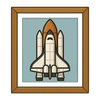
A partially reusable low Earth orbital spacecraft system operated by NASA from 1981 to 2011…
Reads at Grades 3–5 Listens at Grades 1–5
Print & create
Answer keys·No prep·Free with an account
28 worksheets · answer keys · full story · quiz · Ages 8-10 · CEFR B1
Plus adds 291,000+ more stories in 27 languages, audio for every one, and printables for all of them.
Just want Space Shuttle?

Hello from space. I am the Space Shuttle. For thirty years, I was a very special kind of traveler. Imagine a vehicle that could blast off into the sky like a powerful rocket, but then glide back down to Earth and land gently on a runway like an airplane. That was me. This unique ability made me the first operational orbital spacecraft designed for reuse. Before I came along, rockets could only be used one time, which was like throwing away a car after just one trip. My official name is the Space Transportation System, or STS for short. The big idea for me, a sort of 'space truck' that could haul important cargo, was first announced way back in 1968. It was the beginning of a grand adventure that would change how humans explored the final frontier.
My story didn't begin overnight. The dream of a ship that could fly to space and back again had been on the minds of brilliant engineers since the 1950s and 60s. They imagined a future where space travel was more common and less expensive. In 1972, the United States government gave the official approval for my program to begin. It was a huge moment. Thousands of clever people at NASA and other companies started working together to figure out exactly how to build me. After much thought, they settled on a final design. I would be made of three main parts: a winged orbiter, which looked like an airplane and carried the astronauts and cargo; a huge, orange external tank filled with fuel; and two powerful, white solid rocket boosters to give me the massive push I needed to reach the right speed and altitude to enter orbit around the Earth. Before any of my sisters could fly to space, my oldest sister, Enterprise, was built in 1976. She was a test orbiter. In 1977, she performed very important gliding and landing tests, proving that my design could safely return to Earth from high altitudes.
A Space Shuttle's Story
Hello from space. I am the Space Shuttle. For thirty years, I was a very special kind of traveler. Imagine a vehicle that could blast off into the sky like a powerful rocket, but then glide back down to Earth and land gently on a runway like an airplane. That was me. This unique ability made me the first operational orbital spacecraft designed for reuse. Before I came along, rockets could only be used one time, which was like throwing away a car after just one trip. My official name is the Space Transportation System, or STS for short. The big idea for me, a sort of 'space truck' that could haul important cargo, was first announced way back in 1968. It was the beginning of a grand adventure that would change how humans explored the final frontier.
My story didn't begin overnight. The dream of a ship that could fly to space and back again had been on the minds of brilliant engineers since the 1950s and 60s. They imagined a future where space travel was more common and less expensive. In 1972, the United States government gave the official approval for my program to begin. It was a huge moment. Thousands of clever people at NASA and other companies started working together to figure out exactly how to build me. After much thought, they settled on a final design. I would be made of three main parts: a winged orbiter, which looked like an airplane and carried the astronauts and cargo; a huge, orange external tank filled with fuel; and two powerful, white solid rocket boosters to give me the massive push I needed to reach the right speed and altitude to enter orbit around the Earth. Before any of my sisters could fly to space, my oldest sister, Enterprise, was built in 1976. She was a test orbiter. In 1977, she performed very important gliding and landing tests, proving that my design could safely return to Earth from high altitudes.
While Enterprise was preparing for her important tests, construction had already started on the first one of us that would actually travel to space. Her name was Columbia, and her construction began in 1975. Building her was a tremendous challenge. One of the hardest parts was attaching tens of thousands of special black and white tiles all over her body. These tiles were my heat shield, a protective blanket designed to keep the orbiter safe from the intense heat created as it pushed through the air to slow down when returning to Earth. Finally, the big day arrived. On April 12th, 1981, Columbia stood ready for my very first mission, STS-1. Inside were two brave astronauts, John Young and Robert Crippen. It was the first time astronauts had ever flown on a brand-new, untested spacecraft on its maiden voyage. The world watched as Columbia thundered into the sky. After a successful trip, the system I was a part of was declared fully operational on July 4th, 1982. A new era of space exploration had begun.
For the next thirty years, my sisters and I were very busy. We were the workhorses of space, acting as both a 'space truck' and a floating science laboratory. In total, we flew 135 missions. My family of orbiters included Columbia, Challenger, Discovery, Atlantis, and Endeavour. We did so many amazing things. We launched communications satellites that help you watch TV. We sent out space probes to explore distant planets. One of my proudest moments came when my sister Discovery carried the Hubble Space Telescope into orbit. She launched on April 24th, 1990, and deployed the incredible telescope the very next day, on April 25th. We also did the heavy lifting to build the International Space Station, carrying huge pieces of it into orbit piece by piece. Our work was not without danger, and I remember with great sadness the loss of my sister Challenger in 1986 and my sister Columbia in 2003. We will never forget the brave astronauts who were lost on those missions.
After thirty years of service, my flying days came to an end. It was time for a new generation of spacecraft to take over. My final mission was flown by my sister Atlantis, who landed for the last time on July 21st, 2011. It was the end of an amazing chapter in space history. But my story isn't over. My surviving sisters—Discovery, Atlantis, and Endeavour—along with my test sister Enterprise, are now resting in museums across the United States. They stand as silent, powerful reminders of all we accomplished. My legacy lives on every time you look at a picture from the Hubble Telescope or see astronauts living on the International Space Station. I helped prove that reusable spacecraft could work, and now my story inspires the new explorers who are building the next generation of ships that will take humanity even further into the stars.
Wow facts
About
A partially reusable low Earth orbital spacecraft system operated by NASA from 1981 to 2011, which launched like a rocket and landed like a glider, carrying astronauts and cargo to space.
Take a Quiz
Question 1 of 5
The story says the Space Shuttle was like a 'space truck.' What does this phrase mean?
Explore next




Want to do even more?
Go beyond exploring. Unlock tools that turn every story into real learning.

Storypie Plus for families
Full stories, quizzes, and printables. Nights and car rides, sorted.
- Unlimited audio stories
- Create Mode: your child stars in the story
- Offline downloads
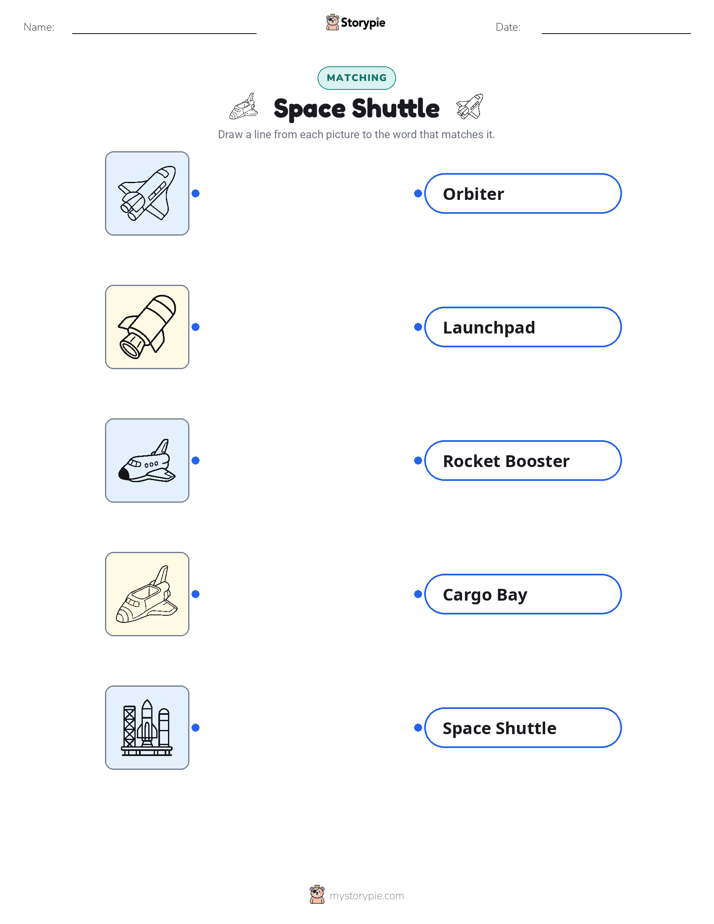
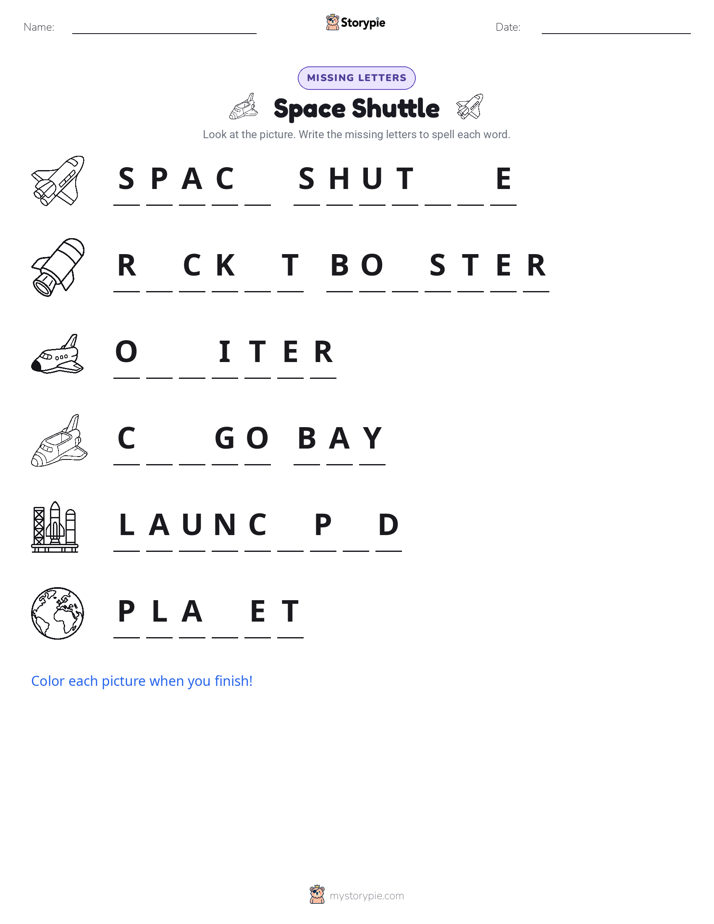
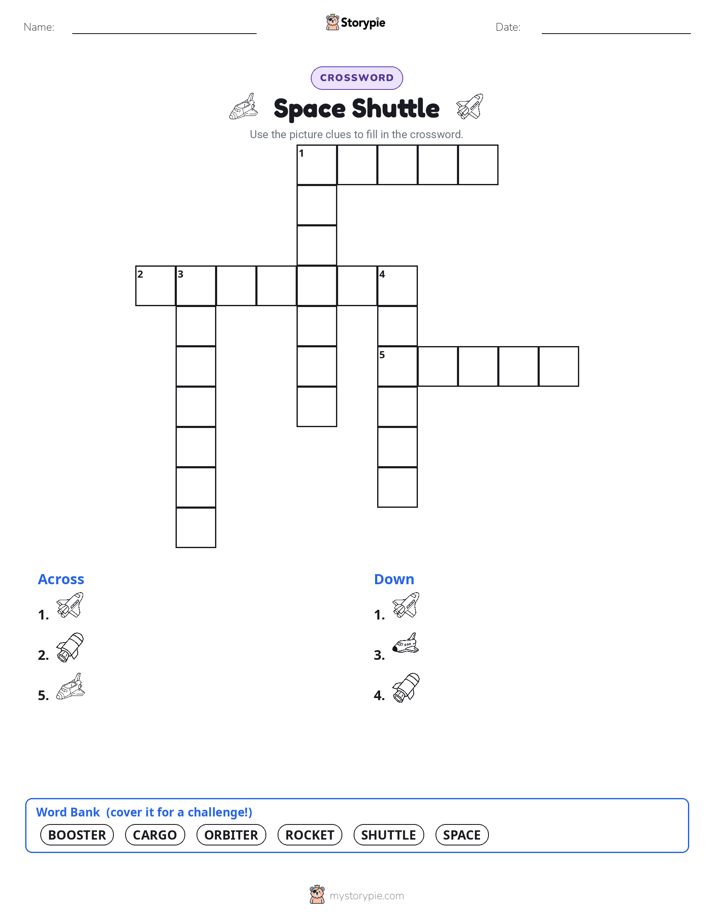
- Printable worksheets & coloring pages

Why Storypie for Schools
Students engaged. Prep in seconds. Evenings back to you.
- Worksheets & Quizzes
- Classroom Management
- Formative Assessment
- Custom Curriculum & Lesson Plans
- 27 Languages

Why Storypie for Homeschool
Curriculum done. They'll ask for more. Hours back in your day.
- Worksheet Generator
- First-Person Audio Stories
- Built-in Comprehension Quizzes
- Custom Curriculum & Lesson Plans
- Print & Go Activities