
 English
 For Schools
 For Homeschool

The Accidental Superstar
You might know me from your kitchen, the slick surface that lets your fried egg slide right off the pan. But my story began long before I made cooking easier. My name is Polytetrafluoroethylene, but you can call me Teflon. I am proof that sometimes, the most wonderful discoveries are the ones no one was looking for. My existence is one of history’s happiest accidents, a surprise born in a quiet laboratory on a chilly morning, April 6th, 1938. A curious chemist was expecting to create something entirely different, a new kind of gas. He had no idea that inside a cold, silent metal canister, he was about to meet me, a material that would travel from a top-secret government project to outer space and into homes all around the world. My birth wasn't planned; it was a moment of pure, unexpected discovery that started with a puzzle that simply refused to be ignored.
My creator was a thoughtful and persistent scientist named Dr. Roy J. Plunkett, and he was working on a big problem for the DuPont company in New Jersey. In the 1930s, refrigerators used gases like ammonia and sulfur dioxide, which were toxic and dangerous if they leaked. Dr. Plunkett was tasked with creating a new, safer refrigerant gas. On that fateful April morning, he was preparing to use a cylinder of a gas he had created called tetrafluoroethylene. He opened the valve, expecting a rush of gas, but nothing came out. The pressure gauge read zero. He and his assistant, Jack Rebok, checked the weight of the canister; it was still heavy, as if it were full, yet it seemed completely empty. Most people might have assumed the experiment had failed, setting the canister aside as a faulty piece of equipment. But Dr. Plunkett’s curiosity was a powerful force. He couldn't let the mystery go. He knew something was still inside, so they decided to do something unconventional: they sawed the metal canister open. Inside, there was no gas. Instead, clinging to the inner walls, was a strange, waxy, white powder. And there I was. I was slippery to the touch, and when they tested me, they found I was astonishingly unreactive. Heat, acid, electricity—nothing seemed to affect me. I was a brand new substance, born from a failed experiment.
For a few years, I was a laboratory curiosity. A material so unique that no one quite knew what to do with me. I was a solution without a problem. My big break, my first true purpose, arrived with the urgency of World War II. The United States had embarked on a top-secret mission called the Manhattan Project, a race to build the first atomic bomb. The scientists working on this project were dealing with some of the most corrosive and dangerous chemicals ever handled, particularly a compound called uranium hexafluoride. This substance was so aggressive that it would eat through almost any container they tried to store it in. But it couldn't eat through me. My incredible chemical resistance made me the perfect material to line the project's pipes, valves, and gaskets. I became a silent hero of the war effort, a crucial component in one of history's most significant and secretive undertakings. I couldn't talk about my job, but I knew I was protecting the scientists and enabling their critical work.
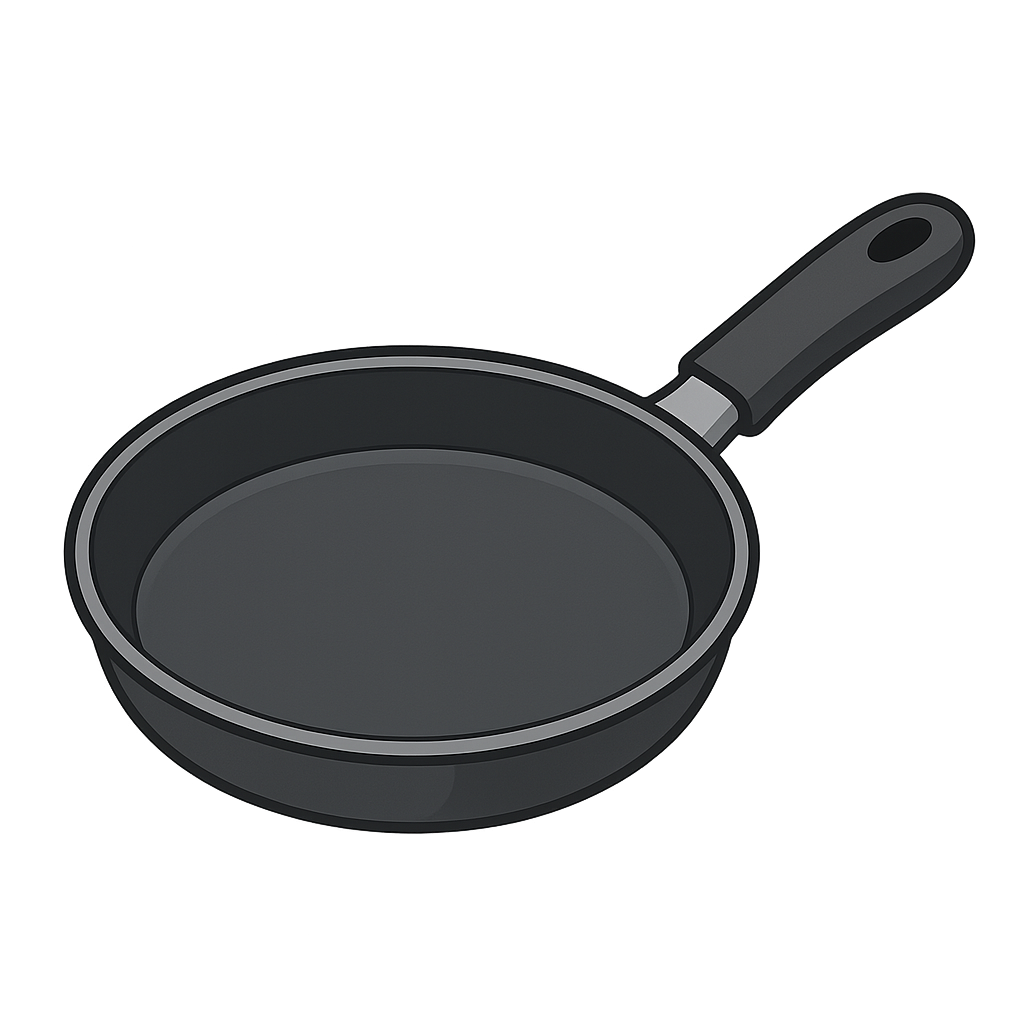
After the war ended in 1945, my life of secrecy was over, but my purpose was still unclear to the wider world. That all changed in the 1950s because of a French engineer named Marc Grégoire and his love for fishing. He had a recurring problem: his fishing line was always getting tangled. He had heard about me, the super-slippery material from America, and had an idea. He coated his fishing line with me, and just like that, his tangling troubles were over. His wife, Colette Grégoire, was a clever woman and a practical cook. Watching him work with his newly coated line, she had a flash of genius. She was tired of scrubbing pans where her perfectly cooked fish would stick and burn. In a moment of inspiration, she asked him, 'If that material can keep your fishing line from sticking, why can't it keep my food from sticking to a pan?' It was a brilliant question. Marc set to work, and in 1954, he successfully created the first non-stick frying pan by bonding me to aluminum. He called his company Tefal, a combination of Teflon and aluminum. Suddenly, I went from a top-secret material of war to a kitchen superstar. I was saving breakfasts, lunches, and dinners from sticking, and making cleanup easier for people everywhere.
My journey from a laboratory mistake to a kitchen helper was just the beginning. My unique set of skills—being incredibly slippery and resistant to almost everything—has taken me to places Dr. Plunkett never could have dreamed of. Today, you can find me in the most incredible places. I help astronauts walk in space because my fibers are woven into their suits. I am used in life-saving medical devices, like artificial joints and heart stents, because I am so unreactive with the human body. I am the coating that makes your raincoat waterproof and the thin membrane in the roof of giant stadiums that lets light in but keeps rain out. My whole existence is a testament to the power of a happy accident and the importance of asking 'What if?'. Dr. Plunkett didn't discard that 'empty' cylinder, and that curiosity changed the world. My story reminds us that sometimes, not finding what you're looking for is the first step toward discovering something far more valuable.
Activities
Take a Quiz
Test what you learned with a fun quiz!
Get creative with colors!
Print a coloring book page of this topic.