English


Teflon
Teflon is the brand name for a super-slippery material called polytetrafluoroethylene (PTFE) that was…
Reads at Grades 3–5 Listens at Grades 1–5
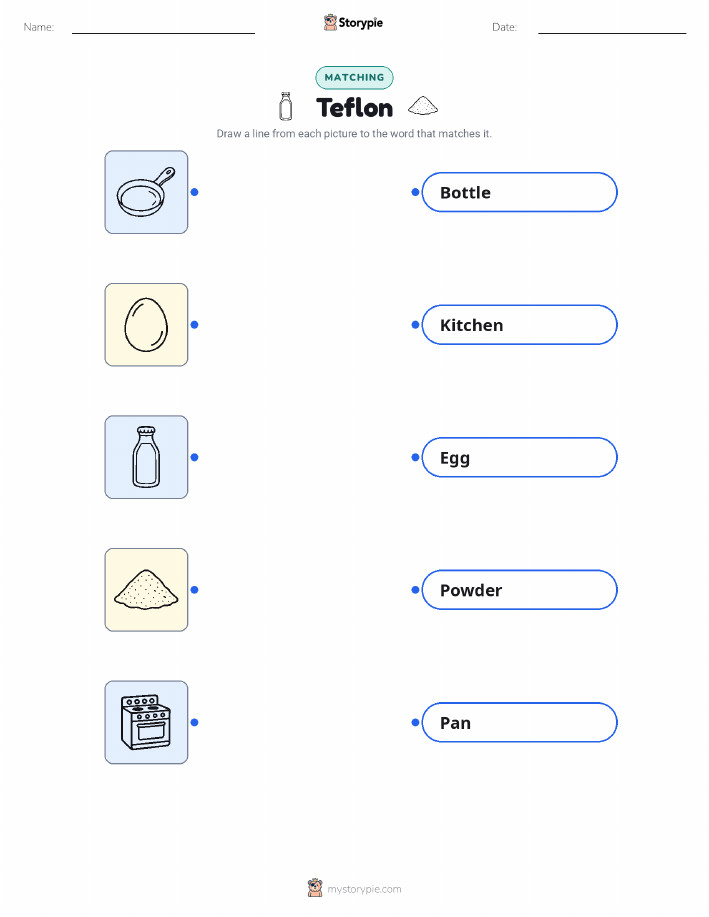
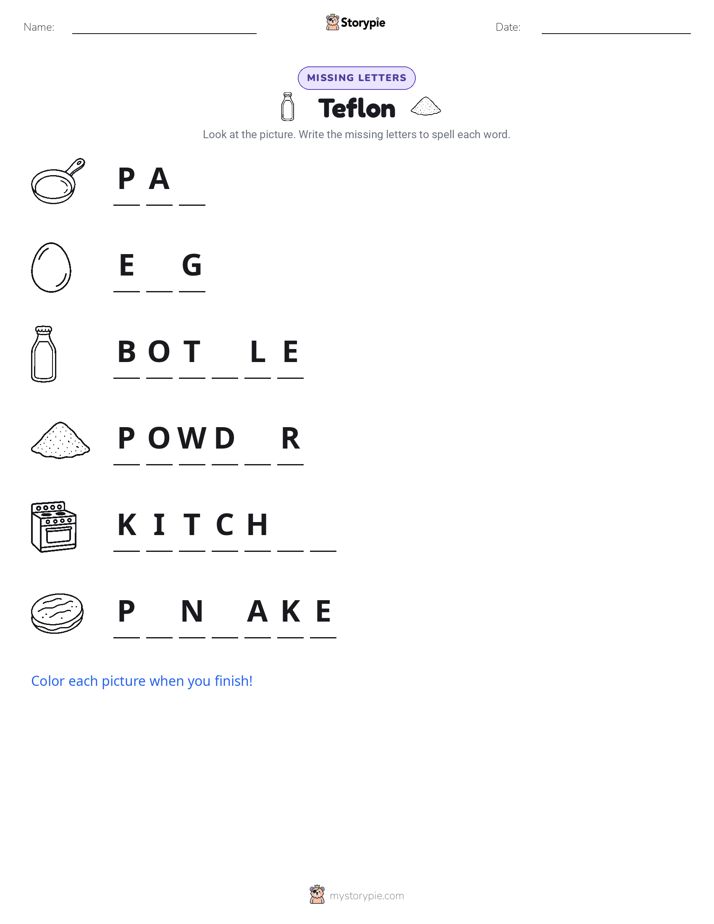
Print & create
Answer keys·No prep·Free with an account
28 worksheets · answer keys · full story · quiz · Ages 8-10 · CEFR B1
Plus adds 279,000+ more stories in 27 languages, audio for every one, and printables for all of them.
Just want Teflon?

Hello there. You probably see me every morning, though you might not know my name. I'm Teflon. I'm the reason your fluffy scrambled eggs slide right out of the pan and onto your plate without sticking. I help your pancakes flip with a gentle flick of the wrist and make sure your grilled cheese sandwiches get perfectly golden-brown without becoming a gooey, burnt mess. I make cooking easier and cleaning up a breeze. But here’s a little secret you might not know: I was never supposed to be in your kitchen at all. In fact, I wasn't even supposed to exist. My story doesn't begin with a brilliant plan to change cooking forever. It begins with a happy accident, a little bit of magic found inside a cold, heavy metal can by a curious scientist who was looking for something completely different. He thought he had a problem on his hands, but it turned out he had discovered me.
Let’s travel back in time to a laboratory on a spring day, April 6th, 1938. A clever chemist named Dr. Roy J. Plunkett was working on a very important project for a big company. He wasn't trying to invent a non-stick coating for pans; his goal was to create a new, safer kind of gas to use in refrigerators to help keep food cold and fresh. He had a special gas stored in a small metal canister, ready for his next experiment. He and his assistant, Jack Rebok, opened the valve on the canister to let some of the gas out, but nothing happened. Not a single hiss, not even a puff of air came out. That was very strange, because when they picked up the canister, it still felt heavy, as if it were completely full. They shook it and tapped it, but still, nothing. Dr. Plunkett could have just thrown the canister away and called it a failed experiment, but he was a true scientist, and true scientists are always curious. He needed to know what had happened to the gas inside. His curiosity is the very reason I am here to tell you my story. Instead of giving up, he decided he had to look inside. Since they couldn't just unscrew the top, they found a saw and carefully cut the thick metal canister open. And what did they find inside? Not a gas, but me. I was a strange, waxy, slippery white powder that had coated the entire inside of the can. The gas had magically transformed into a solid. I was unlike anything anyone had ever seen before. I was incredibly slippery, and almost nothing could stick to me. Not water, not oil, not even sticky glue. Dr. Plunkett knew right away that he had found something special, even if he didn't know exactly what I was for just yet.
The Story of Teflon
Hello there. You probably see me every morning, though you might not know my name. I'm Teflon. I'm the reason your fluffy scrambled eggs slide right out of the pan and onto your plate without sticking. I help your pancakes flip with a gentle flick of the wrist and make sure your grilled cheese sandwiches get perfectly golden-brown without becoming a gooey, burnt mess. I make cooking easier and cleaning up a breeze. But here’s a little secret you might not know: I was never supposed to be in your kitchen at all. In fact, I wasn't even supposed to exist. My story doesn't begin with a brilliant plan to change cooking forever. It begins with a happy accident, a little bit of magic found inside a cold, heavy metal can by a curious scientist who was looking for something completely different. He thought he had a problem on his hands, but it turned out he had discovered me.
Let’s travel back in time to a laboratory on a spring day, April 6th, 1938. A clever chemist named Dr. Roy J. Plunkett was working on a very important project for a big company. He wasn't trying to invent a non-stick coating for pans; his goal was to create a new, safer kind of gas to use in refrigerators to help keep food cold and fresh. He had a special gas stored in a small metal canister, ready for his next experiment. He and his assistant, Jack Rebok, opened the valve on the canister to let some of the gas out, but nothing happened. Not a single hiss, not even a puff of air came out. That was very strange, because when they picked up the canister, it still felt heavy, as if it were completely full. They shook it and tapped it, but still, nothing. Dr. Plunkett could have just thrown the canister away and called it a failed experiment, but he was a true scientist, and true scientists are always curious. He needed to know what had happened to the gas inside. His curiosity is the very reason I am here to tell you my story. Instead of giving up, he decided he had to look inside. Since they couldn't just unscrew the top, they found a saw and carefully cut the thick metal canister open. And what did they find inside? Not a gas, but me. I was a strange, waxy, slippery white powder that had coated the entire inside of the can. The gas had magically transformed into a solid. I was unlike anything anyone had ever seen before. I was incredibly slippery, and almost nothing could stick to me. Not water, not oil, not even sticky glue. Dr. Plunkett knew right away that he had found something special, even if he didn't know exactly what I was for just yet.
At first, my amazing slipperiness was a secret. I was so tough and resistant to just about everything that my first big job was for a top-secret government project during World War II. I helped with very important and serious work, but my true purpose, the one that would bring me into homes all around the world, was still waiting to be discovered. That moment came years later, in the 1950s, thanks to a French engineer named Marc Grégoire. His wife, Colette, loved to go fishing, but she had a frustrating problem: her fishing line was always getting into terrible tangles. Marc had a brilliant idea to coat the fishing line with me, the super-slippery powder, to stop the knots and tangles. It worked perfectly. Seeing how well I made the fishing line glide, Colette had an even better idea. She asked her husband, "If you can put that on a fishing line, why can't you put it on my cooking pans?" And that’s how I finally found my way into your kitchen. Marc Grégoire figured out a way to bond me to aluminum pans, and suddenly, cooking became so much easier. No more scrubbing burnt food for hours. Since then, I’ve gone on to do other amazing things, like helping astronauts in space and making medical equipment safer. Looking back, my whole life is proof that sometimes the most wonderful discoveries are the ones you weren't looking for at all. A stubborn gas canister led to a revolution in the kitchen, all because one scientist was curious enough to ask 'why?'
Wow facts
About
Teflon is the brand name for a super-slippery material called polytetrafluoroethylene (PTFE) that was accidentally discovered in 1938. It is most famous for its use as a non-stick coating on cookware.
Take a Quiz
Question 1 of 5
The story says Roy J. Plunkett could have 'called it a failed experiment.' What does this phrase mean, and why was it important that he didn't?
Explore next






Want to do even more?
Go beyond exploring. Unlock tools that turn every story into real learning.

Storypie Plus for families
Full stories, quizzes, and printables. Nights and car rides, sorted.
- Unlimited audio stories
- Create Mode: your child stars in the story
- Offline downloads
- Printable worksheets & coloring pages

Why Storypie for Schools
Students engaged. Prep in seconds. Evenings back to you.
- Worksheets & Quizzes
- Classroom Management
- Formative Assessment
- Custom Curriculum & Lesson Plans
- 27 Languages

Why Storypie for Homeschool
Curriculum done. They'll ask for more. Hours back in your day.
- Worksheet Generator
- First-Person Audio Stories
- Built-in Comprehension Quizzes
- Custom Curriculum & Lesson Plans
- Print & Go Activities