

 English

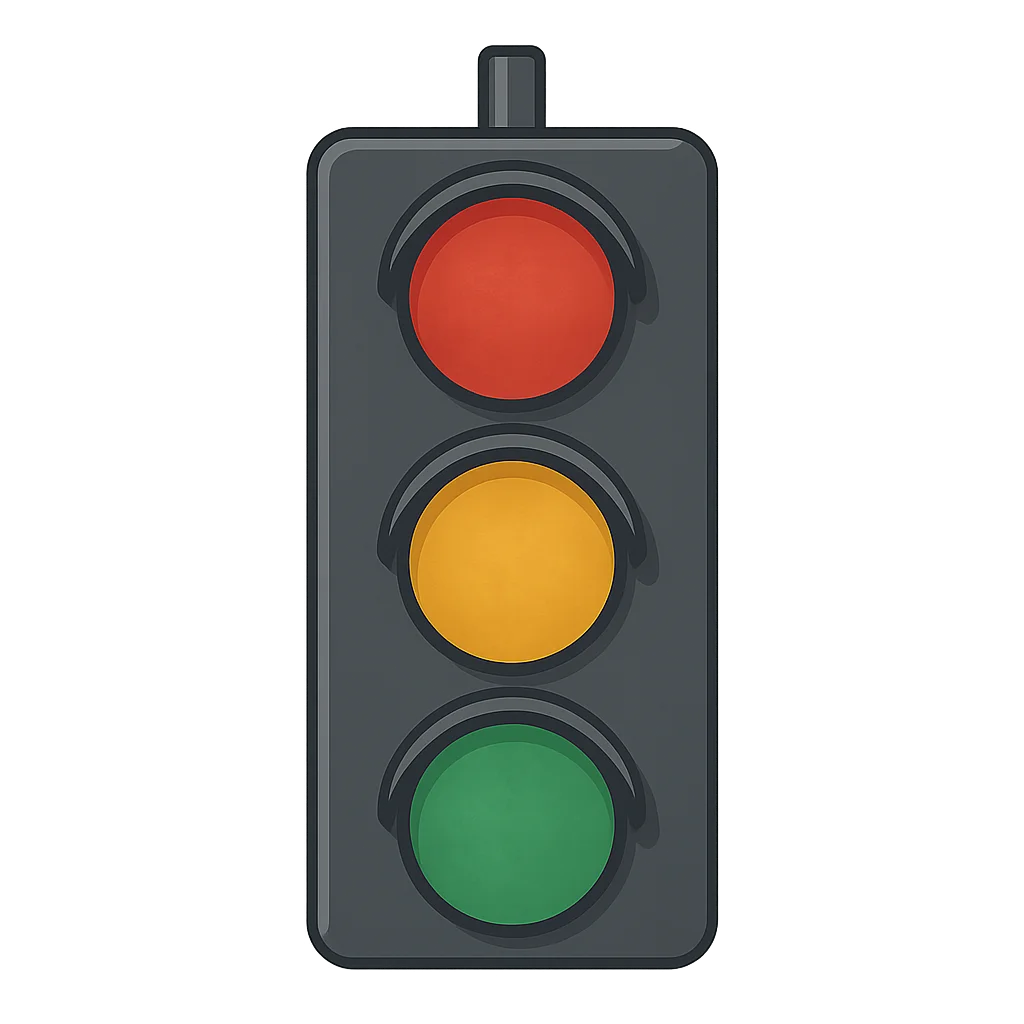
I Am the Guardian of the Crossroads
You see me every day, standing tall at the busiest corners of your world. I am the traffic light, a silent guardian watching over the endless dance of cars, buses, and people. But have you ever imagined a time before my steady glow? Close your eyes and picture it. The year is 1910. The air is thick with the smell of horse manure and gasoline. The noise is a constant clash of iron-shod wheels on cobblestone, the angry sputtering of a new Ford Model T, and the frantic shouts of drivers and pedestrians. Intersections were places of pure chaos, a tangled mess where the strongest or the boldest went first. There were no rules, no order, just a dangerous free-for-all that too often ended in crushed wagons, dented automobiles, and terrible injuries. The world was moving faster than ever before, but it desperately needed someone to bring it order, to protect it from its own speed. It needed me.
My story begins not with a flash of electricity, but with a flicker of gaslight. My very first ancestor was born in London, England, on a cold December 10th, 1868. I was the brainchild of a railway engineer named John Peake Knight, who thought the logic of train signals could tame the city streets. I stood proudly near the Houses of Parliament, a tall iron post with semaphore arms that moved up and down for the daytime crowd. At night, a police officer would light the gas lamps inside me, one glowing red for 'stop' and the other green for 'go'. For a few weeks, I brought a new sense of order to that chaotic corner. But my first life was dramatic and short. A leak in the gas line caused a small explosion, and just like that, my first chapter ended. The idea of me was a good one, but the technology wasn't quite ready. Decades passed, but the problem of traffic only grew worse across the ocean in America. Finally, on August 5th, 1914, in Cleveland, Ohio, I was reborn. This time, I was electric. Designed by men like Lester Wire and James Hoge, I was simpler, with just a red and a green light, and I had to be operated by a police officer from a booth. I was an improvement, but I knew my journey was far from over. I could tell people when to stop and when to go, but I couldn't warn them that a change was coming.
That crucial missing piece of my soul was given to me by a brilliant man named Garrett Morgan. He was an inventor with a keen eye for problems and a heart for helping people. One day, he witnessed a horrifying accident between a horse-drawn carriage and one of the new automobiles at a busy intersection. The abrupt change from 'go' to 'stop' had given neither driver enough time to react. He knew there had to be a safer, smarter way. He dedicated himself to finding a solution, and that solution was me, but better. He gave me my third eye, the amber-yellow light. It was a revolutionary idea. This new light wasn't a command; it was a caution, a moment to pause and prepare. It was a signal that said, 'Slow down, the world is about to change'. On November 20th, 1923, his design for a three-position traffic signal was granted a patent. That yellow light transformed me from a simple switch into a true guide. It introduced a rhythm, a moment of consideration that made intersections infinitely safer. I was no longer just shouting orders; I was communicating, helping drivers and pedestrians anticipate what was next. Garrett Morgan didn't just add a light; he gave me the gift of foresight, and with it, I could finally fulfill my true purpose.
From that moment on, my evolution accelerated. Soon, I learned to think for myself when timers were added, freeing police officers for other duties. I became automatic, a reliable and constant presence day and night. As technology leaped forward, so did I. Engineers gave me new senses. I received sensors buried in the pavement that could feel the weight of waiting cars, allowing me to adjust my timing based on traffic flow. I was given bright, efficient LED lights and countdown timers that helped pedestrians know exactly how much time they had to cross safely. In today's modern cities, I am part of a vast, intelligent network. I talk to other traffic lights for blocks, even miles, around. Together, we coordinate our signals to create 'green waves' that keep traffic moving smoothly, reducing congestion and pollution. My job has grown more complex, but my core mission remains the same as it was on that chaotic street corner over a century ago: to create order, to prevent harm, and to keep life moving forward safely. I am a simple invention born from a complex problem, a testament to how human ingenuity can bring safety and harmony to our bustling world.
Activities
Take a Quiz
Test what you learned with a fun quiz!
Get creative with colors!
Print a coloring book page of this topic.













 Free for Educators