The Machine with Magic Eyes
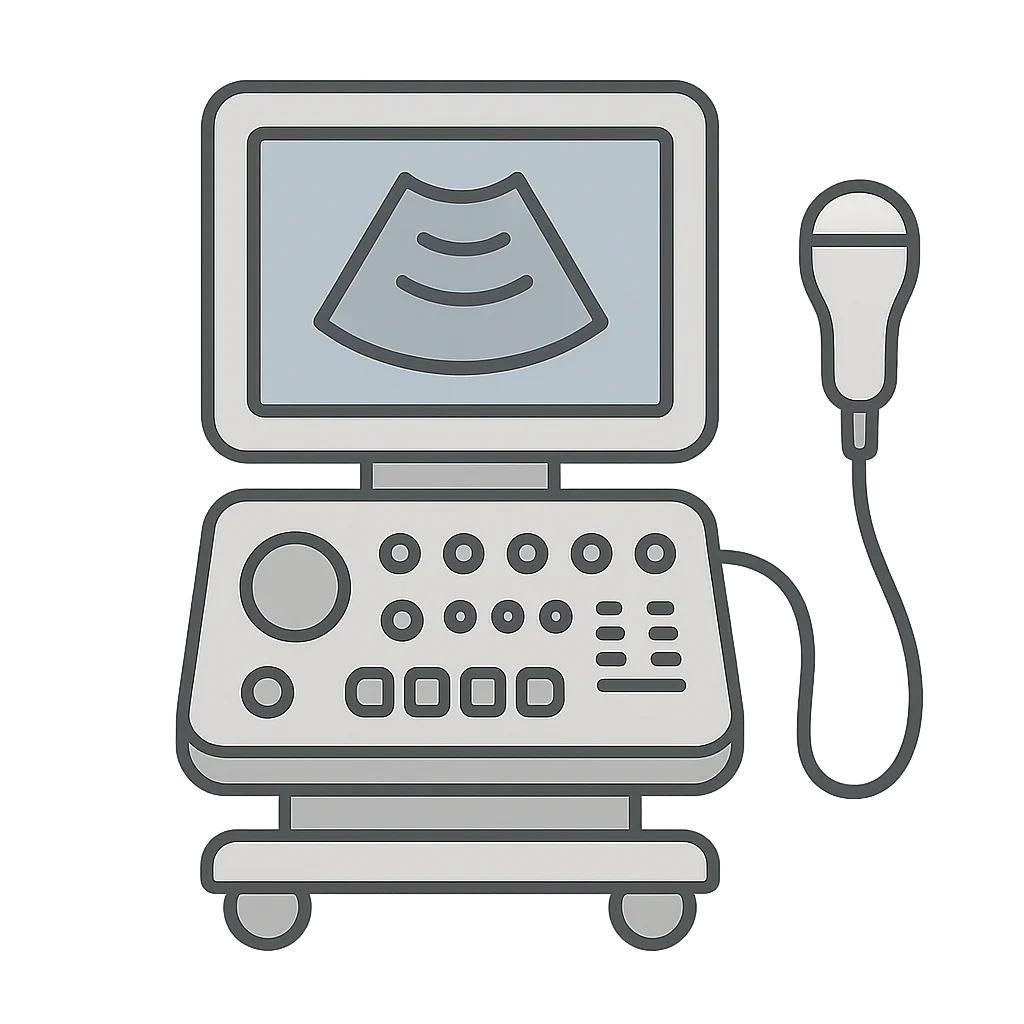
Hello, I'm Ultrasound! You might not have seen me, but I have almost certainly seen you, or maybe even your parents before they were born. I am a special kind of camera, but I don’t use light to take pictures. Instead, I use sound. Not just any sound, but super-high-pitched sound waves that are so high, human ears can’t hear them. It’s like a secret language that bats and dolphins use to see in the dark. I send these quiet little echoes into the human body, and when they bounce back, I cleverly turn them into a picture on a screen. Before I came along, if doctors wanted to see what was happening inside a person, it was a big mystery. I became their magic eyes, allowing them to peek inside without ever making a single cut, solving problems and seeing miracles in a safe and gentle way.
My family history is all about sound. My older, louder cousin was called SONAR, and he spent his time deep in the ocean during wars, sending out powerful sound waves to find hidden submarines. It was a very important job, but not a very gentle one. My story truly begins in the 1950s in a place called Scotland with a thoughtful doctor named Ian Donald. He was visiting a factory where they built giant ships. There, he saw a machine that used sound waves to find tiny, invisible cracks in the thick steel. A brilliant idea sparked in his mind. He wondered, if powerful sounds could see through metal, could a much gentler version of that sound see through a person’s skin? He knew he couldn't do it alone, so he teamed up with a clever engineer named Tom Brown. Together, they imagined a machine that could use sound to help people, and they started working day and night to bring me to life.
Our first attempts were exciting but tricky. When Dr. Donald and Tom first used me to look inside a patient, the pictures I created were not very clear. They were blurry and fuzzy, like trying to look through a foggy window on a cold day. The screen showed mostly gray smudges and strange shadows. Some people might have given up, but Dr. Donald and Tom were persistent. They knew my potential was hiding in those fuzzy images. They adjusted my knobs, changed my parts, and practiced again and again. They learned to read the shadows and understand the stories my echoes were telling. Then, a truly wonderful thing happened. Their hard work paid off, and on October 7th, 1958, they published the very first scientific paper showing the world how I could be used in medicine. It was a huge breakthrough, a brand new, safe way for doctors to diagnose illnesses.
My most famous job, and the one I think is the most fun, is being a baby’s very first photographer. I get to show parents the first pictures of their baby while it is still growing inside its mother’s womb. A doctor or technician will squeeze some cool, slippery gel onto the mother’s belly, which helps my sound waves travel better. Then, they gently slide a special wand, called a transducer, over her skin. I send my quiet echoes inside, and they bounce off the tiny baby. I listen carefully and paint a picture on my screen from what I hear. Parents gasp with joy when they see a tiny heart fluttering with life for the first time, or watch as their baby waves a little hand or kicks its feet. I help doctors make sure the baby is healthy, and I give families a precious first hello.
Looking back, I am so proud of the journey I have made from a fuzzy screen in Scotland to hospitals all over the world. While I love meeting babies, I have many other important jobs, too. I help doctors look at beating hearts, check on kidneys, and see if a muscle was hurt during a soccer game. And I am always learning and changing. My pictures get clearer and more detailed every year, showing things in 3D and even 4D, which is like a live movie. Some of my new siblings are so small and portable that they can fit right into a doctor’s pocket, ready to help people anywhere at any time. My story is one of curiosity and care, and I am happy that my gentle echoes continue to be a powerful and safe tool to help people live longer, healthier lives.
Reading Comprehension Questions
Click to see answer