English

American Tall Tales
A collection of exaggerated stories about larger-than-life American folk heroes…
Reads at Grades 6–8 Listens at Grades 4–8
Print & create
Answer keys·No prep·Free with an account
28 worksheets · answer keys · full story · quiz · Ages 10-12 · CEFR B2
Plus adds 244,000+ more stories in 27 languages, audio for every one, and printables for all of them.
Just want American Tall Tales?
I am the whisper in the pines and the rumble across the plains. I have seen this land grow, from an untamed wilderness of endless forests and mountains that scraped the sky, to a nation built by calloused hands and hopeful hearts. In the 19th century, this country was a challenge, a promise, and a dare all rolled into one. The pioneers, loggers, and cowboys who faced its vastness needed more than just courage; they needed heroes as grand as the landscape itself, figures who could tame rivers and flatten mountains with a single gesture. They needed stories to make them feel powerful in a world that often made them feel small. This powerful hunger for inspiration gave birth to a new kind of story, a legend we call the American Tall Tale. In these tales, the truth was stretched like warm taffy, shaped not by what was, but by what people dreamed they could be.
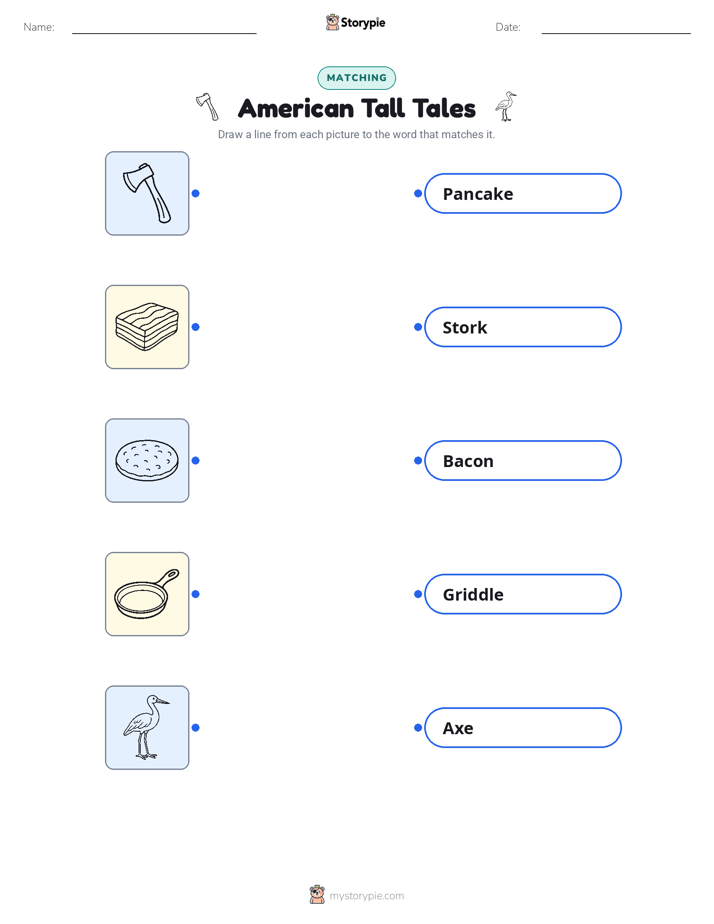
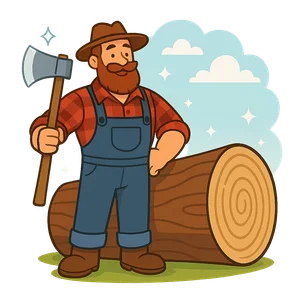
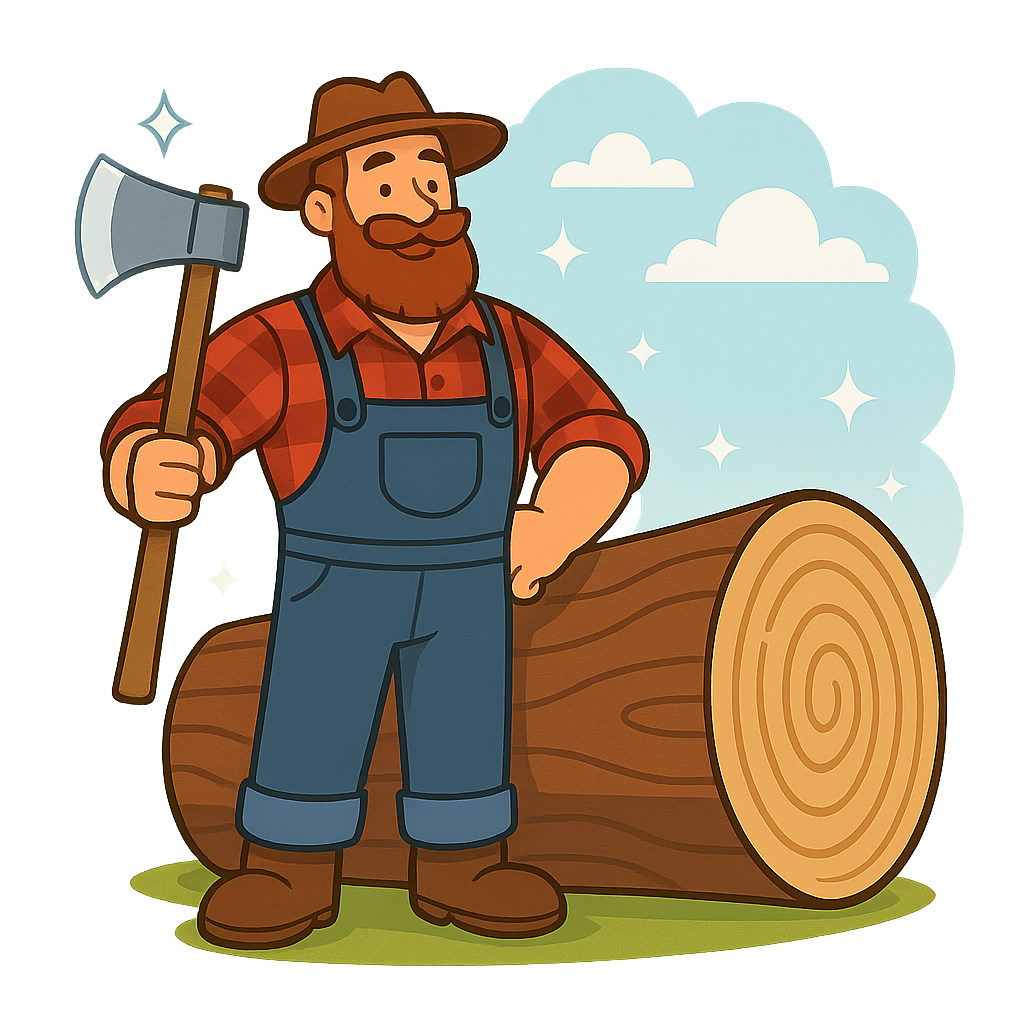
Let me first tell you of the North Woods, a place of bone-deep cold and trees so thick they blotted out the sun. It was here that the first great hero, Paul Bunyan, was born. He wasn't just tall; he was a walking mountain of a man whose laughter could cause an avalanche. When he was a baby, it took five giant storks to deliver him to his parents. As a man, his footsteps were so heavy that they pressed deep into the earth, filling with water to become the 10,000 lakes of Minnesota. His constant companion was Babe the Blue Ox, a magnificent beast born during the Winter of the Blue Snow. Babe was so immense that the distance between his horns measured forty-two axe-handles and a plug of chewing tobacco. Together, they were an unstoppable force of nature. Paul and Babe could clear an entire state of its timber in a single morning. His logging camp was a sight to behold, especially the cookhouse. The griddle was so vast that cooks had to strap slabs of bacon to their feet and skate across its sizzling surface just to keep it greased for the morning pancakes. For the lumberjacks, who performed the back-breaking work of felling ancient trees, the story of Paul Bunyan was more than just a funny tale. It was a reflection of their own strength and the colossal scale of their work, making them feel like giants themselves.
Heroes as Big as the Land
I am the whisper in the pines and the rumble across the plains. I have seen this land grow, from an untamed wilderness of endless forests and mountains that scraped the sky, to a nation built by calloused hands and hopeful hearts. In the 19th century, this country was a challenge, a promise, and a dare all rolled into one. The pioneers, loggers, and cowboys who faced its vastness needed more than just courage; they needed heroes as grand as the landscape itself, figures who could tame rivers and flatten mountains with a single gesture. They needed stories to make them feel powerful in a world that often made them feel small. This powerful hunger for inspiration gave birth to a new kind of story, a legend we call the American Tall Tale. In these tales, the truth was stretched like warm taffy, shaped not by what was, but by what people dreamed they could be.
Let me first tell you of the North Woods, a place of bone-deep cold and trees so thick they blotted out the sun. It was here that the first great hero, Paul Bunyan, was born. He wasn't just tall; he was a walking mountain of a man whose laughter could cause an avalanche. When he was a baby, it took five giant storks to deliver him to his parents. As a man, his footsteps were so heavy that they pressed deep into the earth, filling with water to become the 10,000 lakes of Minnesota. His constant companion was Babe the Blue Ox, a magnificent beast born during the Winter of the Blue Snow. Babe was so immense that the distance between his horns measured forty-two axe-handles and a plug of chewing tobacco. Together, they were an unstoppable force of nature. Paul and Babe could clear an entire state of its timber in a single morning. His logging camp was a sight to behold, especially the cookhouse. The griddle was so vast that cooks had to strap slabs of bacon to their feet and skate across its sizzling surface just to keep it greased for the morning pancakes. For the lumberjacks, who performed the back-breaking work of felling ancient trees, the story of Paul Bunyan was more than just a funny tale. It was a reflection of their own strength and the colossal scale of their work, making them feel like giants themselves.
From the frigid north, I'll carry you south to the sun-scorched plains of the American Southwest. Here, the land was a canvas of dust, rock, and relentless heat, a place that demanded a different kind of hero. This was the home of Pecos Bill. As a baby, he fell out of his family's covered wagon and was found and raised by a pack of coyotes. He thought he was a coyote himself until he met a cowboy and realized he didn't have a tail. Bill grew up to be the greatest cowboy who ever lived, a man as wild and unpredictable as the desert itself. His horse, Widow-Maker, was a creature of pure dynamite, who bucked higher than any mountain and had a taste for nitroglycerin. But Bill tamed him. Instead of a regular rope, Bill preferred to use a live rattlesnake he called Shake as a lasso. He was a master of everything cowboy, but his most legendary feat came during a terrible drought. A massive cyclone was tearing across the plains, sucking up every last drop of moisture. Unfazed, Pecos Bill leaped onto the cyclone's back and rode it like a wild stallion, wrestling and wrangling it until it finally rained itself out. That furious ride is said to have carved out Death Valley with its final crash and created the beautiful hues of the Painted Desert. His story gave cowboys a hero who could master the untamable West they called home.
Now, let us travel east, to the rugged Appalachian Mountains where progress was being forged with sweat and steel. Here, among the railroad workers blasting tunnels through solid rock, was a man unlike any other: John Henry. Born a slave, he was now a free man, and the finest steel-driver on the entire line. A steel-driver’s job was to hammer a steel drill into the rock to make holes for explosives, a grueling and dangerous task. John Henry, with a ten-pound hammer in each hand, was a force of nature, his rhythm like a powerful song echoing through the mountains. One day, a salesman arrived with a newfangled steam-powered drill, claiming his machine could drill faster than any dozen men. The railroad boss was intrigued, seeing a way to save money, but the workers saw a machine that would steal their jobs and their dignity. John Henry would not let that stand. "A man ain't nothin' but a man," he declared, "but before I let that steam drill beat me down, I'll die with a hammer in my hand." A contest was set: John Henry versus the machine. For a whole day, the mountain shuddered with the clang of his hammers against steel and the hissing roar of the engine. When the dust settled, the machine had drilled a hole nine feet deep. But John Henry, powered by sheer will and an indomitable spirit, had drilled two seven-foot holes. He had won. He had proven the power of the human heart, but his own heart, having given everything it could, finally rested.
So why do we still tell these stories of Paul Bunyan, Pecos Bill, and John Henry? Were they just entertaining falsehoods? No, they were something far more important. They were vessels for hope, testaments to pride, and expressions of humor in the face of incredible hardship. For the people who first told them, these tall tales were a way to conquer the unconquerable. If a giant could carve out lakes, a cowboy could ride a tornado, and a man could beat a machine, then surely a lumberjack, a rancher, or a railroad worker could face their own daily struggles. These characters became enduring symbols of American optimism, grit, and the belief that no challenge is too big to overcome. Their legends live on in books, songs, and our collective imagination. And that spirit, the spirit of the tall tale, reignites every time we face a daunting task and tell ourselves a story of our own strength to see us through, reminding us that sometimes, you have to dream big to be big.
Wow facts
About
A collection of exaggerated stories about larger-than-life American folk heroes, originating in the 19th century primarily to entertain and reflect frontier values, with some tales explaining natural features and celebrate the spirit of the American frontier.
Take a Quiz
Question 1 of 5
In your own words, retell the story of John Henry's contest against the steam drill.
Explore next



Want to do even more?
Go beyond exploring. Unlock tools that turn every story into real learning.

Storypie Plus for families
Full stories, quizzes, and printables. Nights and car rides, sorted.
- Unlimited audio stories
- Create Mode: your child stars in the story
- Offline downloads
- Printable worksheets & coloring pages

Why Storypie for Schools
Students engaged. Prep in seconds. Evenings back to you.
- Worksheets & Quizzes
- Classroom Management
- Formative Assessment
- Custom Curriculum & Lesson Plans
- 27 Languages

Why Storypie for Homeschool
Curriculum done. They'll ask for more. Hours back in your day.
- Worksheet Generator
- First-Person Audio Stories
- Built-in Comprehension Quizzes
- Custom Curriculum & Lesson Plans
- Print & Go Activities