Davy Crockett: King of the Wild Frontier
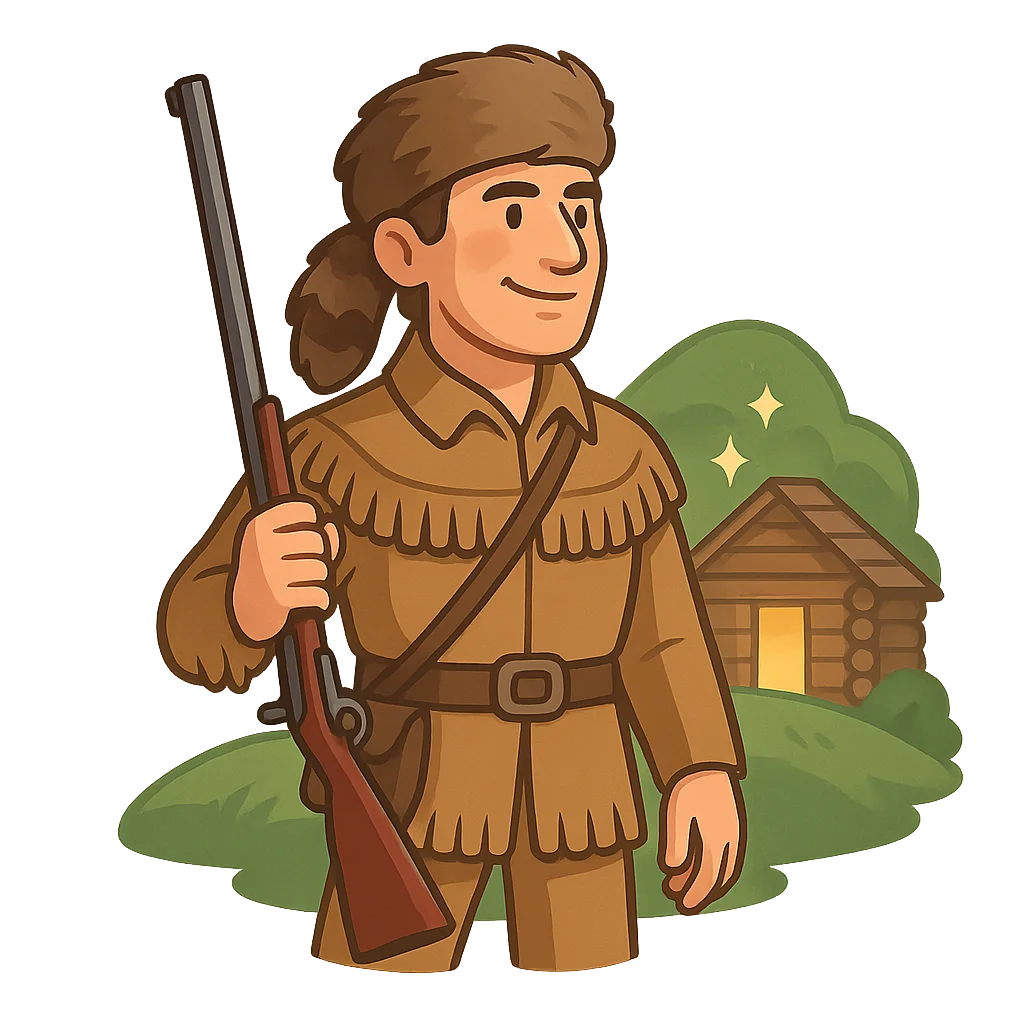
Howdy, folks. Out here where the trees are tall as skyscrapers and the rivers run wild and free, a story can grow just as big. My name is Davy Crockett, and the great American frontier was my home. I was born on a mountaintop in Tennessee on August 17th, 1786, and they say I was grinning from the moment I arrived. As I grew up, people started telling tales about my adventures, stretching them taller than a sycamore tree until they became legends. This is the story of how a real frontiersman became the tall tale hero known as Davy Crockett, King of the Wild Frontier.
The stories about me were told around crackling campfires and printed in little books called almanacs. In these tales, I wasn't just a skilled hunter; I was a force of nature. One story tells of a bear so big and fearsome its name was Death Hug. When I met this bear in the woods, I didn't run. Instead, I gave it my famous grin—a grin so powerful it could charm a squirrel right out of a tree. The bear was so surprised by my confidence that it just gave up, and I led it away peacefully. Another time, the world faced a terrible problem. It was the winter of 1816, a year so cold the earth’s gears had supposedly frozen solid, stopping the sun in the sky. The whole world was turning into an icicle. Can you imagine everything being frozen in place. I knew I had to do something. I climbed the highest, iciest mountain, carrying a slab of bear meat. I used the oil from the meat to grease the frozen axle of the Earth and gave the sun a mighty kick to get it moving again, saving everyone from a frosty fate. They said I was so fast I could ride a streak of lightning and so strong I could hold a river in my hand. Even my famous coonskin cap had a story. They say I met a very proud raccoon who thought it was the toughest critter in the woods. I just grinned at it, and the raccoon, knowing it had been outmatched by the greatest grinner of all time, offered up its tail for my cap. These stories made people laugh, but they also made them feel brave. It seemed I could solve any problem with my strength, my wits, or just a powerful grin.
Now, while I never really thawed the sun with bear grease, the real me—the David Crockett who served in Congress and explored the wilderness—did believe in being brave and doing what's right. The tall tales were a way for people living on the tough frontier to feel strong. They saw the challenges of the wild—fierce animals, harsh weather, and the unknown—and created a hero who was bigger than all of it. The legendary Davy Crockett represented the spirit of the American pioneer: courageous, clever, and always ready for an adventure. I was a real man who fought for my neighbors in government and explored new lands. But I was also a symbol of the wild, wonderful spirit of America. I eventually traveled to Texas and fought for its freedom, where my life ended at a fort called the Alamo on March 6th, 1836. Even though the real man was gone, my legend grew even bigger. Today, the story of Davy Crockett continues to inspire people. It reminds us that there's a little bit of the 'King of the Wild Frontier' in all of us when we face a challenge with a brave heart and maybe even a grin. The myth isn't just about wrestling bears; it’s about wrestling with any problem and believing you have the strength to win, sparking our imagination to this very day.
Reading Comprehension Questions
Click to see answer