English

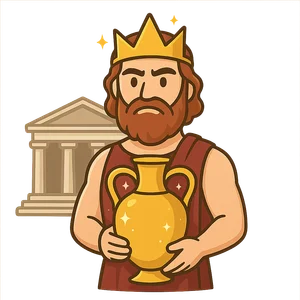
King Eurystheus
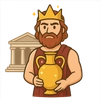
King Eurystheus was the mythical king of Tiryns and Mycenae…
Reads at Grades 6–8 Listens at Grades 4–8
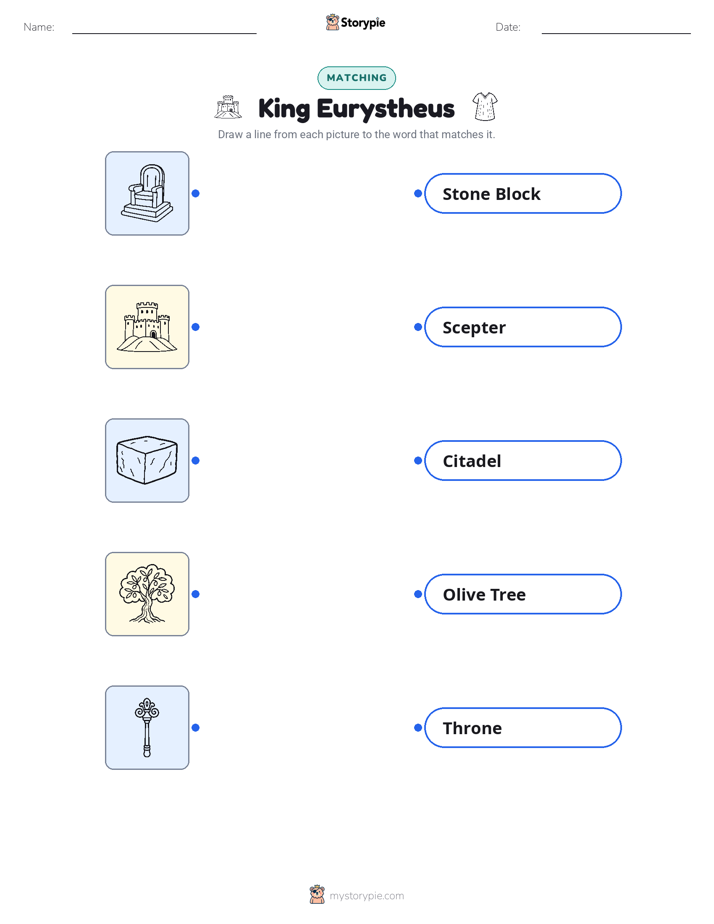
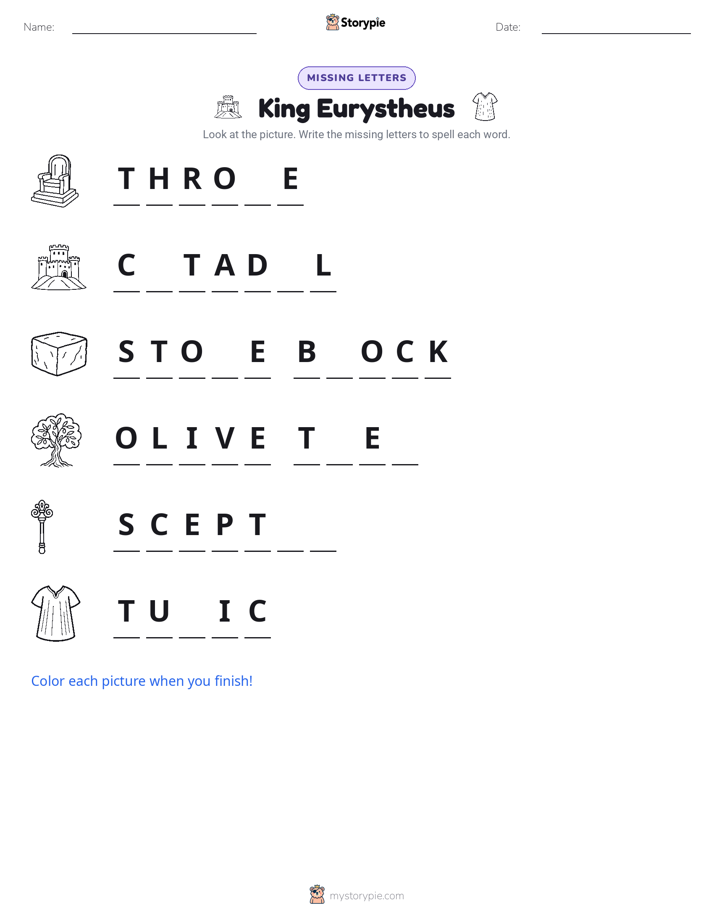
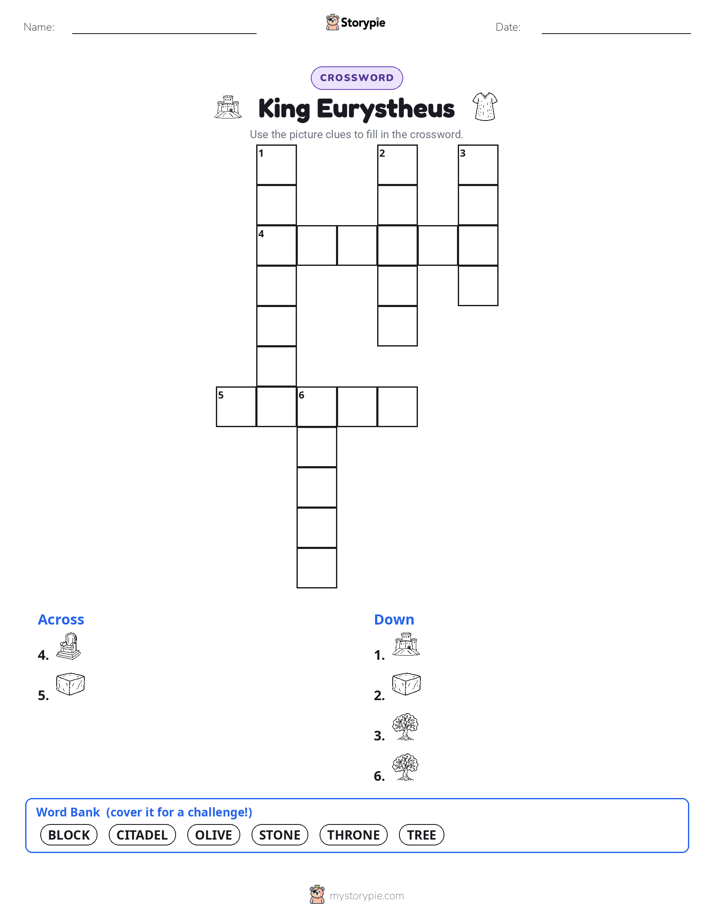
Print & create
Answer keys·No prep·Free with an account
28 worksheets · answer keys · full story · quiz · Ages 10-12 · CEFR B2
Plus adds 208,000+ more stories in 27 languages, audio for every one, and printables for all of them.
Just want King Eurystheus?
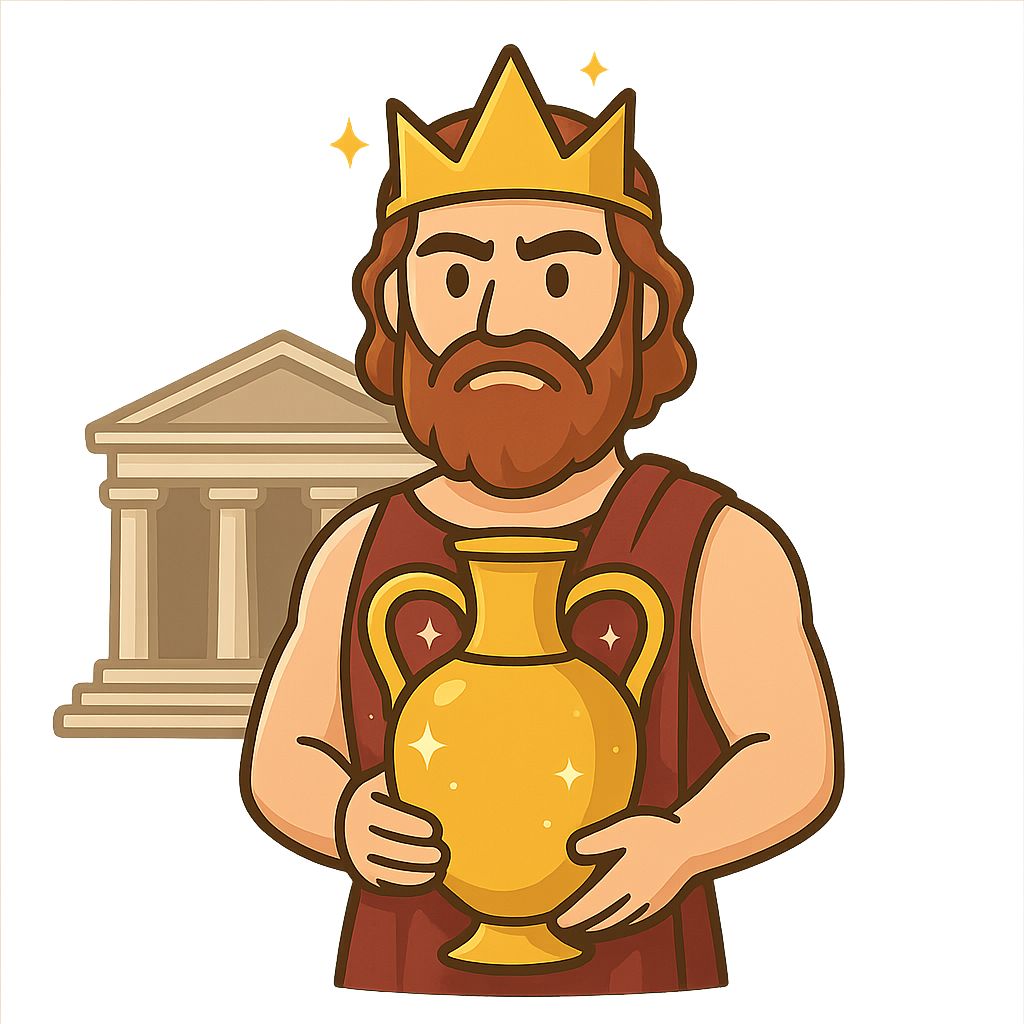
From my throne in the mighty citadel of Mycenae, where the walls are built of stones so large they say the Cyclopes themselves set them in place, I watch the sun bake the plains of Argolis. The air is thick with the scent of olive groves and the low hum of a prosperous city, but a shadow often falls across my heart. I am King Eurystheus, ruler of this land, but my name is forever tied to another's: my cousin, Heracles. He was born with the favor of his father, Zeus, and possessed a strength that was more divine than mortal. It was a power that frightened me, a strength that felt like a storm cloud waiting to break. After a terrible tragedy, born from a madness sent by the jealous goddess Hera, the divine Oracle at Delphi decreed his fate. To cleanse his spirit, Heracles was to serve me for twelve years and perform any tasks I set for him. I saw this as a chance not just to control him, but to test the very limits of his famed power. I devised a series of challenges so difficult, so dangerous, that I believed no man, not even a son of Zeus, could survive them. This is the story of how I, King Eurystheus, commanded the Twelve Labors of Heracles.
The first task was designed to be his last. I sent Heracles to the hills of Nemea to slay a monstrous lion whose golden hide was impervious to any weapon. I imagined him failing, his spear and arrows shattering uselessly against the beast. But Heracles returned, not with a weapon, but with the lion's own hide draped over his shoulders. He had wrestled the beast with his bare hands, using its own unbreakable claw to skin it. I was so terrified when he approached my city gates wearing that fearsome cloak that I ordered him never to enter Mycenae again; he was to present his proofs of labor from a distance. My fear only fueled my determination. For his second labor, I sent him to the swamps of Lerna to destroy the Hydra, a nine-headed serpent whose venom was deadly and for every head severed, two more would grow in its place. Surely, this was an impossible task. Yet, with the help of his nephew Iolaus, Heracles used fire to sear the stumps of each neck as he cut off the heads, preventing them from regrowing. I tried to disqualify the labor, claiming he had received help, but the feat was too great to ignore. The labors grew in scope and strangeness. I commanded him to clean the stables of King Augeas, which held thousands of cattle and had not been cleaned in thirty years. It was a task meant to humiliate him, to bury him in filth. Instead, he showed not just strength but incredible cunning, diverting two entire rivers, the Alpheus and the Peneus, to wash the stables clean in a single day. He captured the Erymanthian Boar, chased the golden-horned Ceryneian Hind for a full year, and drove away the flesh-eating Stymphalian Birds. Each success was a blow to my pride and a source of growing dread. I sent him further and further away, to the very edges of the known world. He journeyed to Crete to capture the Cretan Bull, and to Thrace to steal the man-eating Mares of Diomedes. He even sailed to the island of the Amazons to retrieve the girdle of their queen, Hippolyta. The final labors were meant to be journeys of no return. I ordered him to fetch the golden apples from the Garden of the Hesperides, a task that required him to trick the mighty Titan, Atlas, into helping him. And for his twelfth and final labor, I sent him to the one place from which no mortal had ever returned: the Underworld. His task was to capture Cerberus, the three-headed guard dog of Hades. When Heracles returned, dragging the snarling, chained beast behind him, I could do nothing but stare in utter disbelief. He had faced death itself and emerged victorious. The tasks I had designed to destroy him had instead forged him into the greatest hero the world had ever known.
The Twelve Labors of Heracles
From my throne in the mighty citadel of Mycenae, where the walls are built of stones so large they say the Cyclopes themselves set them in place, I watch the sun bake the plains of Argolis. The air is thick with the scent of olive groves and the low hum of a prosperous city, but a shadow often falls across my heart. I am King Eurystheus, ruler of this land, but my name is forever tied to another's: my cousin, Heracles. He was born with the favor of his father, Zeus, and possessed a strength that was more divine than mortal. It was a power that frightened me, a strength that felt like a storm cloud waiting to break. After a terrible tragedy, born from a madness sent by the jealous goddess Hera, the divine Oracle at Delphi decreed his fate. To cleanse his spirit, Heracles was to serve me for twelve years and perform any tasks I set for him. I saw this as a chance not just to control him, but to test the very limits of his famed power. I devised a series of challenges so difficult, so dangerous, that I believed no man, not even a son of Zeus, could survive them. This is the story of how I, King Eurystheus, commanded the Twelve Labors of Heracles.
The first task was designed to be his last. I sent Heracles to the hills of Nemea to slay a monstrous lion whose golden hide was impervious to any weapon. I imagined him failing, his spear and arrows shattering uselessly against the beast. But Heracles returned, not with a weapon, but with the lion's own hide draped over his shoulders. He had wrestled the beast with his bare hands, using its own unbreakable claw to skin it. I was so terrified when he approached my city gates wearing that fearsome cloak that I ordered him never to enter Mycenae again; he was to present his proofs of labor from a distance. My fear only fueled my determination. For his second labor, I sent him to the swamps of Lerna to destroy the Hydra, a nine-headed serpent whose venom was deadly and for every head severed, two more would grow in its place. Surely, this was an impossible task. Yet, with the help of his nephew Iolaus, Heracles used fire to sear the stumps of each neck as he cut off the heads, preventing them from regrowing. I tried to disqualify the labor, claiming he had received help, but the feat was too great to ignore. The labors grew in scope and strangeness. I commanded him to clean the stables of King Augeas, which held thousands of cattle and had not been cleaned in thirty years. It was a task meant to humiliate him, to bury him in filth. Instead, he showed not just strength but incredible cunning, diverting two entire rivers, the Alpheus and the Peneus, to wash the stables clean in a single day. He captured the Erymanthian Boar, chased the golden-horned Ceryneian Hind for a full year, and drove away the flesh-eating Stymphalian Birds. Each success was a blow to my pride and a source of growing dread. I sent him further and further away, to the very edges of the known world. He journeyed to Crete to capture the Cretan Bull, and to Thrace to steal the man-eating Mares of Diomedes. He even sailed to the island of the Amazons to retrieve the girdle of their queen, Hippolyta. The final labors were meant to be journeys of no return. I ordered him to fetch the golden apples from the Garden of the Hesperides, a task that required him to trick the mighty Titan, Atlas, into helping him. And for his twelfth and final labor, I sent him to the one place from which no mortal had ever returned: the Underworld. His task was to capture Cerberus, the three-headed guard dog of Hades. When Heracles returned, dragging the snarling, chained beast behind him, I could do nothing but stare in utter disbelief. He had faced death itself and emerged victorious. The tasks I had designed to destroy him had instead forged him into the greatest hero the world had ever known.
With the twelfth labor complete, Heracles was free. He had paid his penance and his spirit was cleansed. He left my service a legend, his story already being sung by poets and whispered in awe across Greece. In truth, though I was his taskmaster, I was also his first audience. I witnessed a man confront the impossible and, through sheer will, courage, and ingenuity, make it possible. The story of Heracles and his Twelve Labors became more than just a tale of adventure. For the ancient Greeks, it was a profound story about perseverance. It taught that anyone, even a hero plagued by sorrow, could find redemption by facing their challenges head-on. It showed that true strength was not just physical power, but also intelligence, endurance, and the courage to face the darkness both in the world and within oneself. Today, thousands of years later, the echo of Heracles's feats still resounds. We see his image in sculptures carved from ancient marble, in paintings that capture his epic struggles, and in the movies and books that retell his story for new generations. The myth reminds us that we all have our own 'labors' to face—our challenges, fears, and difficult tasks. Heracles's journey is a timeless inspiration, a story that encourages us to discover our own inner strength, to never give up, and to believe that we, too, can overcome the greatest obstacles in our path. His legend is not just a myth; it's a map of human potential, showing that the path to becoming a hero is paved with courage.
Wow facts
About
King Eurystheus was the mythical king of Tiryns and Mycenae, with different stories saying he ruled one city or the other. At the request of the goddess Hera, he assigned Heracles his famous Twelve Labors.
Take a Quiz
Question 1 of 5
Why did King Eurystheus give Heracles the twelve labors?
Explore next




Want to do even more?
Go beyond exploring. Unlock tools that turn every story into real learning.

Storypie Plus for families
Full stories, quizzes, and printables. Nights and car rides, sorted.
- Unlimited audio stories
- Create Mode: your child stars in the story
- Offline downloads
- Printable worksheets & coloring pages

Why Storypie for Schools
Students engaged. Prep in seconds. Evenings back to you.
- Worksheets & Quizzes
- Classroom Management
- Formative Assessment
- Custom Curriculum & Lesson Plans
- 27 Languages

Why Storypie for Homeschool
Curriculum done. They'll ask for more. Hours back in your day.
- Worksheet Generator
- First-Person Audio Stories
- Built-in Comprehension Quizzes
- Custom Curriculum & Lesson Plans
- Print & Go Activities