English

Greek Mythology
A famous Greek myth about the master inventor Daedalus and his son Icarus…
Reads at Grades 6–8 Listens at Grades 4–8
Print & create
Answer keys·No prep·Free with an account
28 worksheets · answer keys · full story · quiz · Ages 10-12 · CEFR B2
Plus adds 102,000+ more stories in 27 languages, audio for every one, and printables for all of them.
Just want Greek Mythology?
My name is Daedalus, and I was once celebrated as the most brilliant inventor in all of Greece, a man who could craft wonders from bronze, wood, and thought. Now, I stand on the windswept cliffs of Crete, where the salty air is a constant reminder of the vast sea that holds me and my beloved son, Icarus, as prisoners. We are confined here by the cruel command of King Minos, for whom I engineered my greatest and most dreadful creation: the Labyrinth, a maze so complex that no one who entered could ever find their way out. I look at my son, his face bright with the fire of youth, his spirit untamed, and my weary heart aches with a longing for our home in Athens. He sees this island as a grand playground, but I see it only as a beautiful cage. King Minos, in his arrogance, believed he controlled everything. He commanded the soldiers who patrolled the land and the ships that ruled the sea, ensuring no one could leave Crete without his permission. But as I watched the gulls soar effortlessly on the wind, a desperate, audacious plan began to form in my mind, a plan that would challenge the king’s authority and the very laws of nature. Minos did not control the air. This is the story of our escape, a tale of genius and sorrow forever known as The Myth of Icarus and Daedalus.
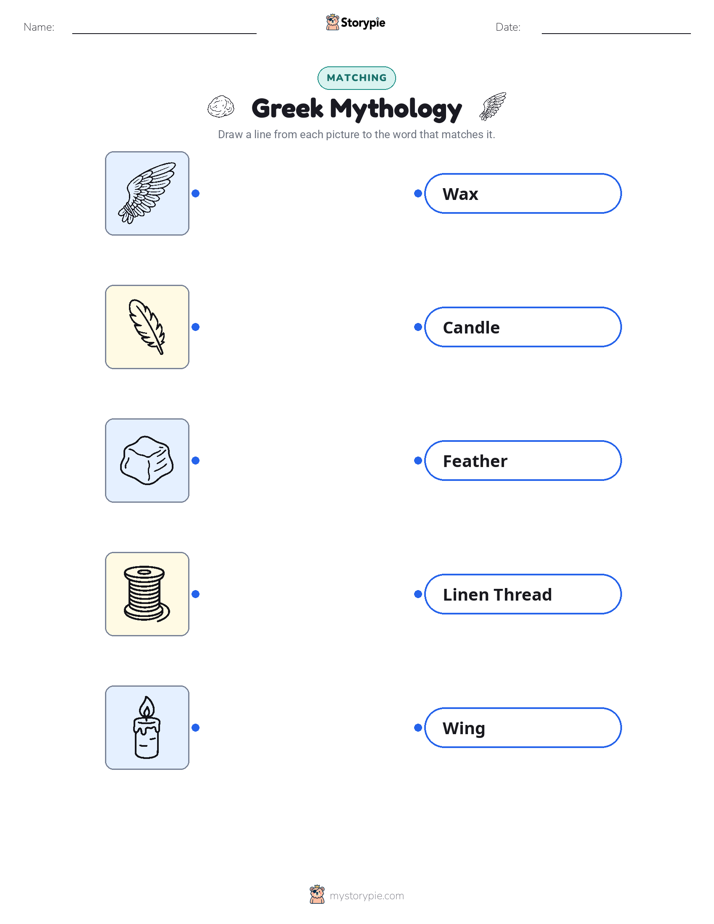
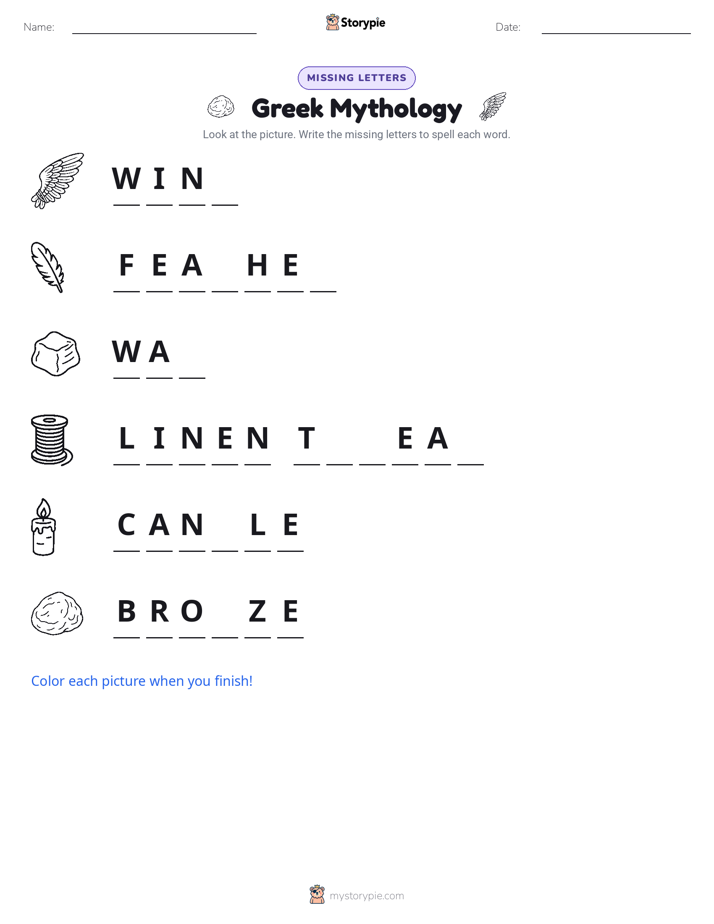
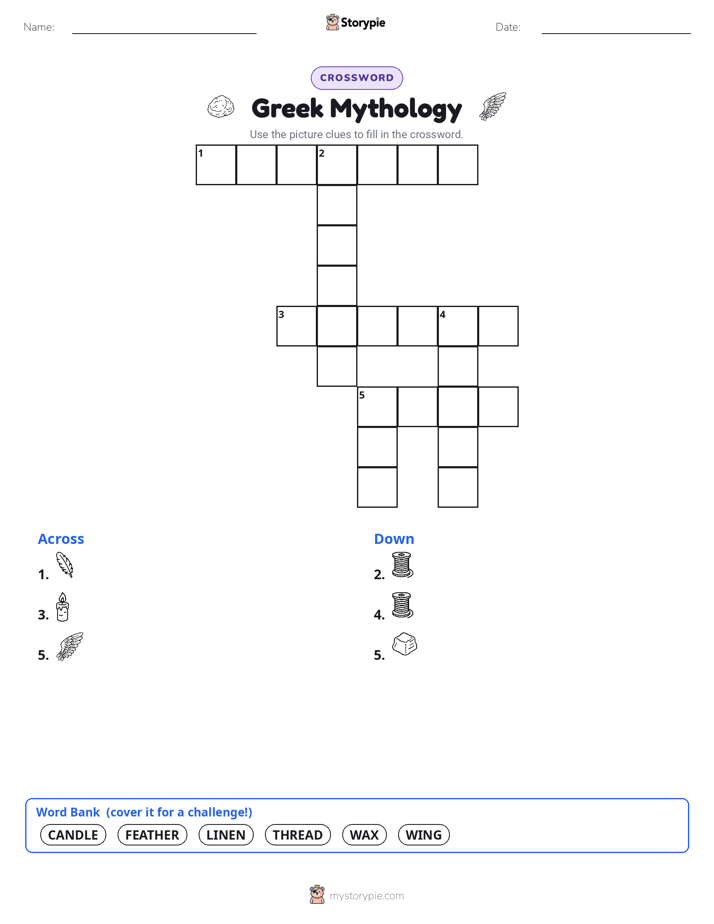
My workshop became a place of secrets, hidden from the prying eyes of the king’s guards. By day, Icarus and I would walk the shores, and he, thinking it a game, would chase the seabirds, his laughter echoing against the rocks. He would return to me with fistfuls of feathers, large and small, light and dark, not knowing they were the keys to our freedom. I gathered them all, sorting them meticulously. At night, by the flickering light of a single candle, the true work began. I laid the feathers out in overlapping rows, from the smallest downy ones to the great, strong quills of eagles, mimicking the natural structure of a bird’s wing. I bound their bases together with sturdy linen thread, and then, using beeswax I had collected, I carefully sealed them into a graceful, curving shape. I fashioned two pairs of these magnificent wings, one for my son, and one for myself. The day we first tested them was one of nervous excitement. “Strap them on, Icarus,” I instructed, my hands trembling slightly. “Feel the wind. Do not fight it. Become part of it.” His first attempts were clumsy, a series of awkward hops and stumbles that ended in laughter. But he was a quick study, and soon, we were both gliding short distances, the exhilarating feeling of lift beneath us a promise of the liberty to come. Before our final departure, I pulled him close, my voice grave. “Listen to me, my son, and do not forget my words. Do not fly too low, for the sea spray will soak your wings and make them too heavy to bear. But do not fly too high, for the sun’s ferocious heat will melt the wax that holds your feathers, and you will fall. Follow my path. Stay in the middle. Stay close to me.” He nodded, his eyes wide with anticipation. We took to the air, and the feeling was beyond description. We were free. The island of Crete shrank below us, a jewel in an endless blue sea. Icarus whooped with pure joy, and my heart swelled with a perilous mix of pride and fear. But the ecstasy of flight was a potent intoxicant. Forgetting my warning in his youthful exuberance, he began to climb, higher and higher, seeking to touch the sun itself. “Icarus. Come back.” I screamed, but the wind stole my words. I watched in horror as he soared upward, a reckless speck against the blinding sun. Then, I saw it. A single feather detached, then another, drifting downward like dark teardrops. The wax was melting. His frantic flapping became useless as the wings disintegrated. For one terrible, silent moment, he hung in the air, and then he plummeted into the sea below. My creation had given us freedom, but it had also stolen my son.
The Flight of Icarus and Daedalus
My name is Daedalus, and I was once celebrated as the most brilliant inventor in all of Greece, a man who could craft wonders from bronze, wood, and thought. Now, I stand on the windswept cliffs of Crete, where the salty air is a constant reminder of the vast sea that holds me and my beloved son, Icarus, as prisoners. We are confined here by the cruel command of King Minos, for whom I engineered my greatest and most dreadful creation: the Labyrinth, a maze so complex that no one who entered could ever find their way out. I look at my son, his face bright with the fire of youth, his spirit untamed, and my weary heart aches with a longing for our home in Athens. He sees this island as a grand playground, but I see it only as a beautiful cage. King Minos, in his arrogance, believed he controlled everything. He commanded the soldiers who patrolled the land and the ships that ruled the sea, ensuring no one could leave Crete without his permission. But as I watched the gulls soar effortlessly on the wind, a desperate, audacious plan began to form in my mind, a plan that would challenge the king’s authority and the very laws of nature. Minos did not control the air. This is the story of our escape, a tale of genius and sorrow forever known as The Myth of Icarus and Daedalus.
My workshop became a place of secrets, hidden from the prying eyes of the king’s guards. By day, Icarus and I would walk the shores, and he, thinking it a game, would chase the seabirds, his laughter echoing against the rocks. He would return to me with fistfuls of feathers, large and small, light and dark, not knowing they were the keys to our freedom. I gathered them all, sorting them meticulously. At night, by the flickering light of a single candle, the true work began. I laid the feathers out in overlapping rows, from the smallest downy ones to the great, strong quills of eagles, mimicking the natural structure of a bird’s wing. I bound their bases together with sturdy linen thread, and then, using beeswax I had collected, I carefully sealed them into a graceful, curving shape. I fashioned two pairs of these magnificent wings, one for my son, and one for myself. The day we first tested them was one of nervous excitement. “Strap them on, Icarus,” I instructed, my hands trembling slightly. “Feel the wind. Do not fight it. Become part of it.” His first attempts were clumsy, a series of awkward hops and stumbles that ended in laughter. But he was a quick study, and soon, we were both gliding short distances, the exhilarating feeling of lift beneath us a promise of the liberty to come. Before our final departure, I pulled him close, my voice grave. “Listen to me, my son, and do not forget my words. Do not fly too low, for the sea spray will soak your wings and make them too heavy to bear. But do not fly too high, for the sun’s ferocious heat will melt the wax that holds your feathers, and you will fall. Follow my path. Stay in the middle. Stay close to me.” He nodded, his eyes wide with anticipation. We took to the air, and the feeling was beyond description. We were free. The island of Crete shrank below us, a jewel in an endless blue sea. Icarus whooped with pure joy, and my heart swelled with a perilous mix of pride and fear. But the ecstasy of flight was a potent intoxicant. Forgetting my warning in his youthful exuberance, he began to climb, higher and higher, seeking to touch the sun itself. “Icarus. Come back.” I screamed, but the wind stole my words. I watched in horror as he soared upward, a reckless speck against the blinding sun. Then, I saw it. A single feather detached, then another, drifting downward like dark teardrops. The wax was melting. His frantic flapping became useless as the wings disintegrated. For one terrible, silent moment, he hung in the air, and then he plummeted into the sea below. My creation had given us freedom, but it had also stolen my son.
The escape was a success, but the victory was hollow, the cost unbearable. My wings carried me onward, but my heart remained in the churning waters below. I landed on the nearest island, my body shaking with a grief so profound it felt like a physical weight. I could not bear to leave the place of my sorrow, so I named the island Icaria, a permanent monument to the boy who had flown too close to the sun. The sea that had claimed him is still known today as the Icarian Sea. Our story outlived us both, but it is not merely a tale of a boy who fell from the sky. It is a timeless lesson about the perilous nature of ‘hubris,’ that dangerous pride that makes us believe we are invincible. It is a warning about the importance of balance, of finding the middle path between reckless ambition and crippling fear. My son's tragedy teaches us to listen to the wisdom of those with more experience, for their guidance is meant to protect, not to restrain. This ancient myth continues to resonate, inspiring countless works of art and literature. It serves as a powerful metaphor in our modern world, reminding us that as we push the boundaries of science and technology, reaching for the stars, we must also respect the fundamental forces we cannot control. Our flight was a beautiful, dangerous dance between human ambition and our limitations. Though it ended in sorrow, it continues to fuel the human imagination, encouraging us to dream and to create, but most importantly, to learn from the profound lessons of the past.
Wow facts
About
A famous Greek myth about the master inventor Daedalus and his son Icarus, who escape imprisonment on Crete by flying with wings made of feathers and wax, serving as a cautionary tale about hubris.
Take a Quiz
Question 1 of 5
Why did Daedalus feel that his greatest creation, the Labyrinth, was also a 'terrible' one?
Explore next




Want to do even more?
Go beyond exploring. Unlock tools that turn every story into real learning.

Storypie Plus for families
Full stories, quizzes, and printables. Nights and car rides, sorted.
- Unlimited audio stories
- Create Mode: your child stars in the story
- Offline downloads
- Printable worksheets & coloring pages

Why Storypie for Schools
Students engaged. Prep in seconds. Evenings back to you.
- Worksheets & Quizzes
- Classroom Management
- Formative Assessment
- Custom Curriculum & Lesson Plans
- 27 Languages

Why Storypie for Homeschool
Curriculum done. They'll ask for more. Hours back in your day.
- Worksheet Generator
- First-Person Audio Stories
- Built-in Comprehension Quizzes
- Custom Curriculum & Lesson Plans
- Print & Go Activities