

 English

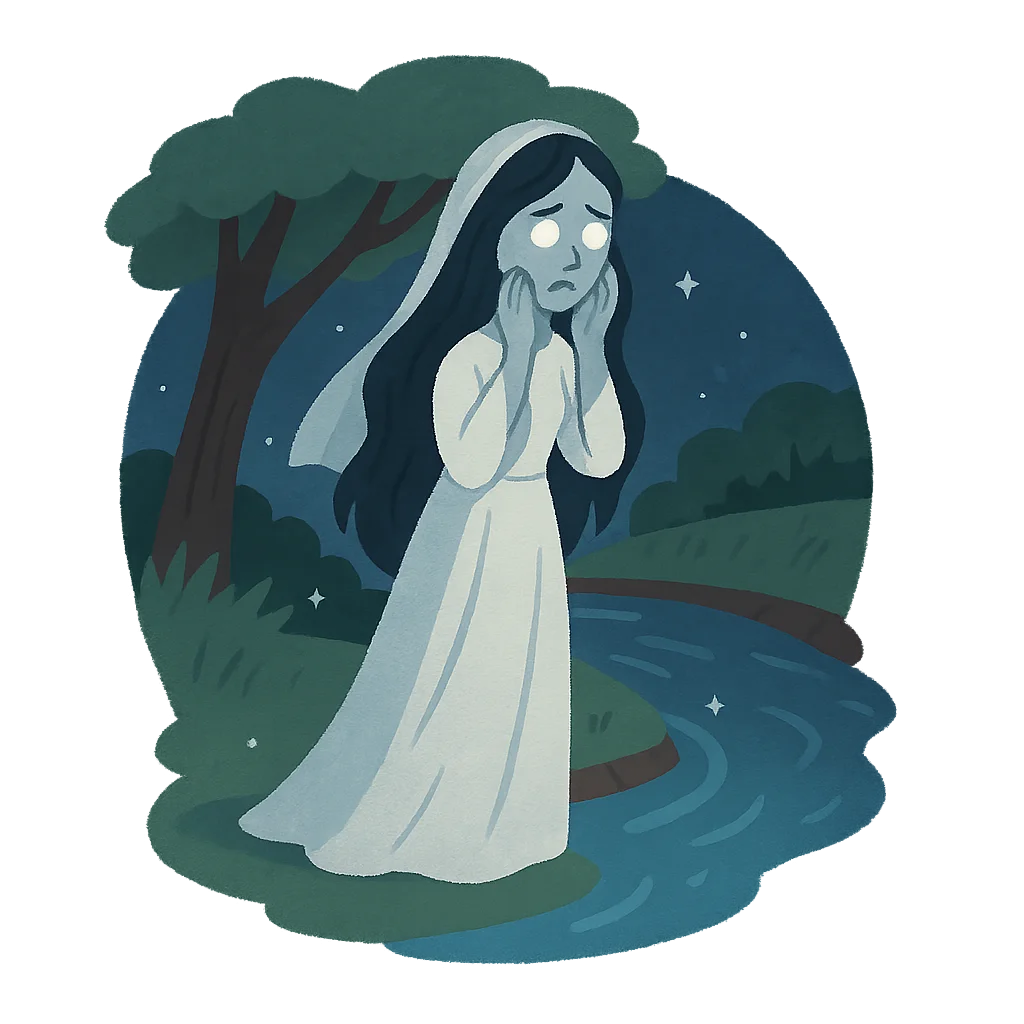
The Weeping Woman of the River
My name is Mateo, and I live in a small village where the nights are so quiet you can hear the river whispering secrets to the moon. On most nights, it's a peaceful sound, but sometimes, when the wind sighs through the willow trees, a different feeling creeps in—a chill that has nothing to do with the cold. My abuela says that's when you must be inside, safe and sound, because the river holds a story of deep sadness. It’s the story of La Llorona. She told me the legend not to scare me, but to teach me about the echoes of the past and the weight of choices made in moments of great sorrow. She says every culture has stories like these, tales that flow like rivers through generations, shaping how we see the world and how we care for one another. The story begins long ago, in a bustling colonial town, with a woman named Maria, who was said to be more beautiful than the flowers that bloomed by the water's edge. She lived a simple life, but her heart held big dreams, dreams that would lead her to a great love and an even greater heartbreak. Her tale is not just a ghost story; it is a profound lesson about love, loss, and a sorrow so powerful it can never be washed away, forever carried on the water and the wind.
From my grandmother's telling, Maria fell deeply in love with a wealthy nobleman who rode into her village. He was charmed by her beauty and spirit, and for a time, they were happy. They had two sons, and Maria’s world was filled with their laughter. But the nobleman's family did not approve of Maria, and his heart, once so devoted, began to drift. He visited less and less, his promises turning as thin as river mist. Eventually, he married a woman of his own class, abandoning Maria and their children completely. Consumed by a storm of grief and rage, Maria's heart shattered. She took her children to the riverbank, her mind clouded by a pain so immense she could not see clearly. In a desperate, tragic moment, she lost her children to the swirling currents. The instant they were gone, the fog of her anger cleared, replaced by a horrifying, soul-crushing realization of what she had done. She screamed their names, wading into the cold, dark water, her hands searching for something that was no longer there. But they were gone forever. Overcome with a grief too heavy for any soul to bear, Maria’s own life ended on that riverbank. But her spirit, my abuela says, could not rest. It was bound to the place of her greatest sorrow. Her spirit was transformed into a wandering, weeping ghost, eternally searching for her lost sons. She is forever heard crying out in the darkness, '¡Ay, mis hijos!' which means 'Oh, my children!'. Her mournful cry is carried by the wind along rivers, lakes, and streams all across the lands. The story became a warning, passed from parents to their children: stay away from the water after dark, listen for her cry, and understand the danger of acting from a place of uncontrollable anger or despair.
When Abuela finishes the story, the night outside feels different. The river's whispers seem to carry a sadder tune. But I'm not just scared; I understand. The legend of La Llorona is more than just a spooky tale. It’s a cautionary story about consequences, about the deep pain of regret, and the unending power of a mother's love, even when it is lost in sorrow. It teaches us to think before we act, especially when we feel hurt or angry, because some actions can create echoes that never fade. For centuries, this story has been a part of my culture and many others across Latin America. It has been told around campfires and whispered as a bedtime warning. But it has also inspired people to create. You can see La Llorona's story in beautiful paintings, hear her sorrow in haunting songs, and watch her tale unfold in movies and plays. She has become a powerful symbol of grief and a figure of cultural identity. The story of La Llorona reminds us that some feelings are so strong they can leave an echo in the world forever. It connects us to our ancestors, who told the same story to their children. It makes us wonder about the mysteries of the world and the deep emotions that make us human. It is a sad story, yes, but it keeps our history alive and continues to spark our imagination, ensuring that the lessons of the past are never truly forgotten.
Activities
Take a Quiz
Test what you learned with a fun quiz!
Get creative with colors!
Print a coloring book page of this topic.















 Free for Educators