

 English

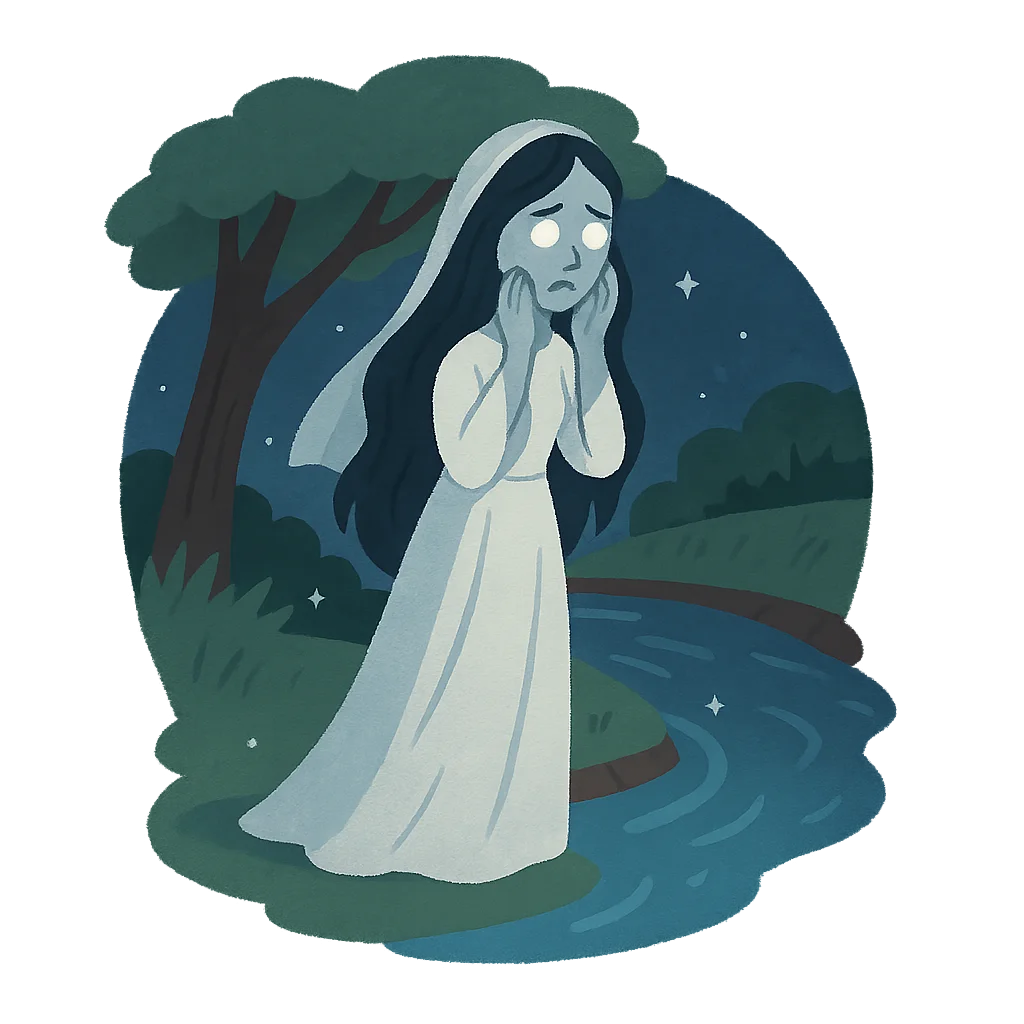
The Legend of La Llorona
My name is Sofia, and some of my favorite memories are the quiet evenings I spend with my abuela on our porch, listening to the gentle murmur of the river nearby. The air always smells of damp earth and night-blooming jasmine, and the fireflies begin to dance as the sun dips below the horizon. On one such evening, as the shadows grew long, Abuela pulled her shawl tighter and said, “The river has many stories to tell, mija. But some are whispers of sadness carried on the wind.” She told me that if I listened closely, I might hear a faint, sorrowful cry. This, she explained, was the sound of a story that has been told for generations, a cautionary tale to keep children safe and mindful. It is the story of La Llorona, the Weeping Woman.
“Long ago, in a small village not unlike ours,” Abuela began, her voice soft as the breeze, “lived a woman named Maria. She was known throughout the land for her beauty, but her greatest treasures were her two young children, whom she loved more than the sun, the moon, and all the stars.” They would spend their days by the river, laughing and playing, their joy echoing through the valley. But as time went on, a deep sadness began to cloud Maria’s heart, like a storm gathering over the mountains. One day, overwhelmed by a powerful wave of anger and sorrow she couldn't control, she took her children to the river. In a moment she would regret for all eternity, the river's current, which was stronger than she realized, swept them away from her. When she finally understood what had happened, a terrible cry escaped her lips as she searched frantically along the water's edge, but her children were gone forever.
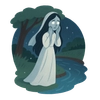
Consumed by a grief so immense it felt like a physical weight, Maria walked the riverbanks day and night, calling for her children. “Where are you?” she would plead to the rushing water. She wouldn't eat or sleep, and her beautiful clothes became tattered rags. Her voice grew hoarse from crying out their names until it was just a raw whisper. Eventually, her own spirit faded from the world of the living, but her sorrow was so strong that it remained, tied to the river that took her children. Abuela told me that Maria became a wandering spirit, a ghost dressed in white, forever searching for what she lost. Her mournful cry, “¡Ay, mis hijos!” which means “Oh, my children!”, can sometimes be heard drifting over the water on moonless nights. Can you imagine hearing a sound so full of sadness? She is a warning, a sad whisper in the dark, reminding children to stay away from the dangerous waters at night and to always stay close to their families.
After Abuela finished her story, the river seemed quieter, and the night felt deeper. I pulled my blanket a little closer. She explained that the story of La Llorona isn't just meant to scare children. It's a powerful story about love, loss, and the terrible weight of regret. It’s a tale passed down from parents to children throughout Latin America to teach them to be careful, to value their families, and to think about the consequences of their actions before they make a choice. Today, the story of the Weeping Woman inspires artists, musicians, and writers. Her ghostly figure appears in paintings and her cry echoes in songs. The myth of La Llorona reminds us that stories are more than just words; they are feelings, lessons, and connections to the people who came before us, a timeless whisper from the past that continues to shape our imagination.
Activities
Take a Quiz
Test what you learned with a fun quiz!
Get creative with colors!
Print a coloring book page of this topic.











 Free for Educators