English


The Heinzelmännchen of Cologne - German
A German folktale about helpful gnomes who worked for the people of Cologne at night until a curious woman…
Reads at Grades 6–8 Listens at Grades 4–8
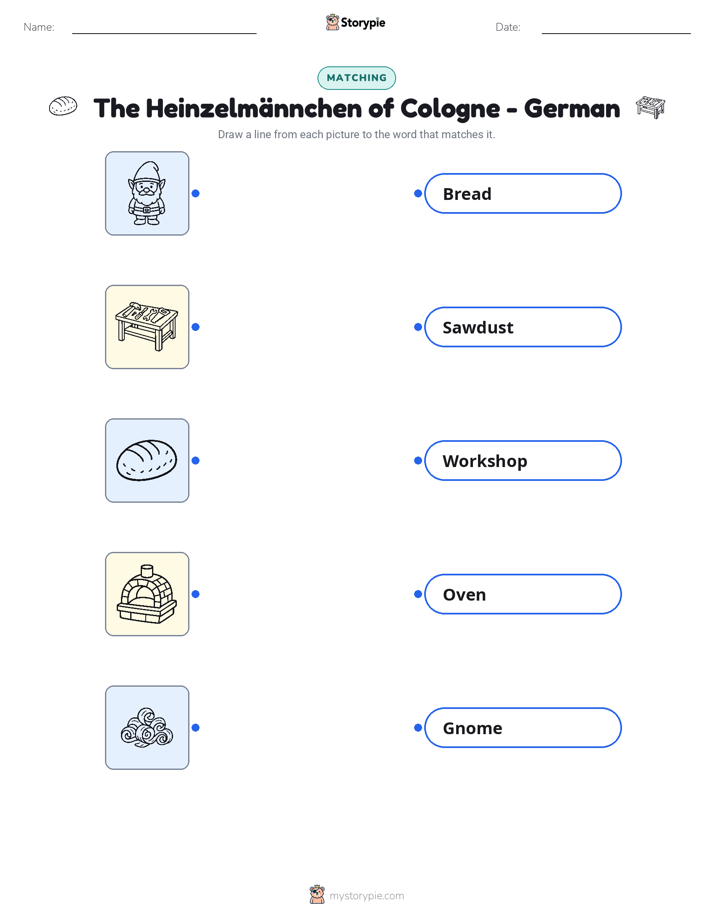
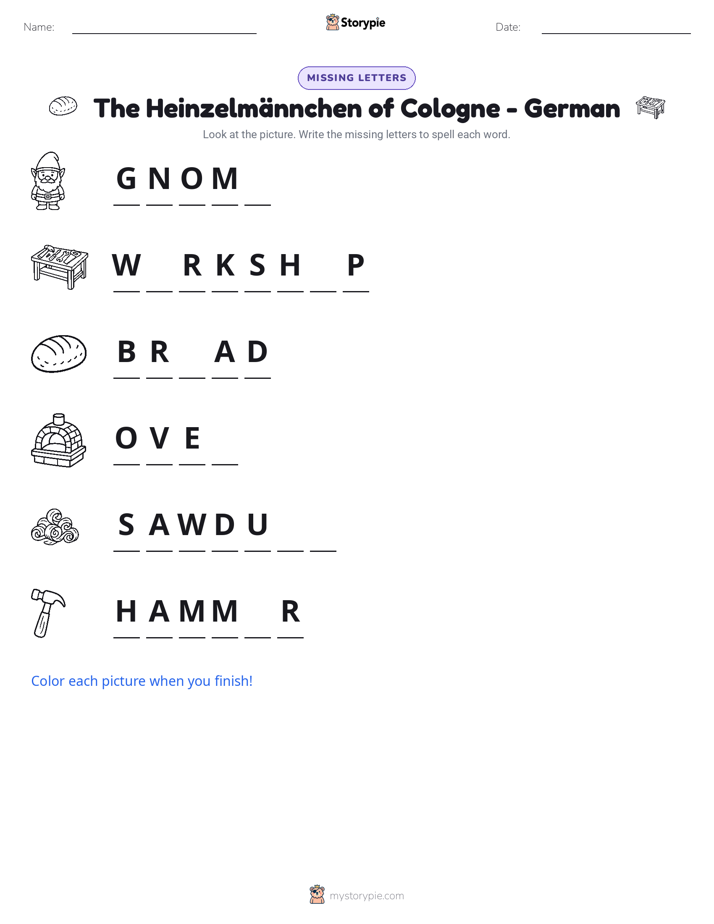
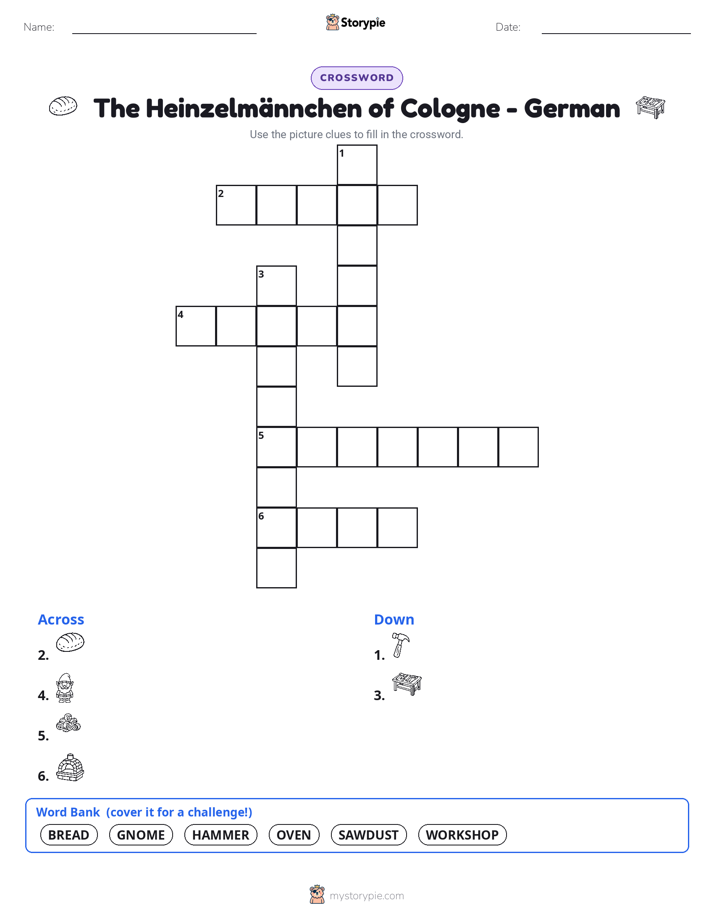
Print & create
Answer keys·No prep·Free with an account
28 worksheets · answer keys · full story · quiz · Ages 10-12 · CEFR B2
Plus adds 164,000+ more stories in 27 languages, audio for every one, and printables for all of them.
Just want The Heinzelmännchen of Cologne - German?
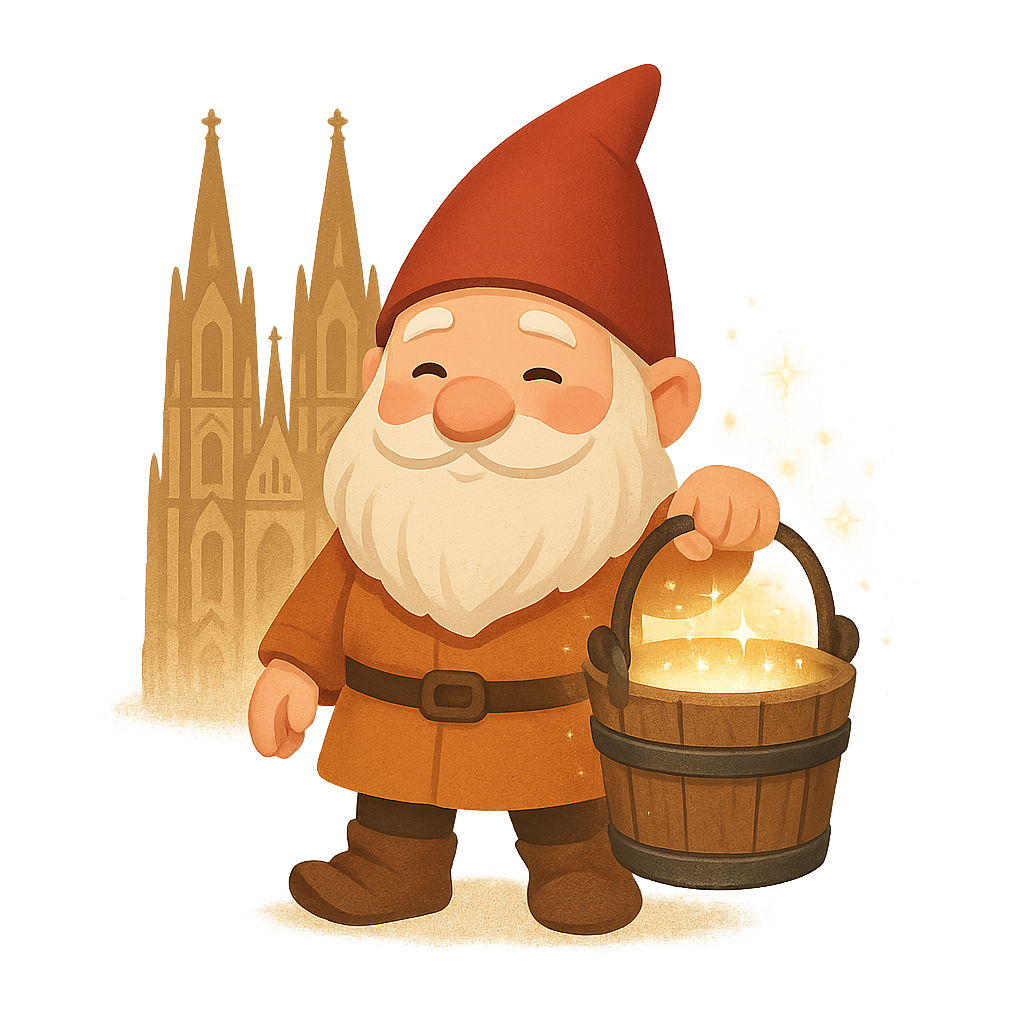
You wouldn't have seen me, not unless you had eyes that could peek through floorboards and into the quietest shadows of a moonlit workshop. My name is Heinz, and for longer than anyone could remember, my family and I were the secret behind the easiest life in all of Germany, right there in the city of Cologne. Every night, as the hardworking—or rather, hardly-working—citizens slept, we would creep out to finish their chores, a silent army of helpers in what people came to call the myth of The Heinzelmännchen of Cologne. Our story begins in this magical time, when the city hummed with productivity, yet no one seemed to break a sweat. It was a perfect arrangement, a silent pact between their slumber and our skill.
Each night was a grand, quiet adventure. I remember tiptoeing into the baker's shop, the air thick with the warm, yeasty scent of dough rising in giant wooden bowls. The baker himself would be snoring loudly in a corner, flour dusting his nose like powdered sugar. With swift, practiced movements, my brothers and I would knead the dough, shape it into perfect loaves, and slide them into the hot brick oven. By sunrise, racks of golden-brown bread would be cooling, ready for the baker to sell, and he would just scratch his head, marveling at his own mysterious efficiency. Then we’d flit over to the carpenter’s shop. The crisp, clean scent of sawdust always filled my nose. A half-finished cabinet would be waiting, its joints unglued, its doors unhung. We’d work with our tiny hammers and saws, our whispers the only sound besides the gentle rasp of sandpaper on wood. By dawn, a magnificent piece of furniture would stand complete. We took immense pride in our work. Our stitches were the straightest, our wood was the smoothest, our barrels were the tightest. The joy wasn't in getting thanks—we never wanted that. It was in the quiet satisfaction of seeing the humans’ delight and utter confusion each morning. They lived in a state of blissful ease, attributing their good fortune to luck or skill they didn't really possess. Their world was perfect, and our secret was the magic that held it all together.
The Heinzelmännchen of Cologne
You wouldn't have seen me, not unless you had eyes that could peek through floorboards and into the quietest shadows of a moonlit workshop. My name is Heinz, and for longer than anyone could remember, my family and I were the secret behind the easiest life in all of Germany, right there in the city of Cologne. Every night, as the hardworking—or rather, hardly-working—citizens slept, we would creep out to finish their chores, a silent army of helpers in what people came to call the myth of The Heinzelmännchen of Cologne. Our story begins in this magical time, when the city hummed with productivity, yet no one seemed to break a sweat. It was a perfect arrangement, a silent pact between their slumber and our skill.
Each night was a grand, quiet adventure. I remember tiptoeing into the baker's shop, the air thick with the warm, yeasty scent of dough rising in giant wooden bowls. The baker himself would be snoring loudly in a corner, flour dusting his nose like powdered sugar. With swift, practiced movements, my brothers and I would knead the dough, shape it into perfect loaves, and slide them into the hot brick oven. By sunrise, racks of golden-brown bread would be cooling, ready for the baker to sell, and he would just scratch his head, marveling at his own mysterious efficiency. Then we’d flit over to the carpenter’s shop. The crisp, clean scent of sawdust always filled my nose. A half-finished cabinet would be waiting, its joints unglued, its doors unhung. We’d work with our tiny hammers and saws, our whispers the only sound besides the gentle rasp of sandpaper on wood. By dawn, a magnificent piece of furniture would stand complete. We took immense pride in our work. Our stitches were the straightest, our wood was the smoothest, our barrels were the tightest. The joy wasn't in getting thanks—we never wanted that. It was in the quiet satisfaction of seeing the humans’ delight and utter confusion each morning. They lived in a state of blissful ease, attributing their good fortune to luck or skill they didn't really possess. Their world was perfect, and our secret was the magic that held it all together.
For a long time, this perfect, unspoken agreement held. The citizens of Cologne were content with their mysterious good fortune, happy to wake up to completed tasks and a life free of toil. But contentment, we learned, is not a universal human trait. There was one person who was not satisfied: the tailor's wife. I don’t think she was a bad person, not truly evil. She was simply consumed by an insatiable curiosity, a question that buzzed in her mind like a trapped fly. Who was finishing her husband's fine suits? Who was hemming the ladies’ dresses with such impossibly perfect, tiny stitches that they seemed spun by fairies? The question gnawed at her day and night, growing from a simple wonder into a relentless obsession. She had to know. She had to see us.
That obsession began to cast a shadow over our nightly work. A new tension hung in the air, cold and sharp. We started sensing things. A floorboard would creak upstairs when the house should have been still. A curtain would twitch in a darkened window. "Did you hear that?" one of my cousins would whisper, pausing with his tiny needle mid-stitch. We became more cautious, our movements quieter, our senses on high alert. But her determination was greater than our caution. Her desire to see us, to expose the magic for her own satisfaction, became a palpable threat. Then came the fateful night, the night that changed everything for Cologne forever. We arrived at the tailor's workshop as usual, the moon casting long shadows across the cobblestone street. But as we scampered up the familiar wooden staircase leading to the sewing room, something was wrong. My foot landed on something small, hard, and round. Then another, and another. Before we could react, a terrible clatter echoed in the silence. She had scattered dried peas all over the stairs. The cold, smooth little spheres rolled under our feet like treacherous marbles. One of us slipped, then another, and suddenly the entire staircase was a chaotic cascade of tumbling, sliding Heinzelmännchen. We tumbled head over heels, our tiny tools flying from our belts, landing in a heap at the bottom of the stairs. And that’s when we saw her. A lamp was thrust forward, its golden light blinding us. The tailor's wife stood there, a triumphant, curious gleam in her eyes. The shock was like a physical blow. We had been seen. The sting of betrayal was sharp and deep, a wound to our very spirit. Our one, unbreakable rule had been broken. In that single, glaring moment, the trust that had allowed our secret world to exist was shattered into a million pieces.
There were no words spoken. There was no need. We looked at one another amidst the scattered peas and clattering tools, and we all knew. The magic was gone. With heavy hearts, we gathered ourselves and our things. The departure was somber and silent. We vanished back into the night, but this time, it was for good. As we left the city walls behind us, it felt like we were taking the very soul of Cologne with us, leaving behind an ordinary town where magic once lived. The next morning, the city woke up to a harsh new reality. The baker’s dough was un-kneaded, a sticky lump in its bowl. The carpenter’s cabinet stood half-finished, a monument to a job abandoned. And in the tailor’s shop, bolts of fine cloth lay untouched, the needles and thread sitting cold and still. The easy life was over. From that day forward, the people of Cologne had to learn the true meaning of a day's work. They had to learn diligence, patience, and the satisfaction that comes from their own labor.
Our story, however, did not vanish with us. It was passed down through generations, whispered from parent to child as a cautionary tale. It became a lesson about how destructive unchecked curiosity can be, a reminder to appreciate good fortune without needing to dissect and possess it. Years later, in 1836, a poet named August Kopisch heard our tale and wrote it down, and soon the story of the Heinzelmännchen was famous all over the world. If you visit Cologne today, you can even find a fountain in the city center. It shows the very moment of our downfall: the tailor’s wife holding her lantern high, and my poor kinsmen tumbling down the stairs. It is a permanent reminder of the price of a single moment of betrayal. Although we never returned, I like to think our story still serves a purpose. It continues to inspire imagination, reminding people everywhere that a little bit of unseen kindness might just be at work when they aren't looking, and that some magic is best left a mystery.
Wow facts
About
A German folktale about helpful gnomes who worked for the people of Cologne at night until a curious woman tried to see them, causing them to leave forever.
Take a Quiz
Question 1 of 5
What character trait was the main cause of the tailor's wife's actions, and what was the ultimate consequence?
Explore next






Want to do even more?
Go beyond exploring. Unlock tools that turn every story into real learning.

Storypie Plus for families
Full stories, quizzes, and printables. Nights and car rides, sorted.
- Unlimited audio stories
- Create Mode: your child stars in the story
- Offline downloads
- Printable worksheets & coloring pages

Why Storypie for Schools
Students engaged. Prep in seconds. Evenings back to you.
- Worksheets & Quizzes
- Classroom Management
- Formative Assessment
- Custom Curriculum & Lesson Plans
- 27 Languages

Why Storypie for Homeschool
Curriculum done. They'll ask for more. Hours back in your day.
- Worksheet Generator
- First-Person Audio Stories
- Built-in Comprehension Quizzes
- Custom Curriculum & Lesson Plans
- Print & Go Activities