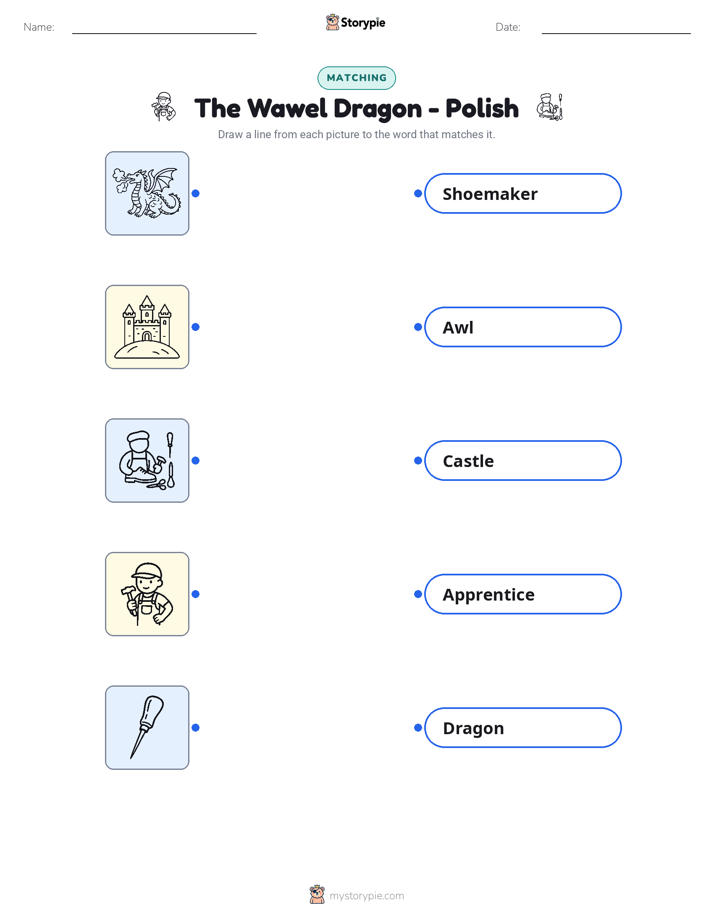
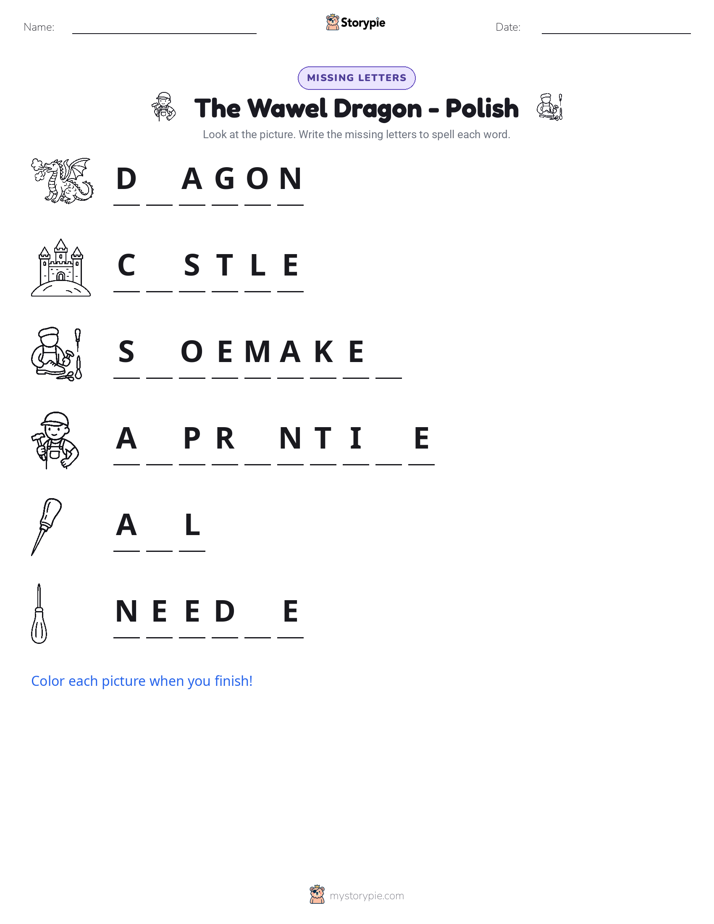
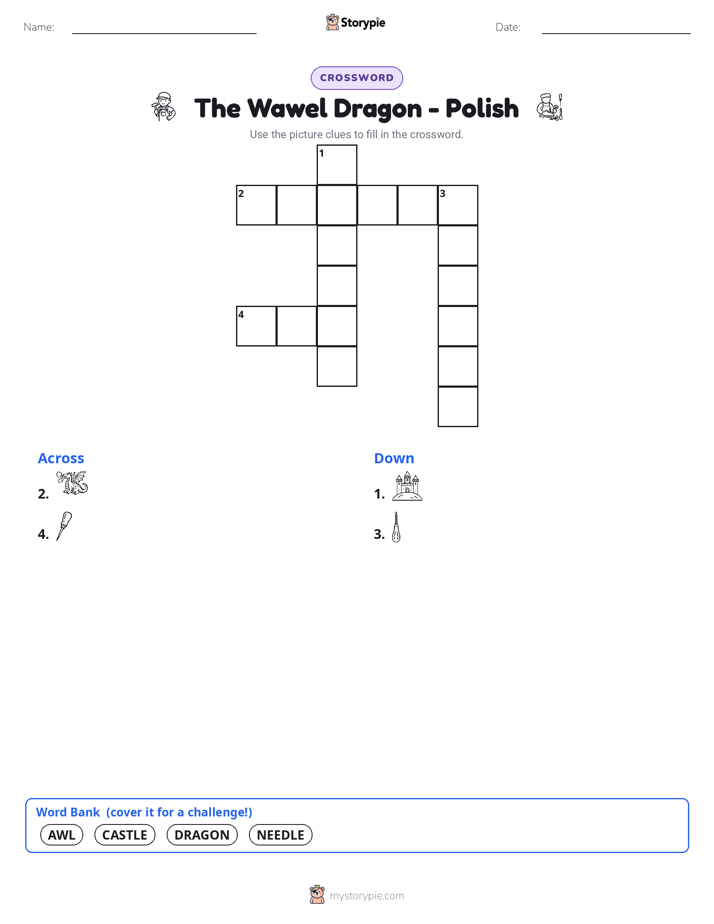
English

The Wawel Dragon - Polish
A famous Polish folktale about a fearsome dragon that lived under Wawel Hill in Kraków and was outsmarted by…
Reads at Grades 3–5 Listens at Grades 1–5
Print & create
Answer keys·No prep·Free with an account
28 worksheets · answer keys · full story · quiz · Ages 8-10 · CEFR B1
Plus adds 164,000+ more stories in 27 languages, audio for every one, and printables for all of them.
Just want The Wawel Dragon - Polish?
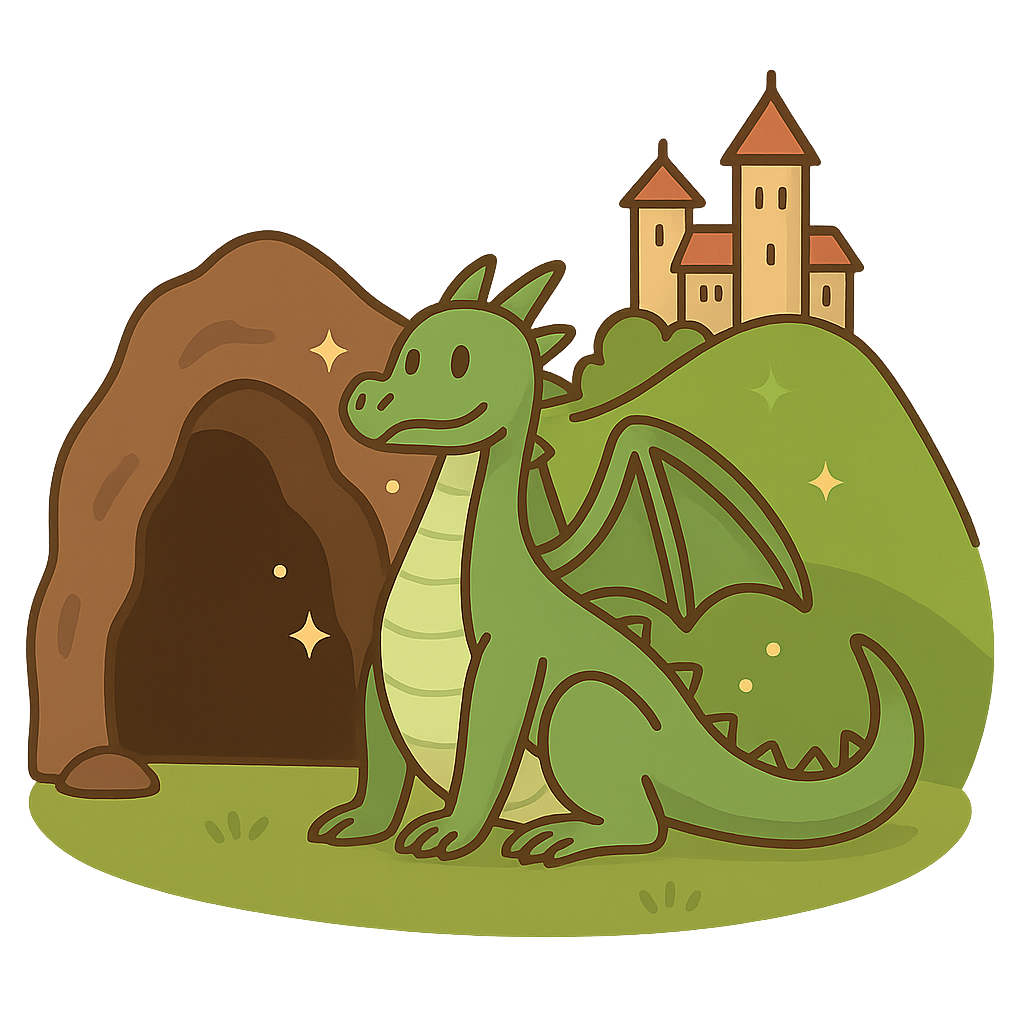
My name is Skuba, and long ago, my world smelled of leather and wax, not smoke and fear. From my small shoemaker's shop, I could see the great Wawel Hill, where our good King Krakus lived in his castle. But beneath that hill, in a dark, damp cave, lived a monster that haunted our dreams and stole our peace. This is the story of how a simple boy with a clever idea faced the terror of the Wawel Dragon.
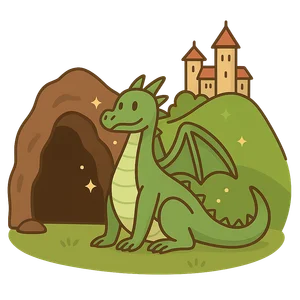
In our ancient city of Kraków, nestled by the winding Vistula River, life was shadowed by a great fear. A monstrous dragon, with scales as tough as shields and teeth like daggers, had made its lair in a cave at the foot of Wawel Hill. I would hear its terrible roar echo through the streets every day, making the windows of my shop rattle and my heart tremble. The dragon, known as Smok Wawelski, was always hungry. It demanded tribute—sheep, cows, and any livestock it could snatch. From my window, I watched farmers lead their animals toward the hill, their faces full of despair. King Krakus, our city's founder, offered a magnificent reward to any knight who could slay the beast: the hand of his daughter, Princess Wanda, and half his kingdom. Knights in shining armor came from all over, their swords gleaming. But one by one, they charged toward the cave, and none ever returned. The dragon's fiery breath was simply too much for them.
While the knights relied on muscles and steel, I watched and thought. I knew my arms were skilled at stitching leather, not swinging a heavy sword, but I believed my brain could be sharper than any blade. An idea sparked in my mind, a bit wild and maybe a little foolish, but it was a chance. I walked to the castle and asked to see the king. “An audience with the king?” the guards chuckled. “A shoemaker’s apprentice?”. But I was persistent, and King Krakus, desperate for any solution, finally agreed to hear me out. I stood before him, my knees knocking. “Your Majesty,” I said, “I do not need armor or a sword. I need a large sheepskin, a sack of yellow sulfur, and a pot of sticky tar.”. The king and his court looked at me as if I had two heads. What could a shoemaker do with such strange items? But seeing the hope in my eyes, he agreed. I worked all night, carefully mixing the pungent, powdery sulfur with the black, gooey tar. Then, I stuffed the stinky mixture inside the sheepskin, sewing it up tightly until it looked just like a plump, sleeping sheep. With my heart pounding, I carried my decoy to the mouth of the dragon's cave and left it there just as the sun began to rise.
The Wawel Dragon
My name is Skuba, and long ago, my world smelled of leather and wax, not smoke and fear. From my small shoemaker's shop, I could see the great Wawel Hill, where our good King Krakus lived in his castle. But beneath that hill, in a dark, damp cave, lived a monster that haunted our dreams and stole our peace. This is the story of how a simple boy with a clever idea faced the terror of the Wawel Dragon.
In our ancient city of Kraków, nestled by the winding Vistula River, life was shadowed by a great fear. A monstrous dragon, with scales as tough as shields and teeth like daggers, had made its lair in a cave at the foot of Wawel Hill. I would hear its terrible roar echo through the streets every day, making the windows of my shop rattle and my heart tremble. The dragon, known as Smok Wawelski, was always hungry. It demanded tribute—sheep, cows, and any livestock it could snatch. From my window, I watched farmers lead their animals toward the hill, their faces full of despair. King Krakus, our city's founder, offered a magnificent reward to any knight who could slay the beast: the hand of his daughter, Princess Wanda, and half his kingdom. Knights in shining armor came from all over, their swords gleaming. But one by one, they charged toward the cave, and none ever returned. The dragon's fiery breath was simply too much for them.
While the knights relied on muscles and steel, I watched and thought. I knew my arms were skilled at stitching leather, not swinging a heavy sword, but I believed my brain could be sharper than any blade. An idea sparked in my mind, a bit wild and maybe a little foolish, but it was a chance. I walked to the castle and asked to see the king. “An audience with the king?” the guards chuckled. “A shoemaker’s apprentice?”. But I was persistent, and King Krakus, desperate for any solution, finally agreed to hear me out. I stood before him, my knees knocking. “Your Majesty,” I said, “I do not need armor or a sword. I need a large sheepskin, a sack of yellow sulfur, and a pot of sticky tar.”. The king and his court looked at me as if I had two heads. What could a shoemaker do with such strange items? But seeing the hope in my eyes, he agreed. I worked all night, carefully mixing the pungent, powdery sulfur with the black, gooey tar. Then, I stuffed the stinky mixture inside the sheepskin, sewing it up tightly until it looked just like a plump, sleeping sheep. With my heart pounding, I carried my decoy to the mouth of the dragon's cave and left it there just as the sun began to rise.
I hid behind some rocks and waited. The smell of the sheep drew the hungry dragon from its slumber. Seeing what it thought was an easy meal, it lumbered out and swallowed my fake sheep in one single, greedy gulp. Instantly, a terrible fire began to burn in its belly. The sulfur ignited. Can you imagine a fire starting inside of you? Roaring in agony, the dragon scrambled to the Vistula River to quench the horrible burning. It drank and drank, trying to put out the flames, but it was no use. The more it drank, the hotter the fire inside seemed to grow. The people of Kraków watched in amazement as the river level actually began to drop. Finally, with a tremendous BANG that was heard all over the city, the dragon exploded. Our long nightmare was finally over.
The city erupted in cheers. I was no longer just Skuba, the shoemaker's apprentice; I was a hero. King Krakus kept his promise, rewarding my ingenuity and celebrating my courage. My story became a beloved Polish legend, passed down through generations. It taught everyone that courage isn't just about strength and swords; it's about using your mind to solve problems in creative ways. Today, if you visit Wawel Castle in Kraków, you can see a metal statue of the dragon near the riverbank. Every few minutes, it breathes real fire, reminding everyone of the famous legend. My story lives on, not just as a tale of a monster, but as an inspiring reminder that even the biggest challenges can be overcome with a little bit of clever thinking.
Wow facts
About
A famous Polish folktale about a fearsome dragon that lived under Wawel Hill in Kraków and was outsmarted by a cobbler named Skuba. He fed the dragon a sheep filled with stinky stuff. This made the dragon go away.
Take a Quiz
Question 1 of 5
In the story, Skuba stuffs a 'pungent' mixture inside the sheepskin. What does 'pungent' mean?
Explore next





Want to do even more?
Go beyond exploring. Unlock tools that turn every story into real learning.

Storypie Plus for families
Full stories, quizzes, and printables. Nights and car rides, sorted.
- Unlimited audio stories
- Create Mode: your child stars in the story
- Offline downloads
- Printable worksheets & coloring pages

Why Storypie for Schools
Students engaged. Prep in seconds. Evenings back to you.
- Worksheets & Quizzes
- Classroom Management
- Formative Assessment
- Custom Curriculum & Lesson Plans
- 27 Languages

Why Storypie for Homeschool
Curriculum done. They'll ask for more. Hours back in your day.
- Worksheet Generator
- First-Person Audio Stories
- Built-in Comprehension Quizzes
- Custom Curriculum & Lesson Plans
- Print & Go Activities