English

Akan People
The Akan are a major meta-ethnic group in West Africa, primarily residing in Ghana and Côte d'Ivoire…
Reads at Grades 3–5 Listens at Grades 1–5
Print & create
Answer keys·No prep·Free with an account
28 worksheets · answer keys · full story · quiz · Ages 8-10 · CEFR B1
Plus adds 116,000+ more stories in 27 languages, audio for every one, and printables for all of them.
Just want Akan People?
Hello! We are the Akan, a large family of many different groups who live in West Africa. You can find our communities mostly in the countries known today as Ghana and Côte d'Ivoire. We are not just one single group, but many, including the Ashanti and the Fante, who each have their own special histories. Even though we are diverse, we see ourselves as one people because we are connected by our shared languages and traditions. These cultural bonds are very important to us and have linked our communities together for hundreds of years.
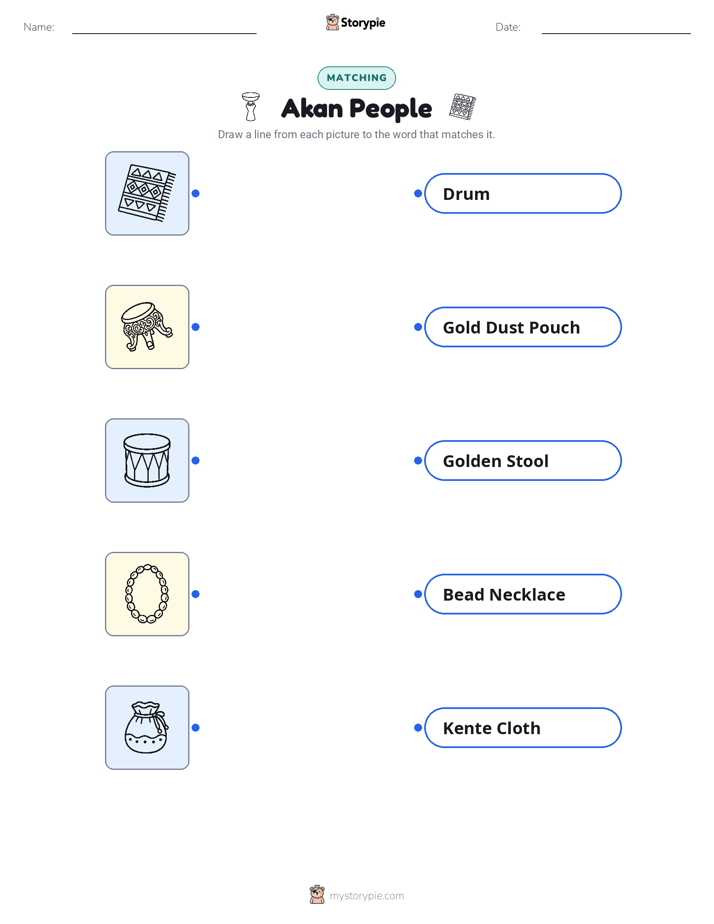
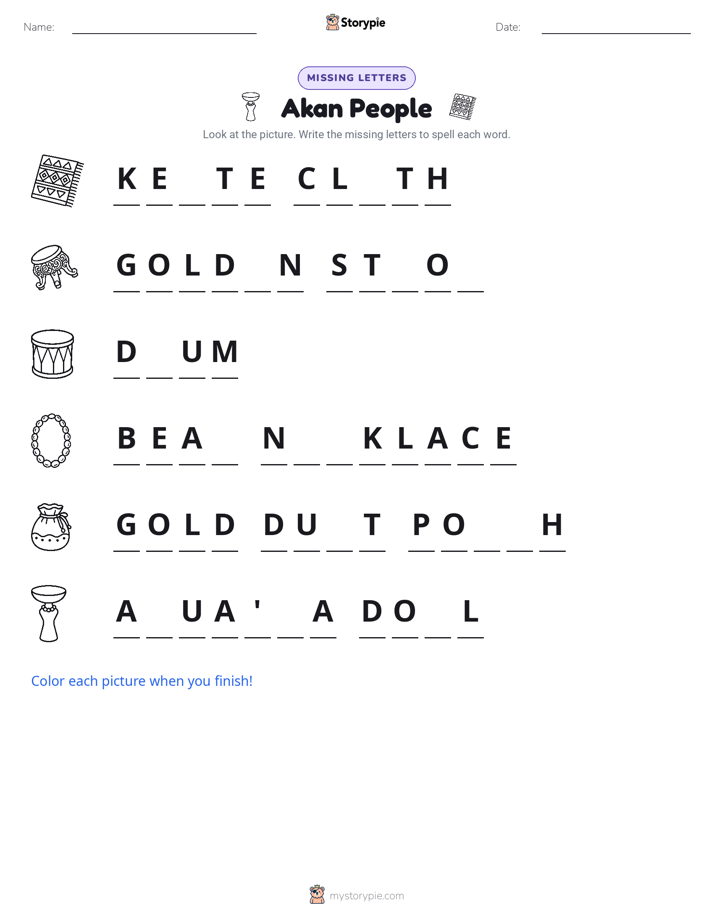
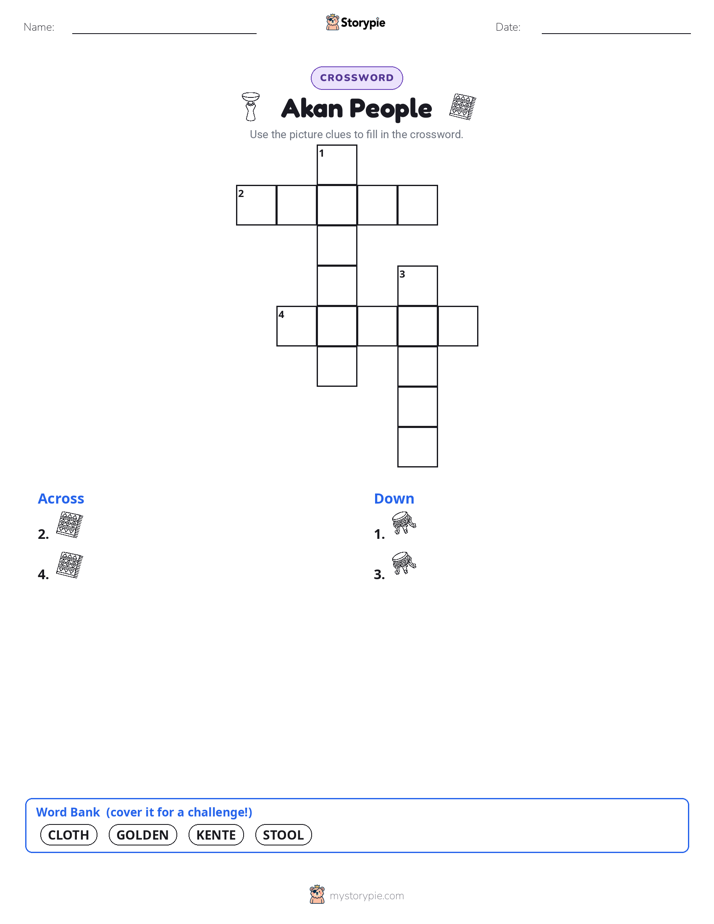
Throughout our history, we built powerful and wealthy kingdoms that were famous across the region. One of the greatest was the Ashanti Empire, which was founded around the year 1701. This kingdom grew strong and prosperous through its trade in gold, which was plentiful in our lands. At the very heart of the Ashanti nation is our sacred symbol of unity, the Golden Stool. Our traditions say that it holds the spirit of our people, and it is so important that it represents the strength and togetherness of the entire Ashanti nation. For us, it is a reminder of our shared past and the bonds that hold us together.
For many of us, family is the center of everything, and our traditional family structure is often matrilineal. This is a special word that means we trace our family history and our ancestors through our mothers' side of the family. In many of our communities, this affects how things are passed down. For example, traditionally, when a man passed away, his property or titles would be inherited by his sister’s children, not his own. This system also creates a special and important bond between uncles and their nieces and nephews. Uncles often play a very important role in raising and guiding their sisters’ children, sharing wisdom and offering support as they grow up.
We Are the Akan People
Hello! We are the Akan, a large family of many different groups who live in West Africa. You can find our communities mostly in the countries known today as Ghana and Côte d'Ivoire. We are not just one single group, but many, including the Ashanti and the Fante, who each have their own special histories. Even though we are diverse, we see ourselves as one people because we are connected by our shared languages and traditions. These cultural bonds are very important to us and have linked our communities together for hundreds of years.
Throughout our history, we built powerful and wealthy kingdoms that were famous across the region. One of the greatest was the Ashanti Empire, which was founded around the year 1701. This kingdom grew strong and prosperous through its trade in gold, which was plentiful in our lands. At the very heart of the Ashanti nation is our sacred symbol of unity, the Golden Stool. Our traditions say that it holds the spirit of our people, and it is so important that it represents the strength and togetherness of the entire Ashanti nation. For us, it is a reminder of our shared past and the bonds that hold us together.
For many of us, family is the center of everything, and our traditional family structure is often matrilineal. This is a special word that means we trace our family history and our ancestors through our mothers' side of the family. In many of our communities, this affects how things are passed down. For example, traditionally, when a man passed away, his property or titles would be inherited by his sister’s children, not his own. This system also creates a special and important bond between uncles and their nieces and nephews. Uncles often play a very important role in raising and guiding their sisters’ children, sharing wisdom and offering support as they grow up.
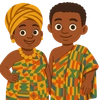
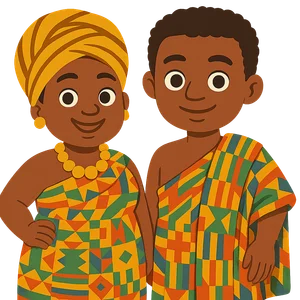
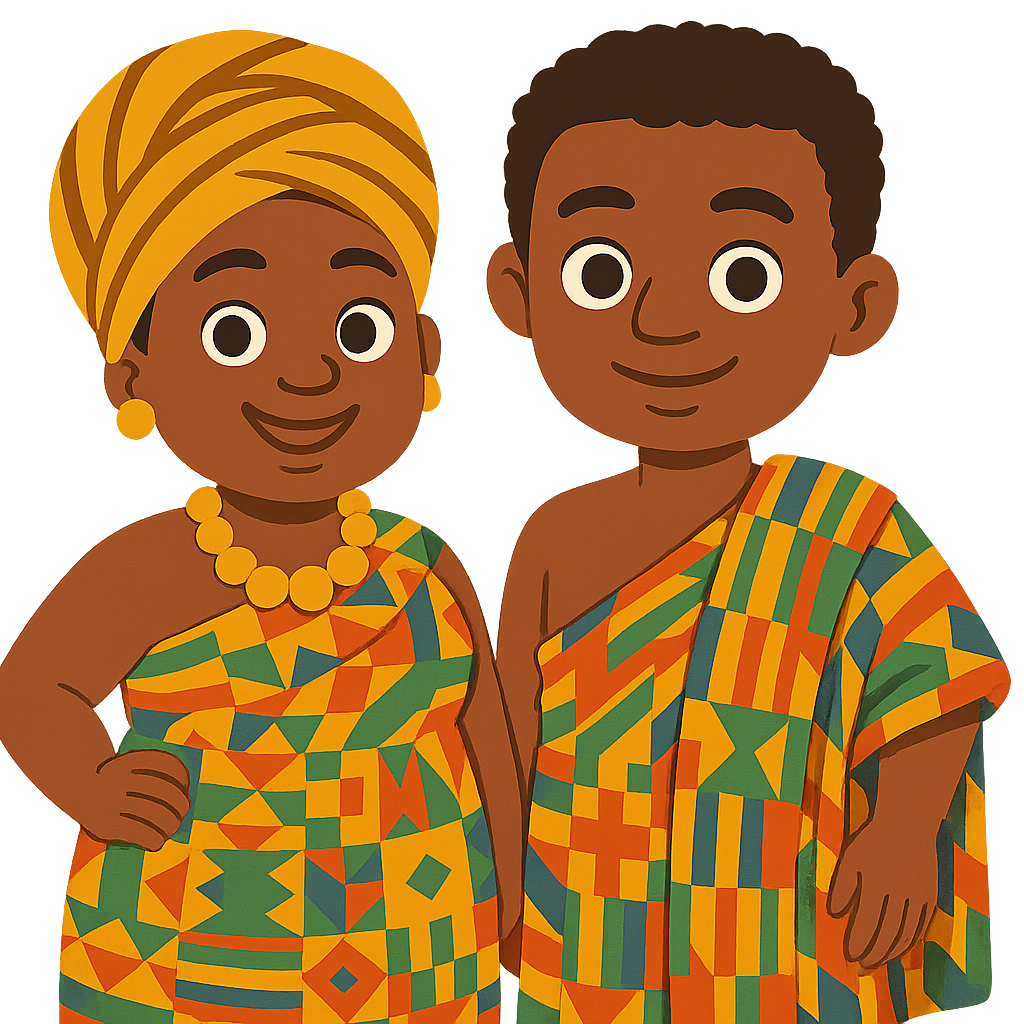
We have always expressed our ideas and beliefs through beautiful art. You may have seen our famous Kente cloth, a vibrant and brightly colored woven fabric. It is much more than just beautiful cloth; every color and every pattern has a special meaning. The designs can tell a story, share a proverb, or represent a person’s status in the community. We also use special symbols called Adinkra in our art, carving them into wood or printing them on cloth. Each Adinkra symbol stands for an important idea. One of the most famous is the Sankofa bird, which is shown with its head turned backward. The Sankofa bird teaches us a valuable lesson: we must look to the past to learn from it as we move into the future.
Stories are another way we share our wisdom. For generations, we have gathered to listen to the tales of Anansi the Spider. Anansi is a clever and tricky character who often gets himself into and out of trouble. While his adventures are funny, the stories are meant to teach important life lessons about wit, wisdom, and how to behave. Along with our stories, we have our own spiritual beliefs. Our traditional belief includes a supreme God, whom we call Nyame. Over time, many of our people have also embraced other faiths, and today, many of us practice Christianity or Islam while still honoring our ancestral traditions.
Today, the Akan culture is alive and well. We are proud to keep our traditions strong through colorful festivals, our beautiful art, and the languages we speak. We live not only in our homelands in Ghana and Côte d'Ivoire but also in communities all around the world, where we continue to share our heritage. In our towns and villages, our chiefs and queen mothers are still highly respected leaders who guide our communities and help preserve the customs that have been passed down to us. Our story is one that continues, connecting our past, present, and future.
Wow facts
About
The Akan are a major meta-ethnic group in West Africa, primarily residing in Ghana and Côte d'Ivoire, known for their powerful historical kingdoms, matrilineal society, and rich artistic traditions like Kente cloth and Adinkra symbols.
Take a Quiz
Question 1 of 5
What is the name of the sacred symbol of unity for the Ashanti nation?
Explore next




Want to do even more?
Go beyond exploring. Unlock tools that turn every story into real learning.

Storypie Plus for families
Full stories, quizzes, and printables. Nights and car rides, sorted.
- Unlimited audio stories
- Create Mode: your child stars in the story
- Offline downloads
- Printable worksheets & coloring pages

Why Storypie for Schools
Students engaged. Prep in seconds. Evenings back to you.
- Worksheets & Quizzes
- Classroom Management
- Formative Assessment
- Custom Curriculum & Lesson Plans
- 27 Languages

Why Storypie for Homeschool
Curriculum done. They'll ask for more. Hours back in your day.
- Worksheet Generator
- First-Person Audio Stories
- Built-in Comprehension Quizzes
- Custom Curriculum & Lesson Plans
- Print & Go Activities