English

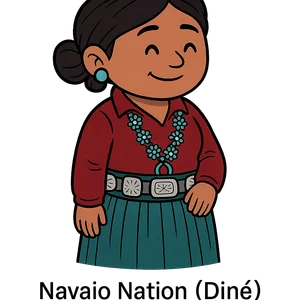
Navajo Nation (Diné)
The Navajo Nation is the largest Native American sovereign nation in the United States by land area…
Reads at Grades 3–5 Listens at Grades 1–5
Print & create
Answer keys·No prep·Free with an account
28 worksheets · answer keys · full story · quiz · Ages 8-10 · CEFR B1
Plus adds 116,000+ more stories in 27 languages, audio for every one, and printables for all of them.
Just want Navajo Nation (Diné)?
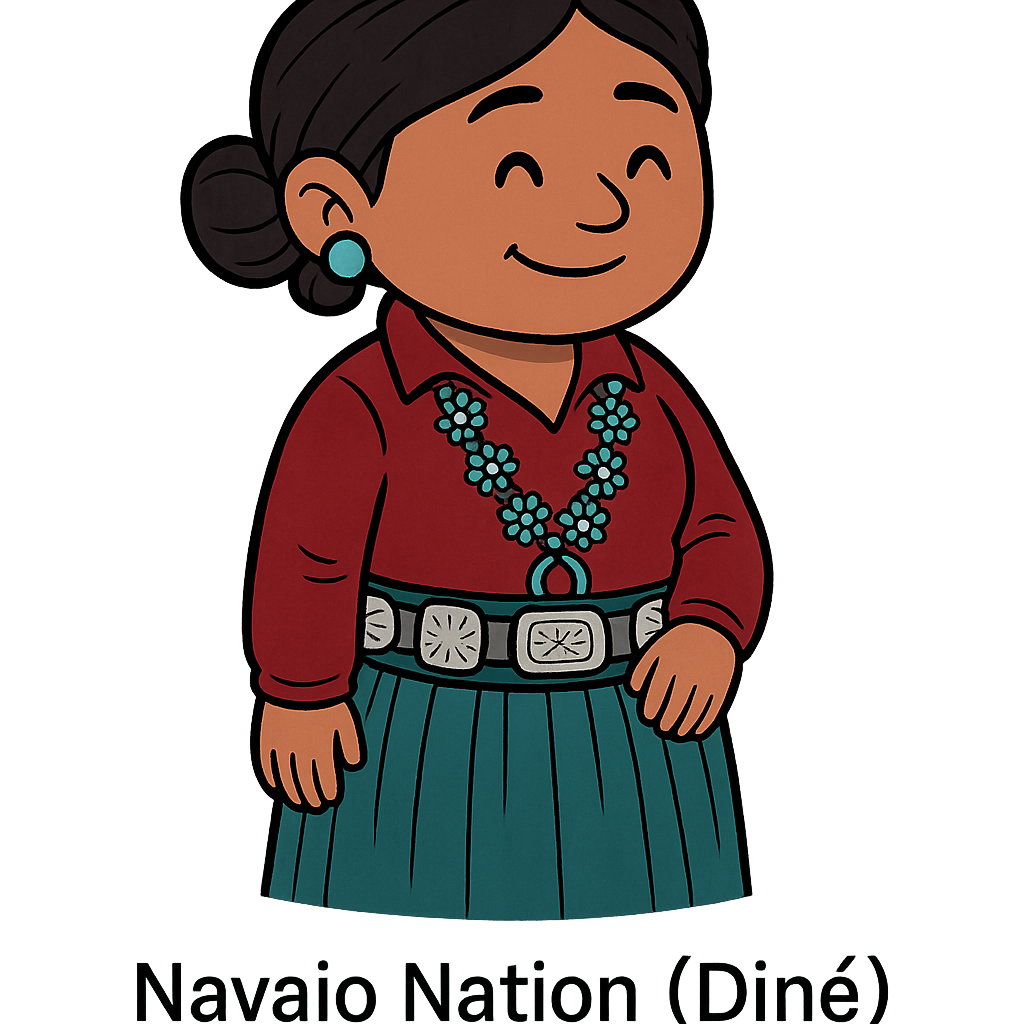
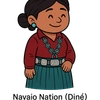
Yá’át’ééh. We are the Diné, which means “The People” in our language. For centuries, our home has been a sacred land in the American Southwest that we call Dinétah. This is more than just a place to live; it is the heart of our world, a land that holds our stories, our history, and our spirit. Our homeland is bordered by four sacred mountains, which stand as guardians in each of the four directions. These mountains mark the boundaries of the world our ancestors knew and are central to our traditional beliefs and ceremonies. They remind us of our deep connection to the earth and our place within the universe. Living in balance with the land has always been a guiding principle for us, a lesson passed down through generations.
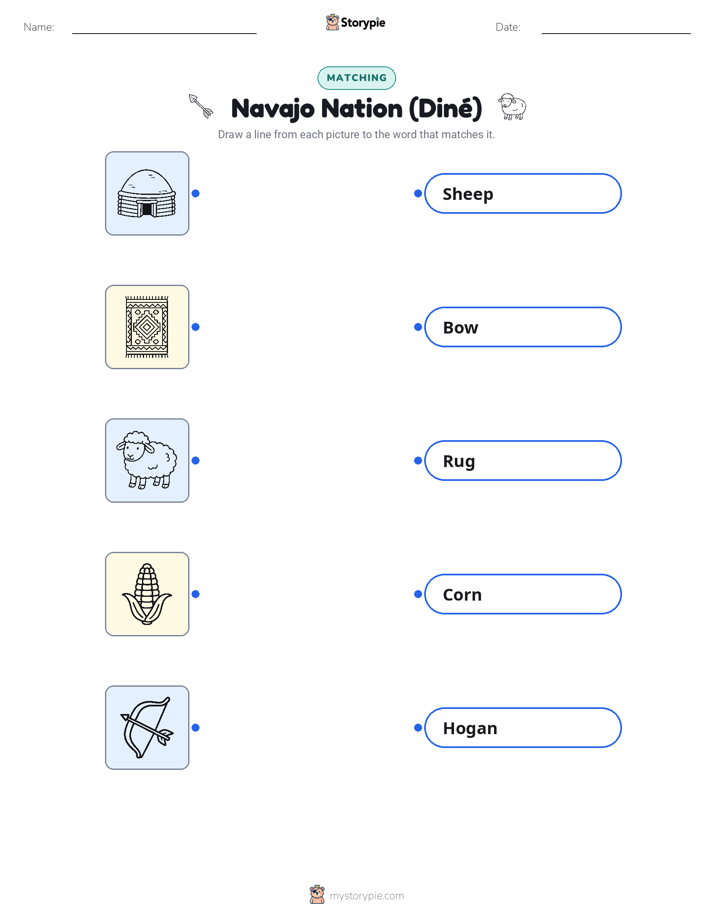
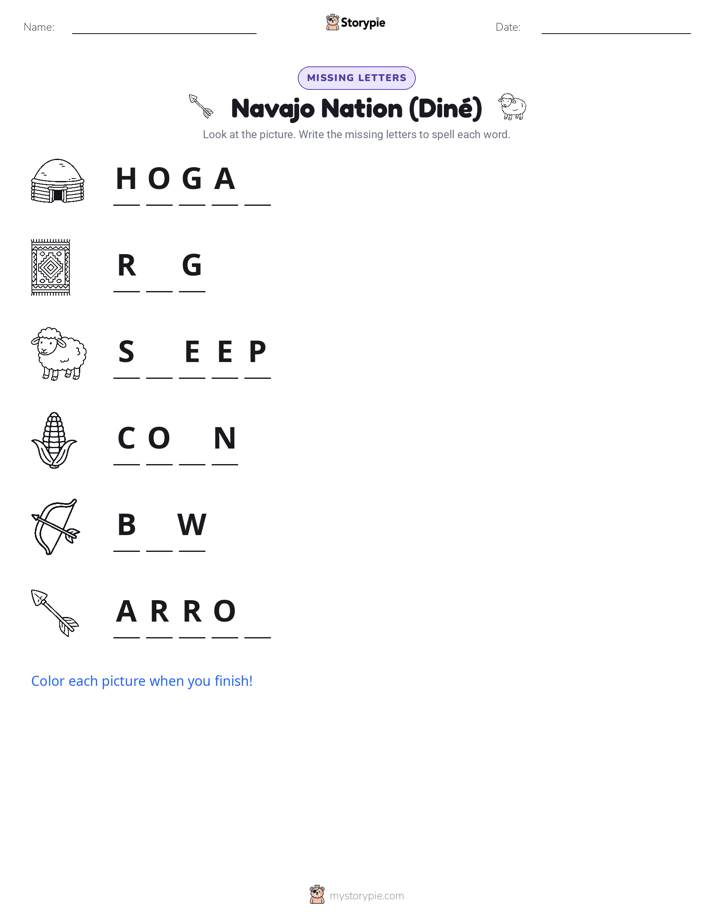
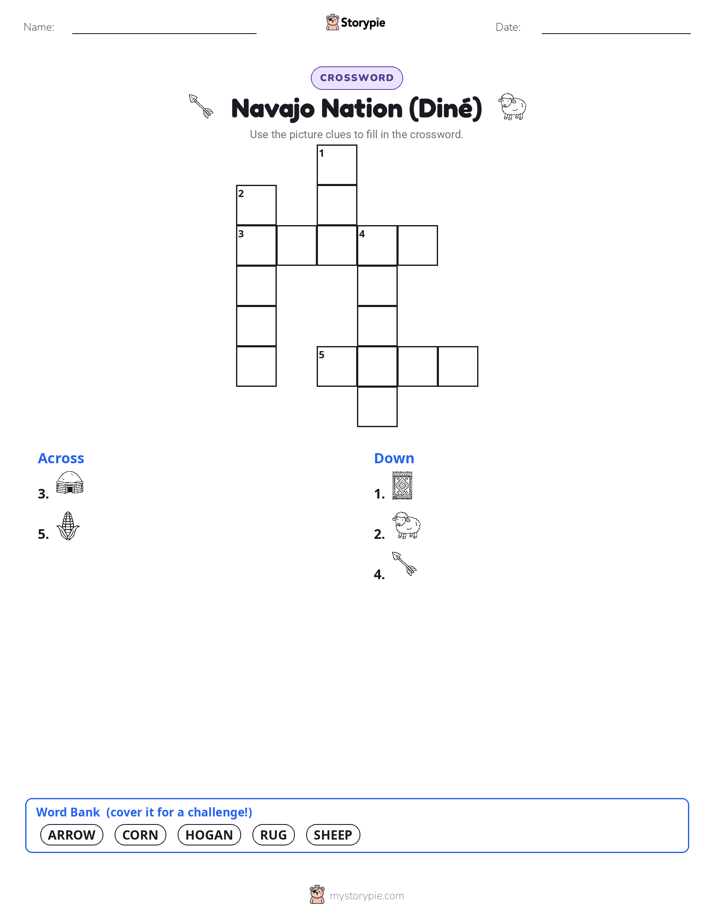
In Dinétah, our traditional homes are called hogans. A hogan is not just a building, but a sacred space built to honor the world around us. These homes, often with their doors facing east to greet the morning sun, are places for family, for ceremony, and for living in harmony. Our families are organized into a matrilineal clan system. This means that we trace our family relationships through our mothers. When we introduce ourselves, we often state our mother’s clan first. This system shows the deep respect we have for women as the foundation of our families and our communities. It connects us to our relatives and teaches us our responsibilities to one another.
Our history has not always been peaceful. In the 1860s, we endured a time of terrible hardship. The United States government forced thousands of us to leave our sacred homeland. We were made to walk hundreds of miles to a reservation in a place that was strange and unfamiliar to us. This journey is known as the Long Walk. It was a time of great loss and suffering for our people. Many of our elders and children did not survive the difficult conditions. But even in our darkest moments, we held onto the hope of returning to Dinétah. We never forgot the sacred mountains and the land that had always been our home.
We Are the Diné
Yá’át’ééh. We are the Diné, which means “The People” in our language. For centuries, our home has been a sacred land in the American Southwest that we call Dinétah. This is more than just a place to live; it is the heart of our world, a land that holds our stories, our history, and our spirit. Our homeland is bordered by four sacred mountains, which stand as guardians in each of the four directions. These mountains mark the boundaries of the world our ancestors knew and are central to our traditional beliefs and ceremonies. They remind us of our deep connection to the earth and our place within the universe. Living in balance with the land has always been a guiding principle for us, a lesson passed down through generations.
In Dinétah, our traditional homes are called hogans. A hogan is not just a building, but a sacred space built to honor the world around us. These homes, often with their doors facing east to greet the morning sun, are places for family, for ceremony, and for living in harmony. Our families are organized into a matrilineal clan system. This means that we trace our family relationships through our mothers. When we introduce ourselves, we often state our mother’s clan first. This system shows the deep respect we have for women as the foundation of our families and our communities. It connects us to our relatives and teaches us our responsibilities to one another.
Our history has not always been peaceful. In the 1860s, we endured a time of terrible hardship. The United States government forced thousands of us to leave our sacred homeland. We were made to walk hundreds of miles to a reservation in a place that was strange and unfamiliar to us. This journey is known as the Long Walk. It was a time of great loss and suffering for our people. Many of our elders and children did not survive the difficult conditions. But even in our darkest moments, we held onto the hope of returning to Dinétah. We never forgot the sacred mountains and the land that had always been our home.
Our resilience and our leaders’ determination led to a historic moment. After years of struggle, we signed the Treaty of 1868 with the U.S. government. This treaty was a promise that allowed us to do something few other Native peoples were able to do: return to our ancestral lands. The journey home was filled with joy and relief. Our return to Dinétah was a powerful testament to our strength and our unbreakable bond with our homeland. It marked a new beginning for our people and allowed us to start rebuilding our lives and our nation on the land we hold sacred.
Our culture is rich with beauty and creativity. We are known for our beautiful weavings, which are much more than just blankets or rugs. Each weaving tells a story through its intricate patterns and colors, reflecting the harmony and balance we see in the world. According to our traditional stories, the art of weaving was taught to us by a spiritual being named Spider Woman. We are also famous for our unique jewelry, skillfully crafted from silver and turquoise. These pieces are not only beautiful decorations but also carry cultural and spiritual meaning. Both our weaving and our jewelry are ways we share our identity and our artistic traditions with the world.
During World War II, our people played a heroic and crucial role in helping the United States. A brave group of Diné men joined the U.S. Marines and became known as the Navajo Code Talkers. They used our complex language to create a secret code that the enemy could not break. Sending and receiving messages in the Diné language, they helped the Allied forces in many important battles. Their work was a secret for many years, but today, they are celebrated as heroes whose unique language skills helped protect their fellow soldiers and win the war.
Today, we are the modern Navajo Nation. Our nation is the largest in the United States by land area, and we have our own government with a president, a council, and our own court system. This sovereignty allows us to make decisions for ourselves and for our future. Our people live across the Southwest, on and off our reservation. We continue to practice our traditions, and we are working hard to preserve our language and culture. We teach our children the Diné language and the stories of our ancestors so that our identity as The People will remain strong for many generations to come.
Wow facts
About
The Navajo Nation is the largest Native American sovereign nation in the United States by land area, home to the Diné people, who have a rich culture and history in the American Southwest.
Take a Quiz
Question 1 of 5
What is the name of the sacred homeland of the Diné people?
Explore next



Want to do even more?
Go beyond exploring. Unlock tools that turn every story into real learning.

Storypie Plus for families
Full stories, quizzes, and printables. Nights and car rides, sorted.
- Unlimited audio stories
- Create Mode: your child stars in the story
- Offline downloads
- Printable worksheets & coloring pages

Why Storypie for Schools
Students engaged. Prep in seconds. Evenings back to you.
- Worksheets & Quizzes
- Classroom Management
- Formative Assessment
- Custom Curriculum & Lesson Plans
- 27 Languages

Why Storypie for Homeschool
Curriculum done. They'll ask for more. Hours back in your day.
- Worksheet Generator
- First-Person Audio Stories
- Built-in Comprehension Quizzes
- Custom Curriculum & Lesson Plans
- Print & Go Activities