English

Dominican Republic
A Caribbean nation on the island of Hispaniola, known for its vibrant culture, beautiful beaches…
Reads at Grades 6–8 Listens at Grades 4–8
Print & create
Answer keys·No prep·Free with an account
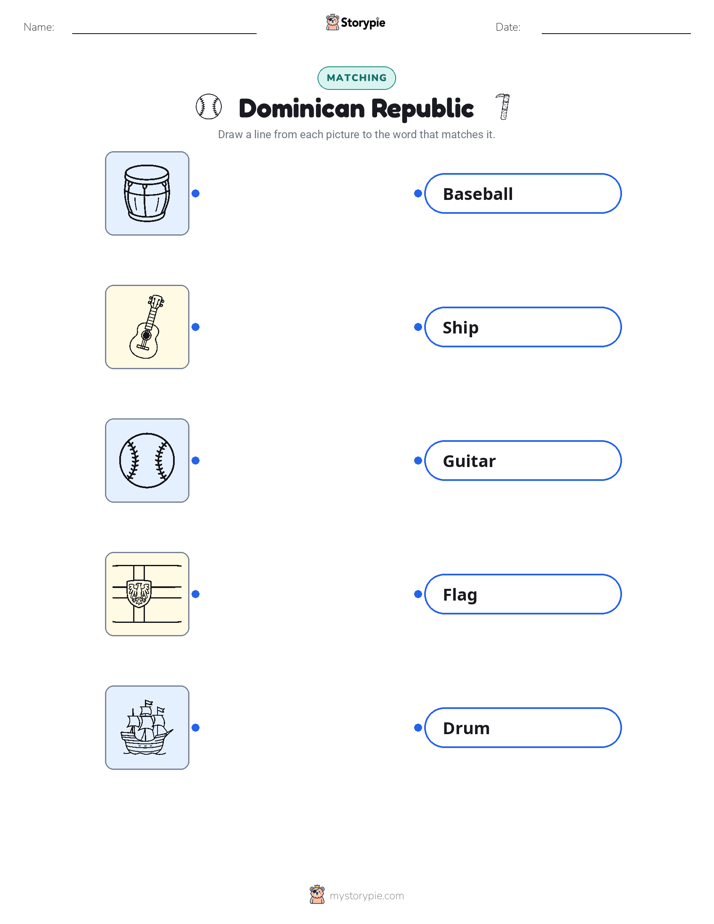
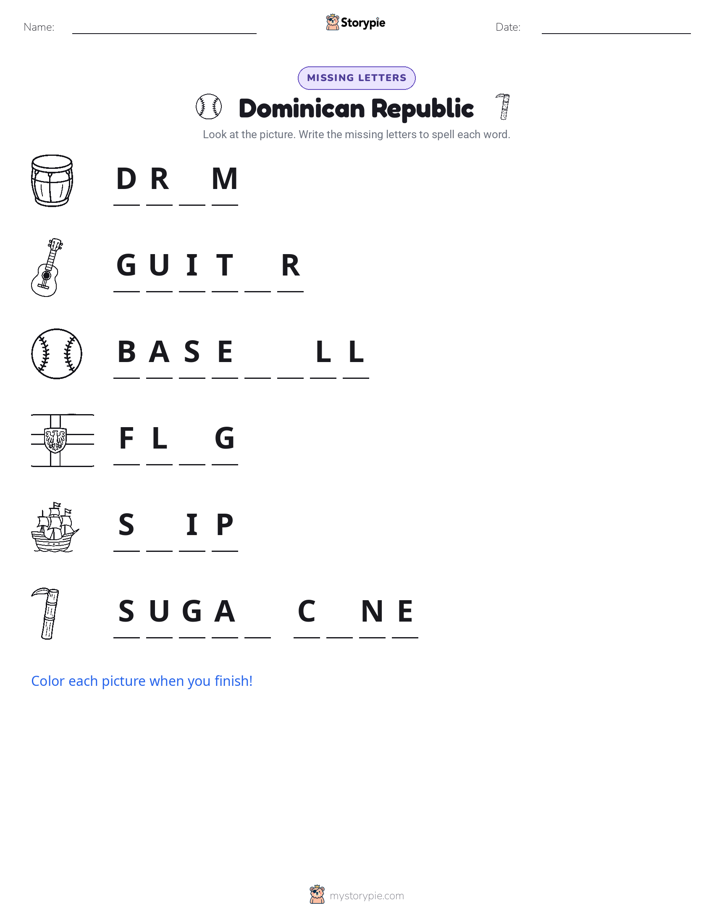
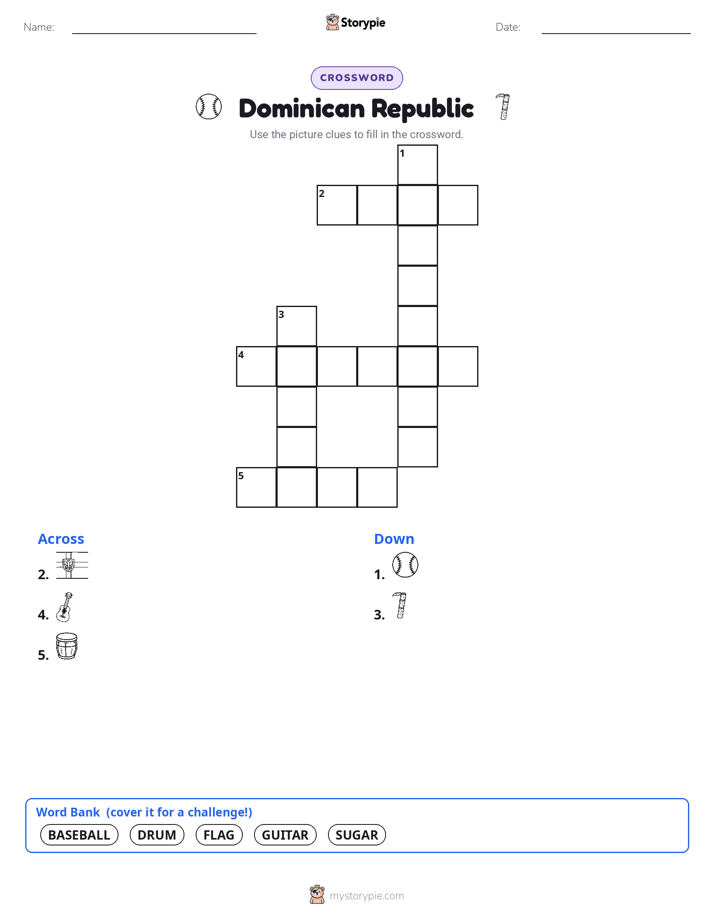
28 worksheets · answer keys · full story · quiz · Ages 10-12 · CEFR B2
Plus adds 279,000+ more stories in 27 languages, audio for every one, and printables for all of them.
Just want Dominican Republic?
Feel the warm sun on your skin and listen as turquoise waves whisper against soft, white sand. The air is sweet with the scent of tropical flowers, and everywhere, you can feel a lively rhythm in the air, a beat that makes you want to dance. This is a place where color, music, and life blend together in a joyful celebration. For centuries, I have been a crossroads of cultures, a jewel cradled by the sea, a land of both deep history and endless welcome. My mountains rise to touch the clouds, and my shores have seen the arrival of great ships and the birth of a proud nation. I have a story of resilience, creativity, and unbreakable spirit to share with you. I am the Dominican Republic, the heart of the Caribbean.
Long before any sails appeared on the horizon, my lands were home to a peaceful and creative people, the Taíno. They lived here for centuries, building their villages, called yucayeques, and developing a society deeply connected to the natural world around them. They saw me not just as land, but as a living being, and they called me Quisqueya, a beautiful name that means ‘mother of all lands.’ To this day, my people speak this name with great affection, a reminder of our indigenous roots. The Taíno were skilled farmers, artists, and navigators who filled my caves with art and my spirit with respect for nature. Their legacy is not just in museums; it is woven into the soul of my people, in our language, our food, and our profound love for this island they first called home.
The Story of the Dominican Republic
Feel the warm sun on your skin and listen as turquoise waves whisper against soft, white sand. The air is sweet with the scent of tropical flowers, and everywhere, you can feel a lively rhythm in the air, a beat that makes you want to dance. This is a place where color, music, and life blend together in a joyful celebration. For centuries, I have been a crossroads of cultures, a jewel cradled by the sea, a land of both deep history and endless welcome. My mountains rise to touch the clouds, and my shores have seen the arrival of great ships and the birth of a proud nation. I have a story of resilience, creativity, and unbreakable spirit to share with you. I am the Dominican Republic, the heart of the Caribbean.
Long before any sails appeared on the horizon, my lands were home to a peaceful and creative people, the Taíno. They lived here for centuries, building their villages, called yucayeques, and developing a society deeply connected to the natural world around them. They saw me not just as land, but as a living being, and they called me Quisqueya, a beautiful name that means ‘mother of all lands.’ To this day, my people speak this name with great affection, a reminder of our indigenous roots. The Taíno were skilled farmers, artists, and navigators who filled my caves with art and my spirit with respect for nature. Their legacy is not just in museums; it is woven into the soul of my people, in our language, our food, and our profound love for this island they first called home.
A new chapter in my story began on December 5th, 1492, when three large ships, unlike any the Taíno had ever seen, arrived on my northern coast. They were led by an explorer named Christopher Columbus, and his arrival marked a moment of profound and irreversible change. Soon after, my destiny was reshaped. On August 5th, 1498, the city of Santo Domingo was founded, becoming the very first and oldest continuously inhabited European city in the Americas. This era was complex and filled with hardship. The Spanish introduced sugarcane, a crop that demanded immense labor. To work the fields, they forced the native Taíno people into servitude, and soon after, began bringing enslaved people from Africa. This was a time of great sorrow, but it was also a time when three cultures began to merge. The resilience of the Taíno, the traditions of the Spanish, and the deep cultural roots of the African peoples slowly began to intertwine, creating the unique cultural tapestry that defines me today.
My people’s desire for freedom grew stronger with every passing generation. The path to becoming an independent nation was long and difficult, a true test of our spirit. We took a brave first step in 1821, declaring a brief independence from Spain, but this freedom was short-lived. In 1822, I was unified with my neighbor, Haiti, for over two decades. During this time, a secret society called La Trinitaria was formed by three visionary young men who are now known as my Founding Fathers: Juan Pablo Duarte, Francisco del Rosario Sánchez, and Matías Ramón Mella. They dreamed of a free and sovereign nation, a place where my people could determine their own destiny. Their courage spread like wildfire, and on the historic day of February 27th, 1844, they led the charge. A cannon was fired, my new flag was raised, and I proudly declared my independence, becoming the sovereign nation I am today.
The 20th century brought new challenges that tested my people's strength. There were periods of political instability, and for thirty-one years, from 1930 to 1961, we lived under the harsh dictatorship of Rafael Trujillo. It was a difficult time that stifled freedom, but it could not extinguish our spirit. Through it all, my people showed incredible resilience. It was during these years that our unique cultural identity blossomed even brighter. The rhythms of merengue and bachata music were born, telling stories of life, love, and struggle, and giving us a reason to dance. We also discovered a national passion for baseball, or béisbol as we call it. The sport became more than just a game; it became a source of immense pride, producing some of the world's greatest players and uniting us in moments of shared joy and excitement.
Today, I am a nation that looks to the future with hope, while honoring the deep and complex history that shaped me. My natural beauty is breathtaking, from the peak of Pico Duarte, the highest mountain in the Caribbean, down to my world-famous sun-drenched beaches. But my greatest treasure is my people. Their warmth is as constant as the sun, their spirit is as resilient as the palms that bend in the storm, and their joy is as infectious as the beat of a merengue drum. I am a living story, a blend of cultures, a testament to the fight for freedom, and a celebration of life. I invite you to come and see for yourself, to walk the cobblestone streets of my first city, to dance to my music, and to feel the welcoming spirit that I offer to the world. Come and share in my story, and perhaps leave a small part of your own.
Wow facts
About
A Caribbean nation on the island of Hispaniola, known for its vibrant culture, beautiful beaches, and being the site of the first permanent European settlement in the Americas.
Take a Quiz
Question 1 of 5
Which sentence best summarizes the main idea of my story?
Explore next

Want to do even more?
Go beyond exploring. Unlock tools that turn every story into real learning.

Storypie Plus for families
Full stories, quizzes, and printables. Nights and car rides, sorted.
- Unlimited audio stories
- Create Mode: your child stars in the story
- Offline downloads
- Printable worksheets & coloring pages

Why Storypie for Schools
Students engaged. Prep in seconds. Evenings back to you.
- Worksheets & Quizzes
- Classroom Management
- Formative Assessment
- Custom Curriculum & Lesson Plans
- 27 Languages

Why Storypie for Homeschool
Curriculum done. They'll ask for more. Hours back in your day.
- Worksheet Generator
- First-Person Audio Stories
- Built-in Comprehension Quizzes
- Custom Curriculum & Lesson Plans
- Print & Go Activities