English

El Salvador
El Salvador, known as the 'Land of Volcanoes,' is the smallest country in Central America…
Reads at Grades 6–8 Listens at Grades 4–8
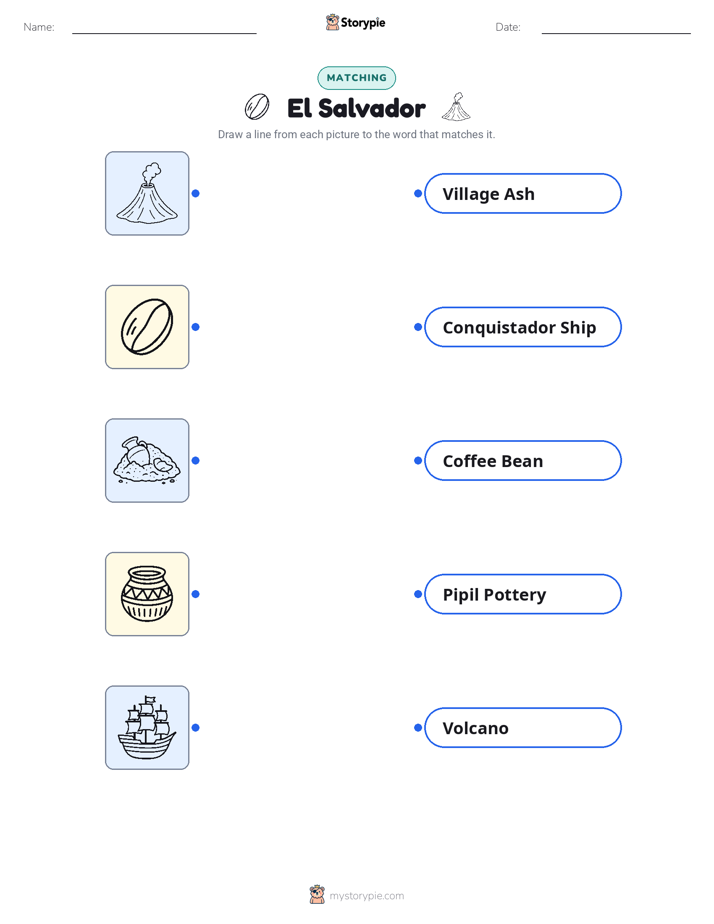
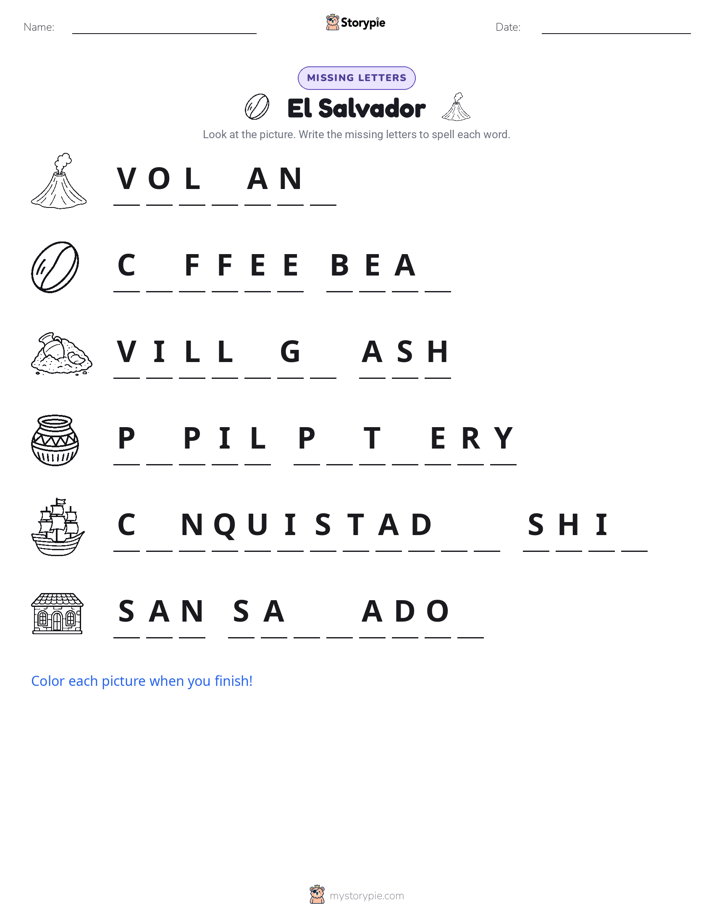
Print & create
Answer keys·No prep·Free with an account
28 worksheets · answer keys · full story · quiz · Ages 10-12 · CEFR B2
Plus adds 280,000+ more stories in 27 languages, audio for every one, and printables for all of them.
Just want El Salvador?
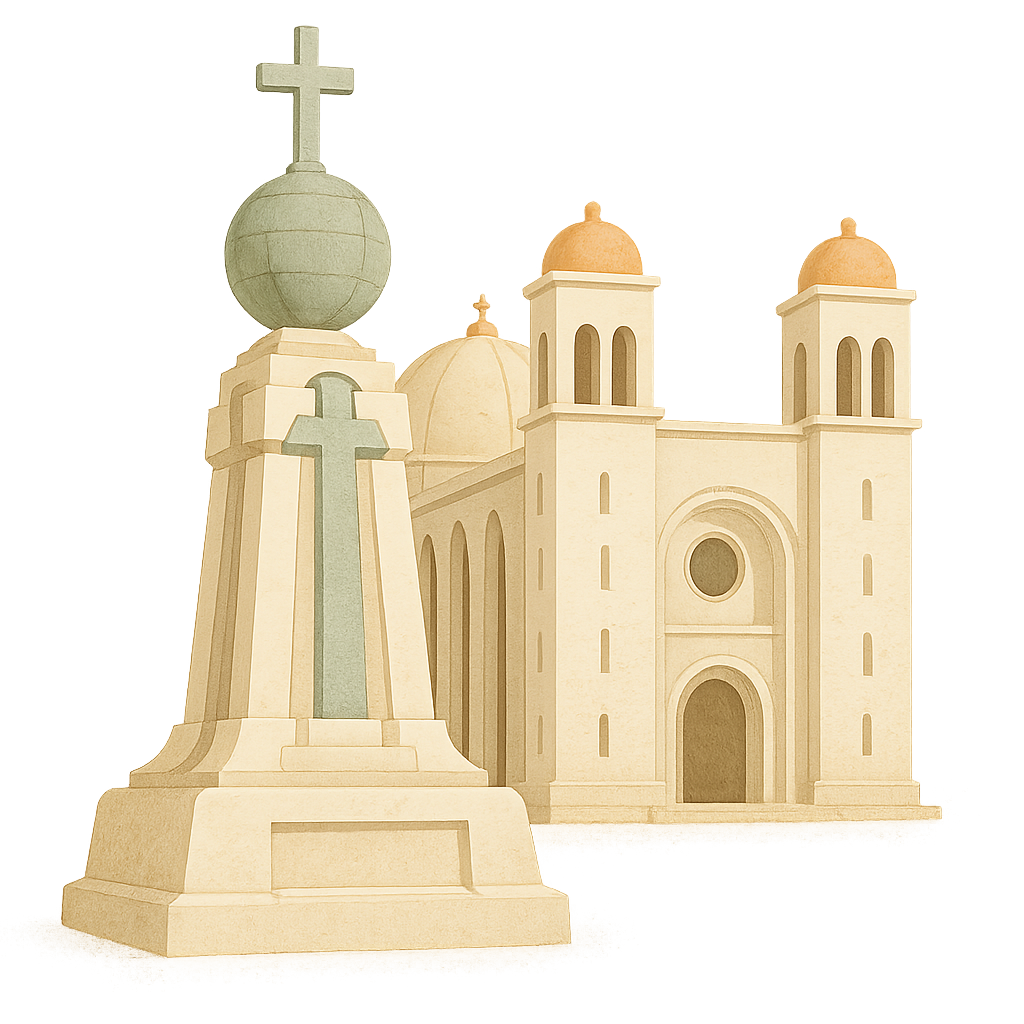
A chain of ancient volcanoes forms my spine, their peaks often cloaked in mist. My shores are kissed by the warm, rhythmic waves of the Pacific Ocean, and my valleys are lush and green, fertile ground for the rich coffee beans that grow here. Beneath my soil lie stories thousands of years old, whispers of civilizations that rose and fell, while the energy of my people today is a vibrant hum you can feel in the bustling cities and quiet mountain towns. For all my history and beauty, I am compact, a small jewel on a vast continent. I am El Salvador, the smallest country in Central America, with a heart as fiery as my volcanoes.
My story begins long before maps gave me my current name. My earliest inhabitants, including the resourceful Maya people, understood the rhythms of my land. But one of my most precious secrets was hidden for centuries by a sudden, powerful event. Around the year 600 CE, one of my volcanoes, Loma Caldera, erupted, blanketing a small village in a thick layer of ash. This village, now called Joya de Cerén, was preserved perfectly, like a snapshot of ancient life. It shows the world how ordinary people lived, with their tools, their homes, and even the meals they were about to eat left untouched. Later, the Pipil people migrated to my lands and built a powerful kingdom called Cuzcatlán. It was a thriving center of trade and culture, with complex social structures and a deep connection to the earth. They were my guardians, fierce and proud, living in harmony with my rivers and mountains.
The Story of El Salvador
A chain of ancient volcanoes forms my spine, their peaks often cloaked in mist. My shores are kissed by the warm, rhythmic waves of the Pacific Ocean, and my valleys are lush and green, fertile ground for the rich coffee beans that grow here. Beneath my soil lie stories thousands of years old, whispers of civilizations that rose and fell, while the energy of my people today is a vibrant hum you can feel in the bustling cities and quiet mountain towns. For all my history and beauty, I am compact, a small jewel on a vast continent. I am El Salvador, the smallest country in Central America, with a heart as fiery as my volcanoes.
My story begins long before maps gave me my current name. My earliest inhabitants, including the resourceful Maya people, understood the rhythms of my land. But one of my most precious secrets was hidden for centuries by a sudden, powerful event. Around the year 600 CE, one of my volcanoes, Loma Caldera, erupted, blanketing a small village in a thick layer of ash. This village, now called Joya de Cerén, was preserved perfectly, like a snapshot of ancient life. It shows the world how ordinary people lived, with their tools, their homes, and even the meals they were about to eat left untouched. Later, the Pipil people migrated to my lands and built a powerful kingdom called Cuzcatlán. It was a thriving center of trade and culture, with complex social structures and a deep connection to the earth. They were my guardians, fierce and proud, living in harmony with my rivers and mountains.
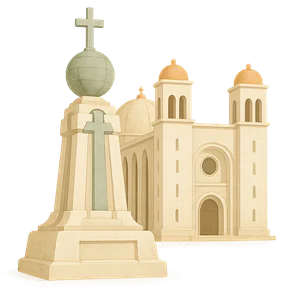
That harmony was disrupted in the year 1524. Ships unlike any seen before arrived on my shores, carrying Spanish conquistadors led by a man named Pedro de Alvarado. The Pipil warriors of Cuzcatlán resisted with incredible bravery, but the clash of worlds was inevitable. The Spanish brought new technologies, animals, and beliefs that would forever change my path. In 1525, they founded the city of San Salvador, which would become my capital and my heart. For nearly 300 years, I was part of the Spanish Empire. During this long era, two worlds slowly, and sometimes painfully, began to merge. The Spanish language mixed with indigenous words, new foods were introduced, and a new faith blended with ancient spiritual beliefs. This fusion forged the unique, layered culture my people carry with them today—a resilient identity born from both conflict and connection.
After centuries under Spanish rule, a new feeling began to stir among my people: a deep desire for freedom and the right to forge their own destiny. The first spark of this movement ignited on November 5th, 1811, in what is now known as the 'First Cry of Independence.' It was a brave but ultimately unsuccessful uprising, yet it planted a seed of hope that could not be extinguished. The struggle continued, fueled by thinkers, leaders, and ordinary people who dreamed of a future they could call their own. That dream finally became a reality on September 15th, 1821, when independence from Spain was declared alongside my Central American neighbors. The journey was not over, though. After a brief period as part of other federations, I stood on my own two feet, becoming a fully independent republic in 1841, ready to write my own chapter in the story of the world.
My path as a new nation was not always smooth. The 20th century brought times of great difficulty and sorrow. The deepest of these challenges was a Civil War that began in 1980 and lasted for twelve long years. It was a time of immense pain that divided families and communities, testing the spirit of my people like never before. But even in the darkest moments, their strength and resilience never failed. They held on to hope, to their culture, and to each other. The turning point came on January 16th, 1992, when the Chapultepec Peace Accords were signed in Mexico City. This was more than just a document; it was a profound promise. It was a commitment to end the fighting, to listen to one another, and to begin the difficult but necessary work of healing. That day marked the start of a new era, one focused on rebuilding not just cities and roads, but trust, unity, and a shared future based on peace.
Today, my heartbeat is strong and vibrant. You can hear it in the cheers of surfers riding the world-class waves at El Tunco and El Sunzal. You can smell it in the delicious aroma of pupusas, my national dish, being cooked by hand on a hot griddle. You can taste it in the rich, smooth coffee grown in my volcanic highlands and enjoyed around the world. And you can see it in the colorful, hopeful art of Fernando Llort, whose simple, joyful designs decorate towns like La Palma, reminding everyone of the beauty in everyday life. My story is one of endurance, of blending old worlds to create something new, and of finding peace after struggle. I invite you to discover my hidden waterfalls, my ancient ruins, and the incredible warmth of my people, who continue to build a bright future with creativity, strength, and an unbreakable spirit.
Wow facts
About
El Salvador, known as the 'Land of Volcanoes,' is the smallest country in Central America, rich in indigenous history, colonial heritage, and renowned for its coffee, surfing, and vibrant culture.
Take a Quiz
Question 1 of 5
What is the main theme of the story, as told by El Salvador?
Explore next




Want to do even more?
Go beyond exploring. Unlock tools that turn every story into real learning.

Storypie Plus for families
Full stories, quizzes, and printables. Nights and car rides, sorted.
- Unlimited audio stories
- Create Mode: your child stars in the story
- Offline downloads
- Printable worksheets & coloring pages

Why Storypie for Schools
Students engaged. Prep in seconds. Evenings back to you.
- Worksheets & Quizzes
- Classroom Management
- Formative Assessment
- Custom Curriculum & Lesson Plans
- 27 Languages

Why Storypie for Homeschool
Curriculum done. They'll ask for more. Hours back in your day.
- Worksheet Generator
- First-Person Audio Stories
- Built-in Comprehension Quizzes
- Custom Curriculum & Lesson Plans
- Print & Go Activities