English

English Channel
A busy arm of the Atlantic Ocean that separates southern England from northern France…
Reads at Grades 6–8 Listens at Grades 4–8
Print & create
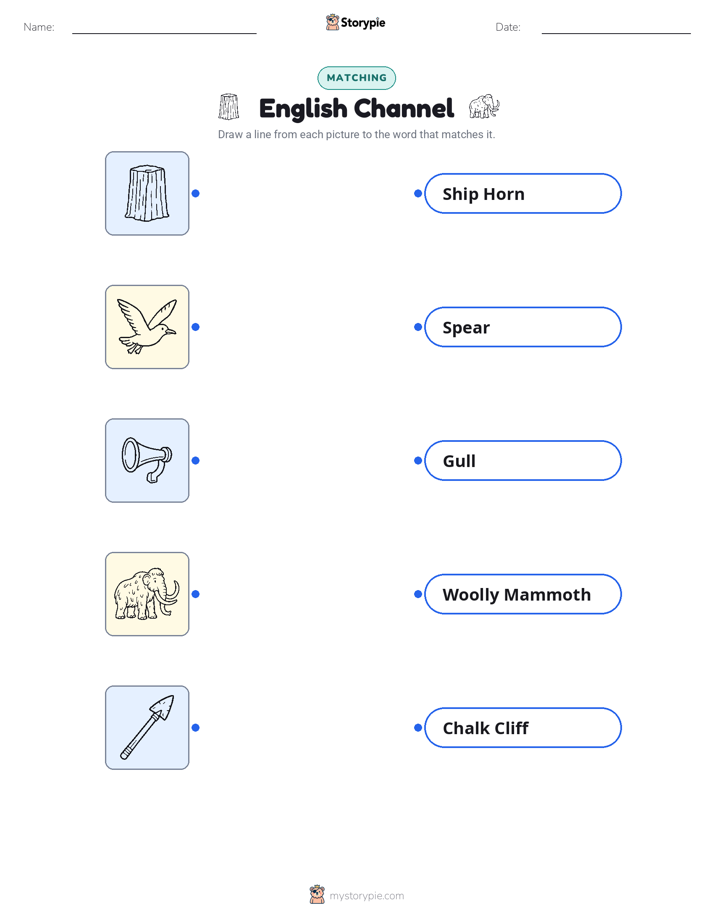
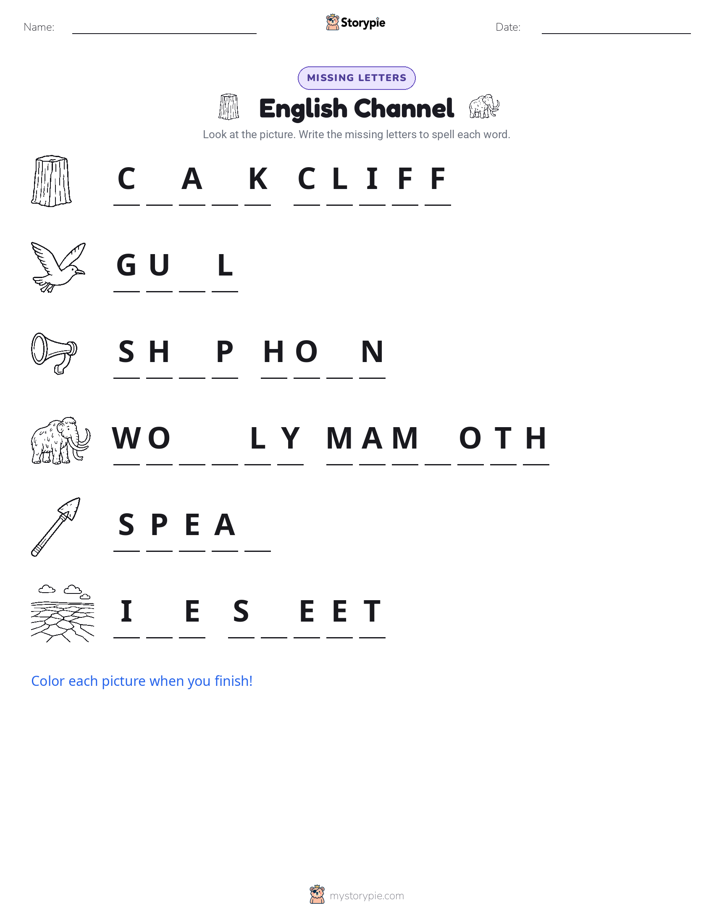
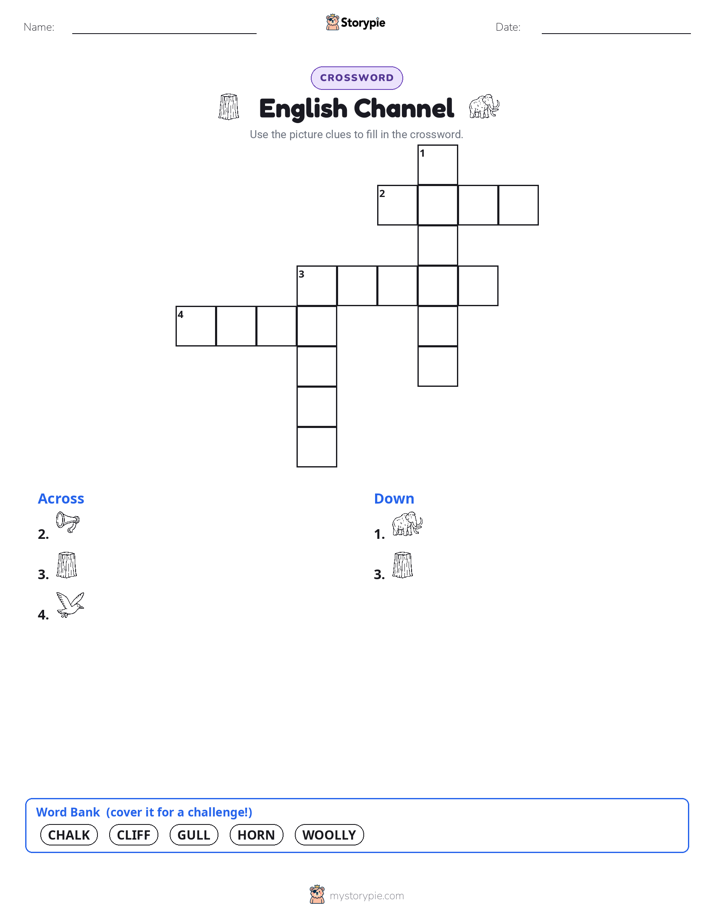
Answer keys·No prep·Free with an account
28 worksheets · answer keys · full story · quiz · Ages 10-12 · CEFR B2
Plus adds 102,000+ more stories in 27 languages, audio for every one, and printables for all of them.
Just want English Channel?
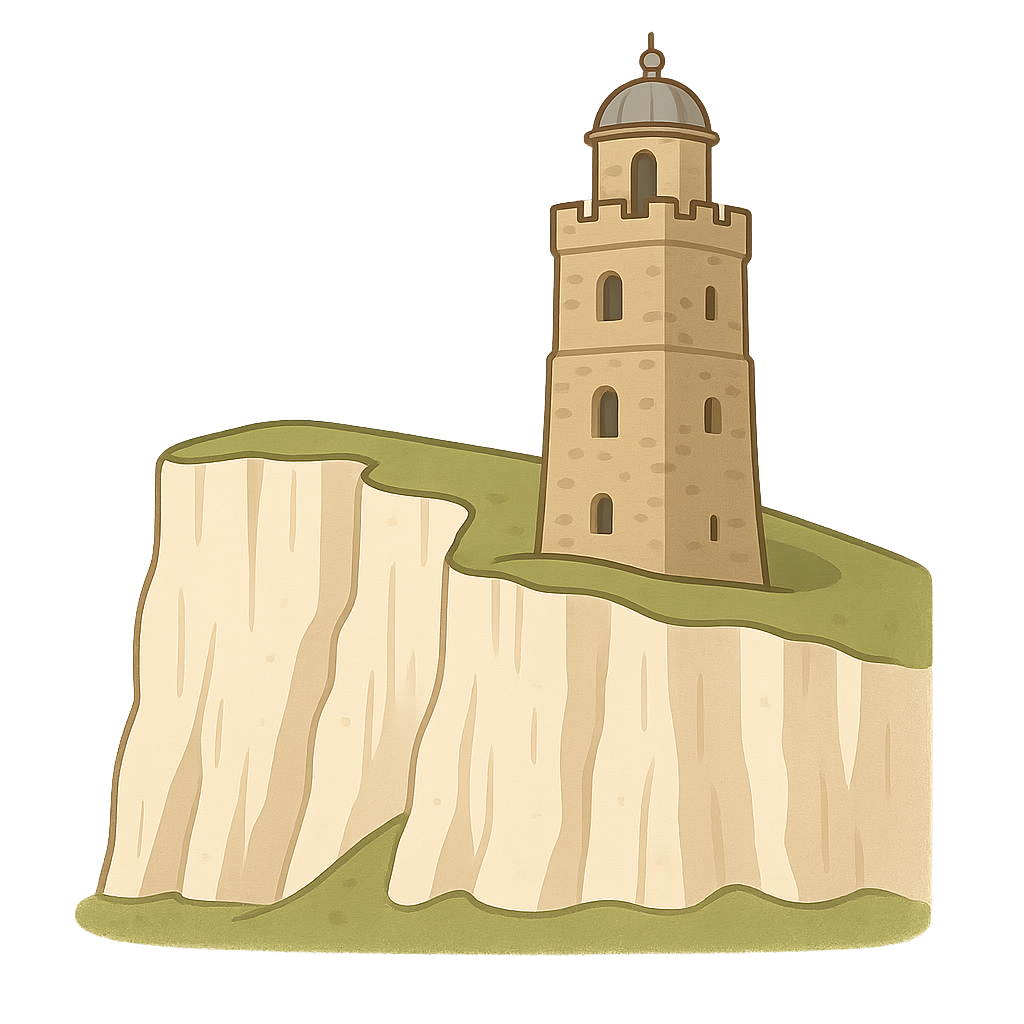
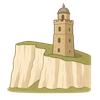
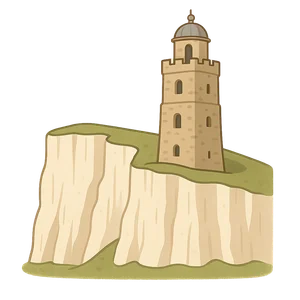
My surface glitters like a silver ribbon tossed between two great lands. On one side, chalky-white cliffs rise like ancient teeth, while on the other, rolling green hills meet my sandy shores. Gulls cry overhead as they wheel and dive, their calls echoing with the deep horns of the massive ships that glide across my waters day and night. I am in constant motion, my tides pulling and pushing, my waves crashing in a steady, ancient rhythm. I have been a witness to history, a silent observer of human ambition, courage, and conflict. For centuries, people have looked across my expanse with a mix of awe and determination, seeing me as both a challenge to be conquered and a connection to be made. I separate two powerful nations, a stretch of restless water that has defined their relationship for thousands of years. My friends in England call me the English Channel. My friends in France call me La Manche, which means 'the sleeve.' I am the silver ribbon of sea that flows between them.
But I was not always a channel of water. Travel back in time with me, long before there were kingdoms or castles, to the Ice Age. Then, I was a vast, rolling, frozen tundra called Doggerland. I was a land bridge, a solid connection between the island you now call Britain and the continent of Europe. Woolly mammoths with great curved tusks roamed across my plains, and early humans, wrapped in animal furs, followed them, hunting with flint-tipped spears. They walked where ships now sail. But the world began to warm, and the great ice sheets started to melt. Around 450,000 years ago, a colossal glacial lake to my north could no longer hold back its melting water. It burst its icy dam, unleashing a megaflood of unimaginable power that thundered across my landscape, carving a deep valley. Still, a stubborn ridge of chalky rock held firm. It took a second great flood, around 160,000 years ago, to finally break through that last barrier. With a final, dramatic surge, the sea rushed in, and I was born. For the first time, Britain was an island, and I became the sea that separated it from the rest of the world.
The Story of the Silver Sleeve
My surface glitters like a silver ribbon tossed between two great lands. On one side, chalky-white cliffs rise like ancient teeth, while on the other, rolling green hills meet my sandy shores. Gulls cry overhead as they wheel and dive, their calls echoing with the deep horns of the massive ships that glide across my waters day and night. I am in constant motion, my tides pulling and pushing, my waves crashing in a steady, ancient rhythm. I have been a witness to history, a silent observer of human ambition, courage, and conflict. For centuries, people have looked across my expanse with a mix of awe and determination, seeing me as both a challenge to be conquered and a connection to be made. I separate two powerful nations, a stretch of restless water that has defined their relationship for thousands of years. My friends in England call me the English Channel. My friends in France call me La Manche, which means 'the sleeve.' I am the silver ribbon of sea that flows between them.
But I was not always a channel of water. Travel back in time with me, long before there were kingdoms or castles, to the Ice Age. Then, I was a vast, rolling, frozen tundra called Doggerland. I was a land bridge, a solid connection between the island you now call Britain and the continent of Europe. Woolly mammoths with great curved tusks roamed across my plains, and early humans, wrapped in animal furs, followed them, hunting with flint-tipped spears. They walked where ships now sail. But the world began to warm, and the great ice sheets started to melt. Around 450,000 years ago, a colossal glacial lake to my north could no longer hold back its melting water. It burst its icy dam, unleashing a megaflood of unimaginable power that thundered across my landscape, carving a deep valley. Still, a stubborn ridge of chalky rock held firm. It took a second great flood, around 160,000 years ago, to finally break through that last barrier. With a final, dramatic surge, the sea rushed in, and I was born. For the first time, Britain was an island, and I became the sea that separated it from the rest of the world.
My new form gave me a dual personality. I became a protective barrier, a natural moat that made invading Britain by sea a difficult and dangerous task. But I was also a highway, a watery road for anyone brave enough to build a ship and face my currents. The first great commander to test my waters was the Roman general Julius Caesar. He sailed his fleets across me in both 55 and 54 BCE, calling me 'Oceanus Britannicus,' the British Ocean. More than a thousand years later, in 1066, my waves carried the massive fleet of William the Conqueror from Normandy in France. His ships landed on the English coast, and he went on to win the Battle of Hastings, changing the course of English history forever. My waters have also been a battlefield. In the summer of 1588, the mighty Spanish Armada, a fleet of over 130 huge warships, sailed into my western end, intending to invade England. But the smaller, faster English ships were waiting. For days, a running battle raged across my surface, with cannon fire echoing from coast to coast. A great storm, which the English called the 'Protestant Wind,' helped scatter the Armada, saving England from invasion and marking a turning point in history.
As centuries passed, people began to see me not just as something to sail across, but as a personal challenge to conquer. On August 25th, 1875, a determined man named Captain Matthew Webb dove into my chilly waters. He swam breaststroke, battling strong currents and jellyfish stings for nearly 22 hours. When he finally staggered ashore in France, he became the first person to swim across me without any assistance, a feat of endurance that captured the world's imagination. Then, in the 20th century, an even more ambitious idea took hold: to travel not over me, but under me. In 1988, an incredible engineering project began. Giant drills started boring deep beneath my seabed, one from the English side and one from the French. For years they dug, removing tons of chalk and clay. Finally, the moment came when the two tunnels met in the middle, a perfect connection. On May 6th, 1994, the Channel Tunnel officially opened. For the first time in over 160,000 years, a direct, dry link existed between Britain and mainland Europe, and high-speed trains began to rush through the darkness beneath my waves.
Today, I am one of the busiest shipping lanes in the world. My surface is a constant parade of ferries carrying vacationers, huge cargo ships transporting goods, and small fishing boats harvesting the sea. I am a hub of commerce and travel, a vital link in the global economy. Yet, my most profound moment may have been during World War II. On a gray morning on June 6th, 1944, known as D-Day, I carried the largest fleet ever assembled. Thousands of ships filled my waters, carrying brave soldiers from Britain to the beaches of Normandy in France on a mission to bring peace and freedom to Europe. I have been a land bridge, a moat, a battlefield, and a challenge. But now, I am mostly a bridge of stories. Through the tunnel below and the ships above, I connect people, cultures, and ideas. I am a reminder that even when a stretch of water separates us, human ingenuity and the desire to connect will always find a way across.
Wow facts
About
A busy arm of the Atlantic Ocean that separates southern England from northern France, serving as a historic barrier and a crucial modern waterway.
Take a Quiz
Question 1 of 5
In your own words, retell the main events that transformed me from the dry land of Doggerland into a sea channel.
Explore next




Want to do even more?
Go beyond exploring. Unlock tools that turn every story into real learning.

Storypie Plus for families
Full stories, quizzes, and printables. Nights and car rides, sorted.
- Unlimited audio stories
- Create Mode: your child stars in the story
- Offline downloads
- Printable worksheets & coloring pages

Why Storypie for Schools
Students engaged. Prep in seconds. Evenings back to you.
- Worksheets & Quizzes
- Classroom Management
- Formative Assessment
- Custom Curriculum & Lesson Plans
- 27 Languages

Why Storypie for Homeschool
Curriculum done. They'll ask for more. Hours back in your day.
- Worksheet Generator
- First-Person Audio Stories
- Built-in Comprehension Quizzes
- Custom Curriculum & Lesson Plans
- Print & Go Activities