English

Itsukushima Shrine
A Shinto shrine on the island of Itsukushima (Miyajima) in Japan…
Reads at Grades 3–5 Listens at Grades 1–5
Print & create
Answer keys·No prep·Free with an account
28 worksheets · answer keys · full story · quiz · Ages 8-10 · CEFR B1
Plus adds 164,000+ more stories in 27 languages, audio for every one, and printables for all of them.
Just want Itsukushima Shrine?
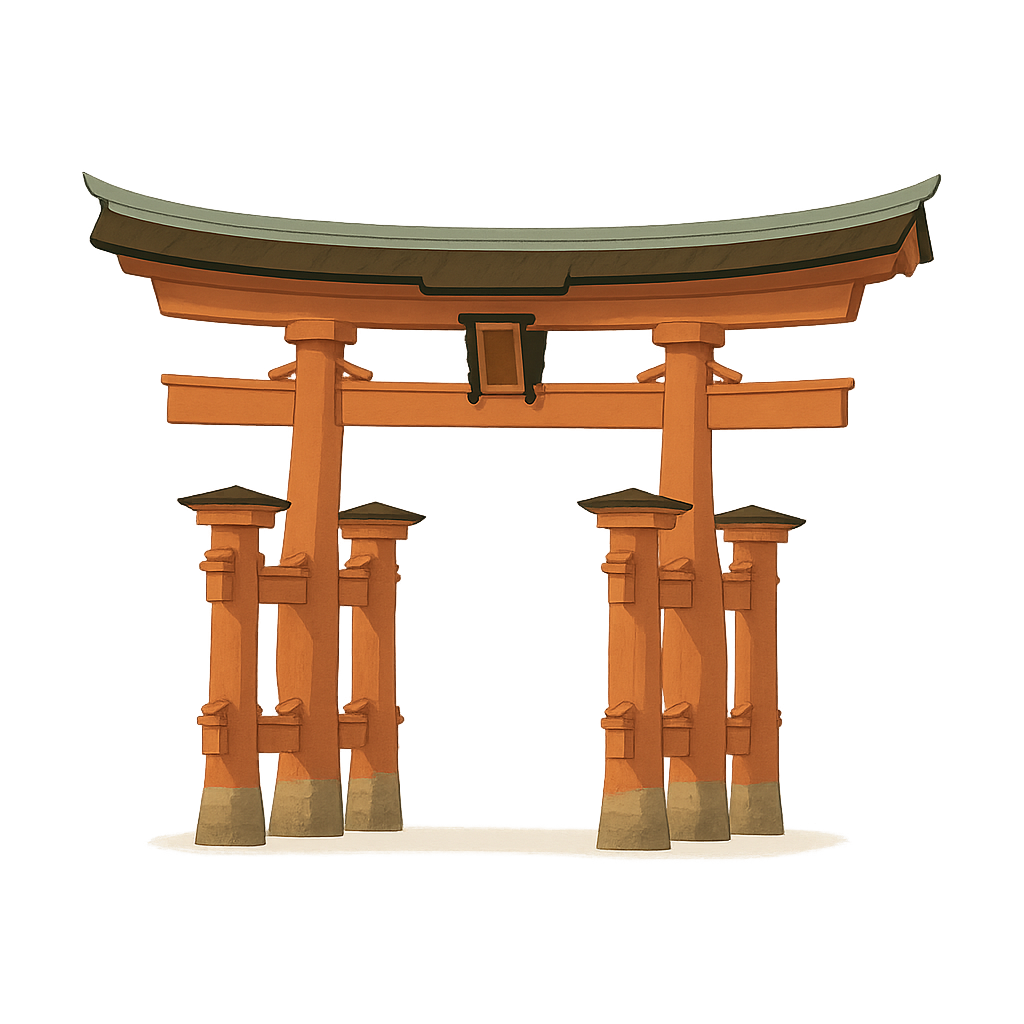
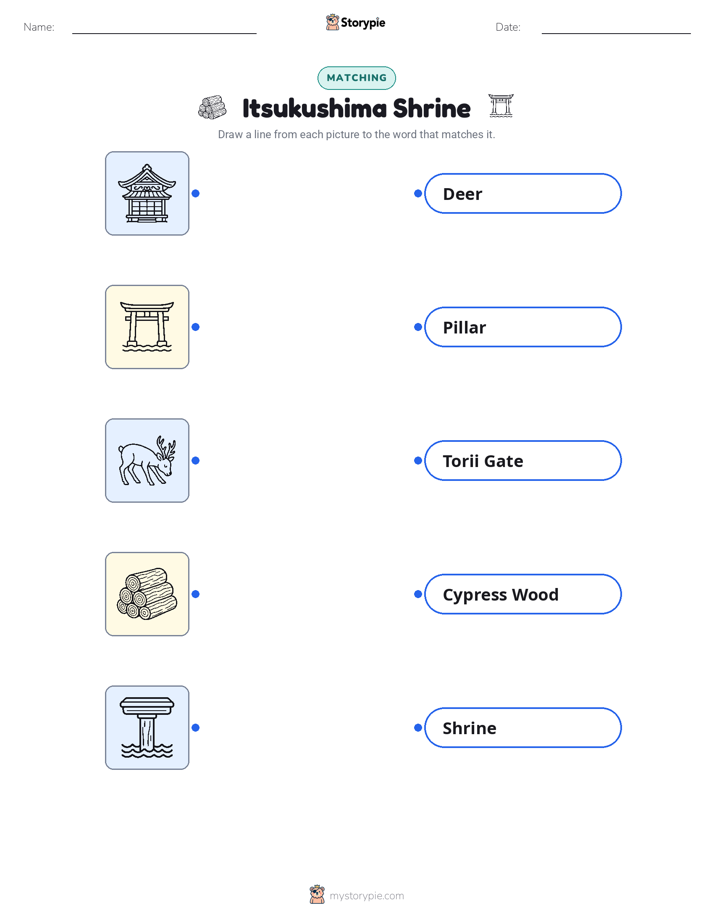
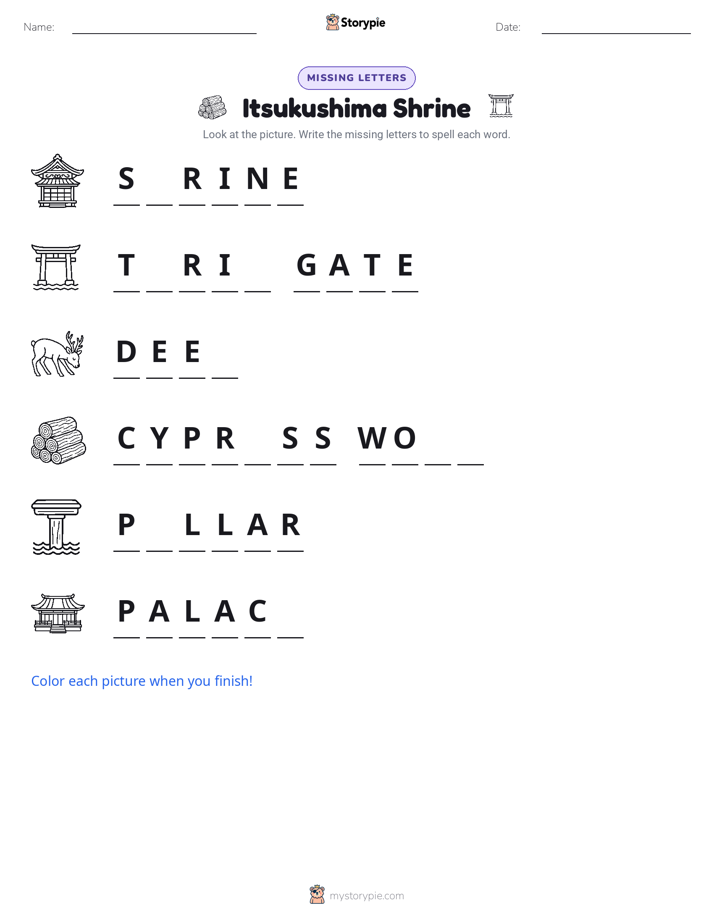
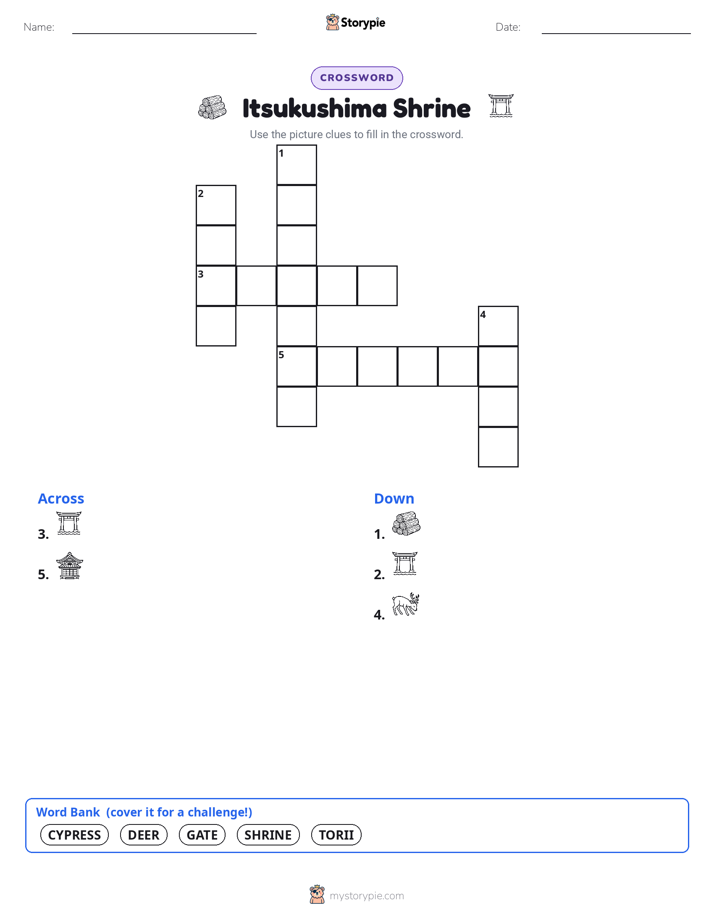
Imagine the feeling of cool seawater gently lapping at your feet, day after day, for hundreds of years. That is my life. I stretch my long, wooden legs into the bay, and my brilliant vermilion-red pillars shine like jewels reflected in the water. All around me, on my island home, gentle deer wander freely, bowing their heads to visitors as if to say hello. My most famous feature stands tall in the waves—a magnificent gate that, when the tide is high, seems to be floating magically on the surface of the sea. It is a breathtaking sight, a perfect frame for the ocean and the sky. People travel across the world just to see it, to feel the calm spirit of this place where the water meets the land in a special way. They wonder how I can stand so strong in the moving tides. I am the Itsukushima Shrine, a gateway between the human and spirit worlds, built right on the sea off the coast of Japan on the beautiful island of Miyajima.
My story is very long, stretching back through centuries of changing seasons. The first small shrine was said to have been built here on this sacred island way back in the year 593. For a long time, I was a quiet place of prayer. But my big transformation came much later, thanks to a powerful and ambitious leader named Taira no Kiyomori. In the year 1168, he was the most influential man in Japan, and he decided to rebuild me into the grand, beautiful structure you see today. He dreamed of a palace on the water, a place so stunning it would look like it belonged to the gods themselves. You see, the entire island of Miyajima was considered holy ground. To honor its sacred nature, Kiyomori decided I should not be built on the land, but over the water. He wanted to create a special place to give thanks and to honor the powerful gods of the sea and storms. He designed my halls, stages, and long, covered corridors to look as if they were floating on the waves, a perfect home for the spirits he wished to please. It was a brilliant idea that made me famous throughout the land.
The Shrine That Floats on the Sea
Imagine the feeling of cool seawater gently lapping at your feet, day after day, for hundreds of years. That is my life. I stretch my long, wooden legs into the bay, and my brilliant vermilion-red pillars shine like jewels reflected in the water. All around me, on my island home, gentle deer wander freely, bowing their heads to visitors as if to say hello. My most famous feature stands tall in the waves—a magnificent gate that, when the tide is high, seems to be floating magically on the surface of the sea. It is a breathtaking sight, a perfect frame for the ocean and the sky. People travel across the world just to see it, to feel the calm spirit of this place where the water meets the land in a special way. They wonder how I can stand so strong in the moving tides. I am the Itsukushima Shrine, a gateway between the human and spirit worlds, built right on the sea off the coast of Japan on the beautiful island of Miyajima.
My story is very long, stretching back through centuries of changing seasons. The first small shrine was said to have been built here on this sacred island way back in the year 593. For a long time, I was a quiet place of prayer. But my big transformation came much later, thanks to a powerful and ambitious leader named Taira no Kiyomori. In the year 1168, he was the most influential man in Japan, and he decided to rebuild me into the grand, beautiful structure you see today. He dreamed of a palace on the water, a place so stunning it would look like it belonged to the gods themselves. You see, the entire island of Miyajima was considered holy ground. To honor its sacred nature, Kiyomori decided I should not be built on the land, but over the water. He wanted to create a special place to give thanks and to honor the powerful gods of the sea and storms. He designed my halls, stages, and long, covered corridors to look as if they were floating on the waves, a perfect home for the spirits he wished to please. It was a brilliant idea that made me famous throughout the land.
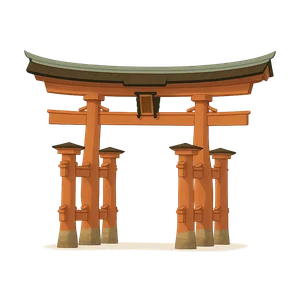
Being built over the water is beautiful, but it also means I have had to be very, very strong. My home in the Seto Inland Sea can be a dangerous place when the sky grows dark and the wind begins to howl. I have faced many powerful ocean storms, called typhoons, that send enormous waves crashing against my wooden pillars and sweeping through my corridors. My long life has been a cycle of beauty and repair. I have been damaged by storms many times, but each time, kind and dedicated people have worked together to rebuild me. They carefully mend my wooden floors and repaint my pillars, making sure my beauty and spirit endure. My famous Great Torii Gate has also faced these storms. The one you see today is not the original, but it is very old. It was built on October 3rd, 1875. It is a masterpiece of clever design. The gate is not buried deep in the seafloor. Instead, it stands perfectly balanced by its own incredible weight, a secret that has allowed it to withstand the pushing and pulling of the tides for over a century.
My strength and beauty have not gone unnoticed by the modern world. In the year 1996, I was given a great honor. I was named a UNESCO World Heritage Site, which means I am recognized as a special treasure for all people around the globe. Today, visitors come from everywhere to walk my wooden corridors, listen to the water flowing beneath their feet, and watch the tide slowly retreat from my gate, allowing them to walk right up to it. They feel the peace of my island and take pictures of the friendly deer. I love sharing my story and my connection to the sea and sky. I am a reminder that beauty, faith, and human creativity can stand strong for centuries, welcoming everyone with a peaceful, floating embrace.
Wow facts
About
A Shinto shrine on the island of Itsukushima (Miyajima) in Japan, famous for its 'floating' torii gate which stands in the sea during high tide.
Take a Quiz
Question 1 of 5
Why was the shrine originally built over the water instead of on the island itself?
Explore next






Want to do even more?
Go beyond exploring. Unlock tools that turn every story into real learning.

Storypie Plus for families
Full stories, quizzes, and printables. Nights and car rides, sorted.
- Unlimited audio stories
- Create Mode: your child stars in the story
- Offline downloads
- Printable worksheets & coloring pages

Why Storypie for Schools
Students engaged. Prep in seconds. Evenings back to you.
- Worksheets & Quizzes
- Classroom Management
- Formative Assessment
- Custom Curriculum & Lesson Plans
- 27 Languages

Why Storypie for Homeschool
Curriculum done. They'll ask for more. Hours back in your day.
- Worksheet Generator
- First-Person Audio Stories
- Built-in Comprehension Quizzes
- Custom Curriculum & Lesson Plans
- Print & Go Activities