English

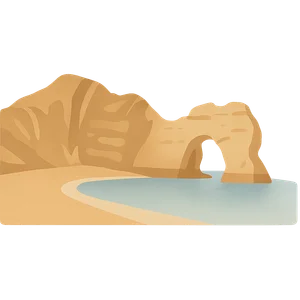
Jurassic Coast
A 95-mile stretch of coastline on the English Channel in southern England…
Reads at Grades 6–8 Listens at Grades 4–8
Print & create
Answer keys·No prep·Free with an account
28 worksheets · answer keys · full story · quiz · Ages 10-12 · CEFR B2
Plus adds 208,000+ more stories in 27 languages, audio for every one, and printables for all of them.
Just want Jurassic Coast?
Feel the cool sea breeze on your face and listen to the steady rhythm of waves crashing against stone. Look closely at me, and you will see cliffs that shift in color, from fiery red under the sun to a brilliant, soft white. Each layer of my rock holds an ancient secret, a page from Earth’s diary written long before humans walked the planet. Buried deep within me are the stony bones of giant sea creatures and the delicate, spiraled shells of animals that vanished millions of years ago. I am a 95-mile-long story of Earth's history, carved into the coast of southern England. I am the Jurassic Coast.
My story begins around 250 million years ago, during a time you call the Triassic Period. The world was a very different place then. The land was part of one enormous supercontinent called Pangaea, and the spot where I now meet the English Channel was a scorching hot desert. Fierce winds blew red sand across the landscape, piling it into vast dunes. Over millions of years, this sand was compressed into the sturdy red rock that forms my western cliffs in Devon. My creation was a slow, patient process, shaped by wind and time. Then, about 200 million years ago, the Jurassic Period began, and my world transformed completely. The great continent began to split apart, and warm, shallow seas flooded the desert. This new ocean teemed with incredible life. Powerful ichthyosaurs, shaped like dolphins, hunted in the depths. Long-necked plesiosaurs glided gracefully through the water, and countless ammonites with beautiful, coiled shells drifted with the currents. When these amazing creatures died, their bodies would sink to the seafloor. Slowly, over ages, they were covered by layers of mud and sand, which hardened around their bones and shells, turning them into the magnificent fossils I protect today.
A Storybook in Stone
Feel the cool sea breeze on your face and listen to the steady rhythm of waves crashing against stone. Look closely at me, and you will see cliffs that shift in color, from fiery red under the sun to a brilliant, soft white. Each layer of my rock holds an ancient secret, a page from Earth’s diary written long before humans walked the planet. Buried deep within me are the stony bones of giant sea creatures and the delicate, spiraled shells of animals that vanished millions of years ago. I am a 95-mile-long story of Earth's history, carved into the coast of southern England. I am the Jurassic Coast.
My story begins around 250 million years ago, during a time you call the Triassic Period. The world was a very different place then. The land was part of one enormous supercontinent called Pangaea, and the spot where I now meet the English Channel was a scorching hot desert. Fierce winds blew red sand across the landscape, piling it into vast dunes. Over millions of years, this sand was compressed into the sturdy red rock that forms my western cliffs in Devon. My creation was a slow, patient process, shaped by wind and time. Then, about 200 million years ago, the Jurassic Period began, and my world transformed completely. The great continent began to split apart, and warm, shallow seas flooded the desert. This new ocean teemed with incredible life. Powerful ichthyosaurs, shaped like dolphins, hunted in the depths. Long-necked plesiosaurs glided gracefully through the water, and countless ammonites with beautiful, coiled shells drifted with the currents. When these amazing creatures died, their bodies would sink to the seafloor. Slowly, over ages, they were covered by layers of mud and sand, which hardened around their bones and shells, turning them into the magnificent fossils I protect today.
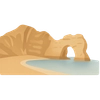
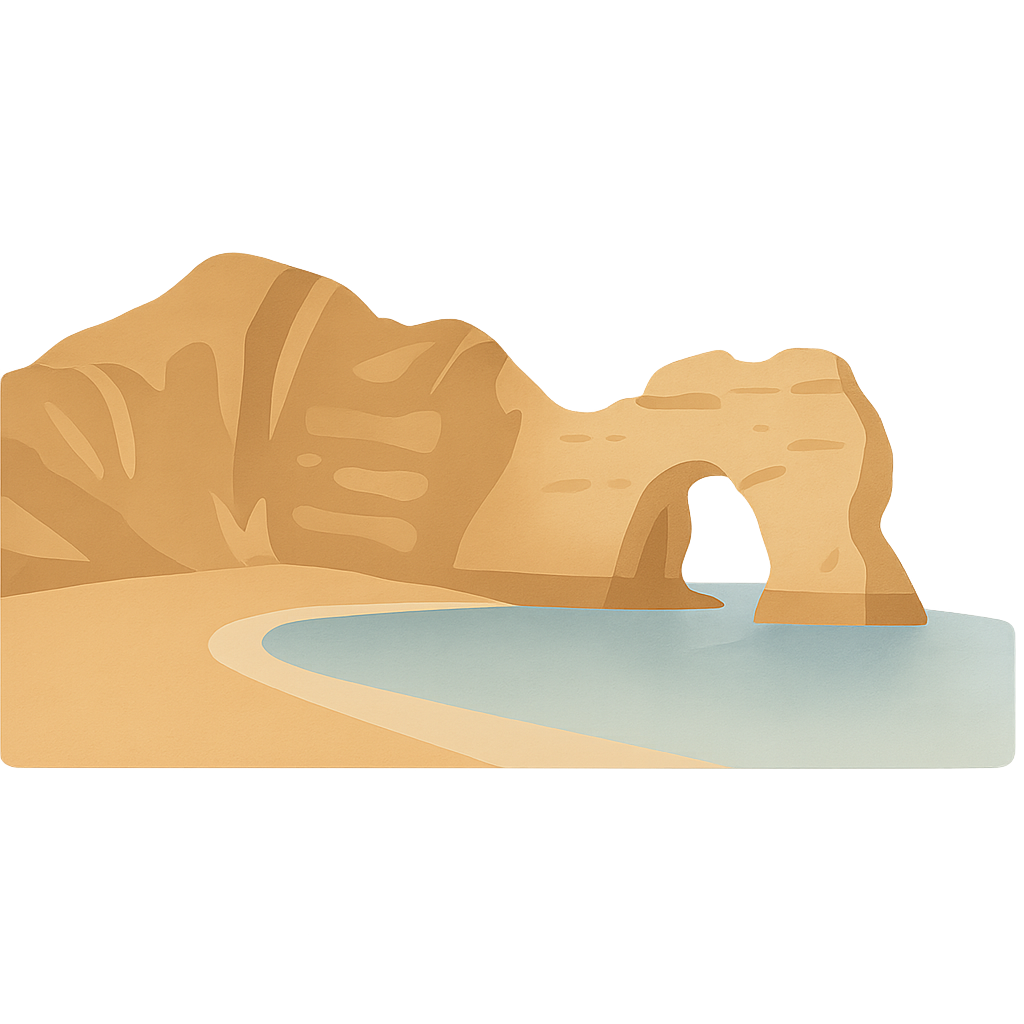
The final chapters of my formation were written during the Cretaceous Period, which started around 145 million years ago. The seas covering me grew deeper and clearer. In these waters lived trillions of tiny marine organisms with chalky shells. As they died, their microscopic remains settled on the ocean floor, building up layer upon layer for millions of years. This process created the soft, white chalk cliffs that you can see at the eastern end of my coastline, like the famous Durdle Door and Old Harry Rocks. For ages, my secrets remained locked away in stone. Then, a remarkable person came along who helped the world read my story. Her name was Mary Anning, and she lived in the town of Lyme Regis in the early 19th century. From a very young age, Mary had a keen eye and a passion for searching my beaches after storms. Armed with a hammer and endless curiosity, she uncovered wonders the world had never seen. In 1811, when she was just a girl, she and her brother discovered the first complete skeleton of an ichthyosaur. In 1823, she unearthed the first plesiosaur, a creature so strange that some scientists thought it was a fake. Then, in 1828, she found the skeleton of a pterosaur, a flying reptile. Mary’s discoveries were revolutionary. They provided powerful evidence that life on Earth had a long, complex history and that species could become extinct. Even though she was a woman from a poor background and wasn't always given credit for her work, her findings forever changed how humans understood the planet’s past.
Today, my story continues, not in the formation of new rock layers, but in the people who come to visit me. On December 13th, 2001, I was given a very special title. I was named a UNESCO World Heritage Site, the first natural one in all of Great Britain. This recognition means that I am considered a place of universal importance, a natural treasure that must be protected for everyone, for all time. Every year, thousands of people walk my coastal paths and carefully search my beaches, just as Mary Anning once did. Scientists come to study my geology, families come to hunt for their own fossil treasures, and explorers of all ages come to witness the immense history held within my cliffs. I am more than just a beautiful coastline. I am a continuous ‘walk through time,’ where every step can take you back millions of years. I offer clues to our planet’s incredible past and stand as a reminder of the ever-changing story of life. My greatest hope is that I will continue to inspire future generations to stay curious, to keep exploring, and to marvel at the amazing history written in stone.
Wow facts
About
A 95-mile stretch of coastline on the English Channel in southern England, renowned for its rich fossil beds and geological features spanning 185 million years of Earth's history.
Take a Quiz
Question 1 of 5
What is the main lesson or message the Jurassic Coast hopes to teach visitors?
Explore next





Want to do even more?
Go beyond exploring. Unlock tools that turn every story into real learning.

Storypie Plus for families
Full stories, quizzes, and printables. Nights and car rides, sorted.
- Unlimited audio stories
- Create Mode: your child stars in the story
- Offline downloads
- Printable worksheets & coloring pages

Why Storypie for Schools
Students engaged. Prep in seconds. Evenings back to you.
- Worksheets & Quizzes
- Classroom Management
- Formative Assessment
- Custom Curriculum & Lesson Plans
- 27 Languages

Why Storypie for Homeschool
Curriculum done. They'll ask for more. Hours back in your day.
- Worksheet Generator
- First-Person Audio Stories
- Built-in Comprehension Quizzes
- Custom Curriculum & Lesson Plans
- Print & Go Activities