English

Living Root Bridges
Living structures in Meghalaya, India…
Reads at Grades 3–5 Listens at Grades 1–5
Print & create
Answer keys·No prep·Free with an account
28 worksheets · answer keys · full story · quiz · Ages 8-10 · CEFR B1
Plus adds 164,000+ more stories in 27 languages, audio for every one, and printables for all of them.
Just want Living Root Bridges?
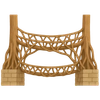
Listen. Can you hear the whisper of rain on a million green leaves? Can you smell the sweet, damp earth of the rainforest? I live here, in a green kingdom in Meghalaya, India, where the clouds come down to kiss the hills. I stretch my strong arms over a rushing, gurgling river, a pathway where there should be none. I am not made of cold stone or hard metal. I am alive. I feel the soft green moss growing along my back like a warm blanket and the gentle patter of footsteps, big and small, that have crossed over me for centuries. Children laugh as they run across my sturdy frame, and elders walk slowly, their hands resting on my root-railings. I am a part of this forest, woven from the very trees that breathe life into this land. I am a Living Root Bridge, a Jingkieng Jri, as the local people who created me call me.
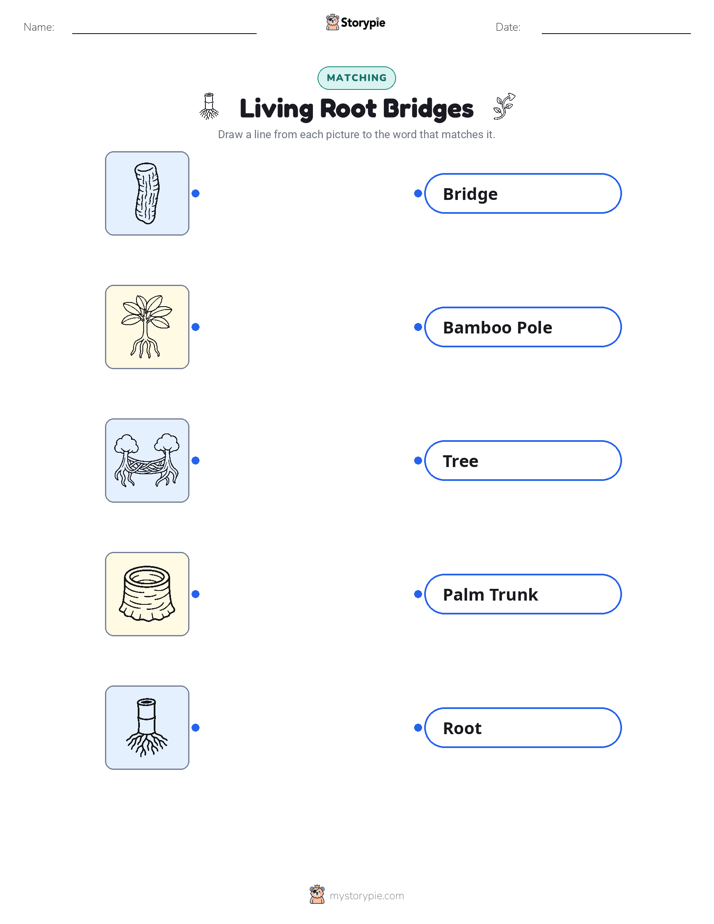
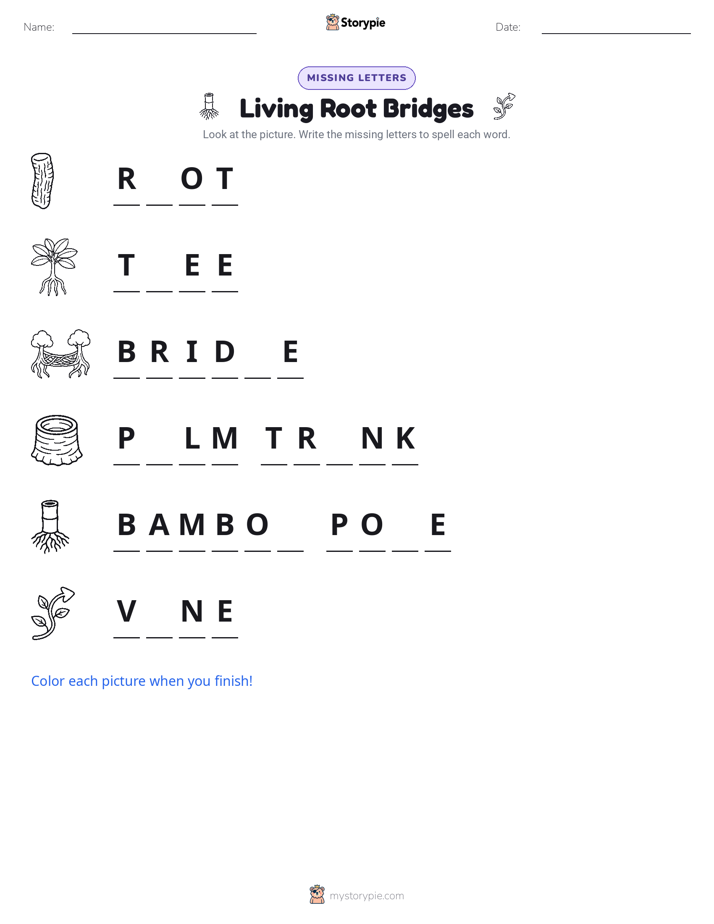
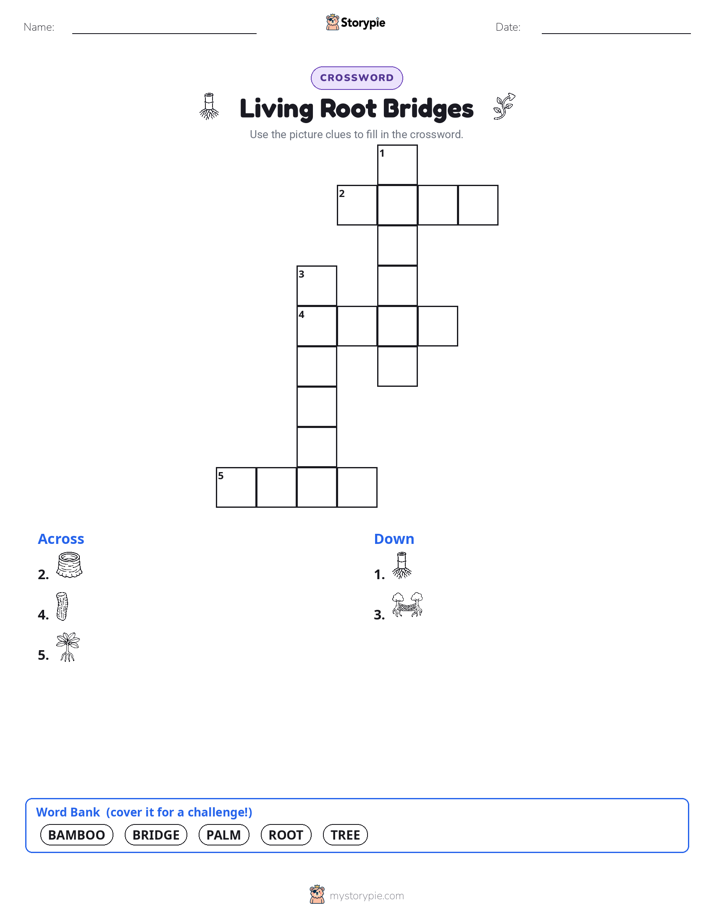
My story begins centuries ago with the clever Khasi and Jaintia people. They faced a mighty challenge. Every year, the monsoon rains would arrive, turning gentle streams into roaring, powerful rivers that could wash away any ordinary bridge made of wood or bamboo. They needed a solution that was as strong and patient as the forest itself. So, they decided not to build a bridge, but to grow one. They planted a special tree, the Ficus elastica, or rubber fig tree, on opposite banks of the river. As the tree grew, it sent down long, thin roots from its branches, like dangling fingers reaching for the water. The village elders would gently take these young, flexible roots and guide them across the river, sometimes threading them through hollowed-out trunks of betel nut trees to protect them and point them in the right direction. This wasn't a job for one person, or even one lifetime. It took patience, with the whole community working together. It could take from the 15th to the 30th year for my roots to reach the other side and grow strong enough to hold a person’s weight. For a long time, only the local people knew about me, until a British officer named Henry Yule wrote about his visit in his journal on July 10th, 1844, sharing my existence with the wider world.
The Living Root Bridge
Listen. Can you hear the whisper of rain on a million green leaves? Can you smell the sweet, damp earth of the rainforest? I live here, in a green kingdom in Meghalaya, India, where the clouds come down to kiss the hills. I stretch my strong arms over a rushing, gurgling river, a pathway where there should be none. I am not made of cold stone or hard metal. I am alive. I feel the soft green moss growing along my back like a warm blanket and the gentle patter of footsteps, big and small, that have crossed over me for centuries. Children laugh as they run across my sturdy frame, and elders walk slowly, their hands resting on my root-railings. I am a part of this forest, woven from the very trees that breathe life into this land. I am a Living Root Bridge, a Jingkieng Jri, as the local people who created me call me.
My story begins centuries ago with the clever Khasi and Jaintia people. They faced a mighty challenge. Every year, the monsoon rains would arrive, turning gentle streams into roaring, powerful rivers that could wash away any ordinary bridge made of wood or bamboo. They needed a solution that was as strong and patient as the forest itself. So, they decided not to build a bridge, but to grow one. They planted a special tree, the Ficus elastica, or rubber fig tree, on opposite banks of the river. As the tree grew, it sent down long, thin roots from its branches, like dangling fingers reaching for the water. The village elders would gently take these young, flexible roots and guide them across the river, sometimes threading them through hollowed-out trunks of betel nut trees to protect them and point them in the right direction. This wasn't a job for one person, or even one lifetime. It took patience, with the whole community working together. It could take from the 15th to the 30th year for my roots to reach the other side and grow strong enough to hold a person’s weight. For a long time, only the local people knew about me, until a British officer named Henry Yule wrote about his visit in his journal on July 10th, 1844, sharing my existence with the wider world.
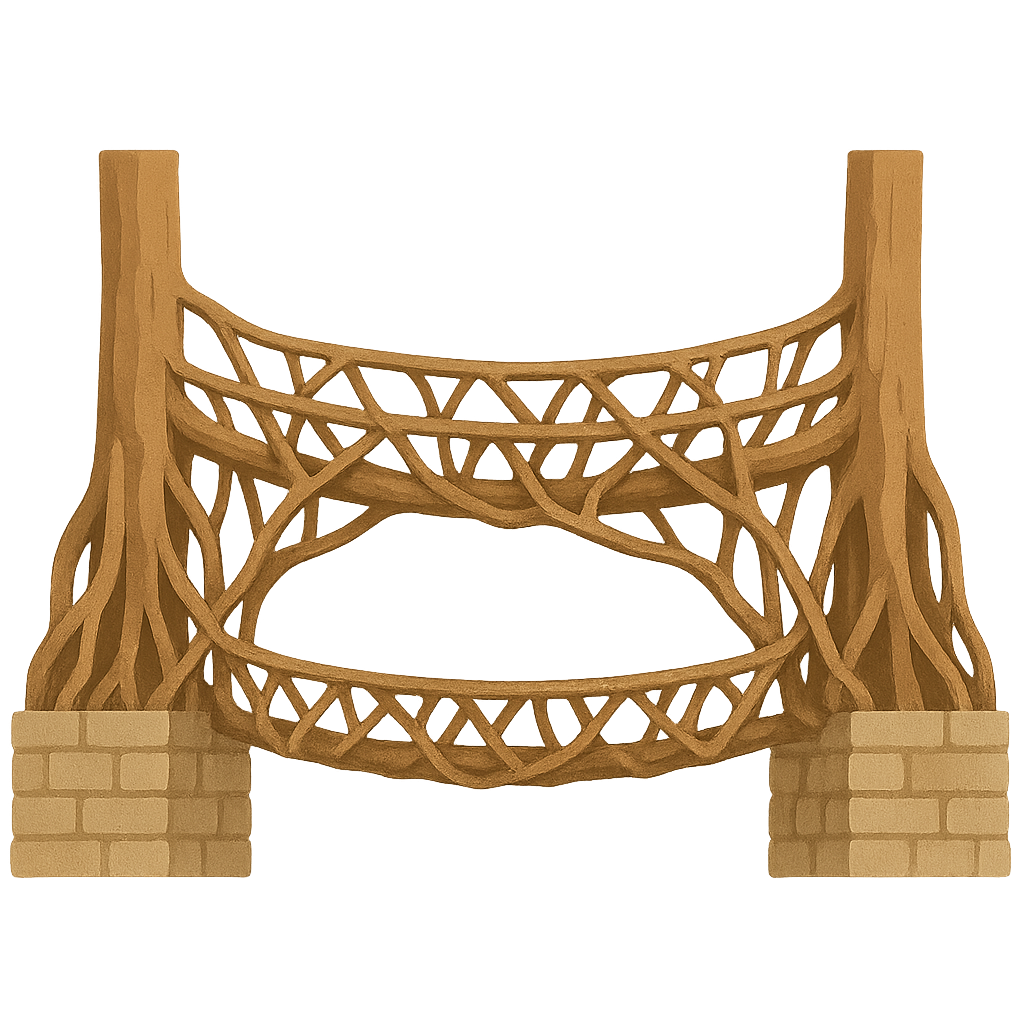
Unlike bridges of steel that rust or wood that rots, I do not get weaker with age. I grow stronger. Every single day, my roots grow a little thicker, intertwining and knotting together to make me more stable and secure. I am a lifeline for the villages I connect. Because of me, children can cross the river safely to get to school, even when the monsoon is at its peak. Families can carry goods to the market, and friends can visit one another. I am more than just a path for humans. I am a home. Squirrels scamper along my handrails, and bright-colored birds build their nests in the tangle of my living branches. I am a bridge that breathes. In the village of Nongriat, my relatives have even grown into a spectacular double-decker bridge, with one pathway woven right on top of another. It shows just how skilled and imaginative my creators are, working hand-in-hand with nature to solve their problems in the most beautiful way.
Today, my life has changed. People from all over the world make long journeys to walk across my living arms. They come to marvel at a bridge that wasn't built, but grown. I am no longer just a way to cross a river; I have become an idea. I teach a lesson about living in harmony with the world around us, showing that the greatest strength can come from being gentle and patient. I am a symbol of how human cleverness and the power of nature can create something wonderful together. In recognition of my importance, on January 27th, 2022, my kind was included on a special list for potential UNESCO World Heritage Sites. I stand as a reminder that sometimes the best solutions aren’t hammered and nailed, but are grown with care, connecting us not just to each other, but to the living world.
Wow facts
About
Living structures in Meghalaya, India, created by the Khasi and Jaintia peoples by guiding the aerial roots of rubber fig trees across rivers to form sturdy bridges.
Take a Quiz
Question 1 of 5
The story says the bridge was a solution to a problem. What was the problem, and how did the Khasi and Jaintia people solve it?
Explore next






Want to do even more?
Go beyond exploring. Unlock tools that turn every story into real learning.

Storypie Plus for families
Full stories, quizzes, and printables. Nights and car rides, sorted.
- Unlimited audio stories
- Create Mode: your child stars in the story
- Offline downloads
- Printable worksheets & coloring pages

Why Storypie for Schools
Students engaged. Prep in seconds. Evenings back to you.
- Worksheets & Quizzes
- Classroom Management
- Formative Assessment
- Custom Curriculum & Lesson Plans
- 27 Languages

Why Storypie for Homeschool
Curriculum done. They'll ask for more. Hours back in your day.
- Worksheet Generator
- First-Person Audio Stories
- Built-in Comprehension Quizzes
- Custom Curriculum & Lesson Plans
- Print & Go Activities