English

Living Root Bridges
Living structures in Meghalaya, India…
Reads at Grades 6–8 Listens at Grades 4–8
Print & create
Answer keys·No prep·Free with an account
28 worksheets · answer keys · full story · quiz · Ages 10-12 · CEFR B2
Plus adds 164,000+ more stories in 27 languages, audio for every one, and printables for all of them.
Just want Living Root Bridges?
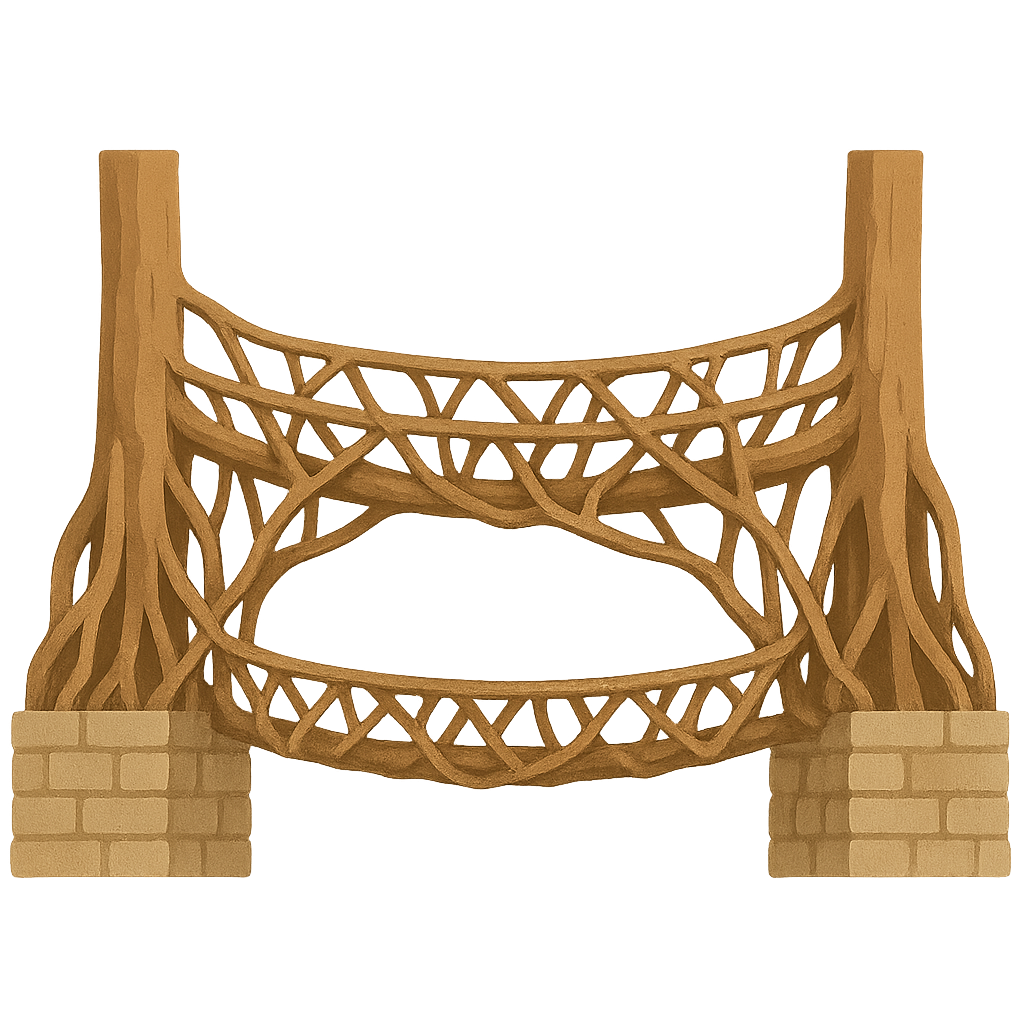
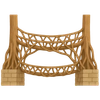
A cool mist kisses my skin, a constant gift from the powerful waterfalls that thunder nearby. All around me, the rainforest sings a chorus of buzzing insects, chirping birds, and the rustle of unseen creatures in the dense green canopy. I stretch myself over a rushing river, a torrent of brown water that swells with power during the monsoon season. For hundreds of years, I have felt the gentle press of bare feet crossing over me, a silent parade of villagers going about their day. They feel my texture, the intricate network of my body, a living tapestry woven over the chasm. I am not cold like stone or splintered like wood. There is a hum of life within me, a slow, patient strength that grew from the very soil of this land. I am not something that was built, but something that was grown. I am alive. I am a Jingkieng Jri, a Living Root Bridge of Meghalaya, India.
My existence is a response to the awesome power of nature. Here in the Khasi and Jaintia Hills of northeastern India, the monsoon is not just a rain shower; it is a season of relentless, powerful downpours. For centuries, these rains have fed the rivers, turning them into impassable forces that could sweep away any ordinary bridge made of bamboo or wood. The people who lived here, the clever and observant Khasi and Jaintia peoples, understood this challenge deeply. They needed a way to connect their villages, to travel to markets, and for children to reach their schools, even during the wettest months. More than 500 years ago, sometime in the 1500s, they looked around not for materials to conquer the forest, but for a partner within it. They noticed a particular tree, the Ficus elastica, or rubber tree. They saw how its secondary roots were incredibly strong and flexible, sometimes reaching out from high up on its trunk to find the soil. This observation sparked a brilliant idea: instead of fighting the water, why not grow a bridge that the water could not defeat? A bridge that was part of the forest itself.
The Living Bridge of Meghalaya
A cool mist kisses my skin, a constant gift from the powerful waterfalls that thunder nearby. All around me, the rainforest sings a chorus of buzzing insects, chirping birds, and the rustle of unseen creatures in the dense green canopy. I stretch myself over a rushing river, a torrent of brown water that swells with power during the monsoon season. For hundreds of years, I have felt the gentle press of bare feet crossing over me, a silent parade of villagers going about their day. They feel my texture, the intricate network of my body, a living tapestry woven over the chasm. I am not cold like stone or splintered like wood. There is a hum of life within me, a slow, patient strength that grew from the very soil of this land. I am not something that was built, but something that was grown. I am alive. I am a Jingkieng Jri, a Living Root Bridge of Meghalaya, India.
My existence is a response to the awesome power of nature. Here in the Khasi and Jaintia Hills of northeastern India, the monsoon is not just a rain shower; it is a season of relentless, powerful downpours. For centuries, these rains have fed the rivers, turning them into impassable forces that could sweep away any ordinary bridge made of bamboo or wood. The people who lived here, the clever and observant Khasi and Jaintia peoples, understood this challenge deeply. They needed a way to connect their villages, to travel to markets, and for children to reach their schools, even during the wettest months. More than 500 years ago, sometime in the 1500s, they looked around not for materials to conquer the forest, but for a partner within it. They noticed a particular tree, the Ficus elastica, or rubber tree. They saw how its secondary roots were incredibly strong and flexible, sometimes reaching out from high up on its trunk to find the soil. This observation sparked a brilliant idea: instead of fighting the water, why not grow a bridge that the water could not defeat? A bridge that was part of the forest itself.
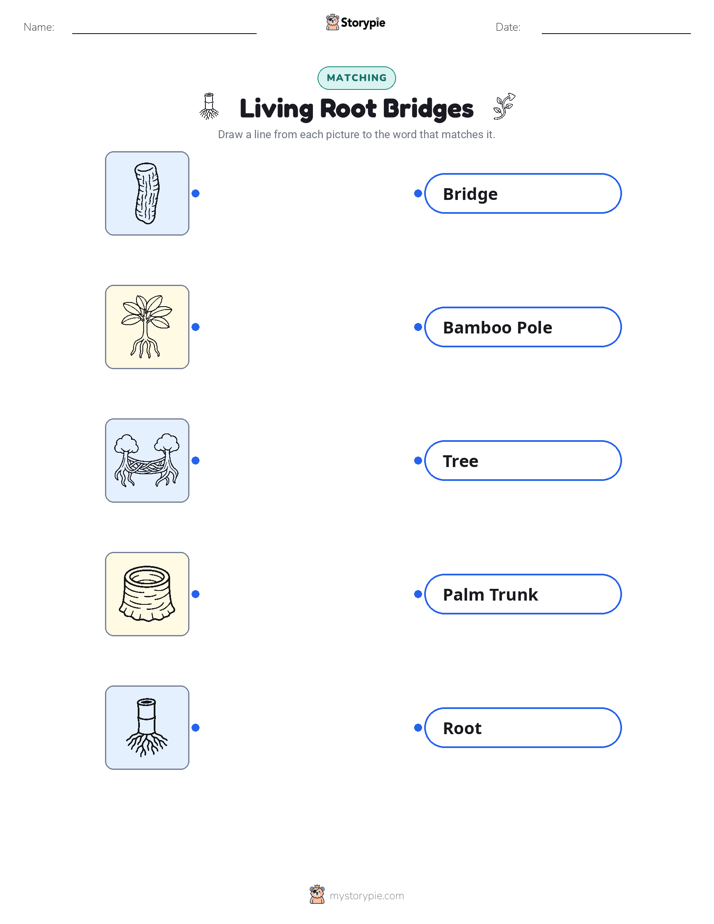
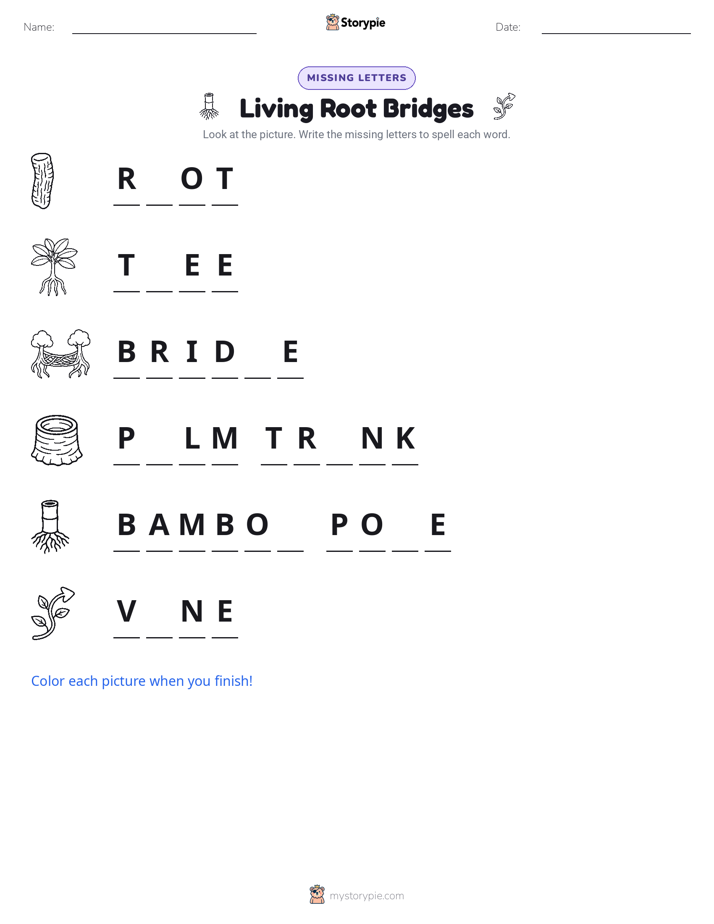
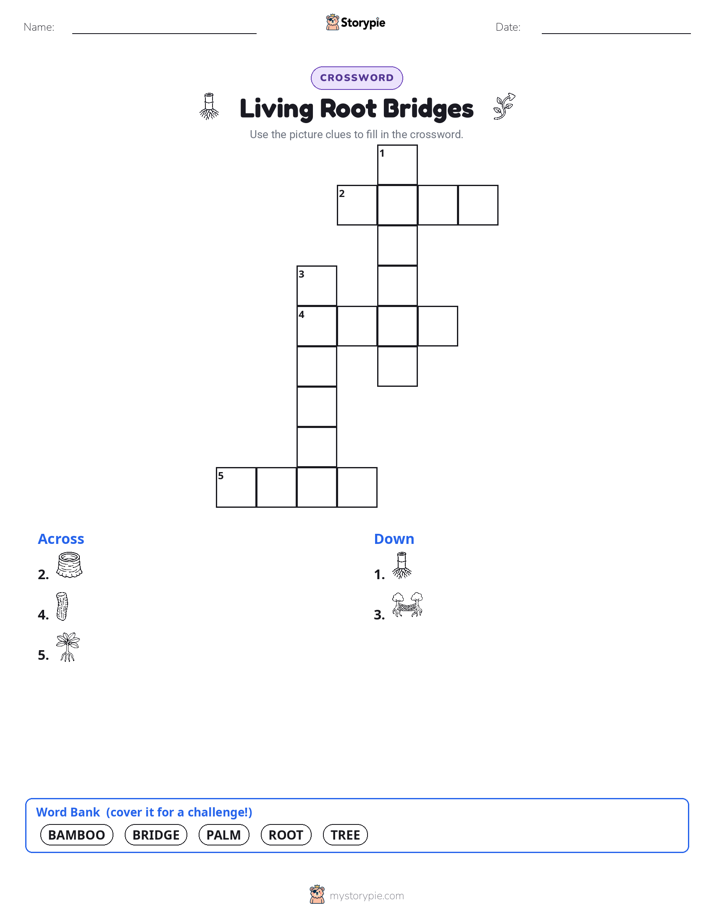
My creation was an act of incredible patience, a promise made by one generation to the next. The process began with a young Ficus elastica sapling planted on each side of a river or ravine. Then, the villagers would take the trunks of hollowed-out areca nut palms or bamboo and lay them across the gap, creating a channel. As my tender young roots began to grow, they were gently guided into these hollow trunks. It was like teaching a vine to climb a trellis. Day after day, year after year, my roots crept forward, protected and directed, until they reached the other side and took hold in the soil. But my journey was far from over. This initial crossing was just a framework. It took between 15 and 30 years for my roots to grow thick and strong enough to bear the weight of a person. Over time, villagers would weave and twist my roots together, encouraging them to fuse into a single, solid structure. This amazing technique of bio-engineering, passed down through generations, was a secret of the forest until a British officer named Lieutenant Henry Yule documented what he saw. In the Journal of the Asiatic Society of Bengal, on July 1st, 1844, he described me to the wider world, sharing the story of a bridge that grows, breathes, and becomes stronger with every passing year.
I am not a relic locked in the past; I am a vital, breathing part of life here today. While modern bridges of steel and concrete are built elsewhere, I continue my quiet work. I connect villages, allowing families to visit one another and farmers to take their goods to market. Children still run across my back on their way to school, their laughter echoing through the trees. Unlike a man-made structure that weakens with age and requires constant repair, I am self-sufficient. I heal my own wounds and strengthen myself over time as my roots grow thicker and my network becomes more complex. Today, people from all over the world come to see me. They are architects, engineers, and travelers who marvel at the wisdom of the Khasi and Jaintia peoples. I have become a symbol of sustainable living and indigenous knowledge, a testament to what is possible when humans work in harmony with nature. My story is a quiet reminder that the strongest and most enduring connections are not always built quickly, but are nurtured with patience, foresight, and a deep respect for the living world.
Wow facts
About
Living structures in Meghalaya, India, created by the Khasi and Jaintia peoples by guiding the aerial roots of rubber fig trees across rivers to form sturdy bridges.
Take a Quiz
Question 1 of 5
In your own words, summarize the main steps the Khasi and Jaintia peoples take to create a living root bridge.
Explore next






Want to do even more?
Go beyond exploring. Unlock tools that turn every story into real learning.

Storypie Plus for families
Full stories, quizzes, and printables. Nights and car rides, sorted.
- Unlimited audio stories
- Create Mode: your child stars in the story
- Offline downloads
- Printable worksheets & coloring pages

Why Storypie for Schools
Students engaged. Prep in seconds. Evenings back to you.
- Worksheets & Quizzes
- Classroom Management
- Formative Assessment
- Custom Curriculum & Lesson Plans
- 27 Languages

Why Storypie for Homeschool
Curriculum done. They'll ask for more. Hours back in your day.
- Worksheet Generator
- First-Person Audio Stories
- Built-in Comprehension Quizzes
- Custom Curriculum & Lesson Plans
- Print & Go Activities