English

Mauryan Empire
The Mauryan Empire was a geographically extensive Iron Age historical power in ancient India…
Reads at Grades 6–8 Listens at Grades 4–8
Print & create
Answer keys·No prep·Free with an account
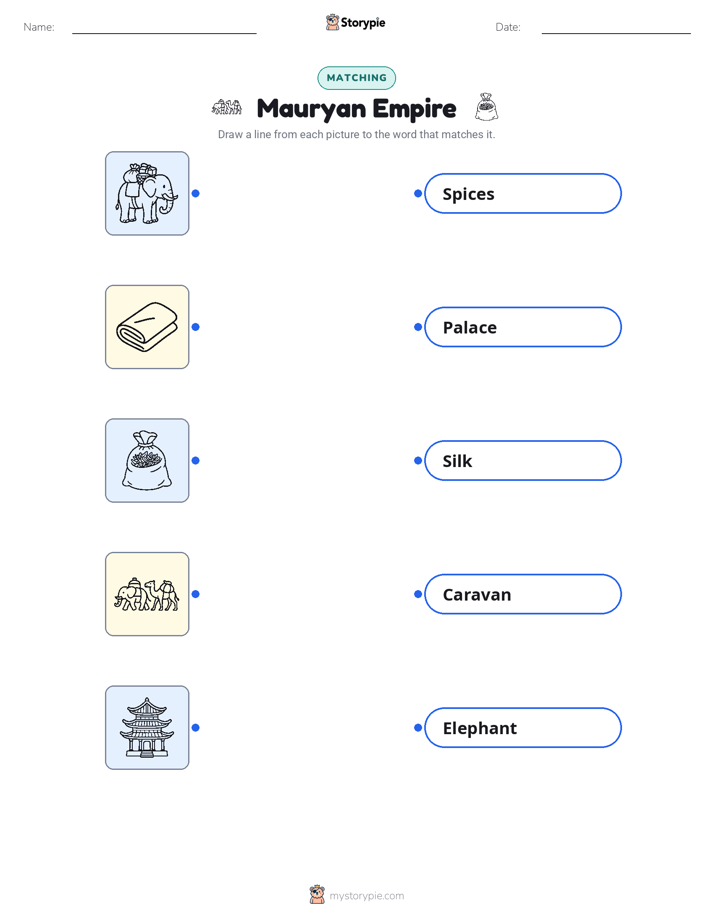
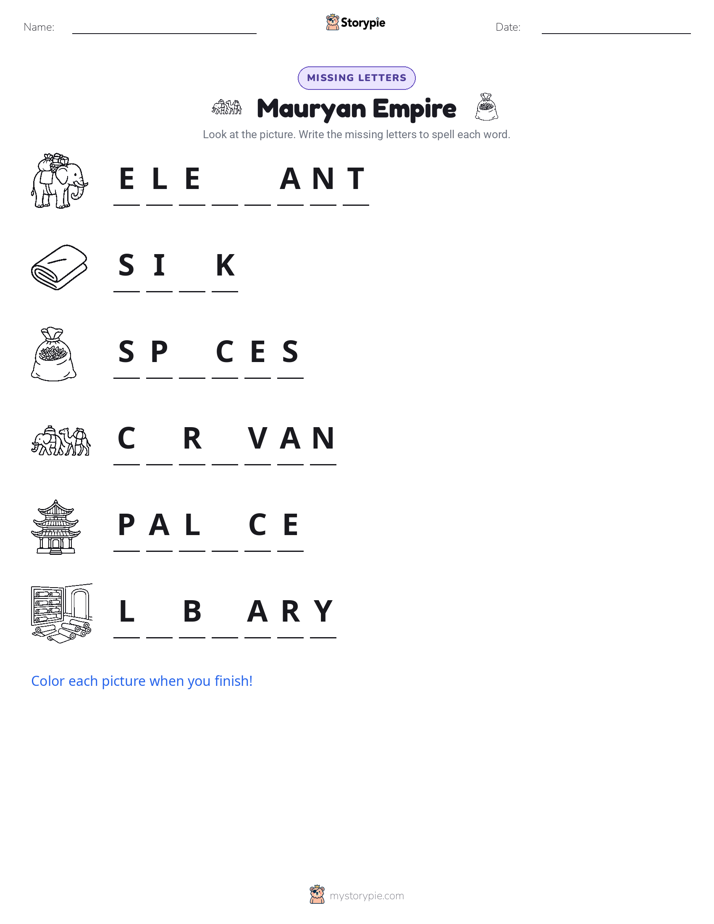
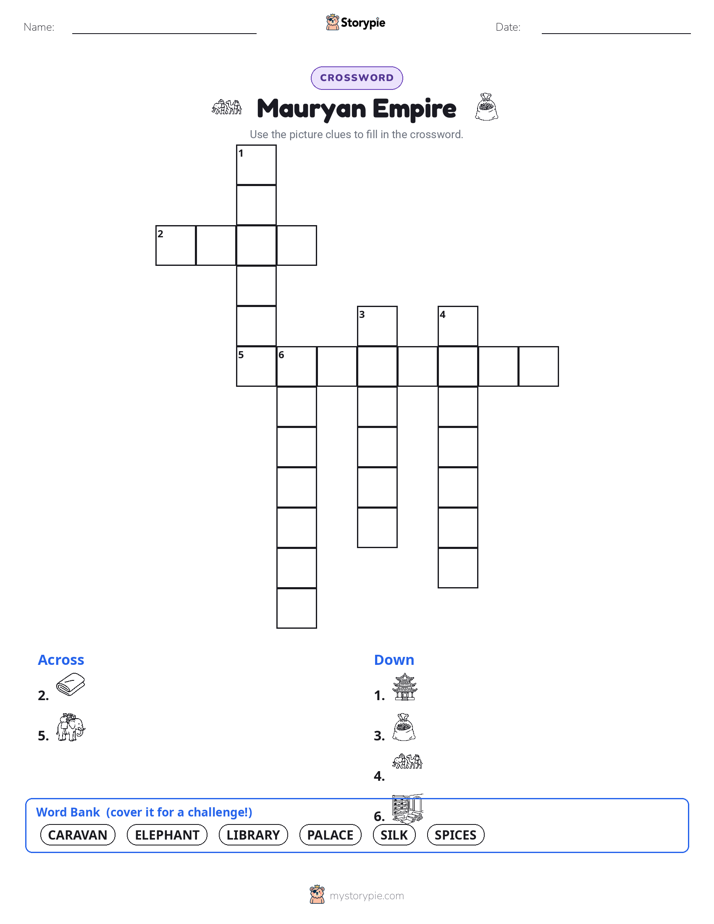
28 worksheets · answer keys · full story · quiz · Ages 10-12 · CEFR B2
Plus adds 208,000+ more stories in 27 languages, audio for every one, and printables for all of them.
Just want Mauryan Empire?
I feel the cool breath of the Himalayas on my northern peaks and the warm sun on my fertile river plains, where the mighty Ganges and Indus rivers flow. For centuries, my body was a patchwork of countless kingdoms, a vibrant but divided land. Imagine the dust kicked up by caravans on my trade routes, where merchants guided elephants laden with silks and spices. Hear the chorus of a hundred different languages spoken in bustling markets and quiet villages. Cultures bloomed side-by-side, each with its own customs, rulers, and armies. There was great beauty in this diversity, but also constant conflict. Kingdoms quarreled over land and resources, and the idea of a single, unified people seemed like a distant dream. I watched as brilliant minds and brave souls longed for a way to bring order to this chaos, to weave the many threads of this land into one magnificent tapestry. They dreamed of a power strong enough to protect its people and wise enough to let its many cultures flourish together. I am the answer to that dream. I am the force that brought these scattered pieces together, creating one of the first and greatest empires of ancient India. I am the Mauryan Empire.
My life began not on a battlefield, but in the minds of two extraordinary individuals. One was a brilliant and determined young man named Chandragupta Maurya. The other was his teacher, a wise and strategic thinker named Chanakya. They saw a land weakened by division and vulnerable to invasion. They envisioned a future where a single, just government could unite the people, fostering prosperity and security for all. Around 322 BCE, their vision became action. With strategic genius, they challenged and overthrew the powerful Nanda Dynasty that ruled the kingdom of Magadha. From this victory, I was born. My purpose was to unite the Indian subcontinent. Chandragupta, as my first emperor, and Chanakya, as his chief advisor, worked tirelessly to build my foundations. We created a single, efficient administration to govern the vast territories. A common currency was introduced, making trade easier and connecting my farthest corners. A remarkable network of roads was built, not just for armies, but for merchants, messengers, and pilgrims, binding my people together. My heart was the magnificent capital city of Pataliputra. It was a place of stunning wooden palaces, libraries, universities, and gardens. A Greek ambassador named Megasthenes visited my court and was so amazed that he wrote a detailed book about my society, my government, and the splendor of my capital, giving the world a window into my glorious early years.
The Story of the Mauryan Empire
I feel the cool breath of the Himalayas on my northern peaks and the warm sun on my fertile river plains, where the mighty Ganges and Indus rivers flow. For centuries, my body was a patchwork of countless kingdoms, a vibrant but divided land. Imagine the dust kicked up by caravans on my trade routes, where merchants guided elephants laden with silks and spices. Hear the chorus of a hundred different languages spoken in bustling markets and quiet villages. Cultures bloomed side-by-side, each with its own customs, rulers, and armies. There was great beauty in this diversity, but also constant conflict. Kingdoms quarreled over land and resources, and the idea of a single, unified people seemed like a distant dream. I watched as brilliant minds and brave souls longed for a way to bring order to this chaos, to weave the many threads of this land into one magnificent tapestry. They dreamed of a power strong enough to protect its people and wise enough to let its many cultures flourish together. I am the answer to that dream. I am the force that brought these scattered pieces together, creating one of the first and greatest empires of ancient India. I am the Mauryan Empire.
My life began not on a battlefield, but in the minds of two extraordinary individuals. One was a brilliant and determined young man named Chandragupta Maurya. The other was his teacher, a wise and strategic thinker named Chanakya. They saw a land weakened by division and vulnerable to invasion. They envisioned a future where a single, just government could unite the people, fostering prosperity and security for all. Around 322 BCE, their vision became action. With strategic genius, they challenged and overthrew the powerful Nanda Dynasty that ruled the kingdom of Magadha. From this victory, I was born. My purpose was to unite the Indian subcontinent. Chandragupta, as my first emperor, and Chanakya, as his chief advisor, worked tirelessly to build my foundations. We created a single, efficient administration to govern the vast territories. A common currency was introduced, making trade easier and connecting my farthest corners. A remarkable network of roads was built, not just for armies, but for merchants, messengers, and pilgrims, binding my people together. My heart was the magnificent capital city of Pataliputra. It was a place of stunning wooden palaces, libraries, universities, and gardens. A Greek ambassador named Megasthenes visited my court and was so amazed that he wrote a detailed book about my society, my government, and the splendor of my capital, giving the world a window into my glorious early years.
My power and size grew immensely under my third and most famous ruler, Emperor Ashoka, who was Chandragupta’s grandson. In his early years, Ashoka was a formidable and ambitious commander, driven to expand my borders just as his grandfather had. He led my armies to victory after victory, and I stretched across nearly the entire subcontinent. But one campaign changed everything. Around 261 BCE, Ashoka waged a brutal war to conquer the kingdom of Kalinga. The battle was won, and Kalinga became part of me, but the cost was staggering. When Ashoka walked through the battlefield, he did not feel the pride of a conqueror. Instead, he was overwhelmed with horror and grief at the sight of the widespread destruction and immense loss of life. That moment became the turning point of his life, and mine. His heart was profoundly changed. He renounced violent conquest forever and embraced the peaceful teachings of Buddhism. He developed a new philosophy for ruling, which he called 'Dhamma'. This was not a new religion, but a moral code based on righteous living, non-violence, tolerance for all faiths, and compassion for all people and animals. Starting around 260 BCE, he began a remarkable project to share his message. He had his Edicts—his promises and principles—carved into massive stone pillars and rock faces throughout my lands. These were not hidden in palaces; they were placed in public spaces for everyone to see and read. They were messages of peace, social welfare, and kindness, a public declaration that my strength would no longer be measured by the size of my army, but by the well-being and virtue of my people.
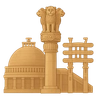
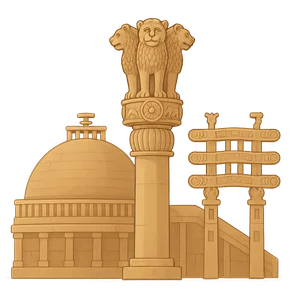
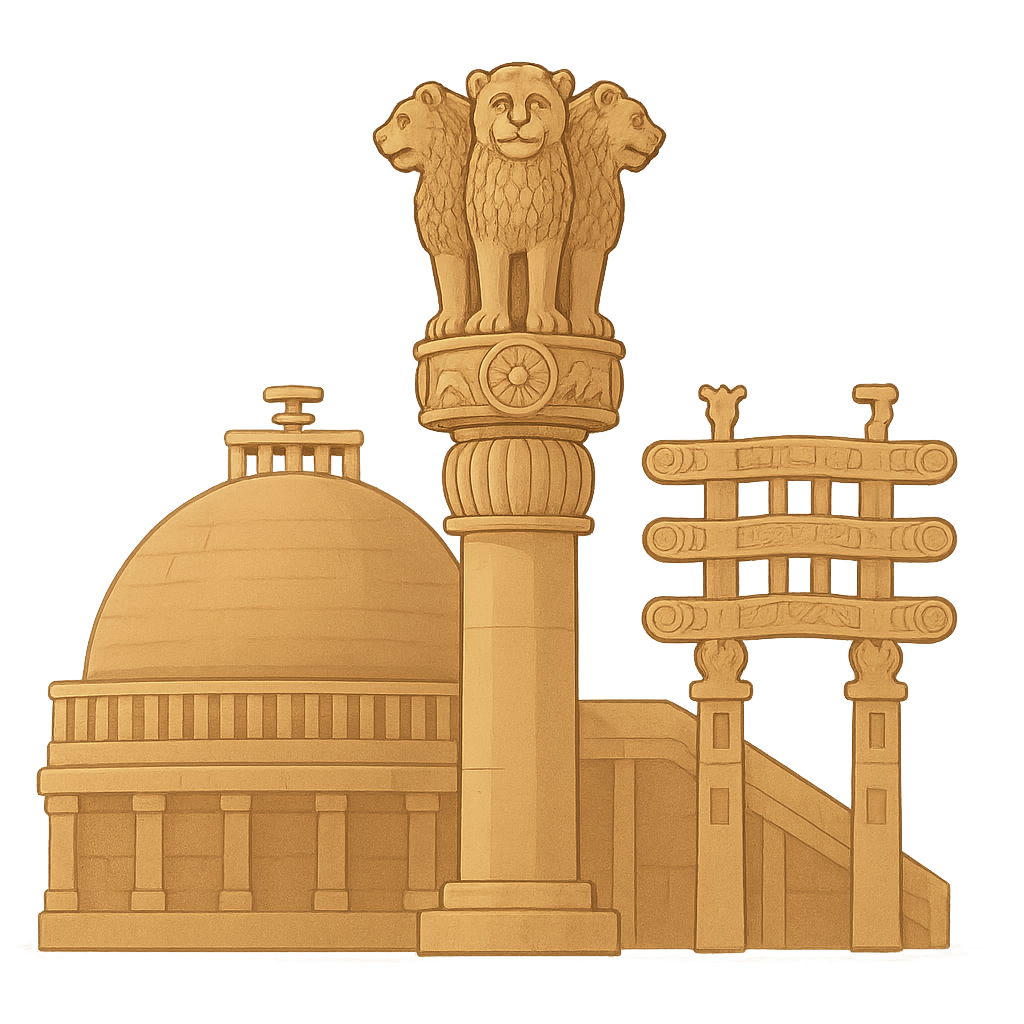
Like all great empires, my time eventually came to an end. After Emperor Ashoka’s death around 232 BCE, my central power gradually weakened. My vast territories became difficult to manage, and regional leaders began to seek independence. By about 185 BCE, my last emperor was overthrown, and I dissolved back into a collection of smaller kingdoms. My physical form was gone, but my spirit, my most important contribution, proved to be far more enduring. The idea of a unified India, a concept I first made real, never truly vanished. More importantly, the principles of 'Ahimsa', or non-violence, and respect for all life, which Ashoka championed, became deeply embedded in the culture and philosophy of the land. They have echoed through the centuries, inspiring leaders and movements around the world. Today, if you look at the national emblem of modern India, you will see a sculpture of four lions facing in four directions. This is the Lion Capital of Ashoka, taken from one of his pillars in a place called Sarnath. It stands as a powerful symbol of the nation's commitment to peace and strength. My story is a reminder that the greatest legacy an empire can leave is not measured in land or gold, but in the timeless ideals of compassion, unity, and peace that continue to inspire humanity.
Wow facts
About
The Mauryan Empire was a geographically extensive Iron Age historical power in ancient India, founded by Chandragupta Maurya in 321 BCE, and reaching its zenith under Ashoka the Great.
Take a Quiz
Question 1 of 5
What is the central theme of the story of the Mauryan Empire?
Explore next




Want to do even more?
Go beyond exploring. Unlock tools that turn every story into real learning.

Storypie Plus for families
Full stories, quizzes, and printables. Nights and car rides, sorted.
- Unlimited audio stories
- Create Mode: your child stars in the story
- Offline downloads
- Printable worksheets & coloring pages

Why Storypie for Schools
Students engaged. Prep in seconds. Evenings back to you.
- Worksheets & Quizzes
- Classroom Management
- Formative Assessment
- Custom Curriculum & Lesson Plans
- 27 Languages

Why Storypie for Homeschool
Curriculum done. They'll ask for more. Hours back in your day.
- Worksheet Generator
- First-Person Audio Stories
- Built-in Comprehension Quizzes
- Custom Curriculum & Lesson Plans
- Print & Go Activities