English

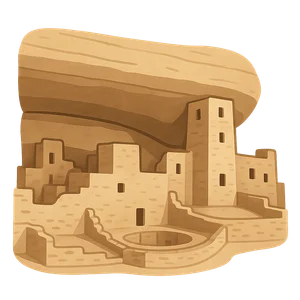
Mesa Verde National Park
A U.S.
Reads at Grades 6–8 Listens at Grades 4–8
Print & create
Answer keys·No prep·Free with an account
28 worksheets · answer keys · full story · quiz · Ages 10-12 · CEFR B2
Plus adds 208,000+ more stories in 27 languages, audio for every one, and printables for all of them.
Just want Mesa Verde National Park?
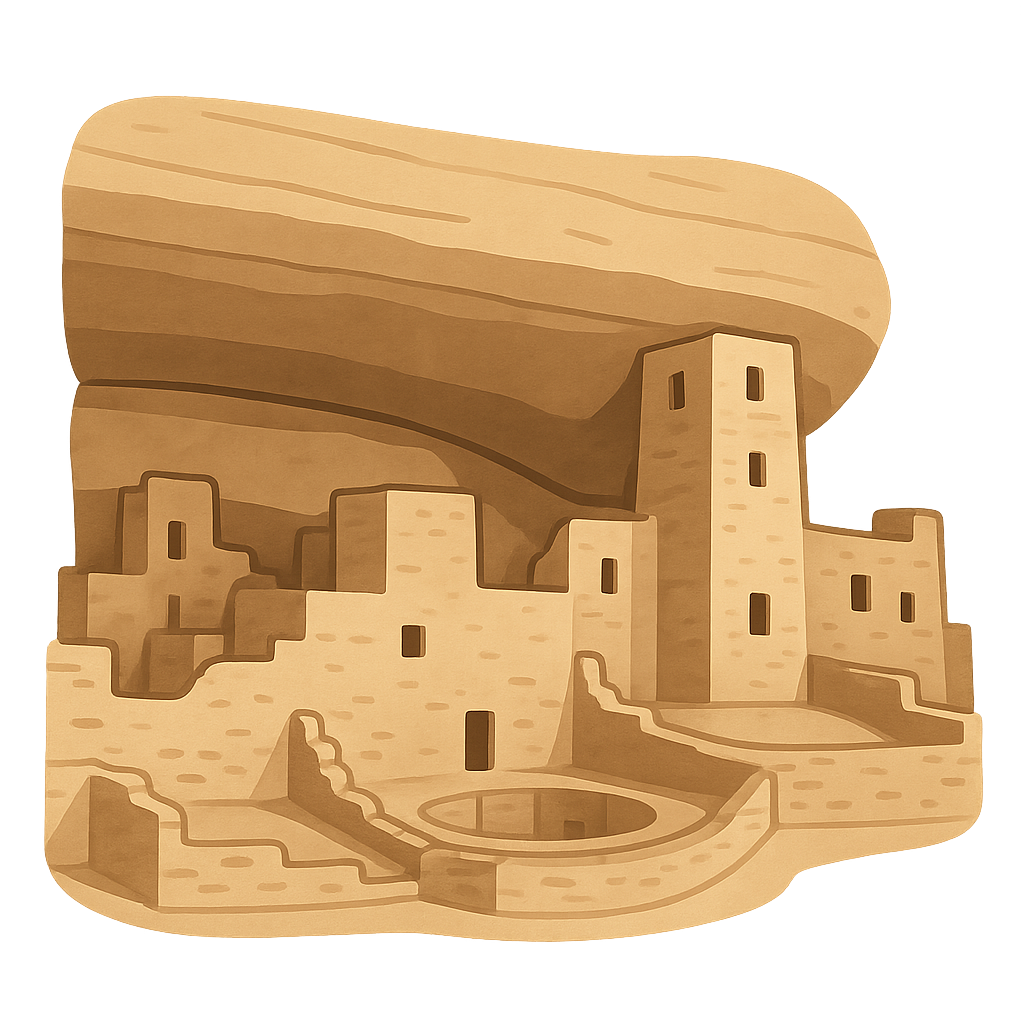
I am a high, green tableland in southwestern Colorado, a world of deep canyons and sprawling mesas under a vast, quiet sky. The air here smells of sun-baked stone, piñon pine, and juniper. If you walk along my edges and peer down into the shadowed alcoves of my cliffs, you might see them: entire cities tucked into the sandstone, protected from the wind and sun. They are silent now, their stone walls holding centuries of secrets. For a thousand years, I was the home of a resourceful and creative people who learned my rhythms and built their lives in harmony with my seasons. They carved their stories into my very heart, and I have kept them safe. I am Mesa Verde National Park, and I hold the memories of a people who built their homes in the sky.
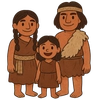
My story with people begins long ago, around the year 550 CE. It was then that the first Ancestral Pueblo people arrived. They were farmers, and they saw that my flat tops were perfect for growing their essential crops: corn, beans, and squash. Their first homes were not the grand stone cities you see today, but clever dwellings called pithouses. They dug these homes several feet into the earth to use the soil as natural insulation, keeping them warm in the winter and cool in the summer. Life was tied to the land. They ground corn into flour on stone slabs, wove intricate baskets from yucca fibers, and crafted beautiful, black-on-white pottery that they used for cooking, storage, and ceremonies. Around 750 CE, a change began. The people started building their homes above ground, using poles and mud to construct connected rooms that formed small villages right on the mesa tops. Their communities grew, and their bond with me, the land that sustained them, deepened with each passing generation.
The Stone Cities in the Sky
I am a high, green tableland in southwestern Colorado, a world of deep canyons and sprawling mesas under a vast, quiet sky. The air here smells of sun-baked stone, piñon pine, and juniper. If you walk along my edges and peer down into the shadowed alcoves of my cliffs, you might see them: entire cities tucked into the sandstone, protected from the wind and sun. They are silent now, their stone walls holding centuries of secrets. For a thousand years, I was the home of a resourceful and creative people who learned my rhythms and built their lives in harmony with my seasons. They carved their stories into my very heart, and I have kept them safe. I am Mesa Verde National Park, and I hold the memories of a people who built their homes in the sky.
My story with people begins long ago, around the year 550 CE. It was then that the first Ancestral Pueblo people arrived. They were farmers, and they saw that my flat tops were perfect for growing their essential crops: corn, beans, and squash. Their first homes were not the grand stone cities you see today, but clever dwellings called pithouses. They dug these homes several feet into the earth to use the soil as natural insulation, keeping them warm in the winter and cool in the summer. Life was tied to the land. They ground corn into flour on stone slabs, wove intricate baskets from yucca fibers, and crafted beautiful, black-on-white pottery that they used for cooking, storage, and ceremonies. Around 750 CE, a change began. The people started building their homes above ground, using poles and mud to construct connected rooms that formed small villages right on the mesa tops. Their communities grew, and their bond with me, the land that sustained them, deepened with each passing generation.
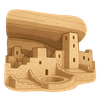
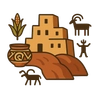
Then came the most incredible chapter of all, a period of breathtaking innovation that lasted from about 1190 to 1270 CE. The people made a remarkable decision. They moved from the open mesa tops into the deep, arching alcoves of my canyon walls. Here, they began constructing some of the most stunning architecture the world has ever seen. Using sandstone blocks they shaped by hand and a mortar of mud and water, they built multi-story villages that climbed the cliff faces. You may have heard their names: Cliff Palace, a magnificent city of over 150 rooms, and Balcony House, a marvel of defensive design. Imagine these places alive. The air would have been filled with the sounds of children laughing and dogs barking, the smell of woodsmoke from cooking fires, and the murmur of voices echoing off the stone. Central to their life were the kivas, circular, subterranean rooms where they held important spiritual ceremonies, connecting their community to the cosmos. Living in the cliffs required tremendous ingenuity. They had to collect water from seeps in the rock and climb hand-and-toe trails to reach their farms on the mesa above. Their cliff dwellings were not just homes; they were masterpieces of engineering and a testament to their ability to adapt and thrive.
The vibrant life within my cliffs did not last forever. By the year 1300, a great silence had fallen over the stone cities. The plazas were empty, the fires were cold, and the people were gone. For centuries, this was a great mystery, but now we understand what likely happened. A severe and prolonged drought settled over the region in the late 1200s. The rains stopped, the springs dried up, and growing crops on the mesa tops became nearly impossible. It was a heartbreaking challenge that no amount of ingenuity could overcome. But the people did not vanish. They gathered their families and migrated south, seeking new homes in places with more reliable water. Their descendants are the Pueblo people who live in Arizona and New Mexico today, carrying on the traditions of their ancestors. For nearly 600 years, the cliff dwellings slept, sheltered from the elements and waiting to be seen again.
My story took a new turn on the cold winter day of December 18th, 1888. Two local ranchers, Richard Wetherill and Charlie Mason, were riding across the mesa in the snow, searching for stray cattle. Peering through the swirling flakes across a canyon, they saw something that made them stop in disbelief. There, tucked into a massive alcove, was a silent, sprawling city of stone. It was Cliff Palace, larger and more spectacular than any they had ever imagined. Their discovery brought my forgotten cities to the attention of the world. Unfortunately, this new fame came with a great risk. Visitors came and took artifacts, and the delicate walls began to crumble. A movement began to protect this incredible heritage, a fight to preserve the legacy of the Ancestral Pueblo people. The effort succeeded on June 29th, 1906, when President Theodore Roosevelt signed a law establishing me as Mesa Verde National Park, ensuring my treasures would be protected for all time.
Today, my purpose is to share the story I hold. Visitors walk the same paths the Ancestral Pueblo people did a thousand years ago. They climb ladders into Balcony House, stand in awe before Cliff Palace, and feel the spirit of this place. My stone walls are more than just ruins; they are a library of human ingenuity, resilience, and community. I am a reminder that we are all connected to the past. I stand as a voice for the future, inspiring all who visit to learn from the brilliance of those who came before and to protect the precious stories that shape our world.
Wow facts
About
A U.S. National Park in southwestern Colorado, renowned for its exceptionally well-preserved Ancestral Puebloan cliff dwellings, which were inhabited from approximately 1150 to 1550 CE.
Take a Quiz
Question 1 of 5
Retell the story of how Mesa Verde became a national park, starting from its rediscovery. What were the key events and who was involved?
Explore next


Want to do even more?
Go beyond exploring. Unlock tools that turn every story into real learning.

Storypie Plus for families
Full stories, quizzes, and printables. Nights and car rides, sorted.
- Unlimited audio stories
- Create Mode: your child stars in the story
- Offline downloads
- Printable worksheets & coloring pages

Why Storypie for Schools
Students engaged. Prep in seconds. Evenings back to you.
- Worksheets & Quizzes
- Classroom Management
- Formative Assessment
- Custom Curriculum & Lesson Plans
- 27 Languages

Why Storypie for Homeschool
Curriculum done. They'll ask for more. Hours back in your day.
- Worksheet Generator
- First-Person Audio Stories
- Built-in Comprehension Quizzes
- Custom Curriculum & Lesson Plans
- Print & Go Activities