English

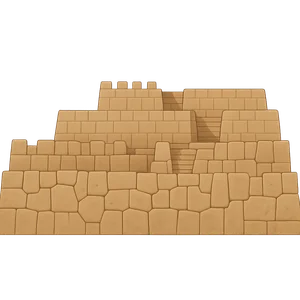
Sacsayhuamán
Sacsayhuamán is a magnificent Inca citadel on the northern outskirts of Cusco, Peru.
Reads at Grades 3–5 Listens at Grades 1–5
Print & create
Answer keys·No prep·Free with an account
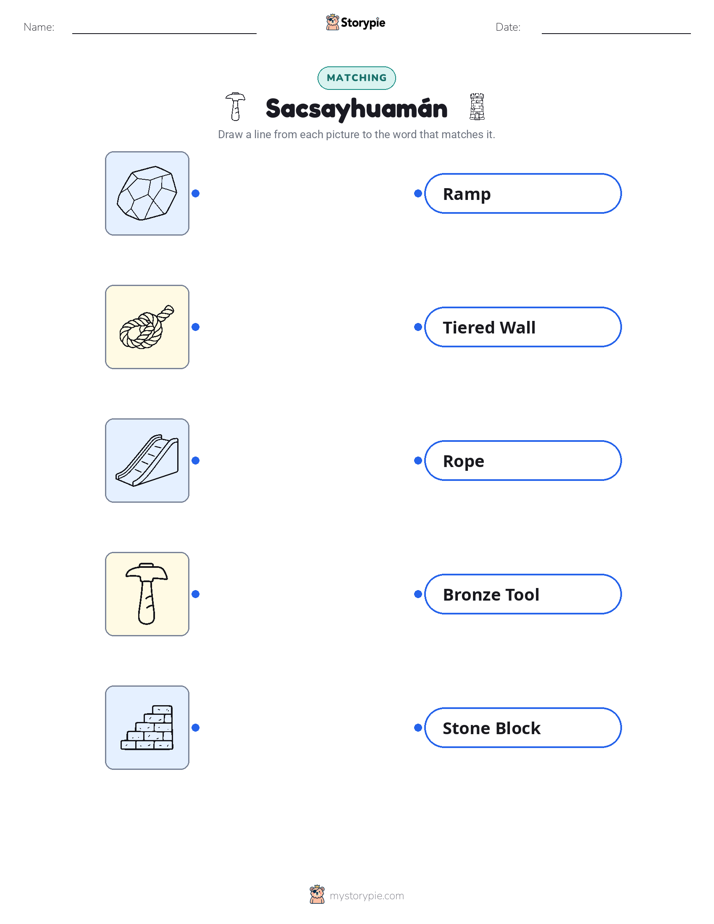
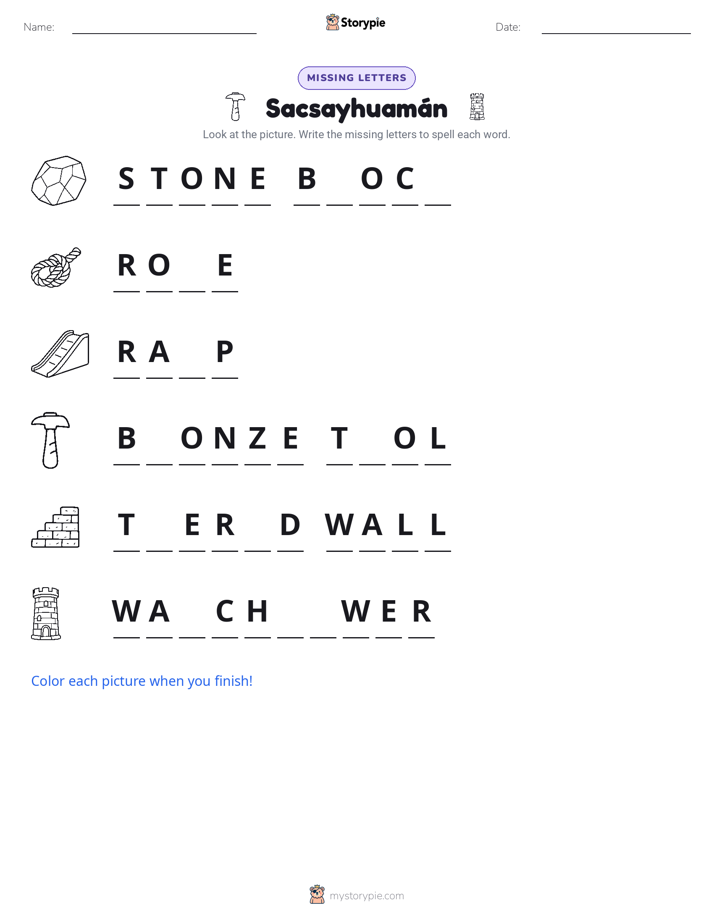
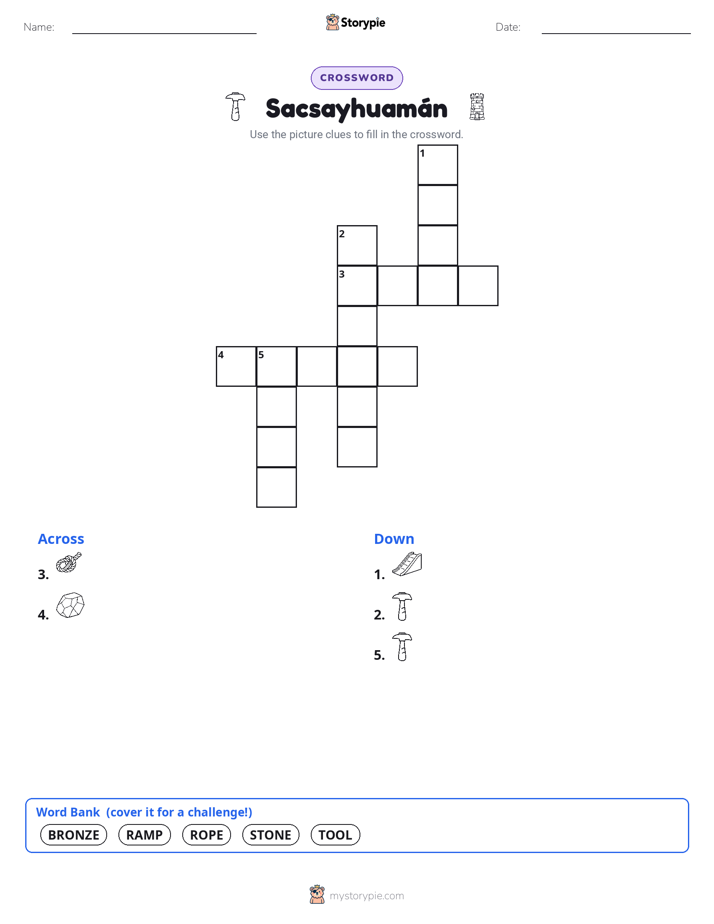
28 worksheets · answer keys · full story · quiz · Ages 8-10 · CEFR B1
Plus adds 164,000+ more stories in 27 languages, audio for every one, and printables for all of them.
Just want Sacsayhuamán?
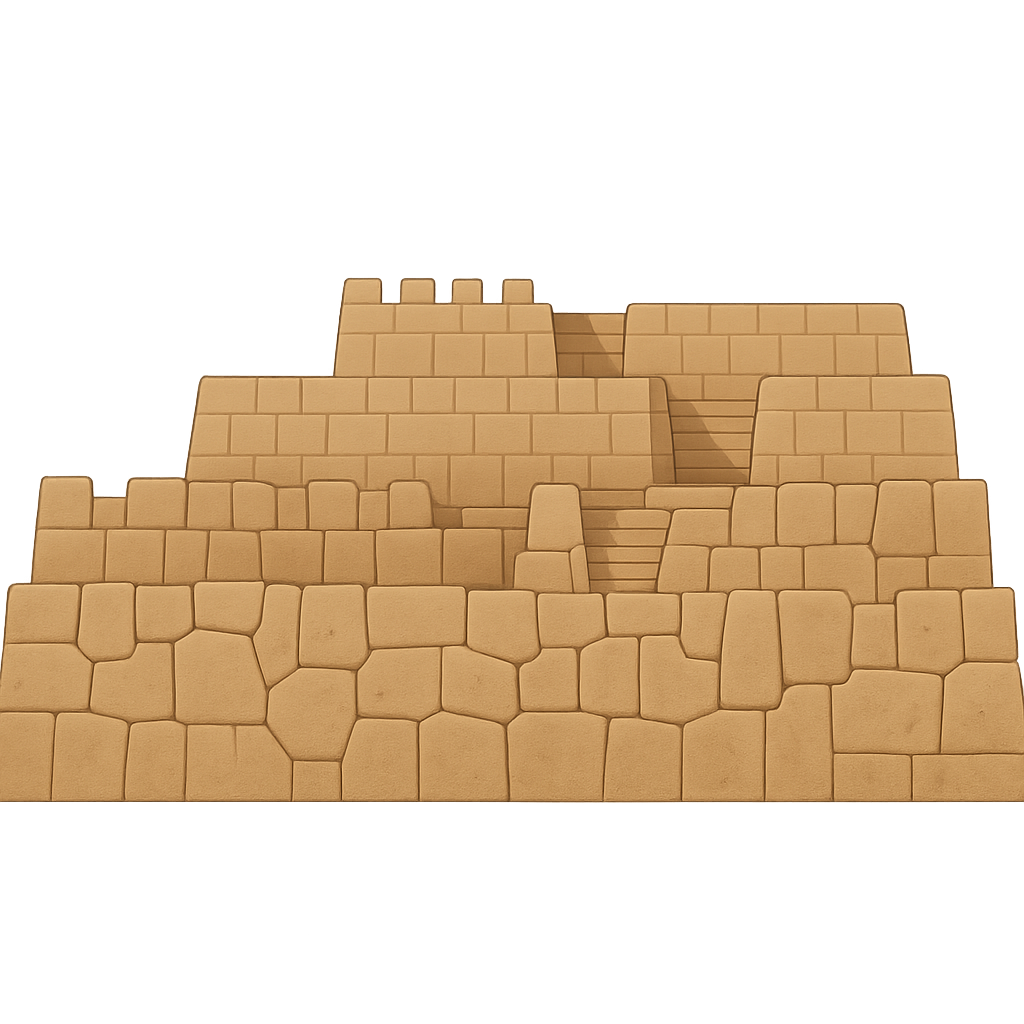
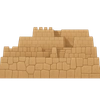
High in the Andes Mountains of Peru, I watch over the city of Cusco like a silent, stone giant. My walls are not straight and smooth, but zigzag back and forth like a lightning bolt frozen in place. They are made of enormous grey stones, some bigger than a car and heavier than a whole herd of elephants. For centuries, people have looked at me and wondered, how could anyone have built this. The stones are fitted together so perfectly, like pieces of a giant puzzle, that you can’t even slide a piece of paper between them. There is no glue or mortar holding me together, only the incredible skill of my creators. I am Sacsayhuamán, a stone puzzle built by the amazing Inca people, and I have stood here for more than five hundred years. My name means 'Royal Eagle' in the Quechua language, and like an eagle, I have seen history unfold in the valley below.
My story begins a long, long time ago, in the mid-1400s. The great Inca emperor, Pachacuti, ruled a powerful and growing empire. He wanted his capital city, Cusco, to be the most magnificent city in the world, and he wanted it to be safe. That is why he commanded that I be built. It was a challenge that seemed impossible. Thousands of workers were gathered for the job. They traveled to quarries many miles away to find the perfect stones. Then came the hardest part: moving them. Using only ropes, logs, and pure strength, they pulled these massive boulders across rivers and up steep mountainsides. It took about fifty years and the hard work of over twenty thousand people to complete my main sections. They were brilliant engineers and artists, shaping each stone with smaller rocks and tools until it fit exactly with its neighbors. But I was not just built for war. I was also a sacred place, a temple where the Inca held their most important ceremonies to honor Inti, the sun god, who they believed gave life to the world.
The Stone Fortress of the Sun
High in the Andes Mountains of Peru, I watch over the city of Cusco like a silent, stone giant. My walls are not straight and smooth, but zigzag back and forth like a lightning bolt frozen in place. They are made of enormous grey stones, some bigger than a car and heavier than a whole herd of elephants. For centuries, people have looked at me and wondered, how could anyone have built this. The stones are fitted together so perfectly, like pieces of a giant puzzle, that you can’t even slide a piece of paper between them. There is no glue or mortar holding me together, only the incredible skill of my creators. I am Sacsayhuamán, a stone puzzle built by the amazing Inca people, and I have stood here for more than five hundred years. My name means 'Royal Eagle' in the Quechua language, and like an eagle, I have seen history unfold in the valley below.
My story begins a long, long time ago, in the mid-1400s. The great Inca emperor, Pachacuti, ruled a powerful and growing empire. He wanted his capital city, Cusco, to be the most magnificent city in the world, and he wanted it to be safe. That is why he commanded that I be built. It was a challenge that seemed impossible. Thousands of workers were gathered for the job. They traveled to quarries many miles away to find the perfect stones. Then came the hardest part: moving them. Using only ropes, logs, and pure strength, they pulled these massive boulders across rivers and up steep mountainsides. It took about fifty years and the hard work of over twenty thousand people to complete my main sections. They were brilliant engineers and artists, shaping each stone with smaller rocks and tools until it fit exactly with its neighbors. But I was not just built for war. I was also a sacred place, a temple where the Inca held their most important ceremonies to honor Inti, the sun god, who they believed gave life to the world.
For many years, I stood as a proud guardian of the Inca Empire. From my high walls, I watched over the bustling city of Cusco, with its golden temples and busy markets. But a great and difficult change was coming. In the early 1530s, strange visitors arrived. They were the Spanish conquistadors, soldiers from across the ocean who came searching for gold and glory. They wanted to conquer the mighty Inca Empire. In May of 1536, my strong walls became the center of a desperate fight. Brave Inca warriors, trying to take back their capital, used me as their fortress in the great Battle of Sacsayhuamán. The battle was fierce, but in the end, the Inca were defeated. After the fighting was over, my story took a sad turn. The Spanish began to take me apart, stone by stone. They used my smaller, easier-to-carry blocks to build their new churches and houses in Cusco. But when they tried to move my biggest stones, they couldn't. The giant rocks that form my main walls were simply too heavy, a stubborn reminder of the incredible power of the Inca.
Today, those giant stones are still here, standing strong against the wind and rain. My broken walls tell a story of a great empire and a difficult past. But my story is not over. I am now a famous and beloved place, and people from all over the world make the journey to Peru to see me. They walk along my zigzag walls and touch the cool, smooth stones, still amazed by the Inca's ingenuity. Every year on June 24th, my grounds come alive with noise and color for a very special celebration called the Inti Raymi, or the Festival of the Sun. Actors dress in beautiful costumes to reenact the ancient ceremonies of the Inca, honoring the sun just as they did centuries ago. Looking back, I see that I have stood through time to remind people of the strength and creativity of those who built me. I am more than just a ruin. I am a story in stone, a proud link to the past that continues to inspire wonder in everyone who visits.
Wow facts
About
Sacsayhuamán is a magnificent Inca citadel on the northern outskirts of Cusco, Peru. It is renowned for its massive, precisely cut stone walls that fit together without mortar, showcasing the Inca's extraordinary engineering and architectural skills.
Take a Quiz
Question 1 of 5
In the story, the word 'ingenuity' is used to describe the Inca people. What does 'ingenuity' mean?
Explore next


Want to do even more?
Go beyond exploring. Unlock tools that turn every story into real learning.

Storypie Plus for families
Full stories, quizzes, and printables. Nights and car rides, sorted.
- Unlimited audio stories
- Create Mode: your child stars in the story
- Offline downloads
- Printable worksheets & coloring pages

Why Storypie for Schools
Students engaged. Prep in seconds. Evenings back to you.
- Worksheets & Quizzes
- Classroom Management
- Formative Assessment
- Custom Curriculum & Lesson Plans
- 27 Languages

Why Storypie for Homeschool
Curriculum done. They'll ask for more. Hours back in your day.
- Worksheet Generator
- First-Person Audio Stories
- Built-in Comprehension Quizzes
- Custom Curriculum & Lesson Plans
- Print & Go Activities