English

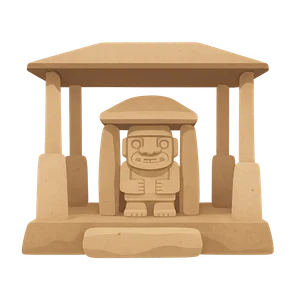
San Agustín Archaeological Park
The largest group of religious monuments and megalithic sculptures in South America, located in Colombia.
Reads at Grades 3–5 Listens at Grades 1–5
Print & create
Answer keys·No prep·Free with an account
28 worksheets · answer keys · full story · quiz · Ages 8-10 · CEFR B1
Plus adds 164,000+ more stories in 27 languages, audio for every one, and printables for all of them.
Just want San Agustín Archaeological Park?
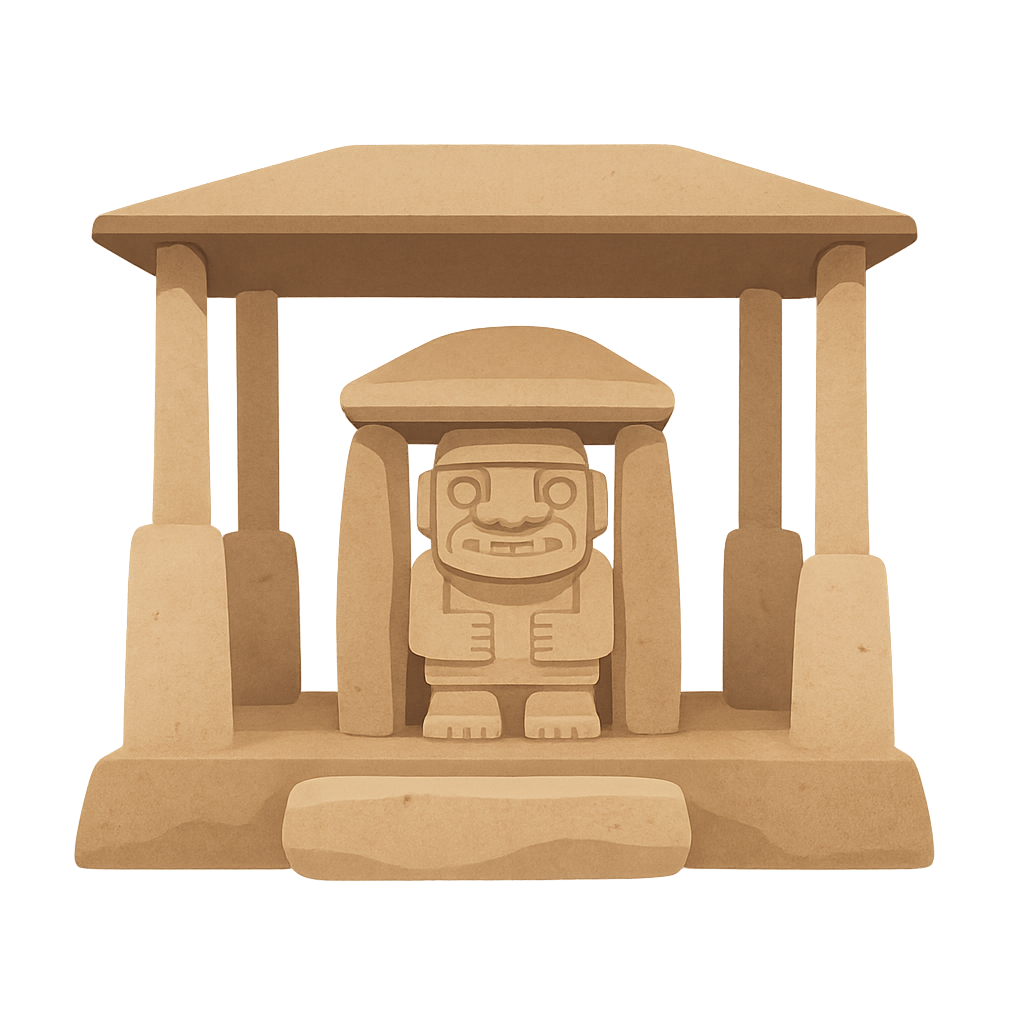
I lie tucked away in the green mountains of southern Colombia, where the great Magdalena River is born. For centuries, I have watched the clouds drift over my hills and listened to the whispers of the wind. But I am not empty. All across my land, silent, mysterious guardians stand watch. Stone faces stare out from the earth, their features a strange and wonderful mix of jaguars, eagles, and humans. One has the sharp eyes of a bird of prey, another the powerful mouth of a jungle cat, and some hold babies or clubs in their stone hands. They are ancient, powerful, and full of secrets. For a very long time, I held those secrets close, waiting for the world to find me. I am the San Agustín Archaeological Park.
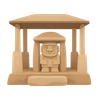
My story begins in a time of master carvers, long, long ago. My hills were alive with the sounds of tapping and scraping between the 1st and 8th centuries CE. A clever and artistic people, who we now call the San Agustín culture, called this valley home. They didn’t have metal chisels like sculptors today. Instead, they used harder stones to patiently chip and grind away at giant volcanic rocks, shaping them into the incredible figures you see today. These were not just decorations. They were guardians, each one telling a story of power, spirit, and belief. A statue with the body of a human and the head of a jaguar represented a warrior's strength. One with eagle features might have symbolized a connection to the world of the spirits. This place was a great and sacred cemetery. When an important leader or priest died, they were laid to rest in a deep tomb, and one of these powerful stone figures was placed at the entrance to watch over their spirit on its long and important journey.
The Stone Guardians of San Agustín
I lie tucked away in the green mountains of southern Colombia, where the great Magdalena River is born. For centuries, I have watched the clouds drift over my hills and listened to the whispers of the wind. But I am not empty. All across my land, silent, mysterious guardians stand watch. Stone faces stare out from the earth, their features a strange and wonderful mix of jaguars, eagles, and humans. One has the sharp eyes of a bird of prey, another the powerful mouth of a jungle cat, and some hold babies or clubs in their stone hands. They are ancient, powerful, and full of secrets. For a very long time, I held those secrets close, waiting for the world to find me. I am the San Agustín Archaeological Park.
My story begins in a time of master carvers, long, long ago. My hills were alive with the sounds of tapping and scraping between the 1st and 8th centuries CE. A clever and artistic people, who we now call the San Agustín culture, called this valley home. They didn’t have metal chisels like sculptors today. Instead, they used harder stones to patiently chip and grind away at giant volcanic rocks, shaping them into the incredible figures you see today. These were not just decorations. They were guardians, each one telling a story of power, spirit, and belief. A statue with the body of a human and the head of a jaguar represented a warrior's strength. One with eagle features might have symbolized a connection to the world of the spirits. This place was a great and sacred cemetery. When an important leader or priest died, they were laid to rest in a deep tomb, and one of these powerful stone figures was placed at the entrance to watch over their spirit on its long and important journey.
But after the 8th century, the people who carved my guardians slowly vanished, and their stories faded into memory. The jungle, with its thick green vines and giant trees, grew over my statues and tombs. I fell into a long, quiet sleep, hidden from the world. The local people who lived nearby always knew I was here, whispering stories of the ancient stone figures, but my full story remained a secret. My awakening began slowly. In 1756, a Spanish traveler named Fray Juan de Santa Gertrudis wrote about seeing my amazing statues in his journal, sharing my existence with the wider world for the first time. But my new dawn truly began in the early 20th century. Between 1913 and 1914, an archaeologist from Germany named Konrad Theodor Preuss arrived. He carefully studied, drew, and photographed my guardians, helping the world understand their true history and importance.
Today, my sleep is over, and I share my stories with everyone who comes to visit. I am proud to be the largest collection of megalithic, or giant stone, sculptures in all of South America, with hundreds of statues scattered across my green hills. My most special day came on December 6th, 1995. On that day, I was named a UNESCO World Heritage Site, a title that means I am a treasure belonging to all of humanity. When you walk my paths now, you walk among history. You can look into the stone eyes of a jaguar-man and wonder about the people who gave him life so many centuries ago. I stand as a reminder of their creativity and strength, a puzzle in stone that continues to inspire everyone who visits.
Wow facts
About
The largest group of religious monuments and megalithic sculptures in South America, located in Colombia. It was created by a pre-Inca culture between the 1st and 8th centuries CE and is now a UNESCO World Heritage Site.
Take a Quiz
Question 1 of 5
Why did the San Agustín people create statues that were part human and part animal?
Explore next





Want to do even more?
Go beyond exploring. Unlock tools that turn every story into real learning.

Storypie Plus for families
Full stories, quizzes, and printables. Nights and car rides, sorted.
- Unlimited audio stories
- Create Mode: your child stars in the story
- Offline downloads
- Printable worksheets & coloring pages

Why Storypie for Schools
Students engaged. Prep in seconds. Evenings back to you.
- Worksheets & Quizzes
- Classroom Management
- Formative Assessment
- Custom Curriculum & Lesson Plans
- 27 Languages

Why Storypie for Homeschool
Curriculum done. They'll ask for more. Hours back in your day.
- Worksheet Generator
- First-Person Audio Stories
- Built-in Comprehension Quizzes
- Custom Curriculum & Lesson Plans
- Print & Go Activities