English

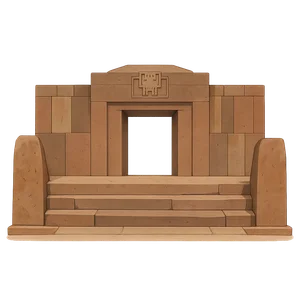
Tiwanaku
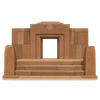
Tiwanaku is an ancient pre-Incan archaeological site in western Bolivia…
Reads at Grades 3–5 Listens at Grades 1–5
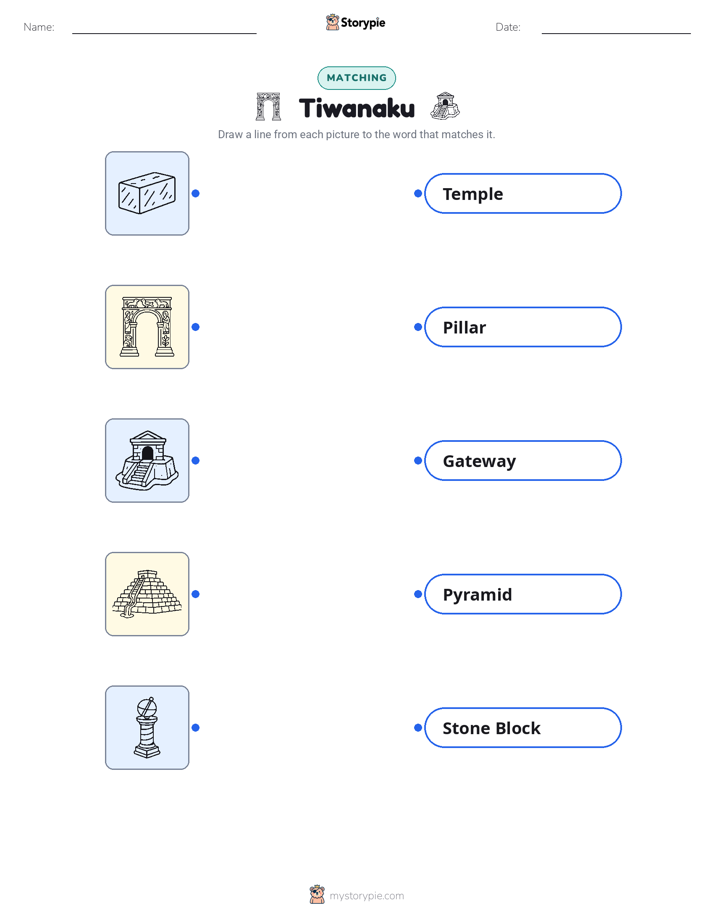
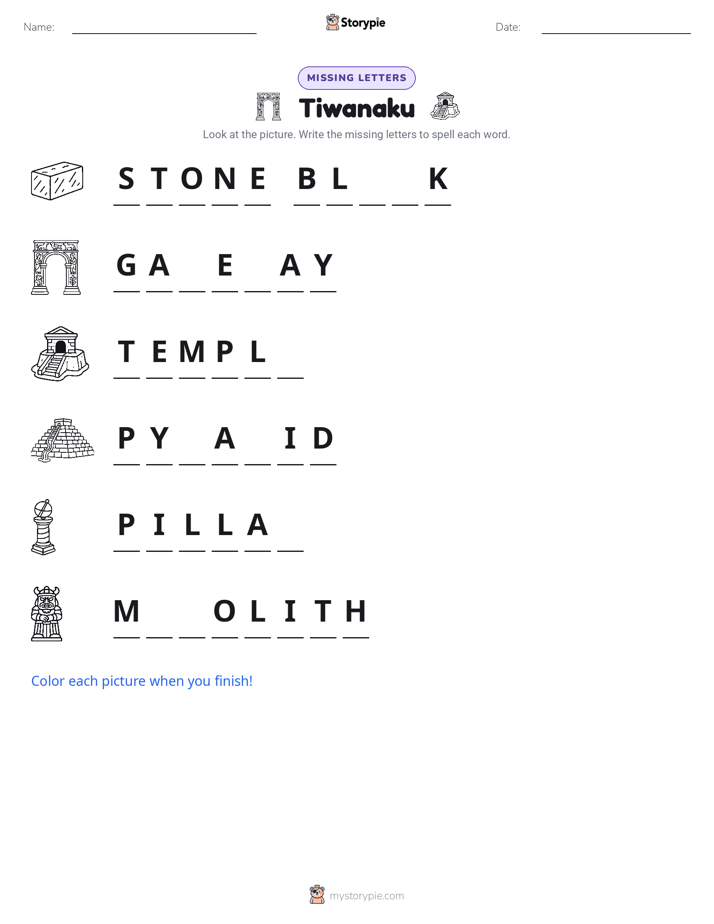
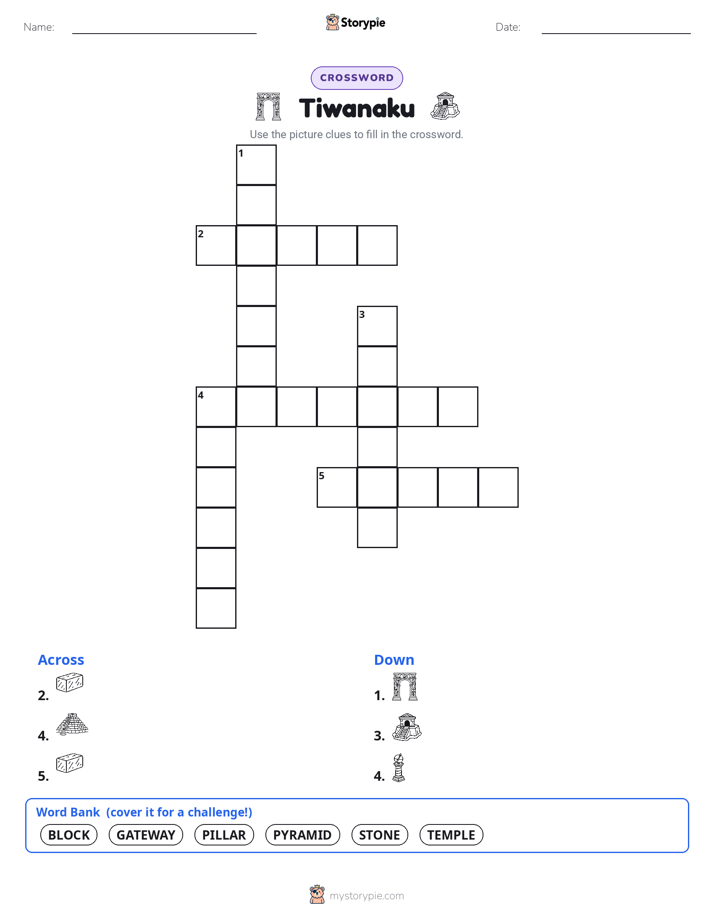
Print & create
Answer keys·No prep·Free with an account
28 worksheets · answer keys · full story · quiz · Ages 8-10 · CEFR B1
Plus adds 164,000+ more stories in 27 languages, audio for every one, and printables for all of them.
Just want Tiwanaku?
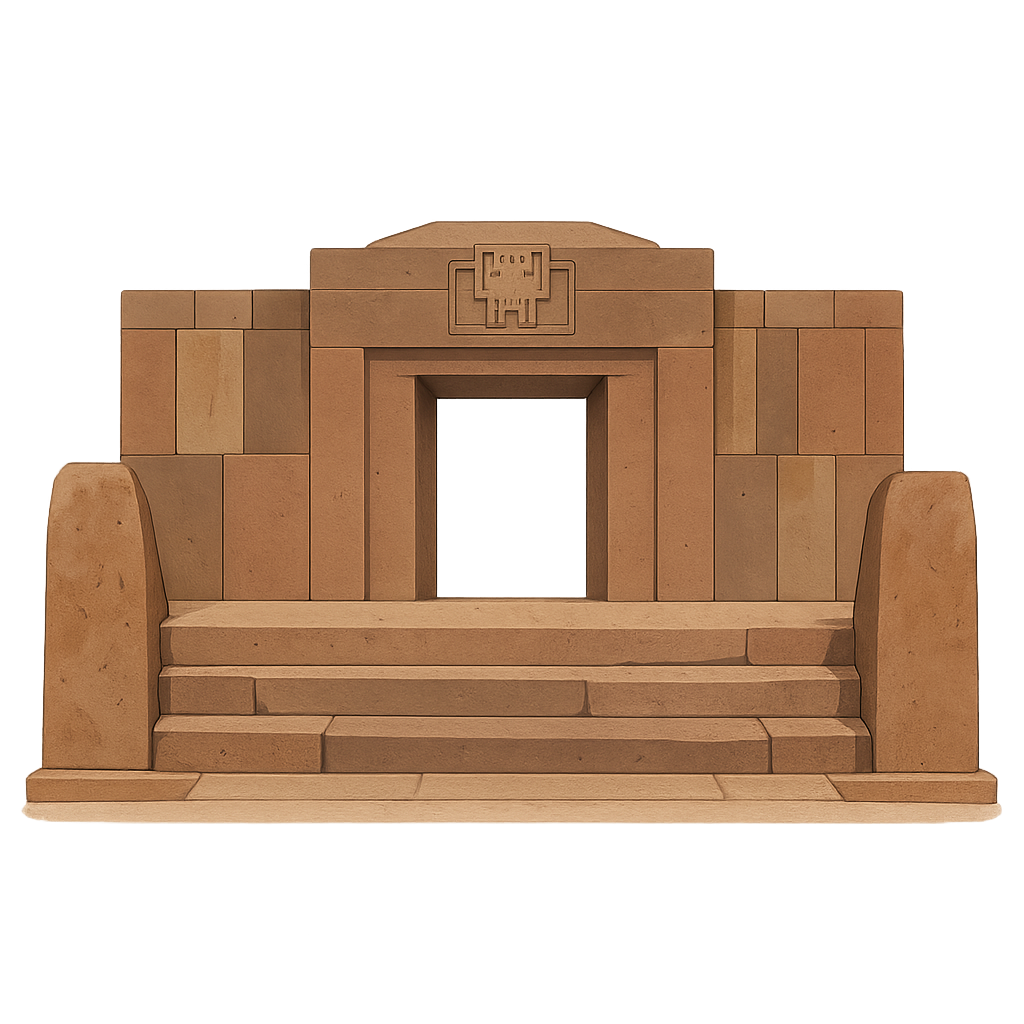
High in the Andes Mountains of what is now Bolivia, the air is thin and crisp, and the sun shines with a special brightness over a vast, flat plain. Here, giant stone heads with mysterious faces stare out from the earth, and massive gateways, carved from single pieces of rock, stand silent against the sky. For centuries, people wondered who could have built such a powerful place so close to the heavens, a place that seemed to be a puzzle left behind by giants. They were right to wonder, because I am a puzzle and a marvel. I am Tiwanaku, a city of stone that once touched the sky.
My story began a very long time ago, as a small, quiet village around 1500 BCE. For more than a thousand years, I was humble. But then, starting around 100 BCE, my people decided to dream bigger. They began to transform me into a great city, and they were masters of stone. They found enormous stones in the mountains, some weighing as much as 100 tons, which is heavier than a whole herd of elephants. They carved these massive blocks with such incredible skill that they fit together perfectly, like pieces in a giant, heavy puzzle, with no space for even a knife blade between them. They didn't even need mortar, that sticky cement that holds bricks together. One of their proudest creations was the Akapana pyramid, a man-made mountain of earth and stone designed to honor the sacred peaks that surrounded us.
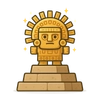
My golden age was a time of greatness, lasting from about 500 CE to 900 CE. During these centuries, I wasn't just a collection of stone buildings; I was the bustling capital of a powerful empire. My streets and plazas were filled with life. Priests in colorful robes chanted to the gods, artists carved detailed images into stone and pottery, and farmers brought potatoes and quinoa from the fields to the busy markets. My most famous monument is the Gateway of the Sun. It was carved from a single, massive block of andesite stone, and at its very center is the image of the Staff God, a powerful being who controlled the thunder and the rain. To feed my growing population in this challenging climate, my people showed their cleverness. They created a brilliant farming system called 'suka kollus'. They built raised fields of soil separated by water channels. During the day, the water in the channels would soak up the sun's warmth and then release it slowly through the cold night, protecting the precious crops from the deadly frost. It was an ingenious solution to a difficult problem.
The Stone City in the Clouds: The Story of Tiwanaku
High in the Andes Mountains of what is now Bolivia, the air is thin and crisp, and the sun shines with a special brightness over a vast, flat plain. Here, giant stone heads with mysterious faces stare out from the earth, and massive gateways, carved from single pieces of rock, stand silent against the sky. For centuries, people wondered who could have built such a powerful place so close to the heavens, a place that seemed to be a puzzle left behind by giants. They were right to wonder, because I am a puzzle and a marvel. I am Tiwanaku, a city of stone that once touched the sky.
My story began a very long time ago, as a small, quiet village around 1500 BCE. For more than a thousand years, I was humble. But then, starting around 100 BCE, my people decided to dream bigger. They began to transform me into a great city, and they were masters of stone. They found enormous stones in the mountains, some weighing as much as 100 tons, which is heavier than a whole herd of elephants. They carved these massive blocks with such incredible skill that they fit together perfectly, like pieces in a giant, heavy puzzle, with no space for even a knife blade between them. They didn't even need mortar, that sticky cement that holds bricks together. One of their proudest creations was the Akapana pyramid, a man-made mountain of earth and stone designed to honor the sacred peaks that surrounded us.
My golden age was a time of greatness, lasting from about 500 CE to 900 CE. During these centuries, I wasn't just a collection of stone buildings; I was the bustling capital of a powerful empire. My streets and plazas were filled with life. Priests in colorful robes chanted to the gods, artists carved detailed images into stone and pottery, and farmers brought potatoes and quinoa from the fields to the busy markets. My most famous monument is the Gateway of the Sun. It was carved from a single, massive block of andesite stone, and at its very center is the image of the Staff God, a powerful being who controlled the thunder and the rain. To feed my growing population in this challenging climate, my people showed their cleverness. They created a brilliant farming system called 'suka kollus'. They built raised fields of soil separated by water channels. During the day, the water in the channels would soak up the sun's warmth and then release it slowly through the cold night, protecting the precious crops from the deadly frost. It was an ingenious solution to a difficult problem.
But even the greatest cities cannot last forever. Around 1000 CE, my time as a capital came to a quiet end. The climate began to change, making the air colder and drier, and even the clever 'suka kollus' couldn't save all the crops. My people began to leave, searching for new places to live, and I fell into a long, peaceful sleep, covered by earth and time. For centuries, I was a memory. Then, in the 20th century, a new kind of person arrived: archaeologists. With gentle hands and careful tools, they began to uncover my secrets. It was a slow and exciting process, like waking me from a dream. Their work showed the world my importance, and on December 2nd, 2000, I was named a UNESCO World Heritage site, a treasure for all of humanity to protect.
Today, I am no longer a busy capital city. My plazas are quiet, and my temples are open to the sky. But I am not gone. I am a teacher. Visitors come from all over the world to walk where my people walked. They gaze up at the Gateway of the Sun and run their hands over my perfectly fitted stones, amazed by the skill of my builders. I stand as a proud reminder of a great civilization that understood the earth, the sky, and the stone. I am a bridge to the past, connecting people today to a powerful story from long ago and inspiring them to solve their own challenges with cleverness, creativity, and care.
Wow facts
About
Tiwanaku is an ancient pre-Incan archaeological site in western Bolivia, known for its monumental stone architecture and as the center of the Tiwanaku state, a powerful Andean polity that flourished for about 325 years, from approximately AD 375 to 700.
Take a Quiz
Question 1 of 5
Why did the people of Tiwanaku need to invent a special farming system like 'suka kollus'?
Explore next



Want to do even more?
Go beyond exploring. Unlock tools that turn every story into real learning.

Storypie Plus for families
Full stories, quizzes, and printables. Nights and car rides, sorted.
- Unlimited audio stories
- Create Mode: your child stars in the story
- Offline downloads
- Printable worksheets & coloring pages

Why Storypie for Schools
Students engaged. Prep in seconds. Evenings back to you.
- Worksheets & Quizzes
- Classroom Management
- Formative Assessment
- Custom Curriculum & Lesson Plans
- 27 Languages

Why Storypie for Homeschool
Curriculum done. They'll ask for more. Hours back in your day.
- Worksheet Generator
- First-Person Audio Stories
- Built-in Comprehension Quizzes
- Custom Curriculum & Lesson Plans
- Print & Go Activities