English

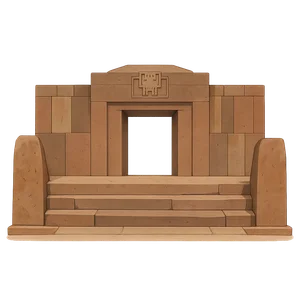
Tiwanaku
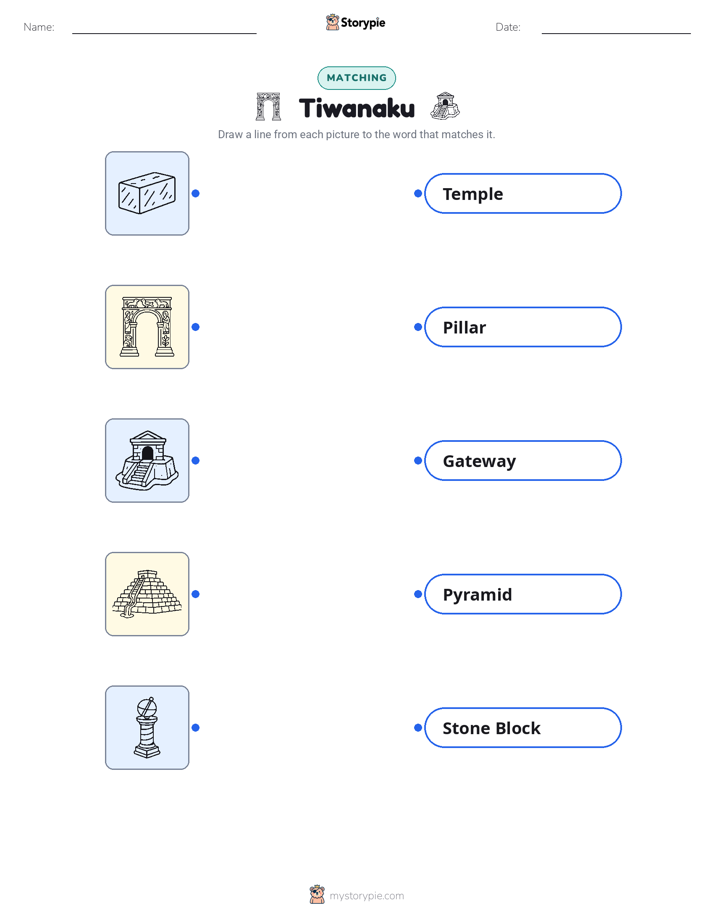
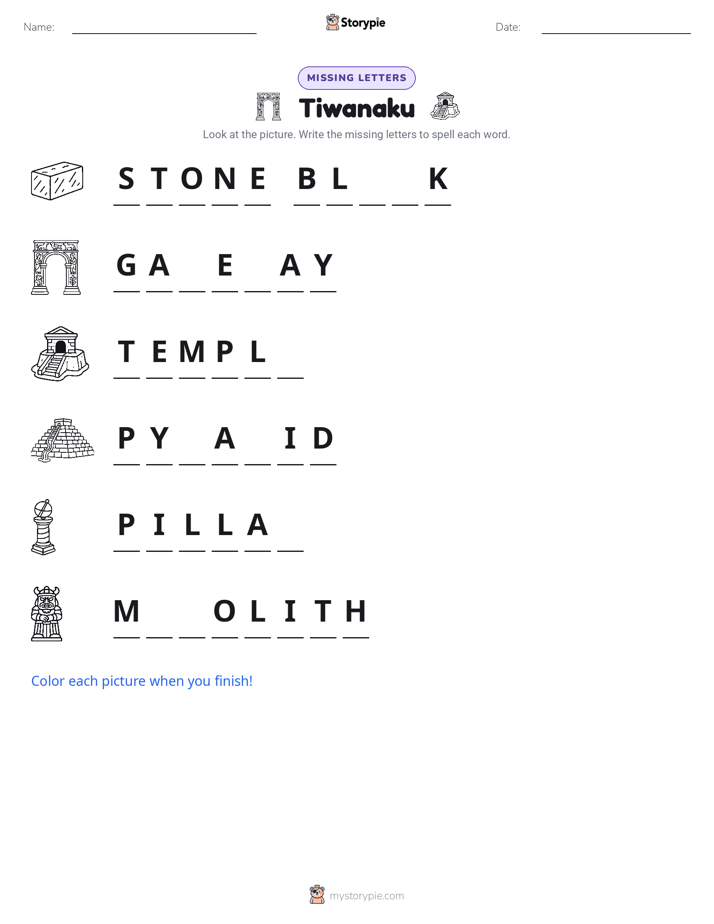
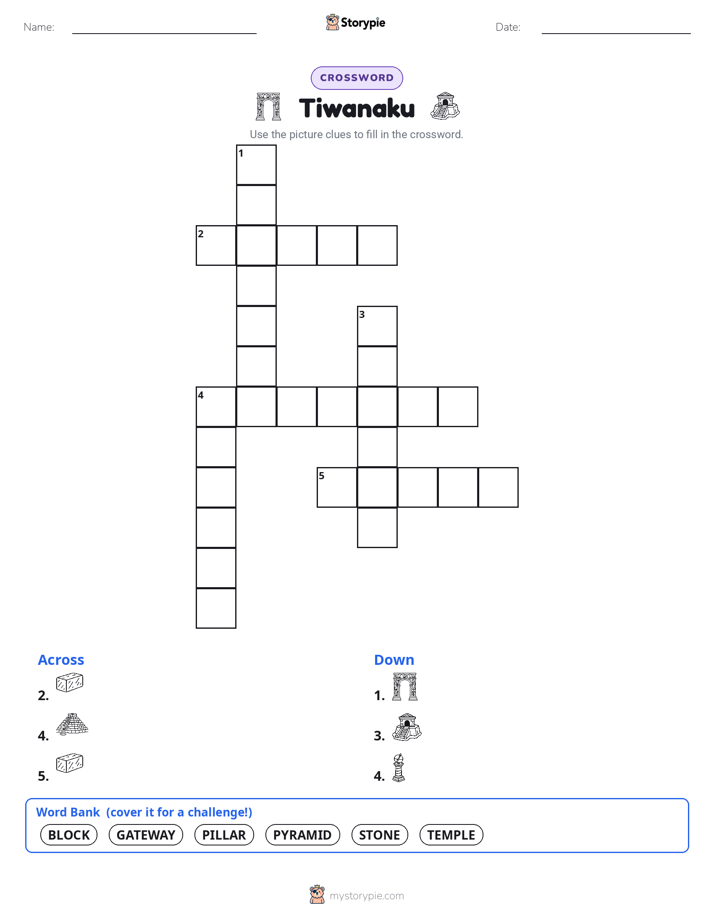
Tiwanaku is an ancient pre-Incan archaeological site in western Bolivia…
Reads at Grades 6–8 Listens at Grades 4–8
Print & create
Answer keys·No prep·Free with an account
28 worksheets · answer keys · full story · quiz · Ages 10-12 · CEFR B2
Plus adds 164,000+ more stories in 27 languages, audio for every one, and printables for all of them.
Just want Tiwanaku?
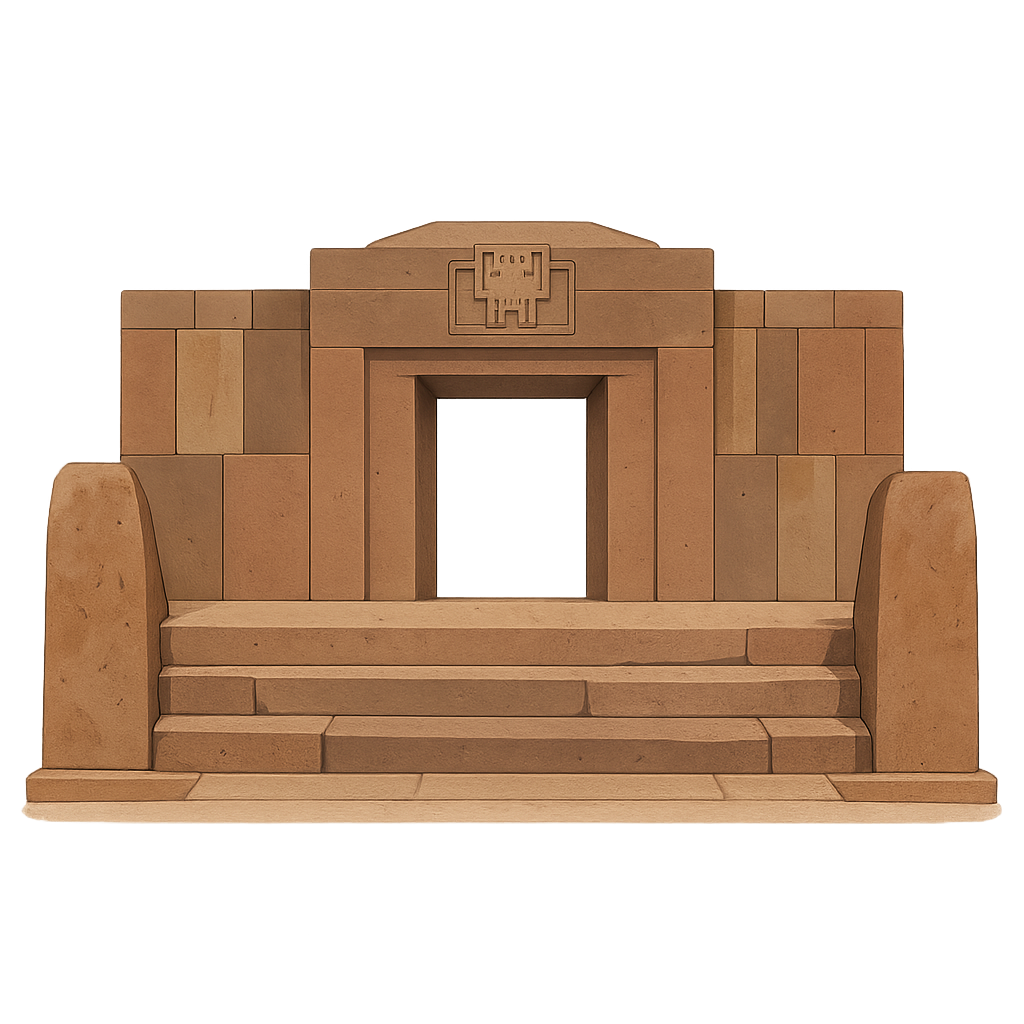
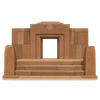
Imagine a place so high that the air is thin and crisp, and the sky feels like a deep blue blanket you could almost touch. Here, more than 12,000 feet up in the Andes Mountains of modern-day Bolivia, near the shimmering waters of Lake Titicaca, the sun burns brightly and the stars seem impossibly close. If you walked across this vast plain, you would find enormous stones, some weighing over one hundred tons, cut with such perfect precision that they fit together without a single drop of mortar. You would see grand gateways carved from single blocks of rock, decorated with mysterious figures staring out across the centuries. For a long time, I was a silent ruin, a puzzle left behind by a forgotten people. But I have a story to tell, a memory of a great civilization that rose and fell with the sun and the rain. I am Tiwanaku, a city of stone and spirit.
My story does not begin with grand pyramids or giant statues. It starts quietly, with the first footsteps of families who arrived on this high plain long, long ago, around 1500 BCE. I was just a small village then, a collection of simple homes clustered together for warmth against the mountain chill. These early people were hardy and clever. They learned to cultivate the land, growing crops like quinoa and potatoes that could survive the harsh climate. They looked at the mountains around them not just as rock and snow, but as powerful, living spirits. They felt a deep connection to this place, believing it was a special point where the three realms met: the sky world above, the earth they lived on, and the underworld below. They laid the first stones with purpose, not just to build shelters, but to create a home that honored the powerful forces of their world. These humble beginnings planted the seeds of a culture that would one day transform me into one of the most important centers of the ancient Andes.
The Stone City that Touched the Sky
Imagine a place so high that the air is thin and crisp, and the sky feels like a deep blue blanket you could almost touch. Here, more than 12,000 feet up in the Andes Mountains of modern-day Bolivia, near the shimmering waters of Lake Titicaca, the sun burns brightly and the stars seem impossibly close. If you walked across this vast plain, you would find enormous stones, some weighing over one hundred tons, cut with such perfect precision that they fit together without a single drop of mortar. You would see grand gateways carved from single blocks of rock, decorated with mysterious figures staring out across the centuries. For a long time, I was a silent ruin, a puzzle left behind by a forgotten people. But I have a story to tell, a memory of a great civilization that rose and fell with the sun and the rain. I am Tiwanaku, a city of stone and spirit.
My story does not begin with grand pyramids or giant statues. It starts quietly, with the first footsteps of families who arrived on this high plain long, long ago, around 1500 BCE. I was just a small village then, a collection of simple homes clustered together for warmth against the mountain chill. These early people were hardy and clever. They learned to cultivate the land, growing crops like quinoa and potatoes that could survive the harsh climate. They looked at the mountains around them not just as rock and snow, but as powerful, living spirits. They felt a deep connection to this place, believing it was a special point where the three realms met: the sky world above, the earth they lived on, and the underworld below. They laid the first stones with purpose, not just to build shelters, but to create a home that honored the powerful forces of their world. These humble beginnings planted the seeds of a culture that would one day transform me into one of the most important centers of the ancient Andes.
Generations passed, and my small village began to dream bigger. Around 300 CE, a great change began. My people were no longer content with simple homes; they wanted to build structures that reflected their beliefs and reached for the heavens. This was the start of my transformation into a great ceremonial center. They built sunken temples, digging deep into the earth so worshippers could feel closer to the underworld. Then, they built upwards, constructing the magnificent Akapana pyramid. It wasn't just a pile of stones; it was a man-made mountain, complete with a complex system of drains that made water thunder through it during rainstorms, mimicking the sacred peaks around me. The skill of my builders was astonishing. Without iron tools or the wheel, they quarried and moved massive andesite blocks from miles away. They shaped them with such mathematical perfection that they interlocked flawlessly. Within my Kalasasaya temple, they erected pillars that served as a giant calendar. My astronomers would stand there, watching the sun rise over different pillars throughout the year to mark solstices and equinoxes, telling them exactly when to plant their crops and when to hold their most important ceremonies.
From about 500 CE to 900 CE, I was at the very heart of a vast and influential world. I was the capital of the Tiwanaku empire, a city bustling with life and power. Caravans of llamas, their soft feet treading ancient paths, arrived daily. They brought goods from every corner of the empire: colorful feathers from the Amazon jungle, shimmering seashells from the Pacific coast, and precious metals from distant mountain mines. To feed my growing population, my people developed an ingenious farming system called 'suka kollus.' They created raised beds of soil separated by water channels. The water absorbed the sun's heat during the day and released it at night, protecting the delicate crops from the deadly frost of the high plains. This brilliant innovation allowed them to produce massive food surpluses. My plazas were filled with towering monoliths, stone figures carved to look like powerful guardians. The most famous of all my treasures is the Gateway of the Sun, carved from a single block of stone. At its center is the Staff God, a mysterious deity who watches over the world. During grand ceremonies, my people would gather in my shadow, feeling connected to their past, their empire, and their gods.
Even the greatest cities can face challenges they cannot overcome. For centuries, my people had mastered the difficult climate, but around the year 1000 CE, the world began to change in a way they couldn't control. It wasn't an army that brought me to my knees, but the sky itself. The life-giving rains stopped falling. A severe and prolonged drought settled over the Andes, lasting for decades. The sun beat down on the dry earth, and the water in the 'suka kollus' channels evaporated. Without water, the brilliant farming system failed, and the fields that once fed an empire turned to dust. Famine spread across the land. With heavy hearts, my people began to leave. Families packed what little they could and walked away from the only home they had ever known, searching for water and a new life. My grand plazas grew silent. The wind whistled through my empty temples. The stone guardians watched over a city of ghosts. I was abandoned, left to wait alone under the harsh Andean sun for hundreds of years.
Centuries of silence passed. Grass grew in my plazas, and my stones slept. But I was never truly forgotten. The Inca people, who rose to power long after I fell, looked upon my ruins with deep reverence. They believed I was a sacred, mythical place—the very spot where their creator god, Viracocha, brought the sun, moon, and the first humans into being. They told stories about my power, ensuring my memory lived on. Then, in the 19th and 20th centuries, a new kind of visitor arrived: archaeologists. With careful hands and patient minds, they began to uncover my buried secrets. They mapped my streets, studied my carvings, and pieced together the story of the people who built me. Their work brought my voice back to the world. On December 2nd, 2000, I was honored as a UNESCO World Heritage Site, recognized for my importance to all of humanity. Today, I am no longer silent. I speak of the incredible genius, resilience, and artistry of my ancient people, inspiring everyone who walks among my stones to wonder at what humans can achieve when they work in harmony with their world.
Wow facts
About
Tiwanaku is an ancient pre-Incan archaeological site in western Bolivia, known for its monumental stone architecture and as the center of the Tiwanaku state, a powerful Andean polity that flourished for about 325 years, from approximately AD 375 to 700.
Take a Quiz
Question 1 of 5
In your own words, describe the three main stages of Tiwanaku's history as told in the story: its beginning, its peak, and its decline.
Explore next



Want to do even more?
Go beyond exploring. Unlock tools that turn every story into real learning.

Storypie Plus for families
Full stories, quizzes, and printables. Nights and car rides, sorted.
- Unlimited audio stories
- Create Mode: your child stars in the story
- Offline downloads
- Printable worksheets & coloring pages

Why Storypie for Schools
Students engaged. Prep in seconds. Evenings back to you.
- Worksheets & Quizzes
- Classroom Management
- Formative Assessment
- Custom Curriculum & Lesson Plans
- 27 Languages

Why Storypie for Homeschool
Curriculum done. They'll ask for more. Hours back in your day.
- Worksheet Generator
- First-Person Audio Stories
- Built-in Comprehension Quizzes
- Custom Curriculum & Lesson Plans
- Print & Go Activities