English

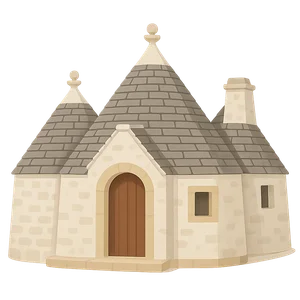
Trulli of Alberobello
The Trulli of Alberobello are a collection of unique limestone dwellings with conical roofs…
Reads at Grades 3–5 Listens at Grades 1–5
Print & create
Answer keys·No prep·Free with an account
28 worksheets · answer keys · full story · quiz · Ages 8-10 · CEFR B1
Plus adds 164,000+ more stories in 27 languages, audio for every one, and printables for all of them.
Just want Trulli of Alberobello?
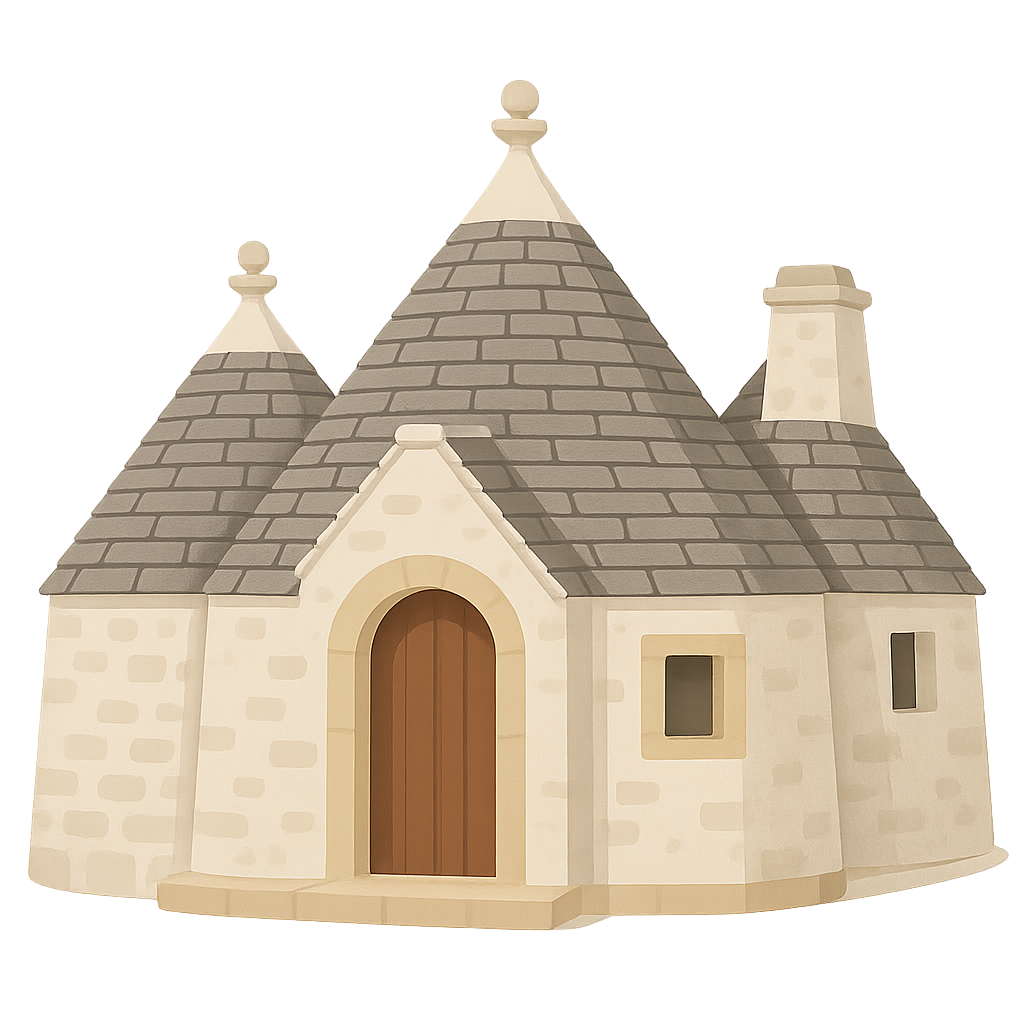
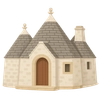
Imagine you are walking under the warm sun in the countryside of southern Italy. All around you are small, round houses with whitewashed walls that sparkle in the light. But the most curious thing is their roofs. They are not flat or sloped like other houses; they are tall, cone-shaped stone roofs that look like a village of pointy hats. Birds sometimes perch on their very tips, and the narrow, winding streets feel like they belong in a fairytale. It’s a place built with cleverness and secrets, a home designed to appear and disappear in a flash. I am this magical village. I am the Trulli of Alberobello.
My story began a very long time ago, around the middle of the 14th century. The land here was given to powerful lords called the Counts of Conversano. They wanted farmers to live here and work the land, but they had a problem. The King of Naples demanded a lot of money in taxes for every new town that was built. The Counts had a clever, sneaky plan to avoid paying. They told the peasant families who came to live here, 'You must build your homes without any mortar.'. Mortar is like a strong glue that holds bricks and stones together. Instead, they had to use a special 'dry stone' technique, carefully stacking stones so they would hold each other up. This meant that if a tax inspector from the king was spotted coming, the people could quickly dismantle their homes, stone by stone. When the inspector arrived, there would be no town to tax, just piles of rocks. From the 16th to the 18th centuries, my village grew, a secret settlement hiding in plain sight.
The Stone Hats of Alberobello
Imagine you are walking under the warm sun in the countryside of southern Italy. All around you are small, round houses with whitewashed walls that sparkle in the light. But the most curious thing is their roofs. They are not flat or sloped like other houses; they are tall, cone-shaped stone roofs that look like a village of pointy hats. Birds sometimes perch on their very tips, and the narrow, winding streets feel like they belong in a fairytale. It’s a place built with cleverness and secrets, a home designed to appear and disappear in a flash. I am this magical village. I am the Trulli of Alberobello.
My story began a very long time ago, around the middle of the 14th century. The land here was given to powerful lords called the Counts of Conversano. They wanted farmers to live here and work the land, but they had a problem. The King of Naples demanded a lot of money in taxes for every new town that was built. The Counts had a clever, sneaky plan to avoid paying. They told the peasant families who came to live here, 'You must build your homes without any mortar.'. Mortar is like a strong glue that holds bricks and stones together. Instead, they had to use a special 'dry stone' technique, carefully stacking stones so they would hold each other up. This meant that if a tax inspector from the king was spotted coming, the people could quickly dismantle their homes, stone by stone. When the inspector arrived, there would be no town to tax, just piles of rocks. From the 16th to the 18th centuries, my village grew, a secret settlement hiding in plain sight.
Life inside my walls was cozy and safe. The families who lived here were resourceful and made the best of their unique homes. My thick stone walls provided amazing natural insulation. This meant that during the scorching summer months, the inside stayed refreshingly cool, and in the chilly winters, the warmth from the fireplace was held inside, keeping everyone snug. The people were also a bit superstitious. They painted mysterious symbols on my conical roofs—hearts, crosses, and other strange signs—to bring good luck or protect them from harm. Each of my pointy roofs was topped with a decorative pinnacle, a special signature for the family who built it. Children played games in my narrow streets, and the community was very close-knit. Generation after generation grew up here, sharing stories and helping one another, always ready to take their homes apart if they had to.
For centuries, the people lived this way, under the rule of the lords and in homes that were never truly permanent. But as time went on, they grew tired of the uncertainty. They wanted freedom and the right to have a real town that couldn't be taken away. They decided to be brave and ask for help. On May 27th, 1797, a group of people from my village traveled to appeal directly to the King, Ferdinand IV of Bourbon. They told him their story and asked to be recognized as a proper town. The King listened and agreed. He issued a decree that made Alberobello a 'royal town,' which meant I was finally free from the control of the Counts of Conversano. My houses could now stand tall and proud, built with mortar to last forever. They never had to be taken apart again.
As the years and centuries passed, people from all over began to realize just how special I was. My unique design wasn't just a clever trick to avoid taxes; it was a beautiful example of human creativity. On December 7th, 1996, I was given a great honor. I was named a UNESCO World Heritage Site, which means I am considered a treasure for the whole world to protect and enjoy. Today, I welcome visitors from everywhere. They walk my winding streets and marvel at my stone hats, and I get to share my story of cleverness, community, and resilience. I stand as a reminder that sometimes, the most challenging problems can lead to the most beautiful and lasting creations.
Wow facts
About
The Trulli of Alberobello are a collection of unique limestone dwellings with conical roofs, located in the Puglia region of southern Italy. They represent a remarkable example of dry-stone construction and are recognized as a UNESCO World Heritage Site.
Take a Quiz
Question 1 of 5
Why did the Counts of Conversano want the farmers to build houses that could be taken apart quickly?
Explore next


Want to do even more?
Go beyond exploring. Unlock tools that turn every story into real learning.

Storypie Plus for families
Full stories, quizzes, and printables. Nights and car rides, sorted.
- Unlimited audio stories
- Create Mode: your child stars in the story
- Offline downloads
- Printable worksheets & coloring pages

Why Storypie for Schools
Students engaged. Prep in seconds. Evenings back to you.
- Worksheets & Quizzes
- Classroom Management
- Formative Assessment
- Custom Curriculum & Lesson Plans
- 27 Languages

Why Storypie for Homeschool
Curriculum done. They'll ask for more. Hours back in your day.
- Worksheet Generator
- First-Person Audio Stories
- Built-in Comprehension Quizzes
- Custom Curriculum & Lesson Plans
- Print & Go Activities