English

Vatican City
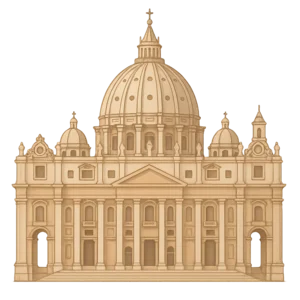
Vatican City is the smallest independent state in the world, located within Rome, Italy.
Reads at Grades 6–8 Listens at Grades 4–8
Print & create
Answer keys·No prep·Free with an account
28 worksheets · answer keys · full story · quiz · Ages 10-12 · CEFR B2
Plus adds 280,000+ more stories in 27 languages, audio for every one, and printables for all of them.
Just want Vatican City?
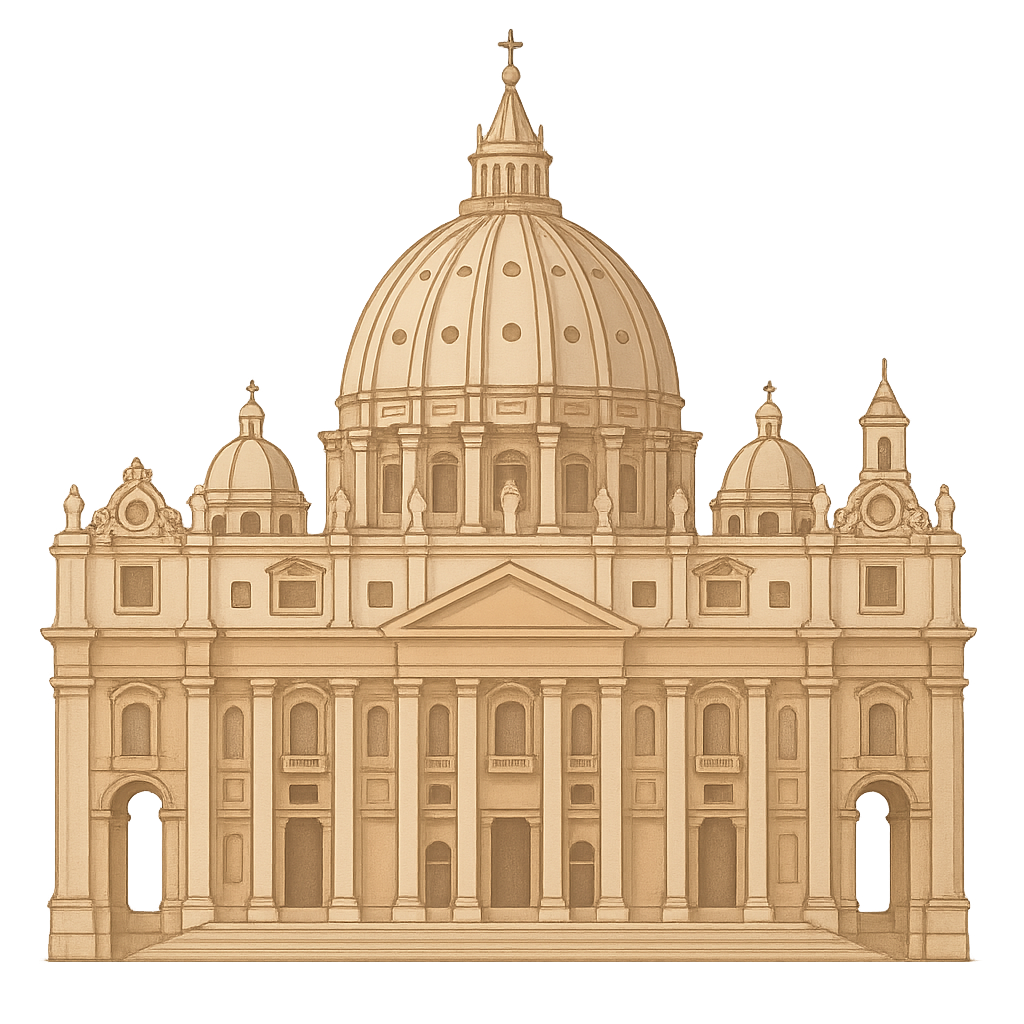
I am a place of towering domes and wide-open arms, a country so small you can walk across me in minutes, yet I hold worlds of art, history, and faith. I live inside another, much older city—Rome—but I have my own flag, my own guards in colorful uniforms, and my own story. Visitors whisper in dozens of languages as they gaze up at the masterpieces that cover my walls and ceilings. Before you know my name, feel my spirit: a place built to inspire awe and connect people to something bigger than themselves. My stone arms reach out to embrace the world, a symbol of welcome for all. I am Vatican City.
My story begins long ago, on a simple, marshy hill outside ancient Rome called Vatican Hill. It wasn't a glamorous place, and for a time, it was even a place of sorrow. But something happened here that changed everything. Around the year 64 CE, a fisherman named Peter, one of the most important followers of Jesus, was laid to rest here. For centuries, people who shared his faith made quiet, often dangerous, journeys to this spot to honor his memory. Then, a powerful Roman Emperor, Constantine, decided this special place deserved a special church. In 326 CE, his workers began building a grand basilica, a church bigger than any seen before, right over the spot where Peter was believed to be buried. For more than a thousand years, that first church stood as a beacon of faith, a destination for pilgrims from across the known world.
After a millennium, the old basilica was growing tired and frail. Its walls sagged, and its beauty had faded with age. A visionary Pope, Julius II, had a bold idea in 1506: to build a new church, the most magnificent in the world, in its place. This was a project of unimaginable scale, one that would take more than a century and the minds of the greatest artists and architects of the Renaissance. A genius named Michelangelo lay on his back on high scaffolding for four grueling years, from 1508 to 1512, to paint the story of creation on the ceiling of my Sistine Chapel, a masterpiece that still makes people gasp in wonder. Years later, when he was an old man, he returned to design my glorious dome, so huge and graceful it seems to float over Rome. In the 1600s, another master, Gian Lorenzo Bernini, designed the sweeping, curved colonnades in my main square, which he described as the two giant arms of the church reaching out to welcome the world. Every stone, every painting, and every sculpture was placed with purpose, to tell stories and lift the human spirit.
The City with Open Arms
I am a place of towering domes and wide-open arms, a country so small you can walk across me in minutes, yet I hold worlds of art, history, and faith. I live inside another, much older city—Rome—but I have my own flag, my own guards in colorful uniforms, and my own story. Visitors whisper in dozens of languages as they gaze up at the masterpieces that cover my walls and ceilings. Before you know my name, feel my spirit: a place built to inspire awe and connect people to something bigger than themselves. My stone arms reach out to embrace the world, a symbol of welcome for all. I am Vatican City.
My story begins long ago, on a simple, marshy hill outside ancient Rome called Vatican Hill. It wasn't a glamorous place, and for a time, it was even a place of sorrow. But something happened here that changed everything. Around the year 64 CE, a fisherman named Peter, one of the most important followers of Jesus, was laid to rest here. For centuries, people who shared his faith made quiet, often dangerous, journeys to this spot to honor his memory. Then, a powerful Roman Emperor, Constantine, decided this special place deserved a special church. In 326 CE, his workers began building a grand basilica, a church bigger than any seen before, right over the spot where Peter was believed to be buried. For more than a thousand years, that first church stood as a beacon of faith, a destination for pilgrims from across the known world.
After a millennium, the old basilica was growing tired and frail. Its walls sagged, and its beauty had faded with age. A visionary Pope, Julius II, had a bold idea in 1506: to build a new church, the most magnificent in the world, in its place. This was a project of unimaginable scale, one that would take more than a century and the minds of the greatest artists and architects of the Renaissance. A genius named Michelangelo lay on his back on high scaffolding for four grueling years, from 1508 to 1512, to paint the story of creation on the ceiling of my Sistine Chapel, a masterpiece that still makes people gasp in wonder. Years later, when he was an old man, he returned to design my glorious dome, so huge and graceful it seems to float over Rome. In the 1600s, another master, Gian Lorenzo Bernini, designed the sweeping, curved colonnades in my main square, which he described as the two giant arms of the church reaching out to welcome the world. Every stone, every painting, and every sculpture was placed with purpose, to tell stories and lift the human spirit.
For most of my life, I was simply a part of the city and country around me, owned by the leaders of the church but subject to the politics of Italy. But on a special day, February 11, 1929, something unique happened. Through an agreement called the Lateran Treaty, I was officially born as my own independent country. I became the smallest sovereign state in the entire world. It sounds strange, a country so tiny you can see its borders from one spot. But my size doesn't measure my importance. As an independent nation, I can focus entirely on my mission: to be a global center for the Catholic Church, a guardian of priceless art and history, and a voice for diplomacy and peace in the world. My Swiss Guards, with their famous striped uniforms designed centuries ago, are not just for show; they are my dedicated army and a symbol of my unique status as a nation dedicated to service and protection.
Today, my gates are open to everyone. People of all faiths and from every corner of the globe walk through my square, explore my vast museums, and stand in quiet awe inside St. Peter's Basilica. They come to see Michelangelo's art, to explore my vast library filled with ancient knowledge, or simply to feel the centuries of history that I hold within my walls. I am more than just a collection of buildings; I am a living, breathing place that connects the past to the present. I am a testament to what humans can create through faith, dedication, and incredible artistry. I hope that when people visit me, they leave feeling inspired—not just by the beauty they see, but by the idea that something built with love and purpose can reach across time to touch hearts forever.
Wow facts
About
Vatican City is the smallest independent state in the world, located within Rome, Italy. It is the spiritual and administrative center of the Roman Catholic Church, famous for St. Peter's Basilica and the Sistine Chapel.
Take a Quiz
Question 1 of 5
Retell the story of how St. Peter's Basilica was built, from the first church to the one that stands today. Mention at least two key people and one important date.
Explore next




Want to do even more?
Go beyond exploring. Unlock tools that turn every story into real learning.

Storypie Plus for families
Full stories, quizzes, and printables. Nights and car rides, sorted.
- Unlimited audio stories
- Create Mode: your child stars in the story
- Offline downloads
- Printable worksheets & coloring pages

Why Storypie for Schools
Students engaged. Prep in seconds. Evenings back to you.
- Worksheets & Quizzes
- Classroom Management
- Formative Assessment
- Custom Curriculum & Lesson Plans
- 27 Languages

Why Storypie for Homeschool
Curriculum done. They'll ask for more. Hours back in your day.
- Worksheet Generator
- First-Person Audio Stories
- Built-in Comprehension Quizzes
- Custom Curriculum & Lesson Plans
- Print & Go Activities