

 English

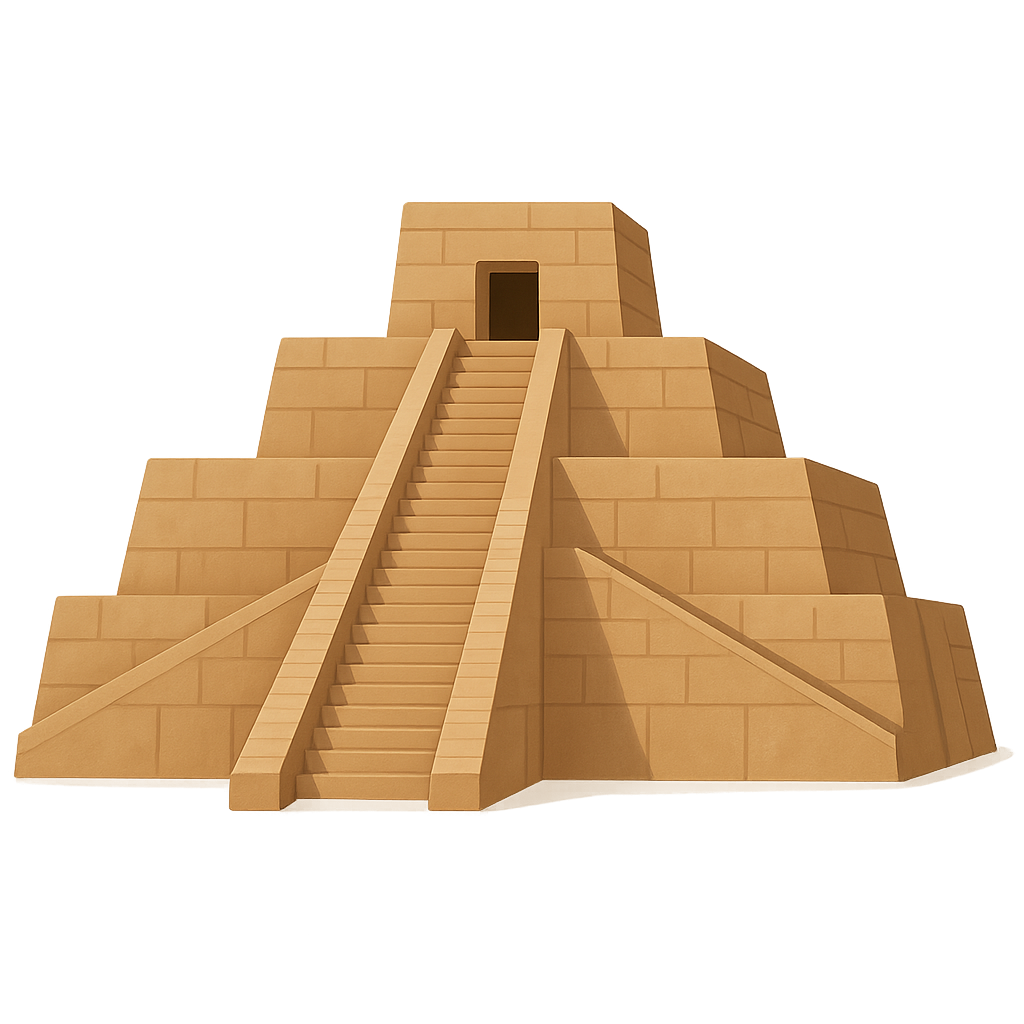
The Stairway to the Moon
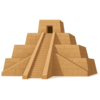
I stand in a flat, sandy land under a hot, bright sun, a giant staircase reaching for the sky. From a distance, I might look like a mountain, but I am not made of rock and earth. I was built by human hands, from millions and millions of mud bricks, stacked carefully one on top of the other. For thousands of years, I have felt the desert winds whisper secrets across my walls and have watched the moon travel across the night sky. I was not built to be a home for people or a fortress for soldiers. I was created to be a special bridge, a connection between the world of people down below and the mysterious heavens far above. People would look at me with wonder, feeling closer to the stars. My real name is a whisper from the past. I am the Great Ziggurat of Ur.
Long, long ago, in a land called Sumer, which was part of a bigger place called Mesopotamia, the city of Ur was full of life. It was a busy, bustling city with markets, homes, and people who worked hard and dreamed big. A wise and powerful king named Ur-Nammu ruled this city around the 21st century BCE. He looked up at the moon each night and felt a deep respect for its glowing light. He decided he wanted to build a magnificent place to honor the moon god, who the Sumerians called Nanna. It was a huge project. Thousands of people came together with a single purpose. They dug up clay from the nearby riverbanks, mixed it with water and straw, and packed it into wooden molds to make bricks. They set the bricks out under the blazing sun until they were baked as hard as stone. Then, the building began. Layer by layer, they built my massive base, and then the next level, and the next, each one smaller than the one below, creating my famous stepped shape. To protect me from the rare but powerful desert rains, they covered my outer walls with a thick, sticky black tar called bitumen, which acted like a waterproof coat. Finally, they built three enormous staircases that led up my sides, meeting at the top. On my highest point, they placed a beautiful temple, a sacred house for Nanna, so the priests could climb up and be closer to the moon god they worshipped.
For centuries, I was the heart of the city of Ur. But as time marched on, empires rose and fell, and the city around me slowly grew quiet. The desert winds, which had once just whispered, began to carry sand. Little by little, the sand piled up against my walls, covering my grand staircases and hiding my strong bricks from the sun. The sand covered me like a warm, heavy blanket, and I fell into a deep, long sleep. For thousands of years, I was just a strange-looking hill in the desert, my true shape hidden and my story forgotten by the world. Then, about a hundred years ago, in the 1920s, a curious and determined archaeologist from England named Sir Leonard Woolley arrived. He had read ancient stories and believed a lost city was sleeping under the sand. With his team, he began to dig. Very carefully, they used shovels and brushes to clear away the sand of centuries. It felt like I was slowly waking up from a very long dream. First, a corner of a wall appeared, then a whole staircase. I could feel the sun on my bricks for the first time in ages. Sir Leonard Woolley and his team were filled with joy and wonder as they uncovered me, realizing they had found one of the world's oldest and grandest buildings.
Today, I still stand proudly in the country now called Iraq. My temple at the very top is gone, washed away by time and wind, but my mighty shape remains for all to see. I am a strong and silent reminder of the brilliant Sumerian people who lived so long ago. They were farmers, writers, and builders who looked at the world with curiosity and creativity. I show everyone who visits that for thousands of years, humans have looked up at the stars and dreamed of building amazing things to connect with the universe. I am a bridge that connects you to the distant past. I hope I inspire you to be curious, to learn about those who came before you, and to build your own wonders that will tell your story for many, many years to come.
Activities
Take a Quiz
Test what you learned with a fun quiz!
Get creative with colors!
Print a coloring book page of this topic.












 Free for Educators