Polski

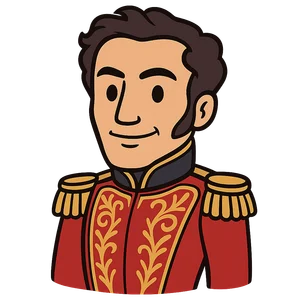
Simón Bolívar
Simón Bolívar był wenezuelskim przywódcą wojskowym i politycznym…
Czytane w Klasy 6–8 Słuchaj w Klasy 4–8
Drukuj i twórz
Klucze odpowiedzi·Bez przygotowań·Darmowe z kontem
27 arkusze robocze · klucze odpowiedzi · pełna historia · quiz · Wiek 10-12 · CEFR B2
Dodatkowo dodaje 164,000+ więcej opowieści w 27 językach, audio do każdej z nich oraz materiały do druku dla wszystkich.
Chcesz tylko Simón Bolívar?
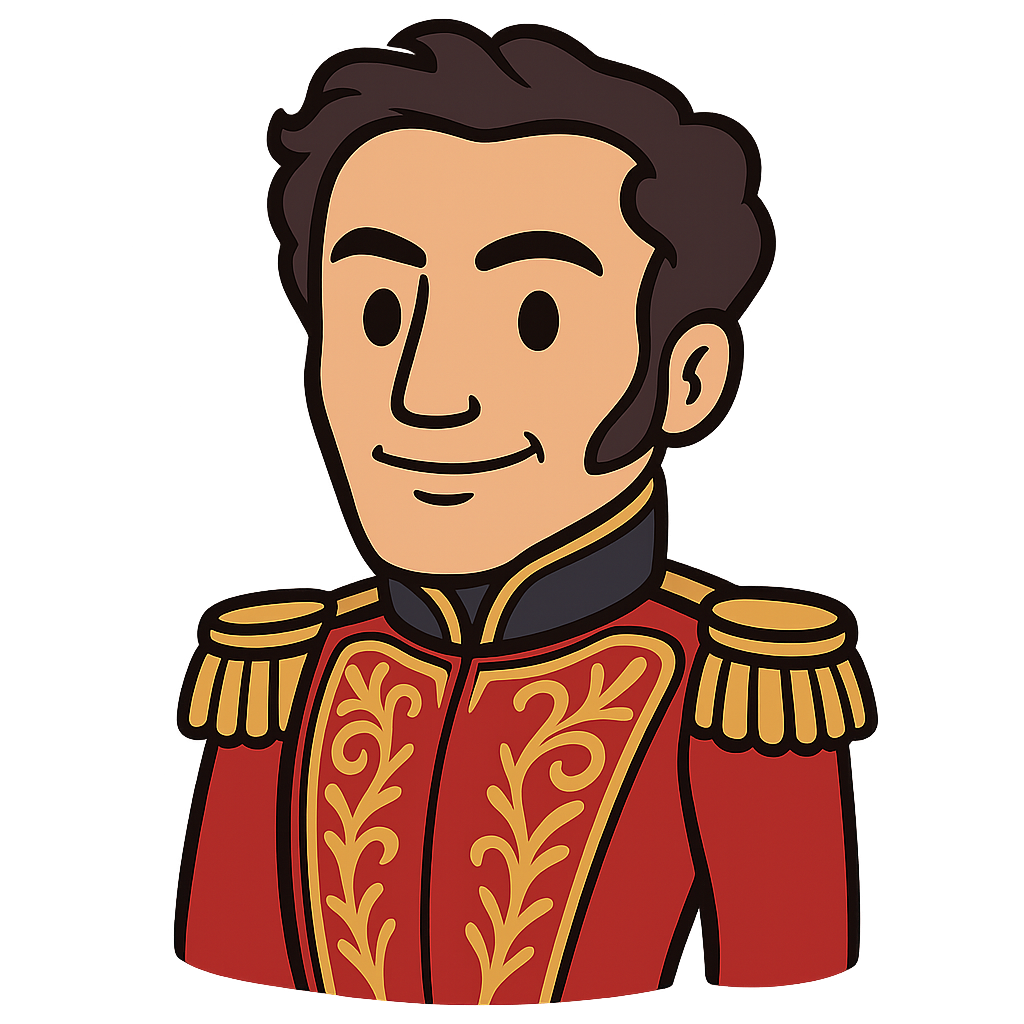
Hello. My name is Simón Bolívar, and I want to tell you the story of my life, a life I dedicated to the dream of freedom. I was born on July 24th, 1783, in a city called Caracas, which was then part of the Spanish Empire in South America. My family was one of the wealthiest in the city, but my childhood was marked by sadness. My father died when I was just two years old, and my mother passed away when I was nine. As an orphan, I was raised by my uncles and my nurse, Hipólita. My most important teacher was a man named Simón Rodríguez, who taught me not just from books, but about the world, about justice, and about the ideas of liberty that were spreading across the globe. He helped shape my understanding of the world and my desire for a different future for my people.
As a young man, I traveled to Europe to complete my education. In Spain, I fell in love with a wonderful woman named María Teresa Rodríguez del Toro y Alaysa, and we were married in 1802. We returned to Venezuela, but my happiness was short-lived; she tragically died from yellow fever in 1803. Heartbroken, I vowed never to marry again and to dedicate my life to a greater purpose. I returned to Europe and, in 1804, I was in Paris when Napoleon Bonaparte crowned himself Emperor of France. Seeing a hero of the revolution become a king disappointed me deeply and strengthened my belief in republics, not monarchies. A year later, in 1805, standing on Monte Sacro, one of the famous hills of Rome, with my old teacher Rodríguez, I made a solemn promise. I swore that I would not rest until I had broken the chains that bound my homeland to Spain. This promise fueled my determination for years to come.
The Life of El Libertador
Hello. My name is Simón Bolívar, and I want to tell you the story of my life, a life I dedicated to the dream of freedom. I was born on July 24th, 1783, in a city called Caracas, which was then part of the Spanish Empire in South America. My family was one of the wealthiest in the city, but my childhood was marked by sadness. My father died when I was just two years old, and my mother passed away when I was nine. As an orphan, I was raised by my uncles and my nurse, Hipólita. My most important teacher was a man named Simón Rodríguez, who taught me not just from books, but about the world, about justice, and about the ideas of liberty that were spreading across the globe. He helped shape my understanding of the world and my desire for a different future for my people.
As a young man, I traveled to Europe to complete my education. In Spain, I fell in love with a wonderful woman named María Teresa Rodríguez del Toro y Alaysa, and we were married in 1802. We returned to Venezuela, but my happiness was short-lived; she tragically died from yellow fever in 1803. Heartbroken, I vowed never to marry again and to dedicate my life to a greater purpose. I returned to Europe and, in 1804, I was in Paris when Napoleon Bonaparte crowned himself Emperor of France. Seeing a hero of the revolution become a king disappointed me deeply and strengthened my belief in republics, not monarchies. A year later, in 1805, standing on Monte Sacro, one of the famous hills of Rome, with my old teacher Rodríguez, I made a solemn promise. I swore that I would not rest until I had broken the chains that bound my homeland to Spain. This promise fueled my determination for years to come.
I returned to South America in 1807, filled with revolutionary fire. The fight for independence was difficult and full of setbacks. Our first attempt to create a free republic in Venezuela failed by 1812. I refused to give up. From exile, I wrote the Cartagena Manifesto, analyzing our mistakes and calling for unity. In 1813, I led a daring military action known as the Admirable Campaign, marching my small army from New Granada back into Venezuela. We fought our way to Caracas, and the people, overjoyed, gave me a title I have cherished ever since: 'El Libertador,' which means 'The Liberator.' This recognition was a powerful moment, showing that the people believed in the cause of freedom.
Our fight was far from over. To truly defeat the Spanish, I knew I had to do something no one thought was possible. In 1819, I led my army of about 2,500 soldiers on a treacherous journey across the mighty Andes mountains to surprise the Spanish forces in New Granada. We climbed towering peaks, braved freezing rains, and crossed raging rivers. Many men and horses were lost, but our determination never wavered. Exhausted but triumphant, we descended from the mountains and took the enemy completely by surprise. On August 7th, 1819, we won a decisive victory at the Battle of Boyacá, which secured the freedom of the land that would become Colombia. This victory was a turning point in our struggle.
My dream was not just to free individual countries, but to unite them into one great nation. After the victory at Boyacá, I helped create a new republic called Gran Colombia, which included modern-day Colombia, Venezuela, Ecuador, and Panama. We continued the fight, securing Venezuela's independence at the Battle of Carabobo in 1821. My trusted general, Antonio José de Sucre, liberated Ecuador at the Battle of Pichincha in 1822. I then marched south to Peru, the final Spanish stronghold. After crucial victories at the Battles of Junín and Ayacucho in 1824, Spanish power in South America was finally broken. In 1825, the region of Upper Peru was freed and named a new country in my honor: Bolivia.
I had achieved my military goals, but my political dream of a united South America proved much harder. Gran Colombia was a vast territory, and people in different regions had their own ideas and leaders. There was constant disagreement and infighting. I worked tirelessly to hold the nation together, but the forces pulling it apart were too strong. It was a great sadness for me to see my dream of unity begin to crumble as regions started to declare their own independence from the federation. The challenges of governing such a diverse and large area were immense.
Legacy & Remembering
Exhausted and in poor health, I stepped down from power. I lived to be 47 years old, passing away on December 17th, 1830. Though my dream of a single, united South American nation did not last, my work helped give birth to six new countries free from foreign rule. Today, I am remembered as El Libertador, a symbol of freedom and independence. Statues of me stand in cities all over the world, and my story continues to inspire people who fight for liberty and self-determination for their own nations. My life's work was dedicated to the ideal of freedom for all.
Fakty wow
O
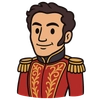
Simón Bolívar był wenezuelskim przywódcą wojskowym i politycznym, który poprowadził do niepodległości dzisiejszą Wenezuelę, Boliwię, Kolumbię, Ekwador, Peru i Panamę spod panowania Imperium Hiszpańskiego. Jest znany jako 'El Libertador' (Wyzwoliciel).
Zrób quiz
Pytanie 1 z 5
In your own words, what was Simón Bolívar's main goal in life?
Zbadaj następne

Chcesz zrobić jeszcze więcej?
Wyjdź poza eksplorację. Odblokuj narzędzia, które zamieniają każdą historię w prawdziwą naukę.

Storypie Plus dla rodzin
Pełne historie, quizy i materiały do druku. Noce i przejażdżki samochodowe, uporządkowane.
- Nieograniczone historie audio
- Tryb tworzenia: twoje dziecko jest gwiazdą w historii
- Pobieranie offline
- Materiały do druku i strony do kolorowania

Dlaczego Storypie dla szkół
Zaangażowani uczniowie. Przygotowanie w kilka sekund. Wieczory znów dla Ciebie.
- Arkusze robocze i quizy
- Zarządzanie Klasą
- Ocena formacyjna
- Dostosowany program nauczania i plany lekcji
- 27 języków

Dlaczego Storypie dla nauczania w domu
Program nauczania gotowy. Będą prosić o więcej. Godziny z powrotem w Twoim dniu.
- Generator arkuszy roboczych
- Historie audio z perspektywy pierwszej osoby
- Wbudowane quizy zrozumienia
- Dostosowany program nauczania i plany lekcji
- Aktywności do druku i zabawy