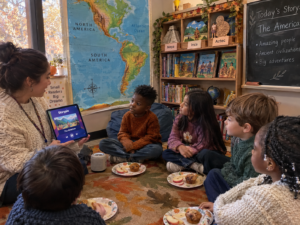
Audio-first stories cognitive load helps children imagine without visual clutter. In the first moments, audio clears competing detail. Parents and teachers see calmer kids and richer inner worlds. In fact, a 2025 online behavioral study showed that 15-second instrumental soundtrack excerpts evoked vivid, structured mental imagery, demonstrating how auditory stimuli can drive cross-modal visual imagination.
Why audio-first stories cognitive load matters
When we remove visual clutter, children have fewer things to process. Cognitive Load Theory calls that clutter extraneous load. As a result, working memory can hold the story. Also, Dual Coding Theory shows two channels: verbal and visual. Audio-first leans on language. That nudges the brain to make pictures from words. A recent 2024 study found that EEG-based cognitive load estimation achieved a peak F1-score of 0.98 when assessing psychoacoustic parameters, indicating a strong correlation between audio characteristics and cognitive load.
How listening grows imagination
Without fixed pictures, each child builds their own scene. Mental images become personal and often richer than any illustration. For this reason, listening practices narrative skills, vocabulary, and flexible thinking. Children who listen often retell stories with new twists. Tiny imaginations get mighty practice. Research from a 2023 fMRI study indicates that information load in a spoken narrative correlates positively with the brain’s functional connectivity, suggesting that audio narratives can enhance mental imagery and cognitive engagement.
Practical benefits at a glance
- Calm moments: no blue light and no fast motion.
- Better focus: audio fits auditory working memory.
- Inclusive by design: helps language learners, kids with dyslexia, and low vision.
- Portable: perfect for car rides, quiet play, or bedtime.
Simple rituals and age guide
Try a short ritual to make listening a habit. First, choose a calm Storypie. Then dim the lights and play at low volume. After the tale, ask one open question. For example, ask What did you see? Give a minute for thinking. Finally, let the child play out the scene through drawing or role play.
Age and length guide:
- Under three: caregiver-led, three minutes or less.
- Ages three to six: five to fifteen minutes with sensory language.
- Ages six to nine: ten to twenty minutes for more complex scenes.
Safety, quality, and easy tips
Keep volume safe and choose calm pacing for bedtime. Also, place devices safely, not on the pillow. Avoid violent or highly stimulating audio before sleep. Audio complements reading and hands-on play. It does not replace them. Furthermore, a 2024 dual-task VR study revealed that participants’ mean secondary-task response times were significantly longer when listening to a hoarse lecturer’s voice, indicating increased cognitive load under challenging audio conditions. This illustrates how audio quality affects cognitive processing, supporting the need for clear audio in storytelling.
Quick how-to for parents
- Choose calm narration.
- Dim lights and lower volume.
- Ask one open question after listening.
- Let the child draw or role-play the scene.
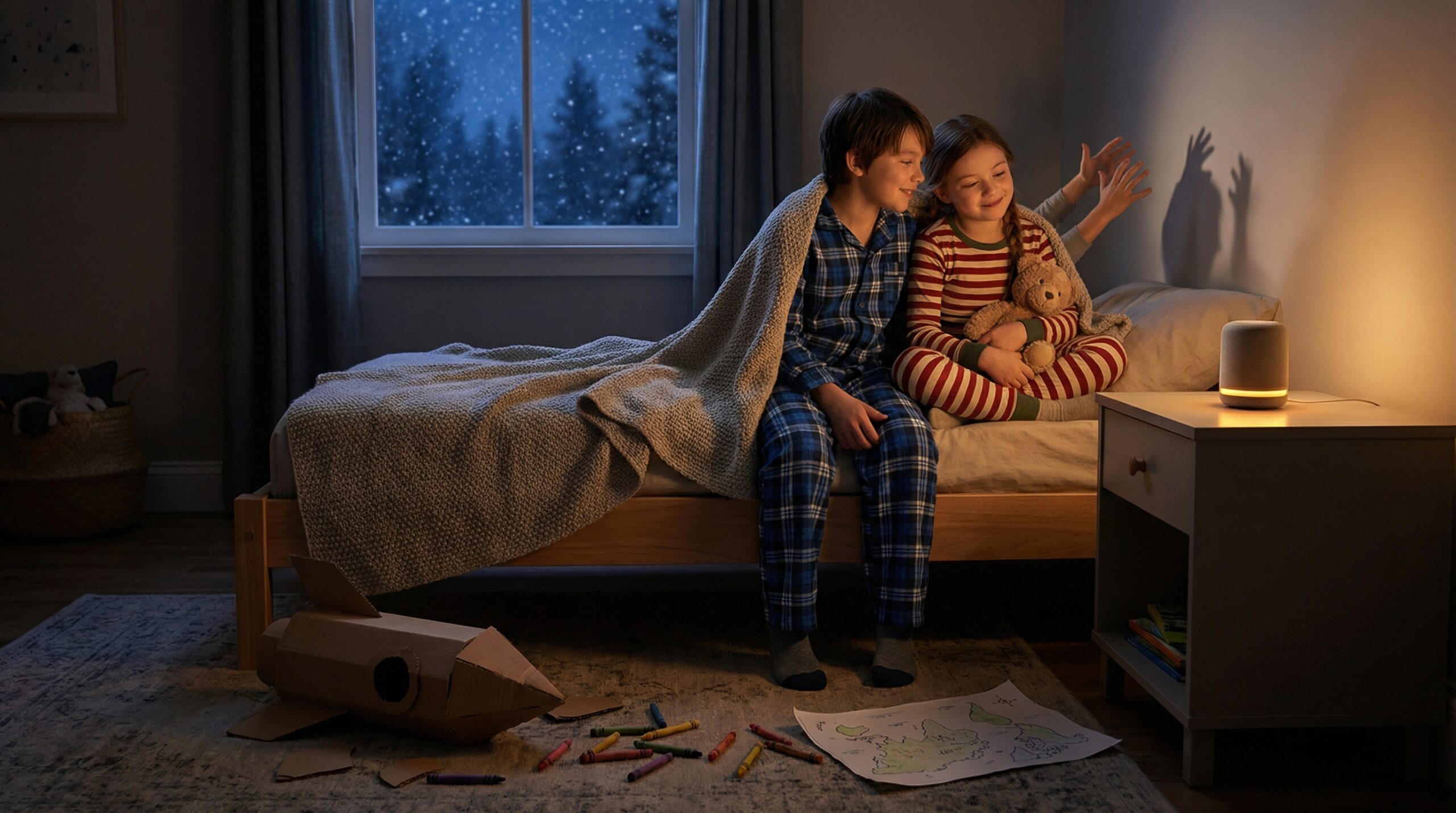
On chilly nights a short audio story lowers sensory load. Kids relax, eyes close, and imagination does the heavy lifting. For a gentle bedtime habit, try a 10-minute Storypie. Play a Storypie now: Get the app or visit the Storypie homepage for more calm tales.